
White-Tailed Deer Scapula Internal Composition and Preservation Guide

Quick Facts
Primary Environment: Forest
Common Discovery Areas: Woodland trails, tree bases, field edges, creek corridors
Ground Condition: Leaf Litter and Soil
Decomposition Stage: Advanced Skeletal Remains
Scavenger Activity: Moderate
Exposure Level: Partially Exposed Surface Find
Climate Zone: Temperate
Season Found: Any Season (Most Visible Fall–Spring)
Likely Scavengers: Coyote, Raccoon, Red Fox, Turkey Vulture
Understanding the White-Tailed Deer Scapula in Natural Settings
The white-tailed deer scapula is a shoulder blade bone commonly encountered among skeletal remains found throughout North America. Even when fragmented, the broad shape and preserved shoulder region often allow the bone to remain recognizable long after the rest of the skeleton has begun to scatter. Because deer occupy such a large geographic range, scapula fragments can be discovered in many different natural environments.
White-tailed deer occur throughout much of the United States, southern Canada, Mexico, and portions of Central America. Their ability to thrive in forests, agricultural landscapes, wetlands, and suburban areas means that skeletal remains are not restricted to a single habitat type. As a result, bone discoveries often occur wherever deer populations are established.
Unlike fresh remains, skeletal bones are usually encountered months or years after decomposition has occurred. During this period, environmental conditions gradually alter the appearance of the bone. Weathering, sunlight, moisture, and soil contact all influence how the specimen eventually appears when discovered.
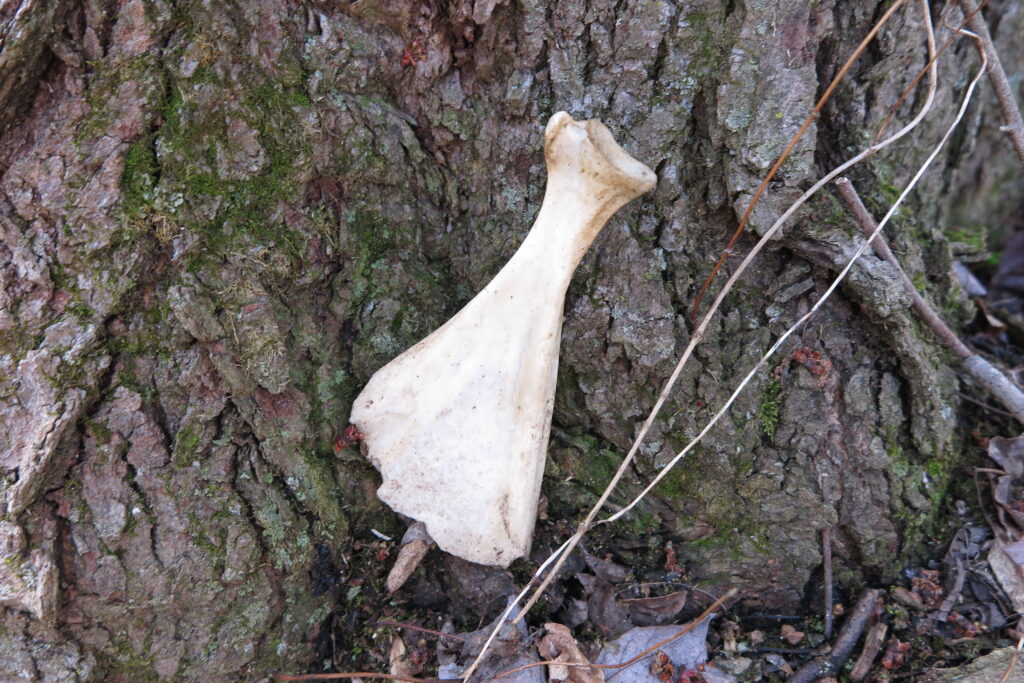
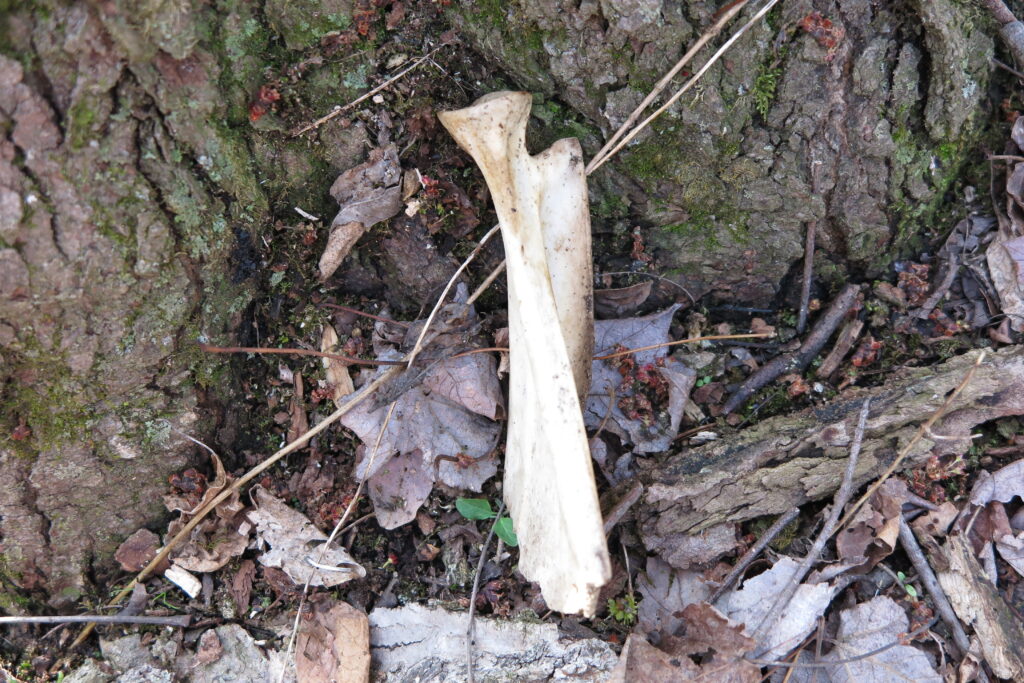
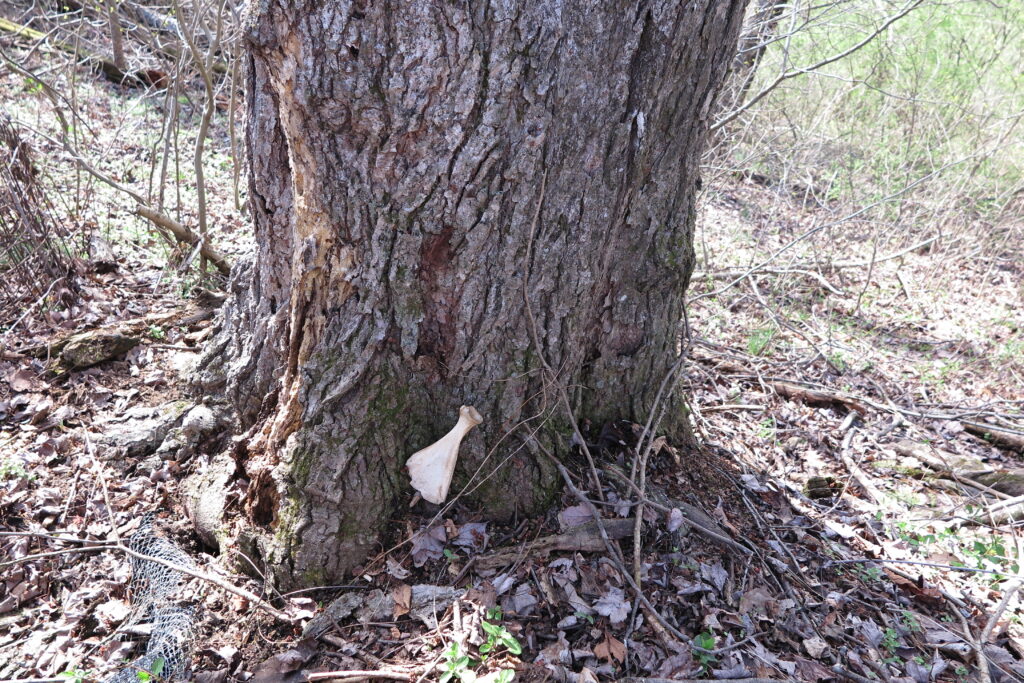
This particular scapula fragment was found resting alongside a tree, where it remained relatively clean and well preserved. Such discoveries are common because fallen leaves and surrounding vegetation can partially protect bones while still allowing them to remain visible. These conditions often preserve important identifying characteristics even after prolonged exposure.
White-Tailed Deer Bone Distribution Across the Landscape
The discovery of deer bones follows predictable patterns across many landscapes. Skeletal remains are generally more common in areas where deer spend significant amounts of time feeding, bedding, or traveling. Because white-tailed deer are highly adaptable, remains may appear in a surprising variety of locations.
Wooded environments often produce the greatest number of bone discoveries. Forests provide cover, food sources, and travel corridors that attract deer throughout the year. When animals die naturally within these habitats, skeletal remains frequently remain hidden beneath leaves until erosion or seasonal changes reveal them.
Compared to open fields, wooded locations tend to preserve bones for longer periods. Thick vegetation, fallen branches, and accumulated leaf litter can shield remains from direct sunlight and human disturbance. As a result, skeletal material often persists longer in forests than in heavily exposed environments.
Field edges represent another common discovery area. Deer frequently move between cover and feeding sites, creating travel routes where skeletal remains may eventually accumulate. Bones discovered along these transition zones often originate from animals that spent much of their lives utilizing both habitat types.
Creek corridors and drainage systems also contribute to the distribution of skeletal material. Water movement may expose previously buried bones or relocate fragments short distances. This can create isolated discoveries far from the original decomposition site.
The visibility of bones often changes with the seasons. During summer, dense vegetation can completely conceal skeletal remains. During autumn and winter, reduced plant growth makes bone discoveries significantly more likely.
Human activity can influence distribution patterns as well. Logging operations, trail maintenance, storm cleanup, and land clearing sometimes reveal remains that had been hidden for years. These disturbances frequently expose bones that would otherwise remain unnoticed beneath vegetation or soil.
Although deer bones can occur in many habitats, they are most consistently encountered in locations that combine wildlife activity with limited disturbance. These conditions increase the likelihood that skeletal remains remain intact long enough to be discovered.
White-Tailed Deer Scapula Habitat and Discovery Locations
Forest floors remain one of the most reliable locations for finding deer scapula fragments. Layers of leaves, fallen bark, and organic debris naturally accumulate around trees, creating environments where bones can persist for extended periods. The specimen documented here reflects a common discovery scenario in which a bone remains partially exposed near the base of a tree.
Trail systems frequently produce skeletal finds because they concentrate both wildlife movement and human observation. Deer regularly use natural pathways through forests, and bones located nearby are more likely to be noticed by hikers. A scapula fragment resting beside a trail often attracts attention because of its unusual shape compared to surrounding natural materials.
Field margins and woodland openings provide another productive search area. Deer commonly feed in open spaces before returning to cover, increasing the likelihood of remains occurring nearby. These locations often contain a mixture of grasses, shrubs, and scattered trees that create transitional habitat.
Water edges represent a distinct category of discovery sites. Streams, ponds, and seasonal drainage channels can expose bones through erosion. In some cases, skeletal remains emerge after heavy rainfall removes sediment that previously concealed them.
A real-world example might involve a deer that dies within a forested ravine. Over time, decomposition reduces the carcass to skeletal remains while scavengers disperse individual bones. Months later, a scapula fragment may become visible near a tree root where shifting soil and leaf litter expose its surface.
Disturbed ground can also reveal previously hidden specimens. Windthrow events, uprooted trees, and erosion frequently uncover bones that have remained buried for years. Such discoveries often appear unexpectedly following major weather events.
The condition of the surrounding habitat often provides clues about the bone’s history. Areas with minimal disturbance tend to preserve skeletal remains more effectively than heavily trafficked locations. Bones recovered from quiet forest settings frequently retain more identifiable features.
Whether discovered beside a trail, beneath a tree, along a creek bank, or near a field edge, the scapula serves as evidence of local wildlife presence. Its location often reflects both the habits of deer and the environmental processes that influence bone preservation.
Environmental Exposure and Bone Movement Processes
Once exposed to the environment, deer bones begin undergoing continuous change. Weather, moisture, temperature fluctuations, and biological activity all influence how a bone ages over time. These forces shape not only the appearance of the specimen but also its final location.
Rainfall plays a significant role in bone exposure. Water can wash away soil and leaf litter, gradually revealing skeletal remains that were previously hidden. Repeated wet and dry cycles may also alter surface coloration and contribute to cracking in older specimens.
Terrain influences how bones move across the landscape. On steep slopes, gravity can slowly transport skeletal material downhill over many years. In flatter environments, movement is often limited unless animals or water redistribute the remains.
Scavengers frequently contribute to bone dispersal. Coyotes, foxes, raccoons, and other animals may carry skeletal elements away from the original carcass site. As a result, a scapula discovered in one location may have originated from a deer that died elsewhere.
Water movement provides another method of redistribution. During heavy storms, streams can transport lighter bones downstream and deposit them along banks or gravel bars. This process occasionally concentrates skeletal material in unexpected locations.
Seasonal freeze-thaw cycles also affect preservation. Expanding ice within cracks can slowly weaken bone surfaces, while repeated freezing and thawing contributes to weathering. These processes become particularly important in temperate climates where seasonal temperature variation is common.
Vegetation can both protect and conceal remains. Thick leaf litter often shields bones from direct sunlight while simultaneously making them more difficult to locate. In contrast, exposed areas may reveal bones more readily but accelerate weathering.
The combination of decomposition, scavenger activity, weather, terrain, and vegetation ultimately determines where a bone is found and what condition it retains. Understanding these environmental influences helps explain why a white-tailed deer scapula fragment may remain well preserved in one location while becoming heavily weathered in another.
Popular Searches About Deer Scapula
Explore Deer Scapula Guide
Explore More Bones

Support Encounters World
Help support wildlife photography and get behind the scenes discoveries on Patreon.