
White-Tailed Deer Scapula Skeleton Position Guide: Where the Shoulder Blade Fits in the Skeleton
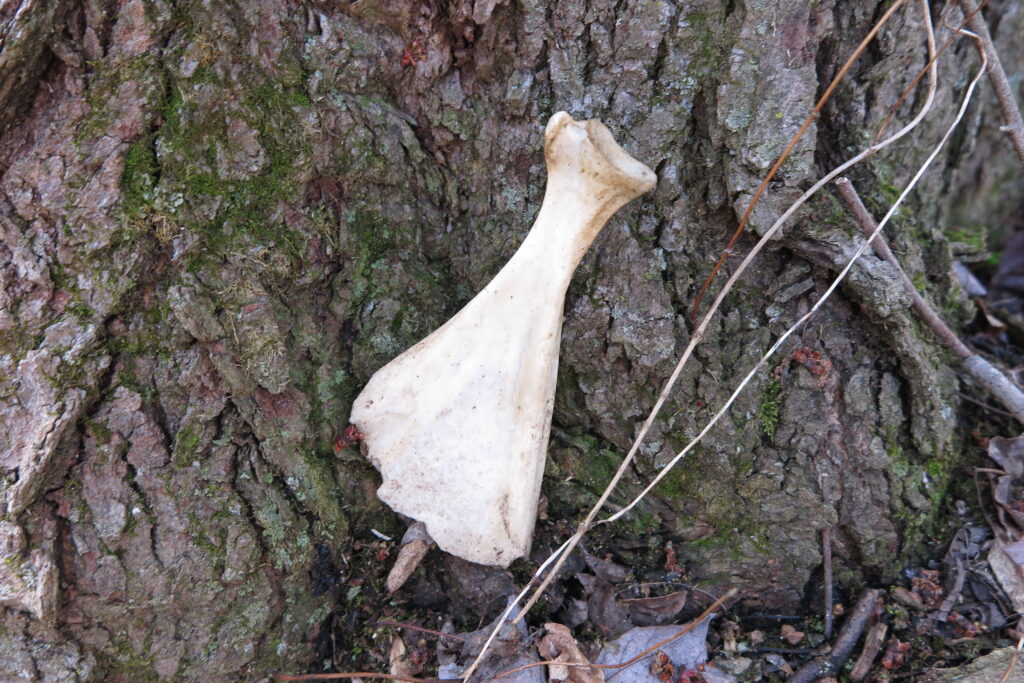
Quick Facts
Bone Type: Scapula (Shoulder Blade)
Likely Animal: White-Tailed Deer
Common Name: White-Tailed Deer Scapula
Scientific Name: Odocoileus virginianus
Bone Category: Shoulder Girdle Bone
Skeleton Position: Upper Front Limb
Connected Bones: Humerus, Axial Skeleton via Muscle Attachments
Body Region: Shoulder and Chest Area
Side of Body: Left or Right
White-Tailed Deer Scapula Position Within the Skeleton
The white-tailed deer scapula is positioned along the upper portion of the front limb, forming the shoulder blade of the animal. Unlike ribs, vertebrae, or skull bones, the scapula occupies a location between the body and the front leg. This placement makes it one of the most important bones involved in connecting the limb to the rest of the skeleton.
White-tailed deer are found across much of North America and rely on efficient movement to navigate forests, wetlands, fields, and mountainous terrain. The location of the scapula reflects this need for mobility. Its placement allows the front limbs to move freely while maintaining stability throughout the shoulder region.
When viewed on a complete skeleton, the scapula sits immediately behind the neck and above the upper front leg. The broad blade lies against the side of the rib cage, creating a smooth transition between the body and the limb. This position is noticeably different from human anatomy, where the shoulder blade rests more prominently across the back.
Many people discovering a scapula fragment in the field struggle to determine where it originally belonged. Because the bone is broad and flat, it is sometimes mistaken for part of the pelvis or rib cage. Understanding its location within the complete skeleton helps eliminate much of this confusion.
White-Tailed Deer Scapula Placement Relative to Other Bones
The scapula occupies a strategic position within the front half of the skeleton. It is located behind the skull, above the humerus, and along the outer surface of the rib cage. This arrangement places it at the center of the shoulder assembly.
Directly below the scapula is the humerus, the large upper front leg bone. The two bones meet at the shoulder joint, creating the connection that allows the leg to move through a wide range of motion. When examining a complete skeleton, the scapula serves as the upper anchor point of the front limb.
Toward the center of the body, the scapula lies adjacent to the ribs. Unlike many animals, deer do not possess a rigid bony connection between the scapula and rib cage. Instead, the shoulder blade is held in place primarily by muscles and connective tissues. This arrangement increases flexibility and contributes to efficient movement.
The neck region is positioned immediately forward of the scapula. Large muscles extend between the shoulder blade and cervical vertebrae, creating a strong connection between the head, neck, and front limbs. This relationship helps coordinate movement throughout the front portion of the body.
Viewed from the side, the scapula appears as a broad plate resting against the chest wall. Its upper border extends above the shoulder joint, while its lower portion tapers toward the front leg. This creates the familiar shoulder-blade profile seen in many large mammals.
Compared to the pelvis, which occupies the rear portion of the body, the scapula is positioned considerably farther forward. This distinction becomes especially useful when attempting to identify isolated skeletal remains. Understanding front-versus-rear skeletal placement can quickly narrow identification possibilities.
When assembled within a complete skeleton, the scapula helps define the overall shape of the shoulder region. Its location influences the appearance of the chest, upper limb, and neck. Even though it is only one component of a larger system, its placement is visually prominent.
For skeletal identification purposes, remembering that the scapula sits above the front leg and alongside the rib cage provides one of the simplest ways to understand its location within the deer skeleton.
White-Tailed Deer Shoulder Blade Connections and Orientation
The orientation of the scapula differs from many other bones in the skeleton. Rather than forming part of the central body axis like the spine, it lies along the outer side of the chest. This positioning allows it to function as a bridge between the body and the limb.
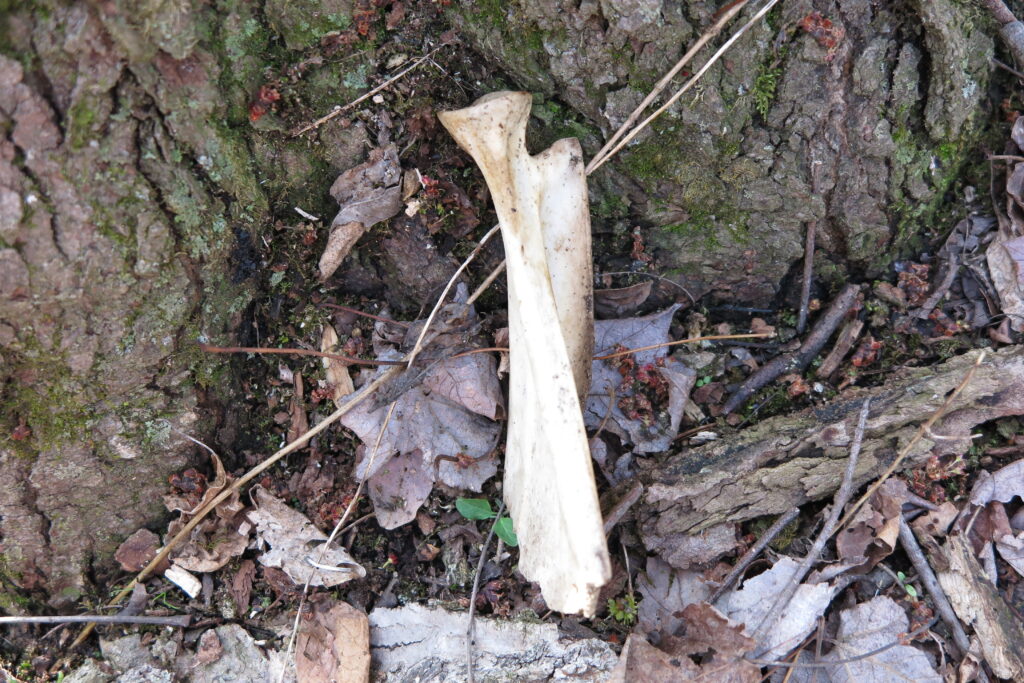
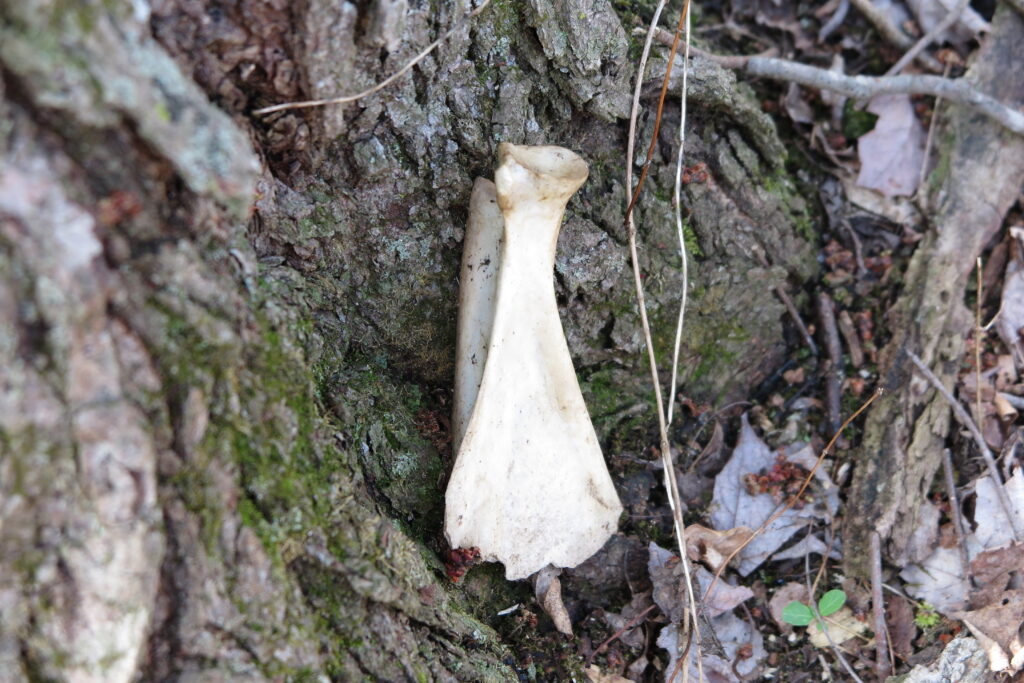
The most significant connection occurs at the shoulder joint, where the scapula meets the humerus. This articulation forms the primary skeletal link between the front leg and shoulder region. On an isolated specimen, the preserved shoulder socket often reveals exactly where this connection occurred.
The broad blade portion faces outward from the rib cage. In life, layers of muscle covered much of this surface, making the bone difficult to see externally. However, on a skeleton mount, the blade becomes one of the most noticeable features of the shoulder area.
The upper portion of the scapula points toward the spine, while the lower region extends toward the shoulder joint. This orientation creates a diagonal alignment across the side of the chest. The arrangement differs considerably from the more horizontal orientation seen in some other skeletal elements.
A useful comparison is to imagine the scapula as a suspended support plate attached to the side of the body. Rather than hanging directly beneath the spine, it rests along the chest wall and serves as the upper foundation of the front limb. This mental image often helps beginners understand its position.
The left and right scapula mirror one another across the body. Each occupies the same location on opposite sides of the skeleton. Although minor individual variation occurs, both shoulder blades follow the same general orientation pattern.
When a complete deer skeleton is viewed from the front, the scapulae sit on either side of the rib cage. From the side, they appear immediately behind the neck and above the front legs. These viewing angles provide valuable perspective for understanding skeletal organization.
Recognizing orientation is especially useful when identifying partial specimens. Even a fragment retaining the shoulder socket can reveal which end faced the leg and which portion extended toward the body.
Identifying Skeleton Position from a Scapula Fragment
One of the most common questions among bone collectors is determining where an isolated bone belonged within the skeleton. A deer scapula fragment provides several clues that help answer this question. Its broad shape immediately suggests a shoulder-region origin rather than a lower limb location.
The preserved shoulder socket serves as the strongest indicator of position. This feature identifies the end that once connected to the humerus. By locating the socket, an observer can determine which direction the front leg would have extended.
The expanding blade portion indicates the side that rested against the body. As the scapula broadens away from the joint, it creates a large surface area that occupied the side of the chest. This widening pattern provides an important orientation reference.
A practical field example involves finding a fragmented scapula beside a trail. Even without the entire bone, the surviving shoulder socket and blade section reveal that the specimen originated from the upper front limb. This allows identification despite substantial damage or weathering.
Compared to vertebrae, the scapula lacks a central spinal structure. Compared to ribs, it possesses a much broader surface area. These differences help eliminate other possible skeletal locations and focus attention on the shoulder region.
The position of the scapula within the skeleton also explains why fragments are commonly found separated from other bones. Because the shoulder blade is relatively broad and thin, portions may break away during decomposition or scavenger activity while still retaining recognizable characteristics.
Understanding skeleton position transforms a simple fragment into part of a larger anatomical picture. Instead of viewing the specimen as an isolated bone, observers can visualize its original location within a living deer. This perspective greatly improves both identification accuracy and skeletal understanding.
For anyone studying wildlife bones, learning the position of the scapula within the complete skeleton provides valuable context. The shoulder blade serves as a key landmark of the front limb system, making it one of the most informative bones for understanding overall skeletal organization.

Popular Searches About Deer Scapula
Explore Deer Scapula Guide
Explore More Bones

Support Encounters World
Help support wildlife photography and get behind the scenes discoveries on Patreon.