
White-Tailed Deer Antler Fragment Internal Composition Guide | Bone Density, Growth Structure, and Internal Material
Quick Facts
Primary Environment: Forest
Common Discovery Areas: Woodland trails, fallen logs, forest edges, deer travel corridors
Ground Condition: Leaf litter and exposed soil
Decomposition Stage: Advanced weathering with structural preservation
Scavenger Activity: Moderate
Exposure Level: Surface exposed
Climate Zone: Temperate
Season Found: Spring through Fall
Associated Species: White-tailed deer, gray squirrel, eastern chipmunk, white oak, maple, mosses
White-Tailed Deer Antler Fragment Internal Structure Overview
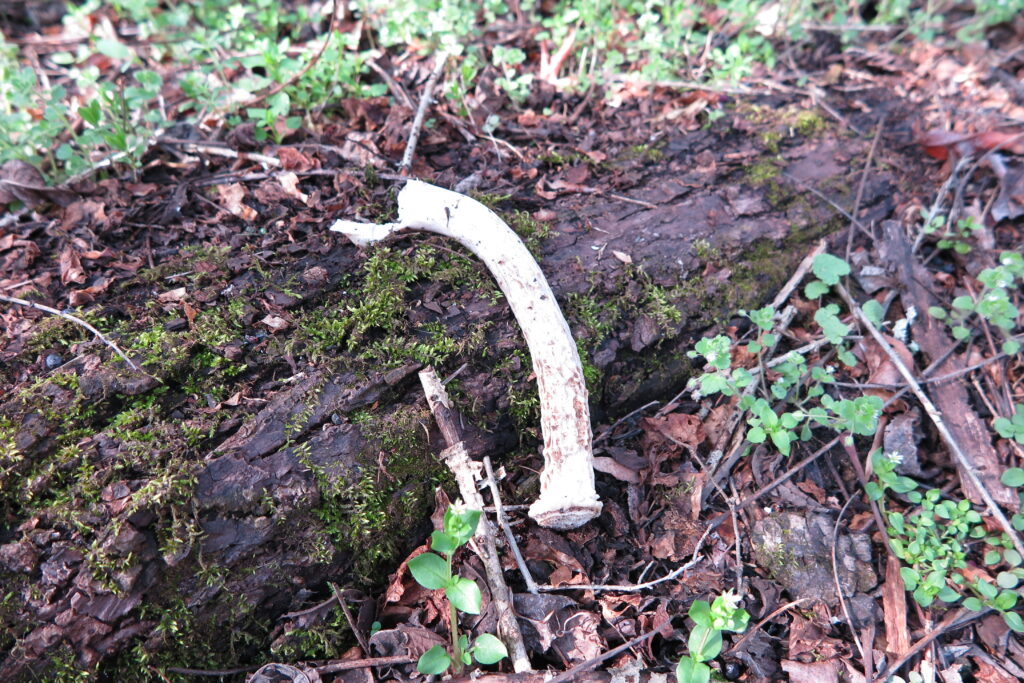
A white-tailed deer antler fragment represents a detached portion of a buck’s antler, a unique skeletal structure produced and shed during recurring annual cycles. Unlike most bones that remain permanently attached throughout an animal’s life, antlers are temporary extensions that are grown, hardened, and eventually discarded. The fragment examined here originated from an adult white-tailed deer, one of North America’s most widely distributed large mammals.
White-tailed deer occupy a remarkable range of habitats stretching across much of the United States, southern Canada, Mexico, and parts of Central America. Their adaptability allows them to thrive in forests, agricultural regions, wetlands, and suburban landscapes. As a result, antler fragments can be encountered throughout a wide geographic area wherever deer populations exist.
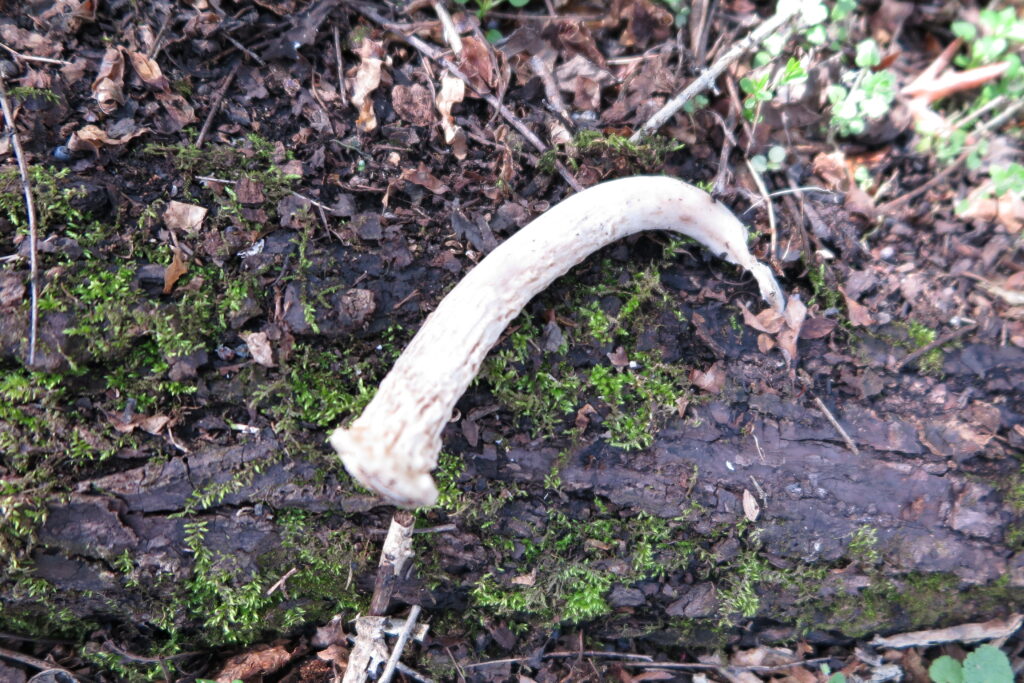
Most discoveries occur unexpectedly during outdoor exploration. A weathered section resting among leaves, partially exposed beside a trail, or perched on a fallen log often stands out because of its unusual shape and pale coloration. Even heavily aged fragments frequently retain enough detail to reveal their origin.
Although the external appearance attracts immediate attention, the interior composition tells a much deeper story. The arrangement of dense bone, porous material, and growth structures provides insight into how antlers develop into some of the fastest-growing skeletal tissues found in the animal kingdom. Understanding this internal construction helps explain why antlers remain durable long after being shed.
White-Tailed Deer Antler Fragment Internal Material and Bone Density
The interior of a white-tailed deer antler differs noticeably from many people’s expectations. While the exterior often appears solid and uniform, the internal structure contains multiple layers of bone organized to balance strength and weight. This arrangement allows antlers to become large and durable without becoming excessively heavy for the animal to carry.
Near the outer surface, antler material is composed primarily of dense compact bone. This layer forms a hard shell that resists impacts, weathering, and gradual wear. When viewed in a broken section, the compact bone often appears smoother and more tightly packed than the material found deeper inside.
Toward the center, the composition becomes increasingly porous. Small internal spaces create a lightweight framework that supports the surrounding structure. This transition from dense exterior to more open interior resembles the construction of certain engineered materials, where a strong outer shell surrounds a lighter internal core.
The contrast between these layers becomes especially noticeable in fragments with broken ends. Weathered fractures sometimes reveal the difference between compact and porous regions, offering a glimpse into the antler’s internal architecture. Even after years of exposure, these features often remain visible enough to help distinguish antler from ordinary skeletal fragments.
White-Tailed Deer Antler Fragment Growth Core and Tissue Formation
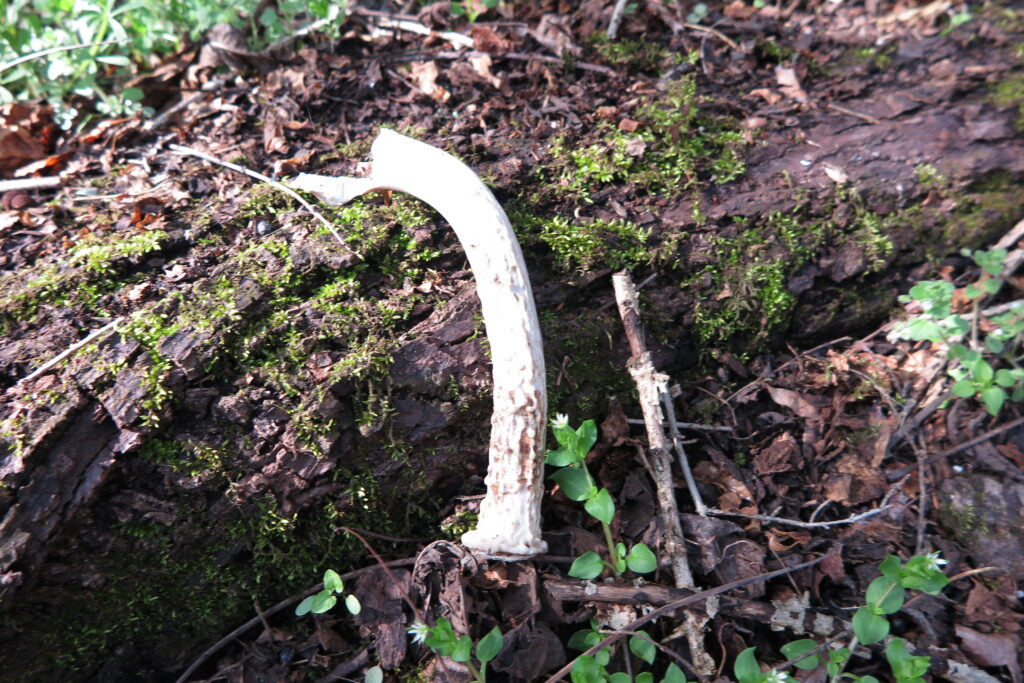
Antlers develop through a process unlike that of most permanent bones. During growth, the developing antler is covered by velvet, a living tissue rich in blood vessels that supplies nutrients to rapidly forming bone. Beneath this covering, new material is deposited and organized into the familiar branching structure associated with mature antlers.
As growth progresses, mineral content increases throughout the antler. Calcium and phosphorus become concentrated within the developing tissue, gradually transforming softer structures into hardened bone. This mineralization process strengthens the antler while preserving the overall framework established during earlier stages of growth.
Internally, growth occurs in organized layers rather than as a single uniform mass. New bone tissue forms around existing structures, creating a complex arrangement that contributes to both durability and efficiency. Similar patterns can be observed in tree growth rings, where new material is added incrementally over time, though antler growth occurs far more rapidly.
By the time the antler reaches maturity, the internal tissues have hardened into a resilient skeletal structure. Once shed, this material remains remarkably durable compared to many other biological remains. The fragment shown here retains evidence of that strength despite weathering, breakage, and prolonged environmental exposure.
White-Tailed Deer Antler Fragment Internal Changes After Shedding
The internal composition of an antler begins changing shortly after it is shed. Exposure to moisture, sunlight, temperature fluctuations, and microbial activity gradually alters both the exterior and interior surfaces. These changes occur slowly, allowing antler fragments to persist in natural environments for many years.
Weathering often affects the outer compact bone first. Small cracks may develop, and the surface can become lighter in color as environmental conditions remove pigments and organic residues. Over time, these alterations expose deeper layers that were previously protected by the dense exterior.
Animals can also influence the internal condition of shed antlers. Rodents such as squirrels and chipmunks frequently gnaw antlers to obtain minerals needed for tooth maintenance and nutrition. Their chewing may remove sections of compact bone and expose underlying porous material, creating distinctive patterns visible on weathered fragments.
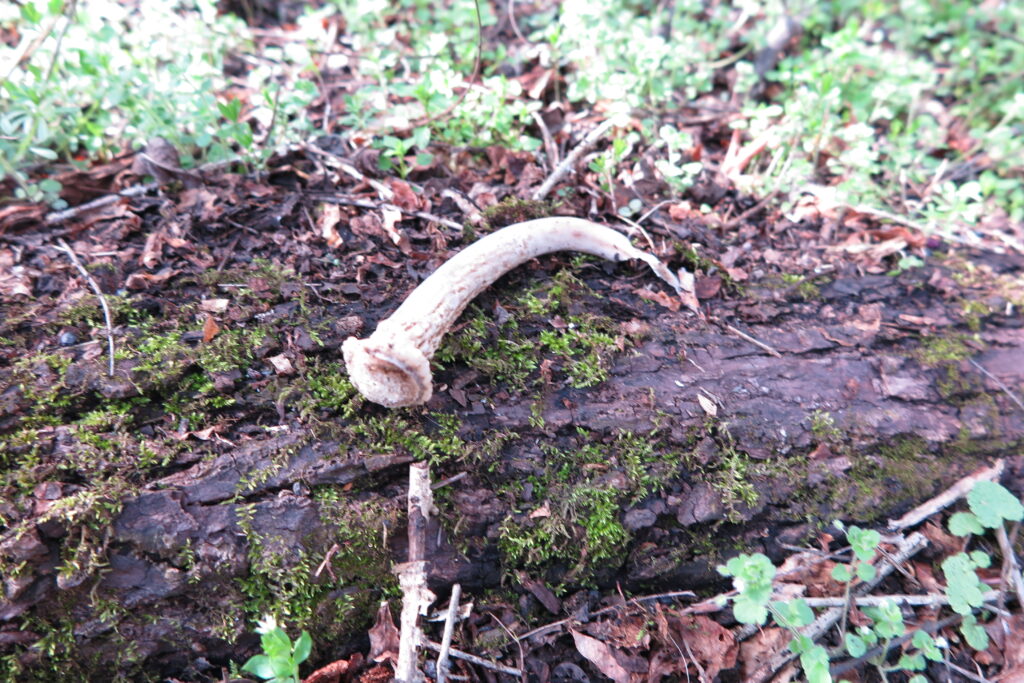
Natural breakdown eventually reaches deeper portions of the structure as environmental exposure continues. Water may penetrate cracks, freeze-thaw cycles can widen fractures, and repeated weather events slowly weaken internal tissues. Even so, antler fragments often outlast many other biological remains because of their dense mineral composition, allowing them to remain recognizable long after they have been shed from the animal that produced them.
Popular Searches About Deer Antler Fragments
Explore Deer Antler Fragment Guide
Explore More Bones

Support Encounters World
Help support wildlife photography and get behind the scenes discoveries on Patreon.