
White-Tailed Deer Antler Breakage Guide | Causes, Identification, and Natural Damage
Quick Facts
Bone Category: Antler
Primary Damage Type: Natural Breakage
Common Causes: Sparring, Impact, Falls, Weathering, Rodent Chewing
Condition: Broken and Weathered
Key Breakage Indicators: Fractured tip, rounded edges, surface wear, chew marks
Understanding White-Tailed Deer Antler Breakage
White-tailed deer antlers are remarkably strong structures, yet they are not indestructible. Throughout a buck’s life, antlers experience repeated impacts, environmental stress, and natural wear that can result in fractures or complete breakage. Many antler fragments discovered in the wild represent only a portion of what was once a much larger antler.
White-tailed deer occur throughout much of North America and occupy a wide range of habitats. Regardless of location, mature bucks depend on their antlers during displays and competition. Because these structures are used actively throughout the breeding season, damage is a natural part of the antler life cycle.
Not every antler fragment originates from a naturally shed antler. Some pieces break away while the antler is still attached to the deer, while others fracture after shedding due to environmental exposure. Determining when breakage occurred often requires examining the condition of the damaged surfaces and surrounding landmarks.
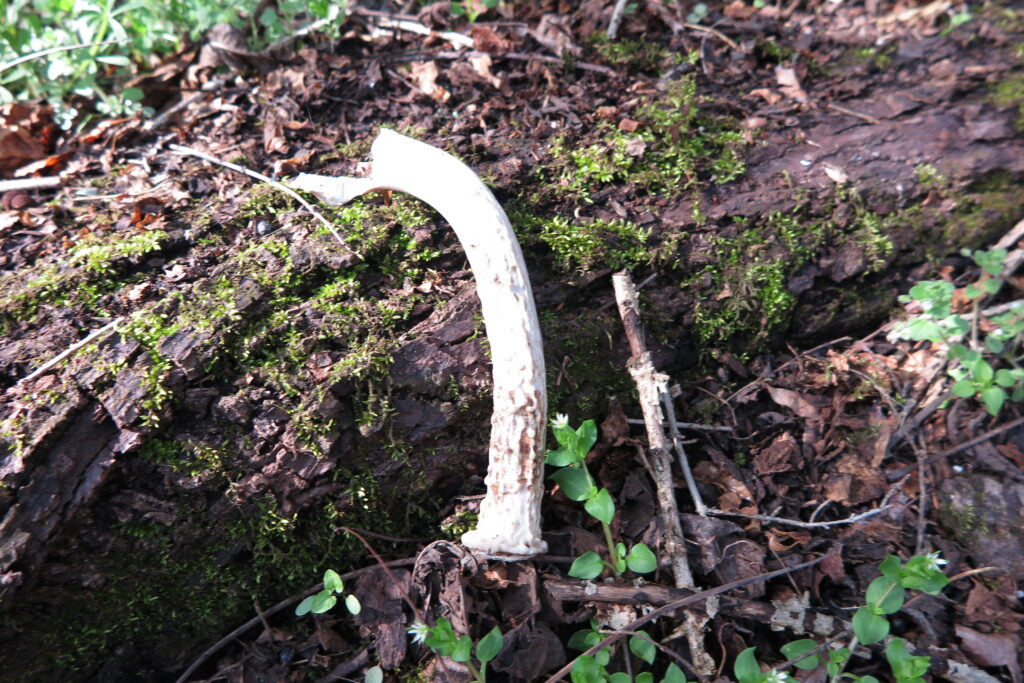
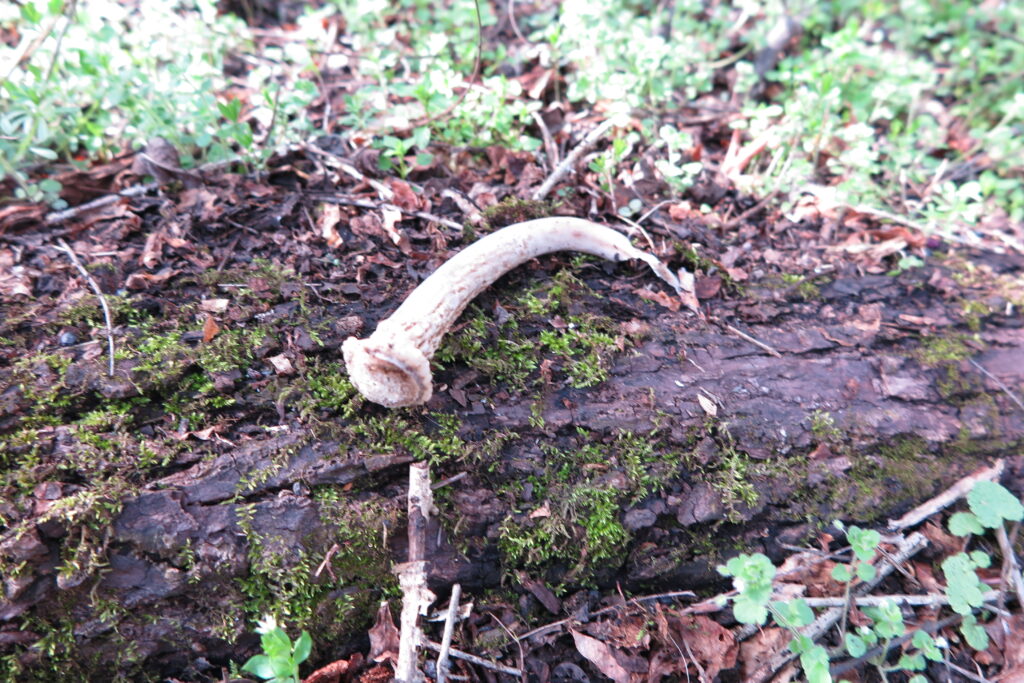
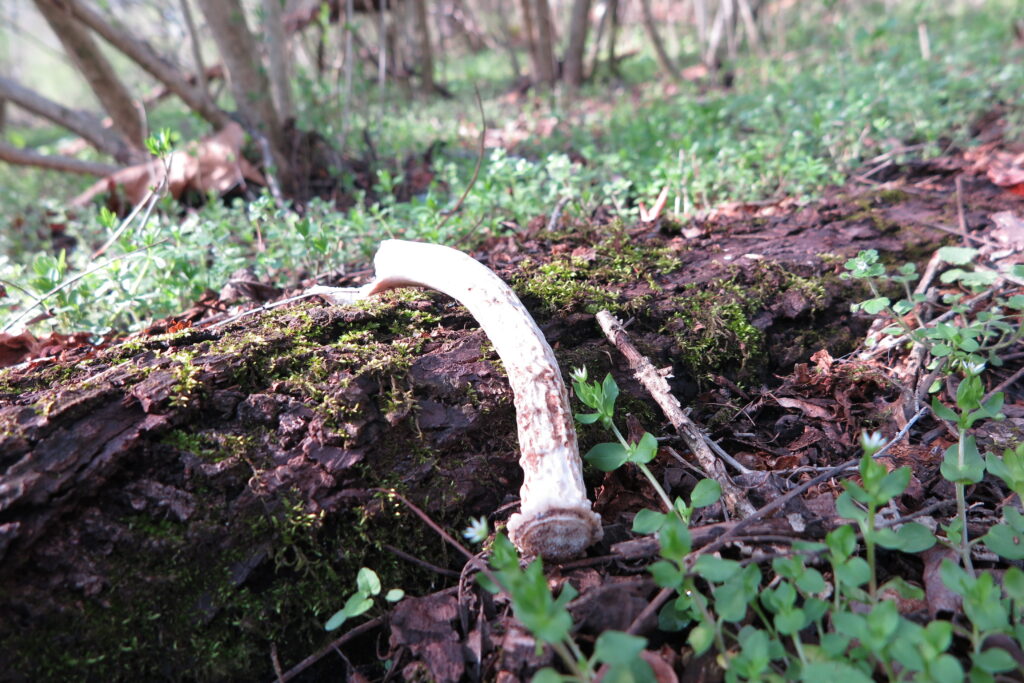
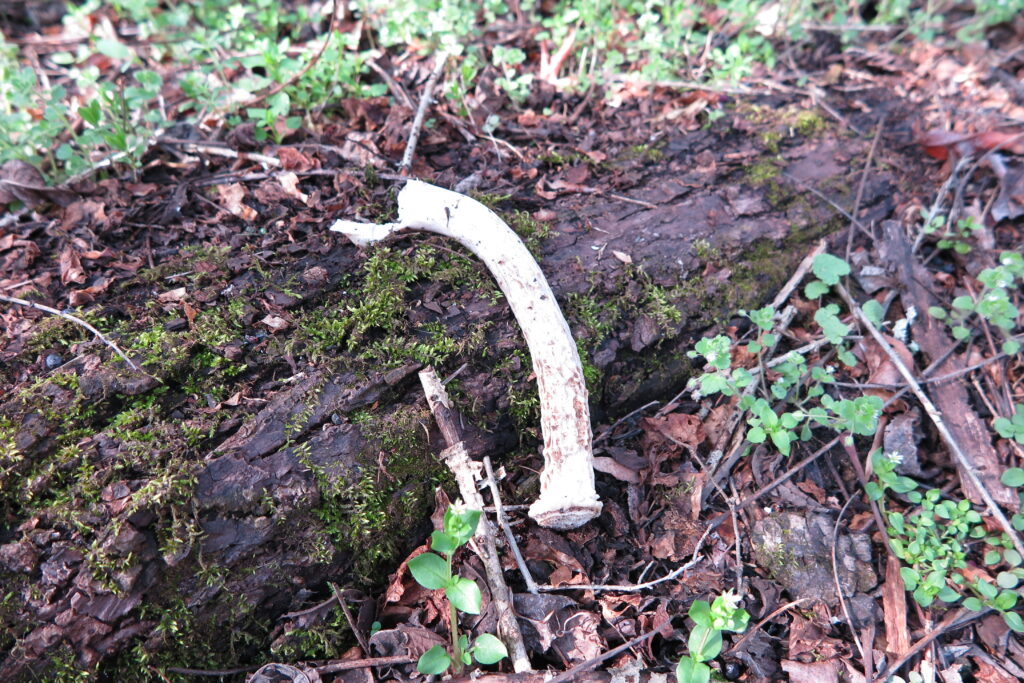
The specimen documented here shows evidence of a broken tip along with substantial weathering. Although the original antler was likely much larger, the remaining section preserves clues that help explain how antler damage occurs and how fragments change over time.
Common Causes of White-Tailed Deer Antler Damage
One of the most frequent causes of antler breakage occurs during the rut. Bucks engage in sparring contests that place considerable force on antler beams and tines. While most encounters end without serious damage, repeated impacts can weaken portions of the antler and occasionally result in fractures.
Trees and woody vegetation can also contribute to breakage. Bucks often rub saplings and shrubs while removing velvet or marking territory. These interactions repeatedly stress antler tips and branches, increasing the likelihood of damage over time.
Environmental obstacles create additional opportunities for fractures. A deer moving through dense vegetation, jumping fences, crossing fallen logs, or navigating steep terrain may strike an antler against a hard object. Similar to how a tree branch can snap under sudden pressure, antlers may break when forces exceed their structural limits.
Weathering becomes increasingly important after an antler has been shed. Exposure to sunlight, moisture, freeze-thaw cycles, and falling debris gradually weakens the material. Even a healthy antler that survived the rut intact may eventually develop fractures after years of environmental exposure.
Identifying White-Tailed Deer Antler Breakage Patterns
Broken antlers often display distinctive patterns that help reveal how damage occurred. Fresh fractures typically show sharper edges and cleaner surfaces, indicating that the break happened recently. The exposed interior may appear lighter in color than surrounding weathered areas.
Older breaks develop a noticeably different appearance. Edges become rounded, surfaces fade in color, and weathering gradually softens the original fracture. These changes can make an old break appear smoother and less dramatic than when it first occurred.
The broken tip visible on this antler fragment exhibits characteristics associated with long-term exposure. Rather than displaying sharp edges, the fracture has become worn and rounded through environmental processes. This suggests that the damage occurred well before the fragment was discovered.
Comparing breakage patterns can provide valuable clues during identification. A recently damaged antler often resembles freshly split wood, while older fractures may look more like weathered stone that has been shaped by years of exposure. These differences help observers estimate whether damage occurred recently or much earlier in the antler’s history.
What Happens to Broken Antlers After Damage Occurs
Once an antler breaks or is shed, it begins a new phase of its existence within the environment. Weathering processes immediately begin altering exposed surfaces. Sunlight fades coloration, moisture enters cracks, and seasonal temperature changes gradually modify the structure.
Wildlife interactions frequently accelerate these changes. Rodents are especially attracted to antlers because of their mineral content. Squirrels, chipmunks, and mice often gnaw exposed sections, leaving grooves and scrape marks that become increasingly visible over time.
Broken fragments may remain near their original location or become relocated by natural forces. Heavy rain can move smaller pieces downhill, while flooding may transport fragments considerable distances. Animals occasionally carry antler sections away from where they were originally shed or broken.
The fragment documented here demonstrates several stages of this process. A broken tip, visible weathering, and evidence of animal chewing all indicate that the antler continued interacting with the environment long after the original damage occurred. Rather than representing a single event, the fragment records years of exposure, wildlife activity, and natural change, making it a valuable example of how antlers evolve after breakage.
Popular Searches About Deer Antler Fragments
Explore Deer Antler Fragment Guide
Explore More Bones

Support Encounters World
Help support wildlife photography and get behind the scenes discoveries on Patreon.