
White-Tailed Deer Antler Fragment Facts Guide | Interesting Facts, Identification, and Wildlife Insights
Quick Facts
Bone Category: Antler
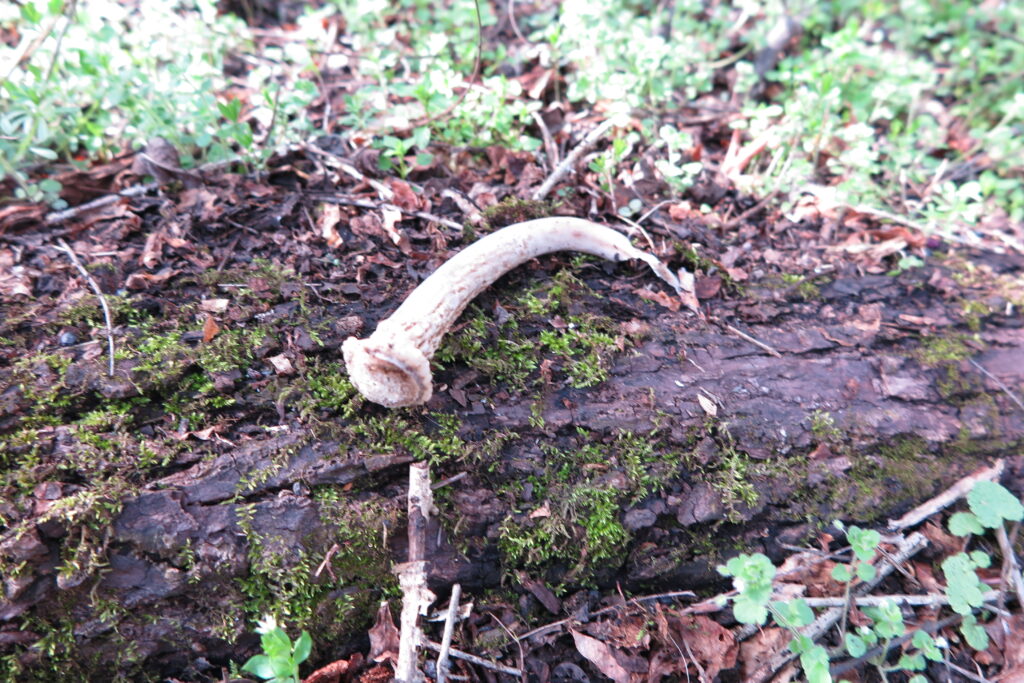
Most Distinctive Feature: Burr and curved beam structure
Annual Regrowth: Yes
Found By: Shed naturally or broken from larger antler
Wildlife Value: Mineral source for rodents and other animals
Fascinating Facts About White-Tailed Deer Antler Fragments
White-tailed deer antler fragments may appear to be simple pieces of bone, but they represent part of one of the most unusual structures found in the mammal world. Unlike permanent horns, antlers are grown, shed, and regrown every year throughout much of a buck’s life. Every fragment found in the wild once formed part of a living structure carried by a mature deer.
White-tailed deer are among the most widespread large mammals in North America. Their success across forests, wetlands, agricultural landscapes, and suburban environments means antler fragments can be encountered in many different habitats. Because millions of bucks shed antlers annually, fragments are among the most frequently discovered large mammal remains.
Many people are surprised to learn that antlers are true bone. Although they often resemble wood when weathered, antlers are composed of living tissue during growth and eventually harden into dense skeletal material. Their appearance can change dramatically after years of exposure, making identification both challenging and rewarding.
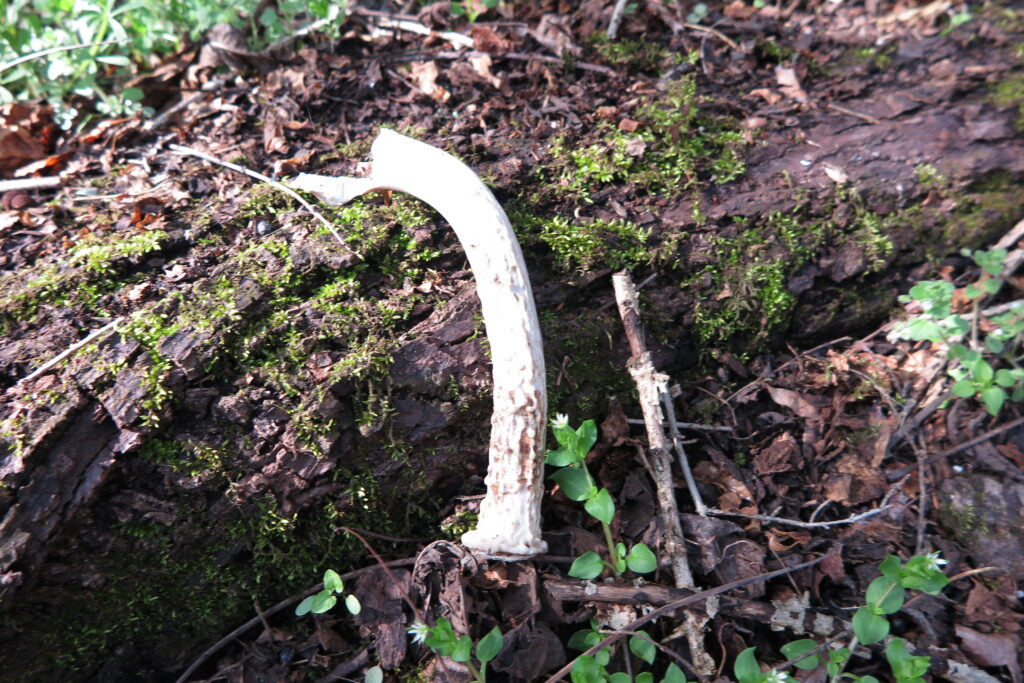
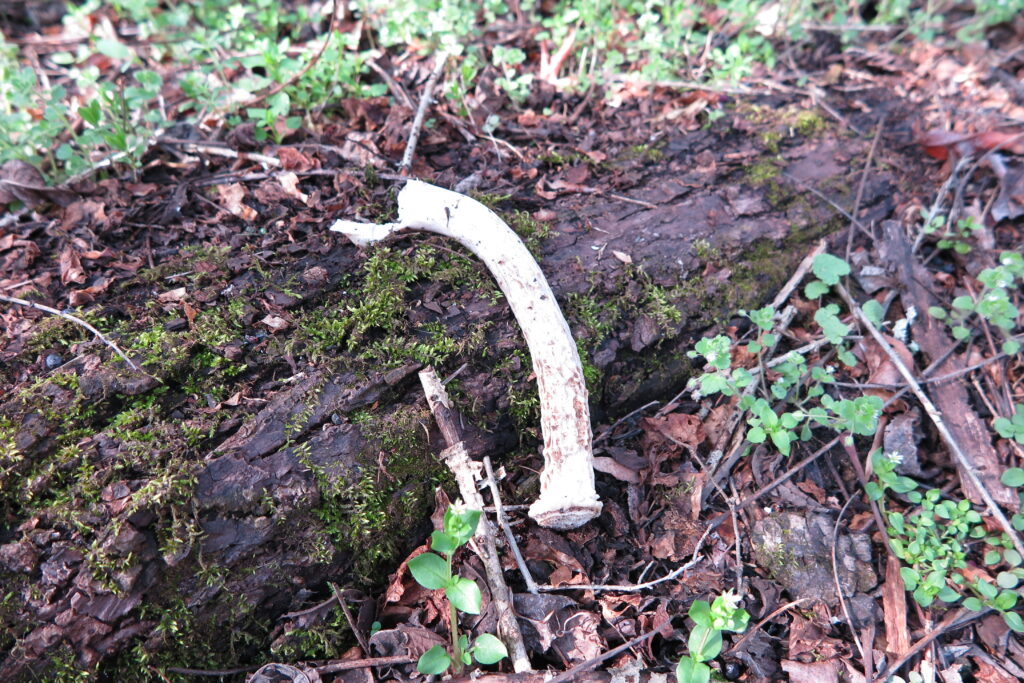
The fragment documented here preserves evidence of a much larger structure. Even though the original antler is incomplete, details such as the curved beam, visible grooves, weathering patterns, and chew marks continue to tell the story of its origin. Every fragment serves as a small record of a deer’s life and the environment it occupied.
Amazing White-Tailed Deer Antler Growth Facts
One of the most remarkable facts about deer antlers is how quickly they grow. During peak development, antlers can be among the fastest-growing bone tissues in the animal kingdom. What begins as a small growth on the skull can transform into a large branching structure within only a few months.
Growing antlers are covered by a specialized tissue called velvet. This soft layer contains blood vessels that transport nutrients and minerals needed for development. Without velvet, antlers would not be able to achieve their impressive growth rates.
Every year, bucks start over from the beginning. After shedding their previous antlers, entirely new antlers grow from structures known as pedicles located on the skull. This annual cycle continues throughout much of a mature buck’s life.
Not all antlers grow the same way. Age, nutrition, genetics, habitat quality, and overall health influence size and complexity. Two deer living in the same region may produce noticeably different antlers, which is one reason every antler fragment appears unique.
Surprising Facts About Shed Antlers and Wildlife
The story of an antler does not end when it falls to the ground. Once shed, antlers become valuable resources used by a variety of wildlife species. Rodents are particularly well known for chewing antlers to obtain minerals and maintain healthy teeth.
Squirrels are among the most common animals found gnawing shed antlers. Their chewing leaves grooves, scrapes, and worn edges that can remain visible for years. Many weathered antlers found in the wild display evidence of this activity.
Antlers also contribute nutrients back into the environment. As they gradually weather and break down, minerals become available to soil organisms, plants, and fungi. This natural recycling process allows nutrients originally used by the deer to return to the ecosystem.
The antler fragment documented here contains signs of this continuing wildlife interaction. Visible chew marks indicate that other animals likely utilized the antler after it was shed. What began as part of a living deer eventually became a resource supporting additional wildlife.
White-Tailed Deer Antler Identification Facts
One of the easiest ways to identify an antler fragment is by locating the burr. The burr forms a rough ring near the base of the antler where it was attached to the pedicle of the skull. This feature is often preserved even when other sections are damaged or missing.
Curvature provides another useful clue. White-tailed deer antlers rarely grow in straight lines and instead display sweeping bends and natural arcs. The fragment shown here retains part of this characteristic beam curvature, making identification easier.
Weathered antlers are often mistaken for wood because of their pale coloration and rough texture. However, antlers feel noticeably heavier than similar-sized pieces of wood and lack visible grain patterns. Their dense bone structure remains one of the most reliable identification features.
Perhaps the most interesting identification fact is that no two antlers are exactly alike. Just as fingerprints vary between people, antler shape, branching patterns, and overall structure differ between individual deer. Even a small fragment preserves unique characteristics that once belonged to a specific buck, making every discovery a one-of-a-kind piece of wildlife history.
Popular Searches About Deer Antler Fragments
Explore Deer Antler Fragment Guide
Explore More Bones

Support Encounters World
Help support wildlife photography and get behind the scenes discoveries on Patreon.