
White-Tailed Deer Antler Growth Guide | How Deer Antlers Develop and Regrow Each Year
Quick Facts
Growth Period: Spring through Late Summer
Species: White-Tailed Deer
Scientific Name: Odocoileus virginianus
Who Grows Antlers?: Male Deer (Bucks)
Fastest Growth Stage: Velvet Growth Period
Growth Trigger: Increasing Daylight and Hormonal Changes
Annual Regrowth: Yes
Primary Growth Material: Bone Tissue
Peak Antler Development: Late Summer to Early Fall
Understanding White-Tailed Deer Antler Growth
White-tailed deer antlers are among the most remarkable structures found in the animal kingdom. Unlike permanent horns or skeletal bones that remain largely unchanged throughout life, antlers are grown from scratch each year. This annual cycle allows bucks to produce entirely new antlers after shedding the previous set.
White-tailed deer inhabit forests, wetlands, agricultural regions, and suburban landscapes across much of North America. Regardless of where they live, mature bucks follow a similar pattern of antler development driven by seasonal biological changes. Although timing may vary slightly by region, the overall process remains consistent throughout the species’ range.
Many people assume antlers are permanent parts of the skeleton, but they are actually temporary bone structures. Each year, bucks shed their old antlers before beginning an entirely new growth cycle. The process repeats throughout much of the animal’s adult life and contributes to the variation seen among different age classes.
Antler growth represents a major investment of energy and nutrients. Bucks must dedicate significant resources toward producing these structures while also maintaining normal body functions. The result is one of the fastest examples of bone growth found in any mammal.
White-Tailed Deer Antler Growth Cycle Throughout the Year
The antler growth cycle begins shortly after the previous antlers have been shed. Following antler drop, the pedicles on the skull become active and begin producing new tissue. This marks the start of another season of development.
During spring, small antler buds emerge from the pedicles and begin expanding rapidly. At this stage, the developing antlers are covered by a specialized tissue known as velvet. Velvet contains an extensive network of blood vessels that delivers nutrients necessary for continued growth.
As spring transitions into summer, antlers increase dramatically in size. Branches known as tines begin forming while the main beam continues lengthening. Growth occurs at a remarkable pace, transforming small protrusions into complex structures within a matter of months.
By late summer, most antler development has been completed. The antlers have reached their seasonal size and shape, preparing for the next phase of the cycle. What began as soft tissue has now developed into a substantial framework of bone that will soon harden completely.
White-Tailed Deer Velvet Growth and Bone Development
Velvet plays a critical role during antler development. This soft outer covering supplies oxygen, nutrients, and minerals to rapidly growing tissues beneath the surface. Without velvet, antlers would be unable to achieve their impressive growth rates.
While the exterior remains covered in velvet, the interior gradually transforms into bone. Calcium, phosphorus, and other minerals accumulate within developing tissues, increasing strength and density. The process resembles the construction of a building, where a framework is established before being reinforced and strengthened.
The growth occurring beneath velvet is extraordinarily fast. Researchers often cite antlers as one of the fastest-growing bone tissues in the animal kingdom. During peak development, noticeable changes can occur over surprisingly short periods.
As summer progresses, blood flow to the velvet gradually decreases. The antler’s internal structure becomes increasingly hardened while the soft covering begins losing its function. This transition signals that the growth stage is approaching completion and prepares the antler for use during the breeding season.
White-Tailed Deer Antler Maturity and Annual Regrowth
Once antler growth is complete, the velvet is eventually shed, exposing the hardened bone beneath. The antlers now display the appearance most people associate with mature bucks. Their size, shape, and branching pattern reflect the growth achieved during the previous months.
Mature antlers serve as visual signals and play an important role during the breeding season. Bucks use them during displays, sparring contests, and interactions with competitors. The completed antlers represent the final product of an extensive developmental process that began shortly after the previous set was shed.
Following the breeding season, hormone levels begin changing once again. These changes eventually trigger the antler shedding process, causing the completed antlers to detach from the skull. Although the structures themselves are lost, the cycle is far from over.
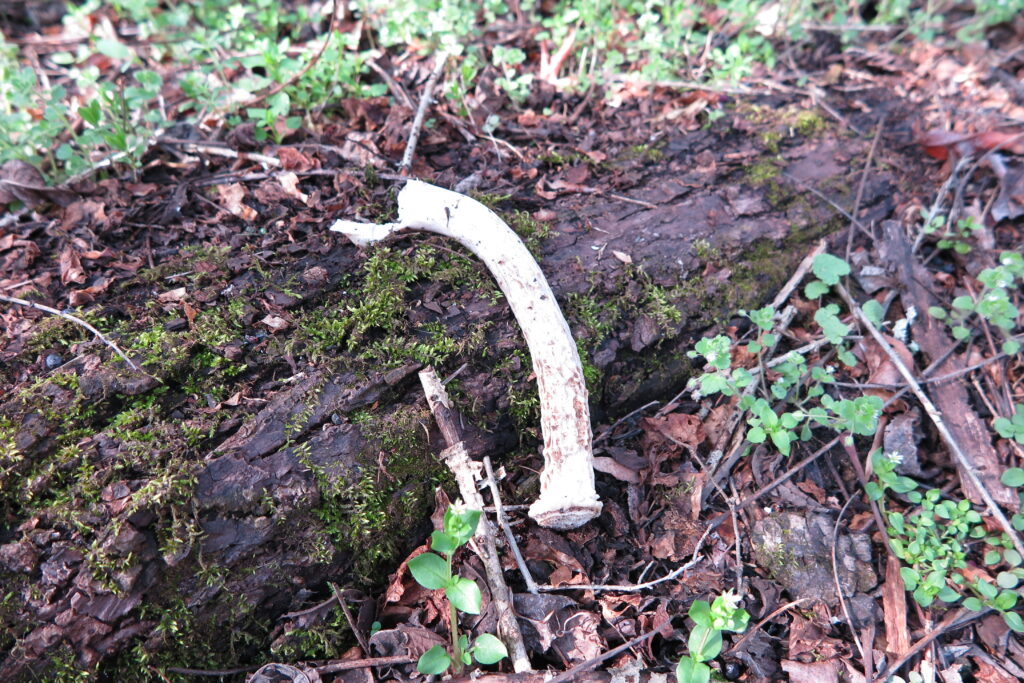
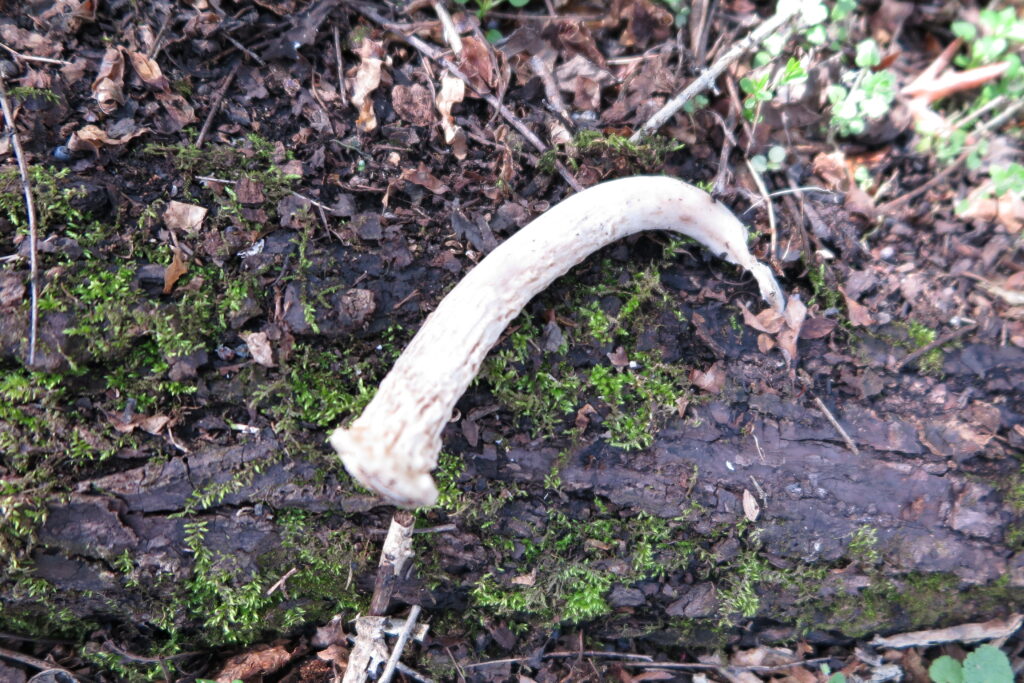
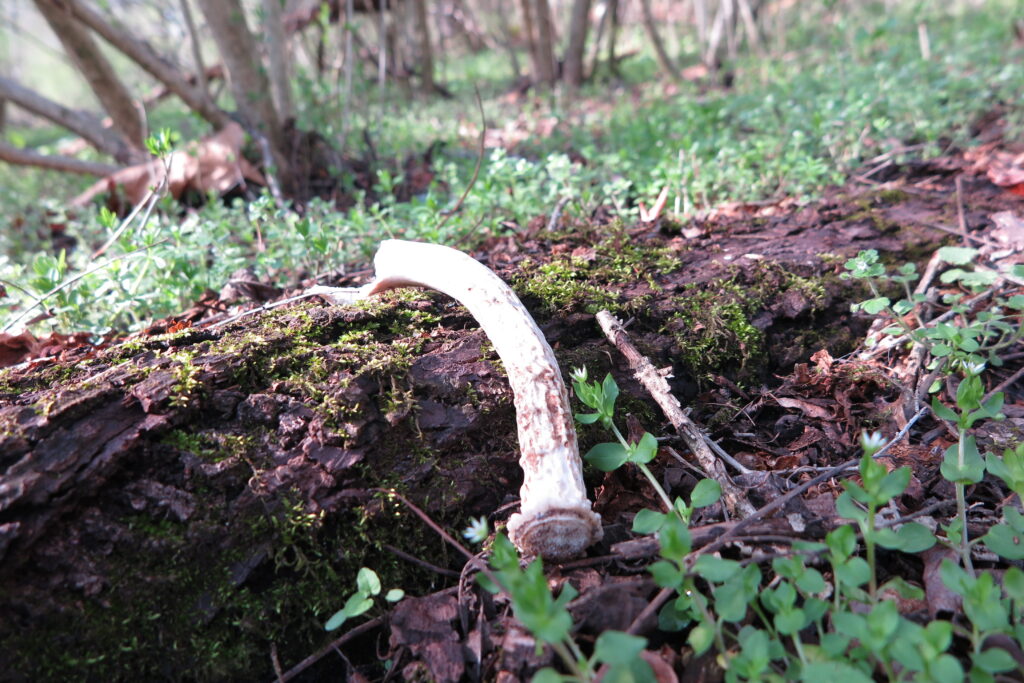
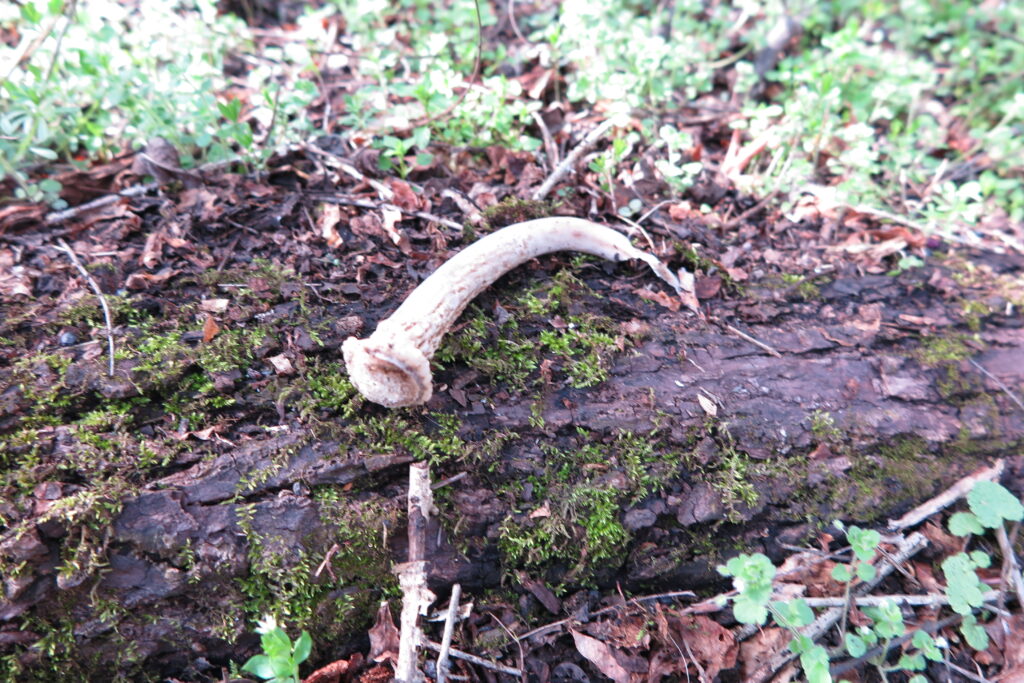
The following spring, new antlers begin growing from the pedicles once again. This continuous cycle of growth, hardening, use, shedding, and regrowth repeats year after year. The white-tailed deer antler fragment documented here was once part of that remarkable process, representing a small surviving piece of a structure that was grown, carried, shed, and eventually returned to the landscape.
Popular Searches About Deer Antler Fragments
Explore Deer Antler Fragment Guide
Explore More Bones

Support Encounters World
Help support wildlife photography and get behind the scenes discoveries on Patreon.