Red-Bellied Piranha Attack Guide: Do Red-Bellied Piranhas Attack Humans?
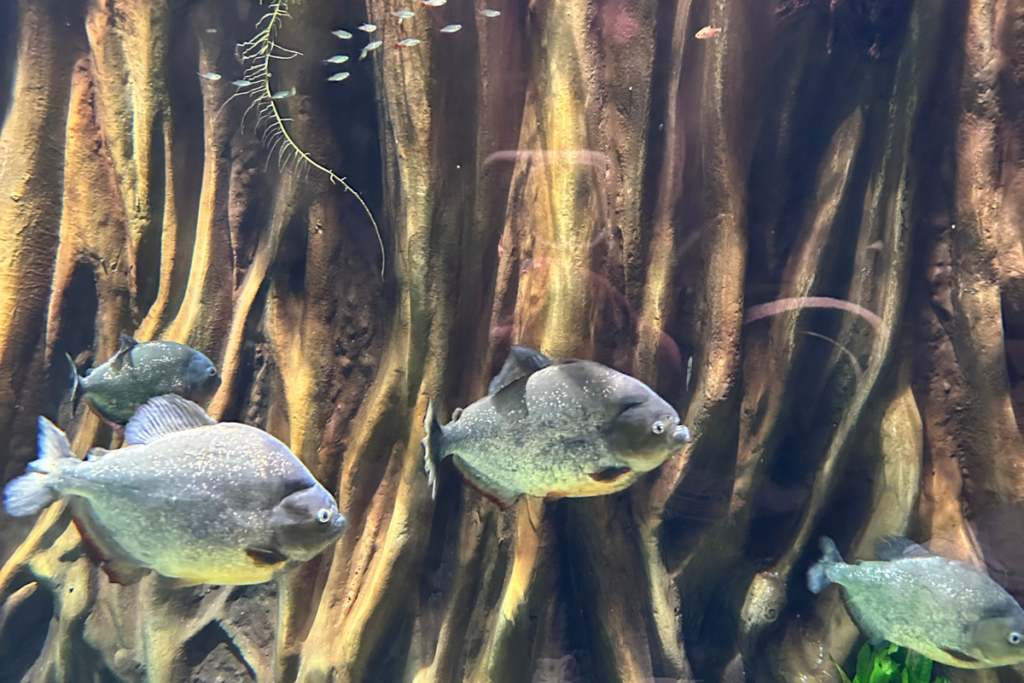
Quick Facts
Attack Frequency: Rare Toward Humans
Bite Capability: Powerful Cutting Bite
Primary Defense: Schooling and Avoidance
Human Risk Level: Low Under Normal Conditions
Global Range: South America
Notable Feature: Sharp Interlocking Teeth Designed for Precise Cutting
Red-Bellied Piranha Attack Reputation and Public Perception
The red-bellied piranha is one of the most misunderstood freshwater fish in the world. Native to the Amazon Basin, Orinoco watershed, and Paraguay-Paraná river system, this species has developed a reputation that often exceeds reality. Movies, television programs, and fictional stories have transformed the piranha into a symbol of danger, creating an image that many people immediately recognize.
For decades, dramatic portrayals have suggested that schools of piranhas routinely attack large animals and humans. These stories have become deeply embedded in popular culture and continue to influence public opinion today. As a result, many people imagine piranhas as aggressive fish constantly searching for opportunities to attack.
The reality observed by researchers and wildlife experts is considerably different. Red-bellied piranhas spend most of their lives functioning as ordinary members of freshwater ecosystems. Like many wild animals, they are far more concerned with survival and environmental awareness than with seeking confrontations.
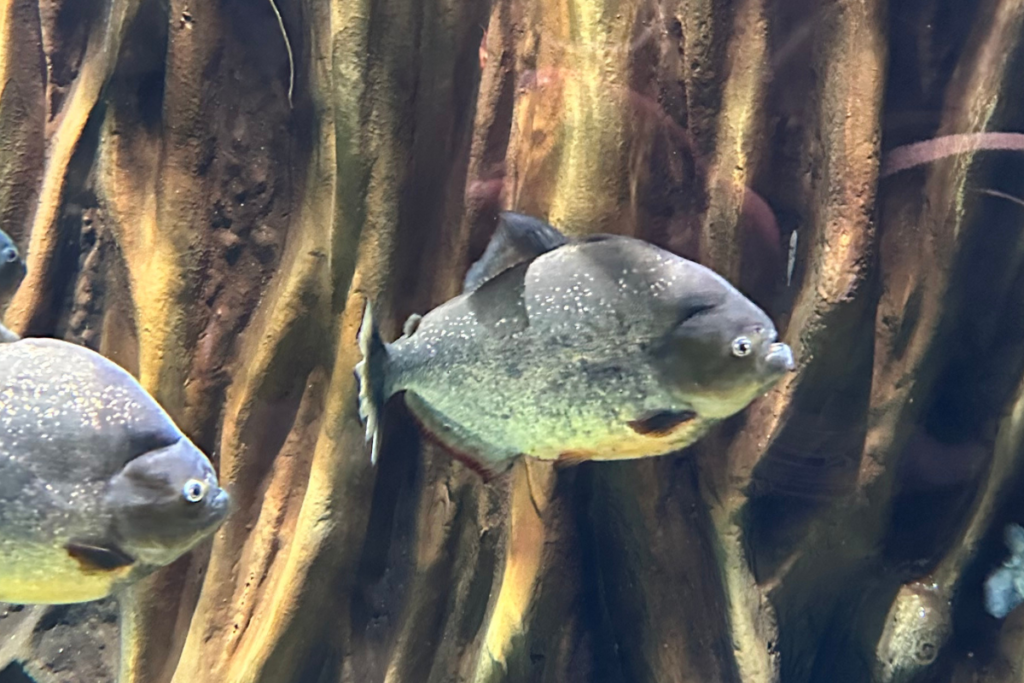
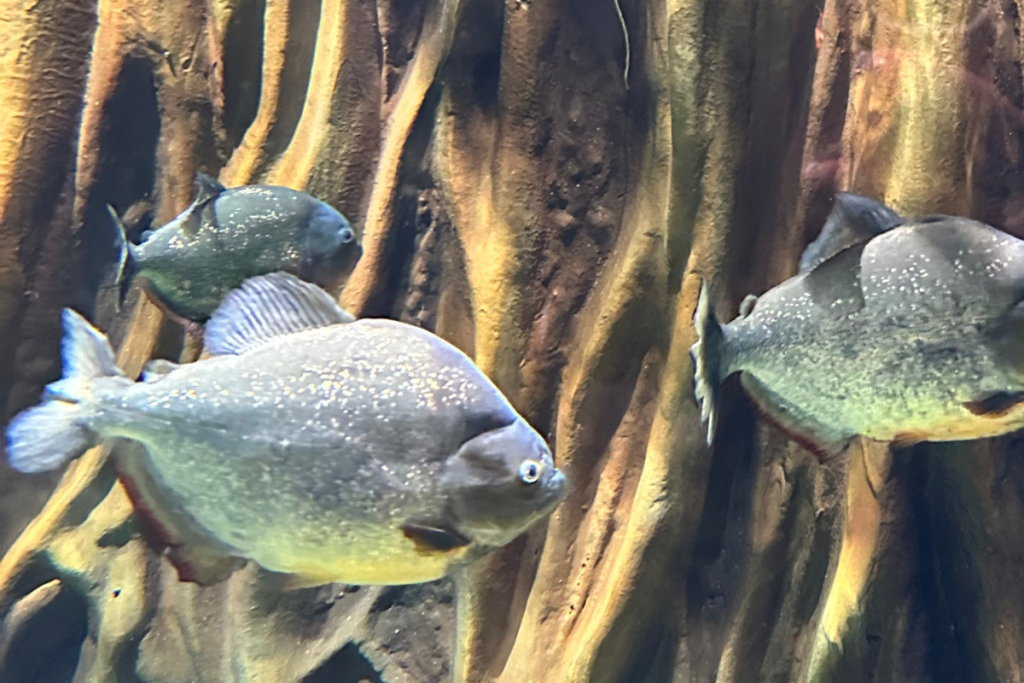
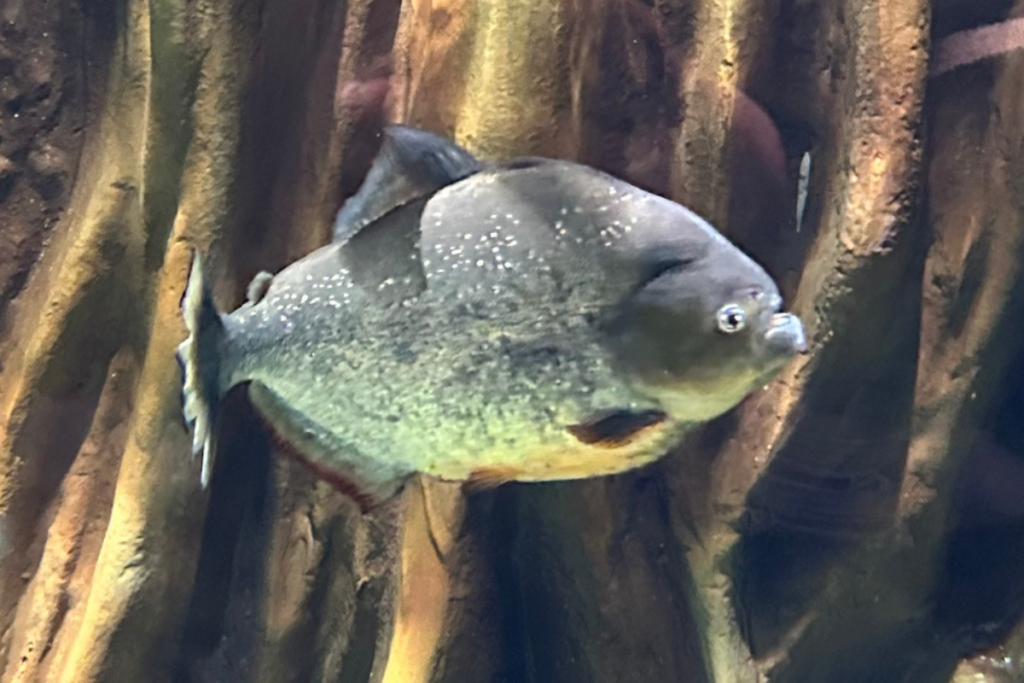
Their intimidating appearance contributes significantly to their reputation. The combination of a deep body, powerful jaws, and sharply defined teeth naturally attracts attention. When these features are combined with decades of sensationalized media coverage, it becomes easy to understand why the species has gained such a dramatic image.
Understanding piranha attacks requires separating myth from reality. While the fish is certainly capable of biting, its actual interactions with humans are far more complex than many people assume. Examining the facts provides a clearer picture of how the species truly behaves in natural environments.
Red-Bellied Piranha Bite Capability and Physical Features
The red-bellied piranha possesses one of the most recognizable jaw structures among freshwater fish. Its mouth contains rows of triangular teeth that fit together with remarkable precision. These teeth form an efficient cutting surface that has become the defining feature of the species.
Each tooth resembles a miniature wedge with sharply defined edges. Rather than being long and needle-like, the teeth are short, broad, and tightly packed together. This arrangement creates a structure often compared to a pair of scissors or a row of interlocking blades.
The jaws themselves are supported by strong muscles concentrated within the head. Despite the fish’s moderate size, these muscles generate substantial force relative to body dimensions. The result is a bite that is effective and highly specialized for its intended purpose.
Viewed closely, the teeth appear almost perfectly engineered. Upper and lower rows align with extraordinary accuracy, allowing them to function together rather than independently. Few freshwater fish possess a dental arrangement as distinctive or visually impressive as that of the red-bellied piranha.
Although these physical traits are often associated with attacks, they are fundamentally adaptations that evolved over millions of years. Their existence does not mean the fish constantly uses them against large animals. Instead, they represent one component of a much broader set of evolutionary characteristics that contribute to the species’ success.
When Red-Bellied Piranha Attacks Can Occur
Documented piranha bites on humans do occur, but they are relatively uncommon compared with the widespread fear surrounding the species. Most incidents involve isolated bites rather than the dramatic mass attacks frequently depicted in fictional stories. In many cases, environmental circumstances play a significant role.
Periods of drought can increase the likelihood of encounters. As water levels drop, fish become concentrated into smaller areas, leading to increased competition and stress. Under such conditions, the chance of accidental or defensive bites may rise compared with normal circumstances.
Injured animals entering the water can also attract attention from aquatic wildlife. Rivers contain countless organisms responding to environmental cues, and piranhas are no exception. Situations involving wounded animals often differ substantially from the everyday conditions experienced by people visiting waterways.
Another factor involves breeding-related territoriality. During certain periods, fish may become more protective of specific areas. Similar responses occur throughout the animal kingdom and can be observed in birds, reptiles, mammals, and many fish species.
It is important to recognize that most people living within piranha range enter rivers regularly without experiencing attacks. Millions of human interactions occur within South America’s waterways every year. This reality highlights how uncommon serious incidents actually are compared with the perception created by popular culture.
Red-Bellied Piranha Attacks and Their Role in Nature
The famous reputation of the red-bellied piranha often overshadows its true ecological importance. Within freshwater ecosystems, the species functions as one component of a much larger environmental network. Understanding this broader role helps place the topic of attacks into proper perspective.
Healthy ecosystems depend on a wide variety of species occupying different positions within food webs. The red-bellied piranha contributes to these relationships while also serving as prey for larger animals such as caimans, giant otters, river dolphins, and large catfish. This interconnected structure demonstrates that the fish is neither invincible nor uniquely dangerous.
Public fascination with attacks has unintentionally made the species one of the most famous freshwater fish on Earth. As a result, piranhas often serve as ambassadors for discussions about river ecosystems, biodiversity, and wildlife conservation. Their reputation attracts attention, but that attention can also create opportunities for education.
One useful comparison is the way sharks are viewed in marine environments. Although sharks are capable predators, most species pose little threat to humans under normal circumstances. The red-bellied piranha occupies a similar position in public imagination, where perception often exceeds actual risk.
The red-bellied piranha remains a powerful fish equipped with impressive teeth and jaws, but its reputation as a relentless attacker is largely exaggerated. Most interactions with humans are uneventful, and serious incidents are uncommon. By understanding the species within its ecological context rather than through myths alone, a more accurate and fascinating picture of this iconic South American fish emerges.
Popular Searches About Red-Bellied Piranha
Explore Red-Bellied Piranha Guide
Explore More Exhibits

Support Encounters World
Help support wildlife photography and get behind the scenes discoveries on Patreon.