Red-Bellied Piranha vs Pacu: Key Differences in Size, Teeth, Appearance, and Behavior
Quick Facts
Shared Family: Serrasalmidae
Biggest Difference: Teeth Structure and Adult Size
Average Piranha Size: 8–14 Inches (20–35 cm)
Average Pacu Size: 20–40+ Inches (50–100+ cm)
Global Range: South America
Notable Feature: Pacu Teeth Resemble Human Teeth While Piranha Teeth Are Triangular and Interlocking
Red-Bellied Piranha vs Pacu Overview
The red-bellied piranha and pacu are two of the most frequently confused freshwater fish in the world. Both originate from South America’s river systems and belong to the same fish family, which explains why they share a similar body shape. To an untrained observer, a juvenile pacu can appear almost identical to a piranha at first glance.
Both species occur throughout portions of the Amazon Basin and other tropical freshwater watersheds. Their overlapping geographic ranges have contributed to confusion among aquarium hobbyists, anglers, and wildlife enthusiasts. Despite their similarities, these fish follow very different evolutionary paths and develop distinct characteristics as they mature.
Young pacu often display silver coloration and deep bodies similar to those of red-bellied piranhas. When viewed in aquarium stores, small individuals are sometimes mistaken for piranhas due to their comparable profile. As they grow, however, the differences become increasingly obvious.
The comparison is similar to examining wolves and domestic dogs. While they share a common ancestry and certain physical traits, important differences emerge when viewed more closely. Understanding these distinctions helps wildlife enthusiasts identify each species accurately and appreciate their unique adaptations.
Red-Bellied Piranha and Pacu Appearance Comparison
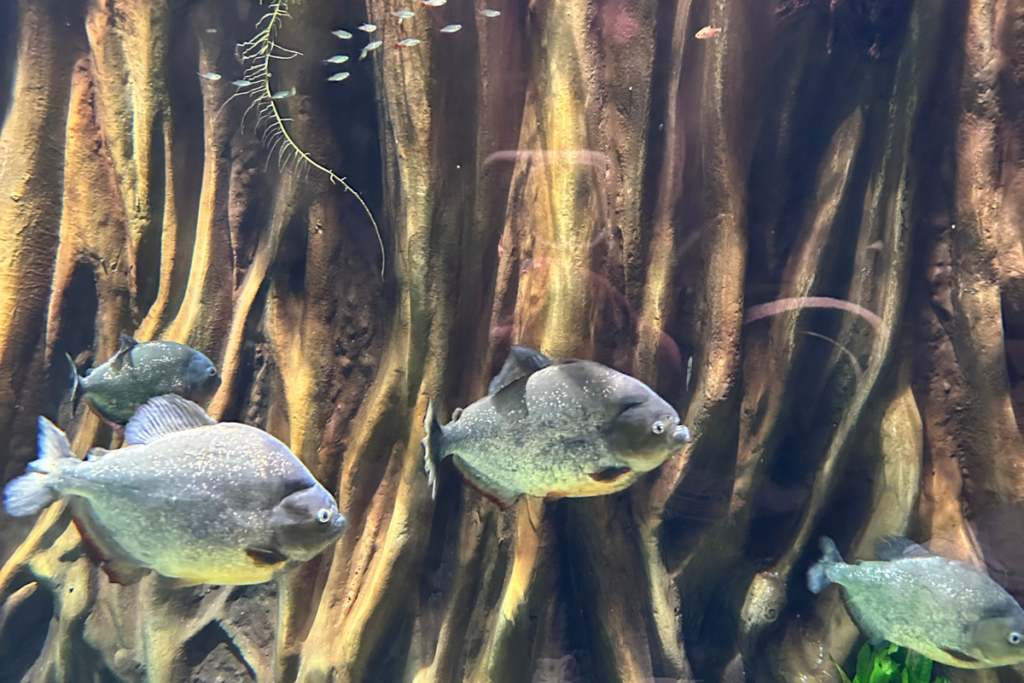
At first glance, both fish possess a deep-bodied shape that differs from the long, slender profile common among many freshwater species. Their compressed bodies create a rounded outline when viewed from the side. This shared appearance often causes people to assume they are the same type of fish.
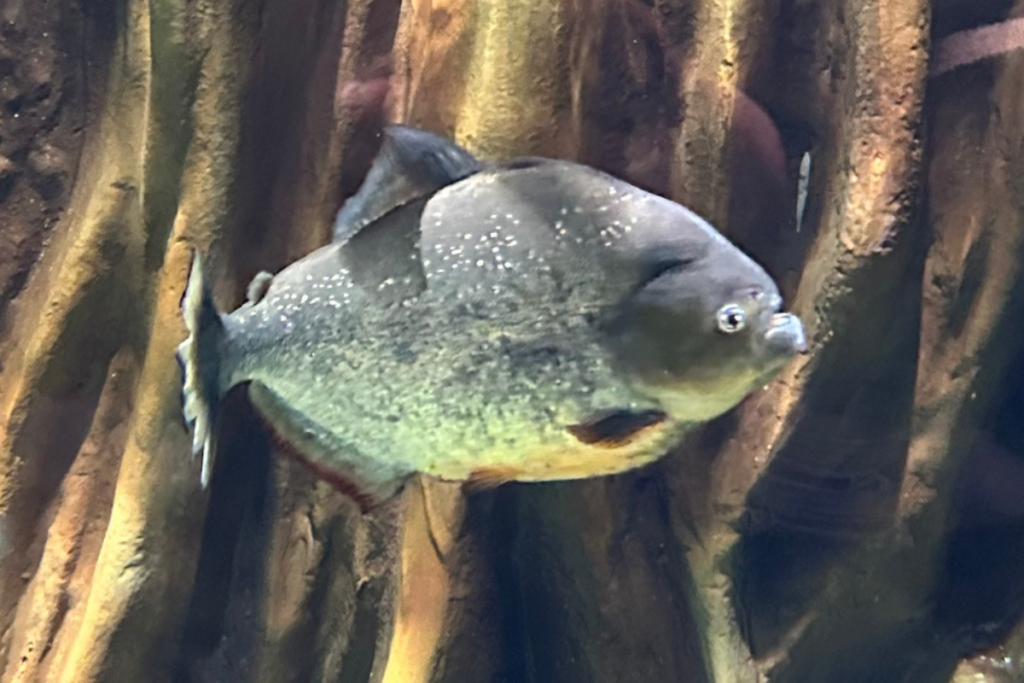
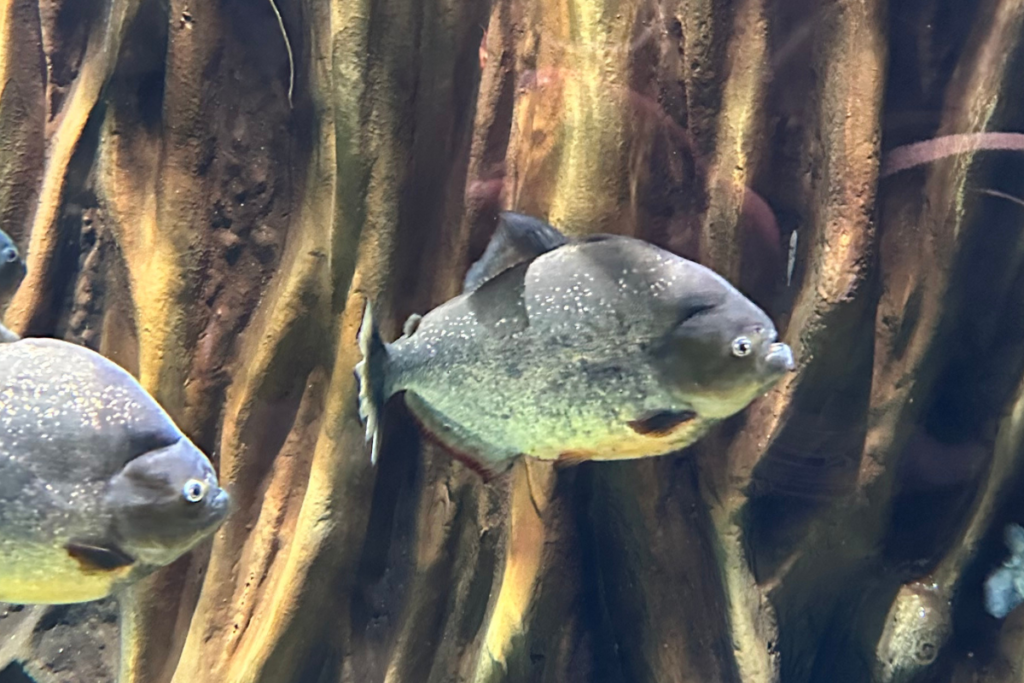
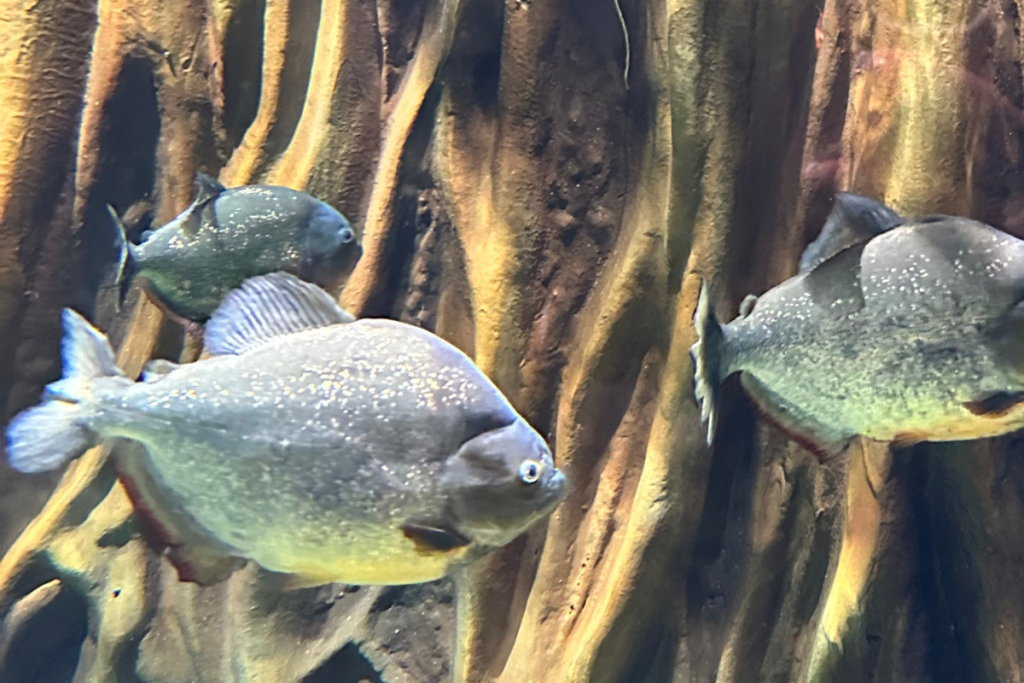
The red-bellied piranha is generally more compact and muscular. Mature individuals usually develop a bright red, orange, or reddish-gold underside that contrasts sharply with their silver-gray body. This coloration is one of the species’ most recognizable visual features and serves as an immediate clue when identifying adults.
Pacu typically display a more uniform color pattern. Most species exhibit shades of silver, gray, olive, or dark bronze without the vivid red belly associated with piranhas. Their appearance is often less dramatic but becomes impressive because of their much larger overall size.
Size differences become especially noticeable as the fish mature. A fully grown red-bellied piranha is often comparable in length to a dinner plate, while adult pacu can reach dimensions similar to a large serving tray. Some pacu species exceed three feet in length and can weigh dozens of pounds, dwarfing even the largest piranhas.
Head shape also provides useful identification clues. Piranhas possess a broader, more powerful-looking face, while pacu often develop a slightly more rounded and less aggressive profile. These differences become easier to recognize with experience and close observation.
Teeth and Physical Characteristics That Separate Piranhas from Pacu
The most famous difference between these species involves their teeth. Red-bellied piranhas possess sharp triangular teeth arranged in interlocking rows. The structure resembles a collection of miniature blades fitted together with remarkable precision.
Pacu teeth look completely different. Instead of pointed cutting teeth, pacu possess flatter teeth that often resemble human molars. This unusual appearance has generated widespread interest because photographs of pacu jaws can look surprisingly human-like at first glance.
The contrast is similar to comparing a steak knife with a set of grinding teeth. Piranha teeth form a specialized cutting surface, while pacu teeth are broader and designed for a different purpose. This distinction is one of the easiest and most reliable ways to identify the two fish.
Body proportions further separate the species. Piranhas maintain a compact, athletic build throughout life, while pacu often become noticeably bulkier as they grow. Mature pacu develop a heavier appearance that reflects their larger overall size and body mass.
Another important characteristic is growth potential. While red-bellied piranhas remain moderate-sized fish throughout adulthood, pacu continue growing far beyond what most aquarium owners expect. This difference explains why pacu are frequently surrendered to public aquariums after outgrowing home tanks.
Red-Bellied Piranha vs Pacu Role in Freshwater Ecosystems
Although they belong to the same family, piranhas and pacu occupy different ecological roles within South America’s freshwater environments. Their distinct adaptations allow them to contribute to ecosystem function in separate ways. This diversity helps support the remarkable biodiversity found throughout tropical river systems.
The red-bellied piranha is one of the most recognizable fish within South American food webs. Its physical adaptations place it within an important position among aquatic communities. These interactions contribute to the movement of energy through freshwater ecosystems and help maintain ecological balance.
Pacu play a different but equally valuable role. Many species are important contributors to seed dispersal within flooded forests and river systems. By transporting plant material through aquatic environments, pacu help connect waterways with surrounding vegetation and contribute to ecosystem health.
The relationship between these species demonstrates how closely related animals can evolve very different functions. Rather than competing for identical ecological positions, piranhas and pacu have developed characteristics that allow them to occupy separate niches. This specialization reduces competition and increases biodiversity.
Despite frequent confusion between the two, red-bellied piranhas and pacu are remarkably different animals. Their appearance, teeth, size, and ecological roles all reflect unique evolutionary histories. Learning to distinguish them provides a deeper understanding of South America’s freshwater wildlife and highlights the incredible diversity found within the same fish family.
Popular Searches About Red-Bellied Piranha
Explore Red-Bellied Piranha Guide
Explore More Exhibits

Support Encounters World
Help support wildlife photography and get behind the scenes discoveries on Patreon.