Red Ant (Myrmica Ant) Overview – Identification, Appearance, and Key Characteristics
Quick Facts
Scientific Name: Myrmica sp.
Common Name: Red Ant (Myrmica Ant)
Location: Forest edges, grasslands, gardens, and soil-rich environments
Average Size: 4–7 mm (about the size of a sesame seed)
Lifespan: Workers: several months to over a year; Queens: multiple years
Global Range: North America, Europe, and parts of Asia
Conservation Status: Not Evaluated (generally common and widespread)
Notable Feature: Distinct two-segmented waist and reddish-brown coloration
Location Observed: Pennsylvania, USA
Field Observation
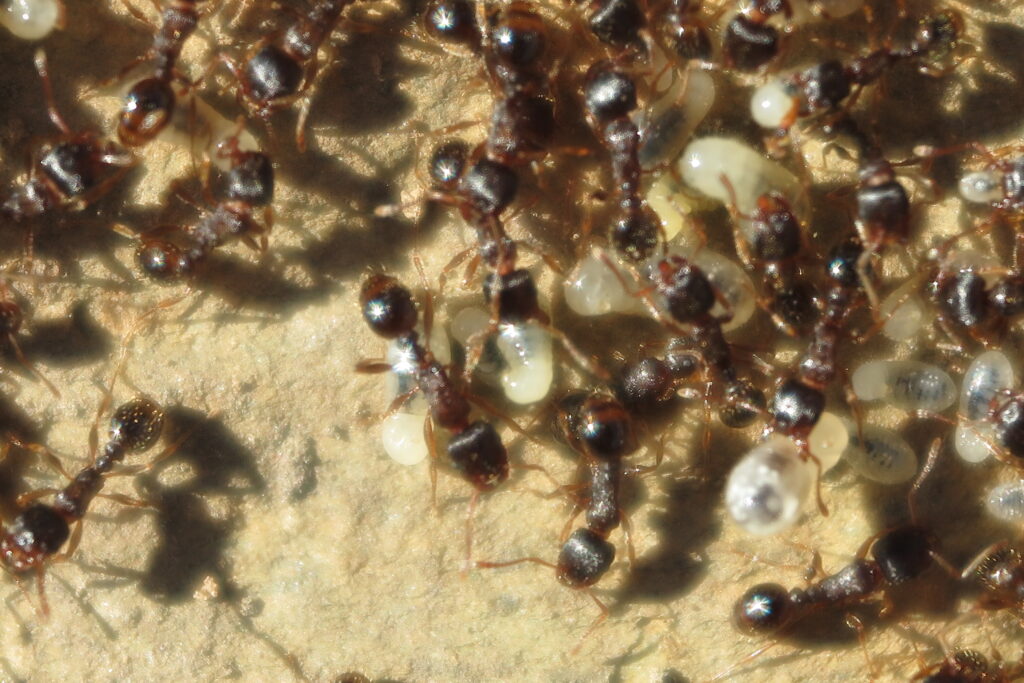
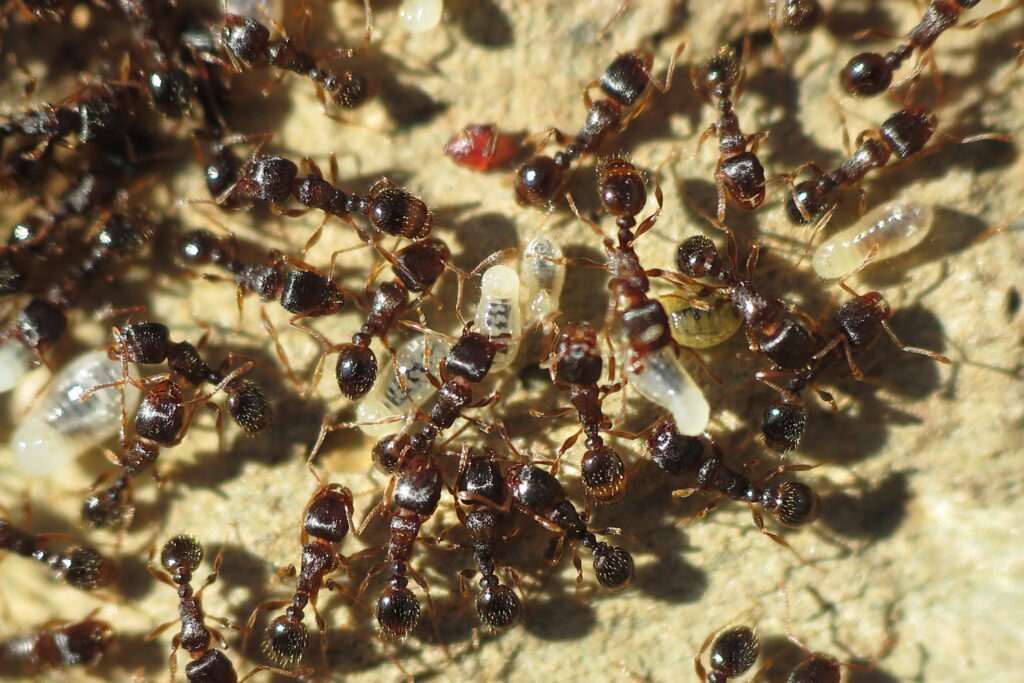
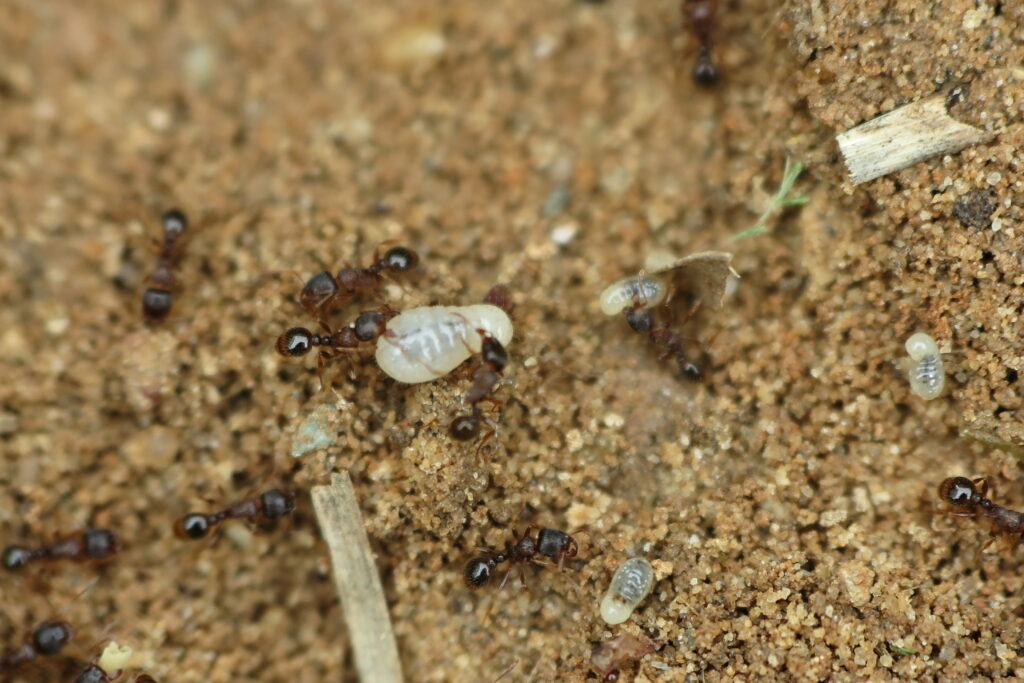
The colony moved rapidly, each worker carrying larvae straight toward underground entrances with clear purpose. Their coordination was immediate and efficient, with no hesitation or wasted motion. It was a fast, organized response that showed how tightly the group functions as a unit.
Introduction to Red Ants (Myrmica Ants) in the Wild
Red ants in the genus Myrmica are small yet highly noticeable insects often encountered in natural and semi-natural environments. Their reddish-brown coloration and active presence in soil or under debris make them one of the more recognizable ant groups for casual observers and nature enthusiasts alike. Despite their size, they create a strong visual impression when seen moving in groups or navigating open ground.
These ants are widely distributed across temperate regions of the world, with numerous species found throughout North America, Europe, and Asia. They commonly appear in places where soil remains relatively undisturbed, including woodland edges, open meadows, and even suburban lawns. Their adaptability allows them to exist across a variety of climates, from cool northern regions to more moderate environments.
When observed up close, Myrmica ants display a structured and deliberate appearance, with clearly segmented bodies and a slightly glossy surface that reflects light. Their movement often draws attention, especially when multiple individuals are visible at once, creating a sense of organized activity within their surroundings. Even without understanding their behavior, their presence adds noticeable life to otherwise still environments.
Encounters with these ants often happen unexpectedly, such as lifting a rock or stepping near a patch of exposed soil. In those moments, their numbers and coordinated movement become immediately apparent, offering a glimpse into a much larger system operating just beneath the surface. This subtle but dynamic presence is part of what makes Myrmica ants such a compelling subject for observation.
Red Ant (Myrmica Ant) Appearance and Overall Form
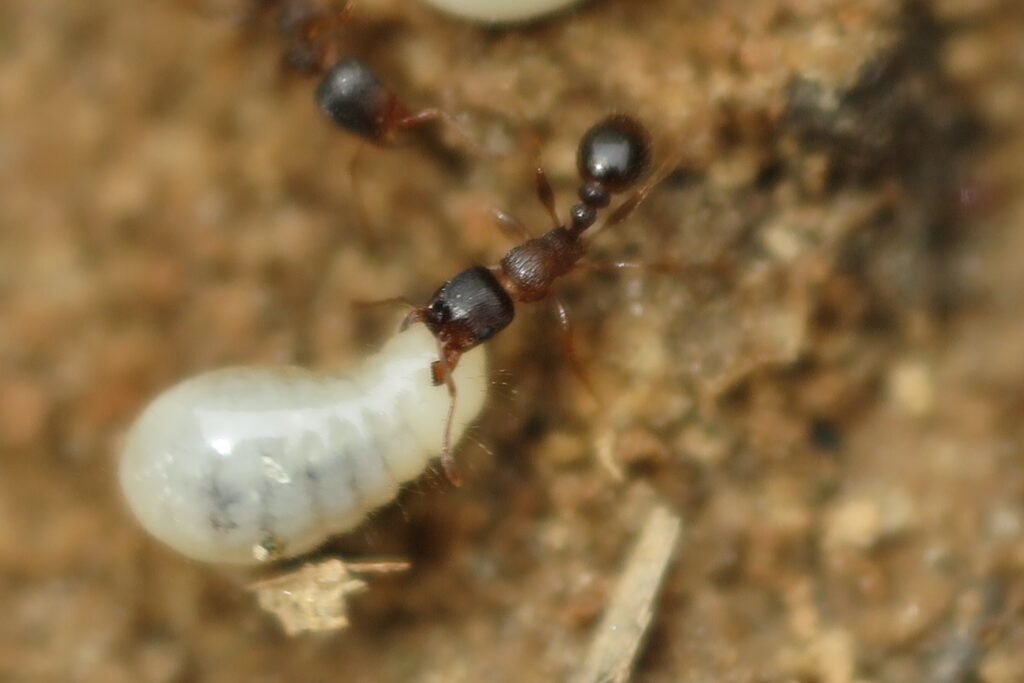
Myrmica ants are small insects with a body structure that is both compact and distinctly segmented. Their bodies are divided into three primary sections: the head, thorax, and abdomen, connected by a narrow waist composed of two visible nodes. This double-node waist is one of the most defining visual traits and helps separate them from many other common ant groups.
Coloration typically ranges from reddish-brown to dark brown, sometimes appearing almost black in certain lighting conditions. The head and thorax may display warmer reddish tones, while the abdomen often appears darker and slightly shinier. This subtle contrast gives the ant a layered look, especially when viewed under natural sunlight.
In terms of size, these ants are quite small, usually measuring between 4 and 7 millimeters in length. To put that into perspective, an individual worker is roughly comparable to a sesame seed or slightly larger grain of rice. Despite their small size, their proportions are well-defined, making their features surprisingly easy to distinguish in close-up views.
When seen in the wild, Myrmica ants often appear sleek and slightly elongated compared to bulkier ant species. Their legs are relatively long for their body size, giving them a more agile and mobile appearance. This structure allows them to move efficiently across uneven surfaces such as soil, leaf litter, and small debris, where their shape helps them navigate tight spaces with ease.
General Characteristics of Myrmica Ants and Key Identifiers
One of the most recognizable features of Myrmica ants is their two-segmented waist, technically known as the petiole and postpetiole. This structure creates a noticeable break between the thorax and abdomen, forming a distinct profile when viewed from the side. Many other ants have only a single node, making this a key identifying trait.
Their antennae are another defining characteristic, consisting of multiple segments with a slight bend near the middle. These antennae are constantly in motion, giving the ants a sense of alertness and responsiveness even when standing still. The head itself is proportionally large compared to the rest of the body, adding to their distinct silhouette.
Compared to similar ants such as pavement ants (Tetramorium), Myrmica ants tend to have a more slender and less blocky appearance. Pavement ants often appear darker and more compact, while Myrmica ants have a lighter tone and more elongated proportions. This difference becomes especially noticeable when observing them side by side.
Another subtle but important feature is the texture of their bodies. Rather than being completely smooth, Myrmica ants often display a slightly rough or finely sculpted surface, particularly on the thorax. This texture can catch light differently, giving them a less glossy and more matte appearance in certain angles, which further helps distinguish them from smoother-bodied species.
Ecological Role of Red Ants (Myrmica Ants) in Nature
Myrmica ants play an important role in maintaining balance within their ecosystems, even though they are often overlooked due to their size. As part of the broader ant community, they contribute to soil health and structure, indirectly supporting plant growth and nutrient cycling. Their constant presence beneath the surface influences the physical makeup of the ground over time.
These ants are also a key component of the food web, serving as a food source for a variety of animals. Birds, amphibians, and small mammals may rely on ants as part of their diet, making them an important link between lower and higher levels of the ecosystem. Their abundance ensures that they remain a reliable resource for many species.
In addition to their role as prey, Myrmica ants contribute to the breakdown and redistribution of organic material. As they move through soil and debris, they help shift small particles and contribute to the gradual mixing of organic and mineral layers. This process supports healthier soil conditions and improves the overall environment for plant life.
Their presence can also influence the distribution of other small organisms. By occupying space and interacting with their surroundings, they help shape microhabitats that other insects and microorganisms depend on. While these effects may not be immediately visible, they are part of a larger system that keeps ecosystems functioning smoothly and efficiently.