Why Do Ants Carry White Eggs? (What Ants Are Really Holding Explained)
Quick Facts
Location: Soil, gardens, forests, and open ground
Average Size: 4–7 mm (about the size of a sesame seed)
Lifespan: Workers: months to over a year; Queens: multiple years
Global Range: North America, Europe, and parts of Asia
Conservation Status: Not Evaluated (common and widespread)
Notable Feature: Carries white brood (larvae and pupae) during colony activity
Introduction to Why Ants Carry White Eggs in the Wild
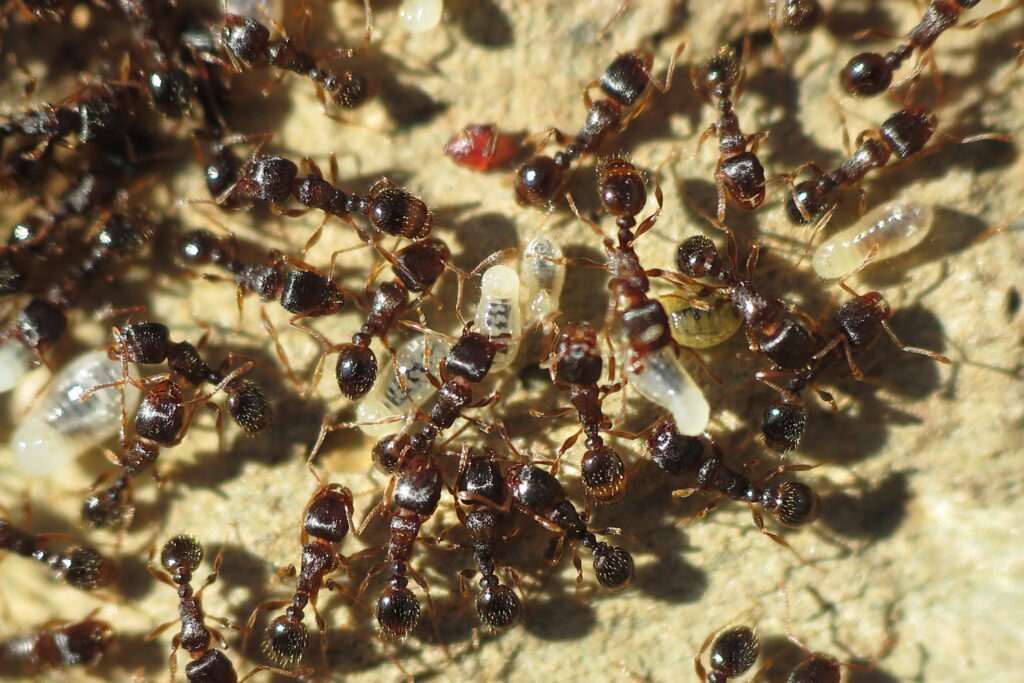
Seeing ants carrying small white objects often raises immediate curiosity. These bright, rice-like shapes stand out against darker soil, making them one of the most noticeable behaviors during an ant encounter. At first glance, they are commonly assumed to be eggs, but what ants are actually holding is slightly different and more complex.
Red ants in the genus Myrmica are frequently observed displaying this behavior across temperate regions of North America, Europe, and Asia. They are commonly found in environments where soil can be easily disturbed, such as gardens, trails, or forest edges. When their colony is exposed, this activity becomes highly visible as ants rapidly move these white forms.
These white structures are part of the ants’ developmental stages, representing larvae and pupae rather than true eggs. Unlike eggs, which are extremely small and difficult to see, these later stages are larger and easier to handle. Their size and pale color make them stand out clearly when carried above ground.
Moments like this provide a rare glimpse into the inner workings of an ant colony. What appears to be a simple action is actually part of a larger system focused on maintaining and protecting the next generation. This brief exposure reveals an otherwise hidden aspect of ant life beneath the surface.
What Ants Are Really Carrying – Appearance and Identification of White Brood
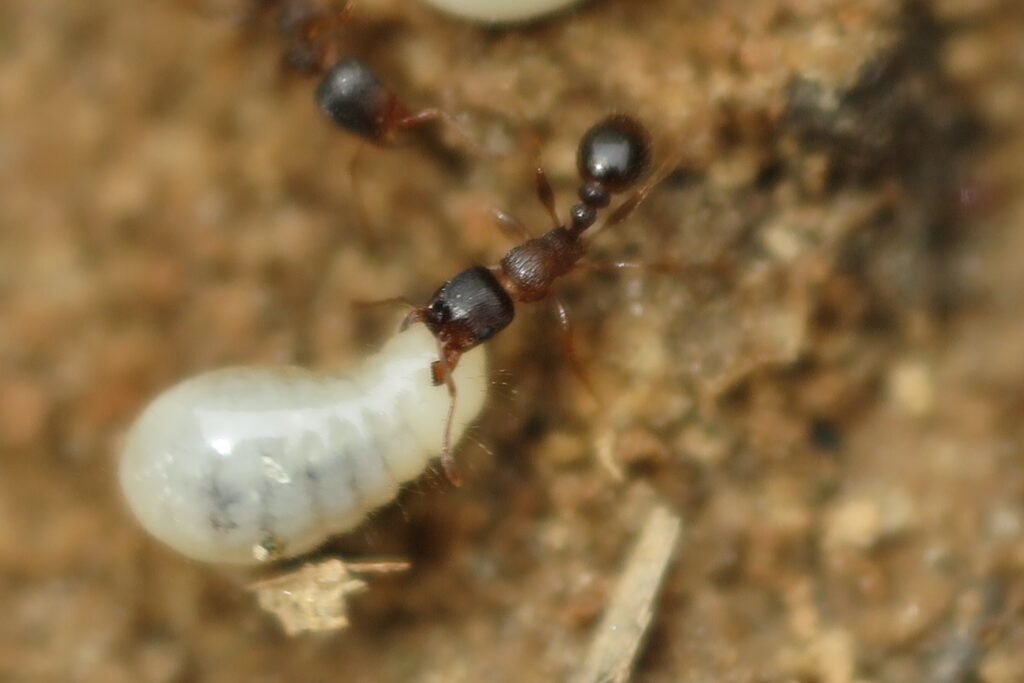
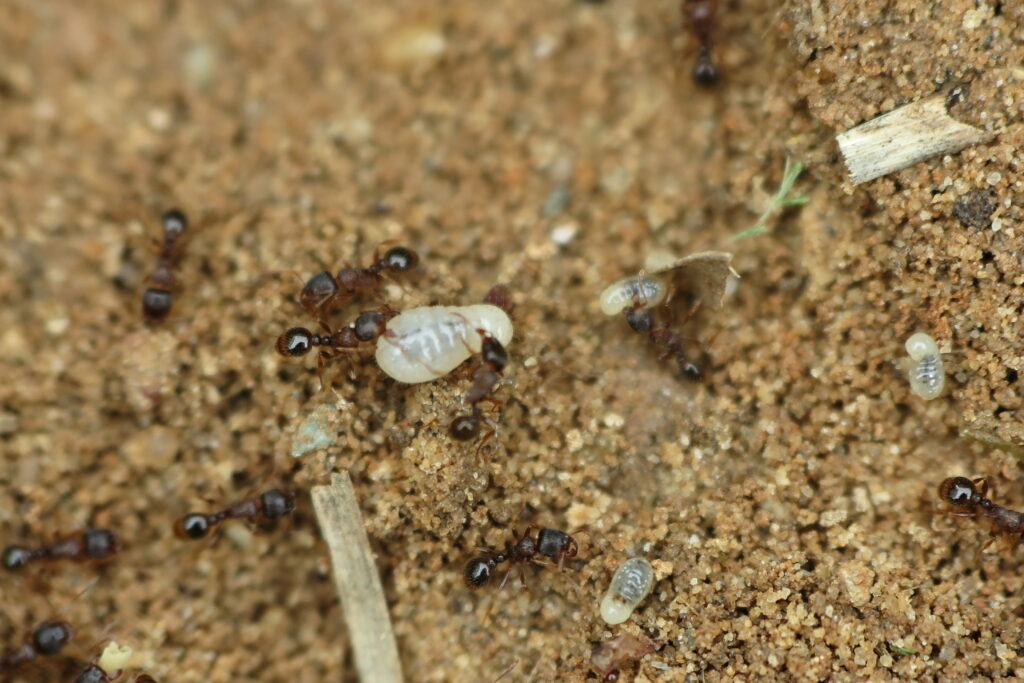
The white objects carried by ants are most commonly larvae or pupae, each representing a different stage in the ant’s life cycle. Larvae are soft, curved, and slightly translucent, often resembling tiny grains of rice or small maggots. Pupae, on the other hand, tend to appear more solid and oval, sometimes showing faint segmentation.
In Myrmica ants, these brood stages are noticeably larger than eggs and are easier for workers to grip and transport. Eggs themselves are extremely small and rarely seen during surface activity. The larger size of larvae and pupae is what makes them the primary focus when ants are observed carrying white objects.
Coloration plays an important role in visibility. The pale white or cream color contrasts sharply with the darker tones of soil and the reddish-brown bodies of the ants. This contrast makes the brood highly visible, even from a distance, especially when multiple ants are carrying them at once.
When viewed in the wild, the brood appears delicate and carefully handled. Each piece is carried individually, often held securely in the ant’s mandibles. This precise handling highlights the importance of these life stages, as they represent the future members of the colony.
Key Characteristics of Ant Brood and Why It Looks Like “Eggs”
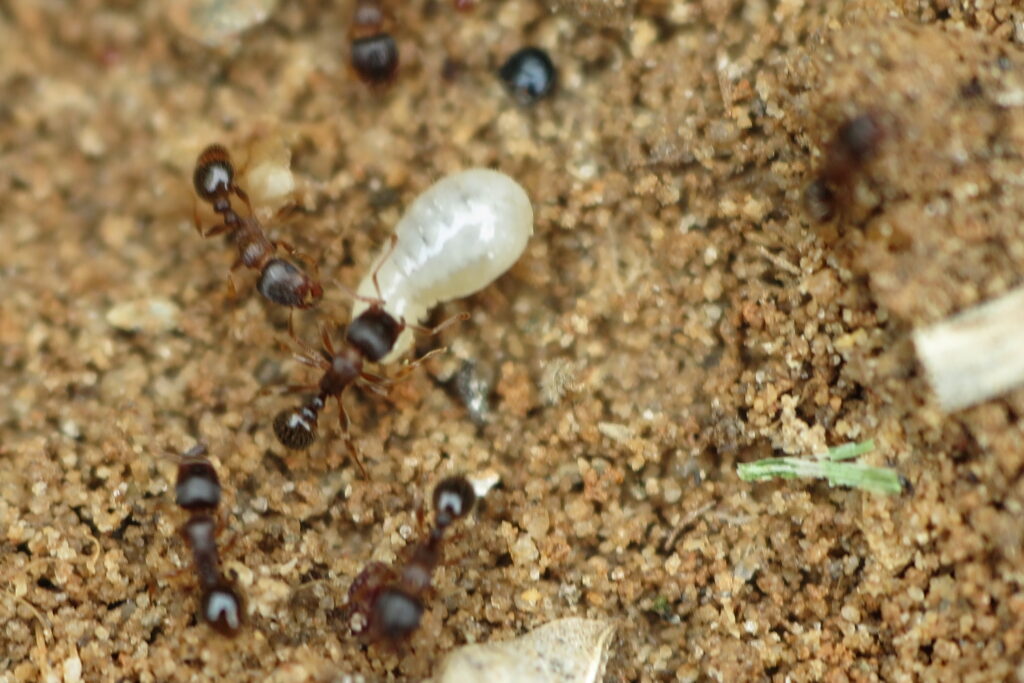
One of the main reasons people mistake larvae and pupae for eggs is their shape and color. The smooth, rounded appearance closely resembles what many expect eggs to look like. However, true ant eggs are much smaller and typically remain hidden deeper within the nest.
Larvae are the feeding stage of development, though this is not immediately obvious from appearance alone. They lack defined features such as legs or eyes and remain in a soft, immobile form. This simplicity contributes to the common misunderstanding, as they do not resemble adult ants in any recognizable way.
Pupae represent a later stage, where the ant begins to take on a more structured form. In some cases, they may appear slightly darker or show faint outlines of body segments. This stage is closer to adulthood, but still retains the pale coloration that makes it resemble an egg to the untrained eye.
Compared to other insects, ant brood remains relatively exposed during certain moments, making it easier to observe. For example, many insects conceal their developmental stages within protective casings or hidden environments. Ants, however, may briefly bring these stages into view, creating the opportunity for direct observation and frequent misidentification.
Role of Ant Brood in the Ecosystem and Colony Life Cycle
The brood carried by ants represents the continuation of the colony and plays a central role in its long-term survival. Each larva and pupa will eventually develop into a worker, contributing to the growth and maintenance of the colony. Without these stages, the colony would not be able to sustain itself over time.
In a broader ecological sense, ant colonies influence their environment through their population size and activity. The development of new ants ensures that the colony remains an active participant in processes such as soil turnover and interaction with other organisms. This ongoing cycle supports the stability of local ecosystems.
The presence of brood also connects ants to other parts of the food web. While protected within the colony, these stages can become vulnerable if exposed, making them a potential food source for other animals. This adds another layer to their ecological role, linking them to both predator and prey dynamics.
Overall, the white objects seen in an ant’s grasp are more than just a curious detail. They are a visible part of a much larger system, representing growth, renewal, and the continuation of life within the colony. Observing them offers a deeper understanding of how even the smallest organisms contribute to the balance of nature.