
Calligrapher Fly Life Cycle Guide: From Egg to Adult Hoverfly
Quick Facts
Life Cycle Type: Complete Metamorphosis
Development Stages: Egg, Larva, Pupa, Adult
Egg Location: Vegetation near prey populations
Larval Stage: Predatory and fast-growing
Adult Stage: Winged reproductive stage
Understanding the Calligrapher Fly Life Cycle
The calligrapher fly (Toxomerus sp.) undergoes a complete metamorphosis, a developmental process shared by many flies, beetles, butterflies, and other insects. Rather than gradually changing into an adult form, it passes through four distinct stages: egg, larva, pupa, and adult. Each stage serves a different purpose and possesses its own appearance, structure, and biological function.
Across North, Central, and South America, members of the Toxomerus genus repeat this life cycle continuously as environmental conditions allow. The timing of development varies depending on temperature, seasonal conditions, and resource availability. Warmer environments often accelerate growth, while cooler conditions may slow the process considerably.
Many people only recognize the adult stage because it is the most visible part of the insect’s life. The brightly marked hoverfly is easy to observe around flowering vegetation and open landscapes. However, most of the insect’s development occurs in less noticeable stages that remain hidden from casual observers.
The transformation between stages is dramatic. A newly laid egg looks nothing like the larva that emerges from it, and the larva bears little resemblance to the eventual adult fly. This complete reorganization allows each stage to specialize in different biological tasks.
Complete metamorphosis provides several advantages. Young individuals and adults occupy different ecological roles and utilize different resources during development. This separation reduces competition between generations and increases overall survival opportunities.
Understanding the life cycle helps reveal how a small hoverfly successfully develops from a microscopic egg into a fully winged adult. Each stage contributes to the continuation of the species and demonstrates the remarkable complexity of insect development.
Calligrapher Fly Egg Stage and Early Development
The life cycle begins when a female calligrapher fly deposits eggs in suitable locations. Egg placement is important because newly hatched larvae have limited mobility and depend on nearby resources for survival. Females typically select locations that maximize the chances of successful development.
The eggs are extremely small and can be difficult to detect without careful examination. Their pale coloration often helps them blend into surrounding vegetation. To most observers, they appear as tiny elongated structures attached to plant surfaces.
During this stage, development occurs entirely within the protective egg shell. The growing embryo gradually forms the structures needed for the larval stage. Although little visible activity occurs externally, significant biological changes are taking place inside.
Environmental conditions strongly influence the duration of the egg stage. Warm temperatures generally accelerate development, while cooler weather can extend incubation time. Moisture levels and overall environmental stability may also affect survival.
Compared to later stages, the egg phase is relatively short. Its primary purpose is to protect the developing embryo until it is ready to emerge. Once development is complete, the young larva breaks through the shell and begins the next stage of its life.
Although often overlooked because of their small size, eggs represent a critical foundation for the entire life cycle. Successful egg development determines whether the insect can continue progressing toward adulthood and reproduction.
Larval and Pupal Stages of Calligrapher Fly Development
After hatching, the calligrapher fly enters the larval stage. This immature form looks completely different from the adult and lacks both wings and the bright coloration associated with mature individuals. The body is typically elongated and soft, giving it an appearance more similar to a tiny worm than a fly.
The larval stage is primarily focused on growth. During this period, the insect increases in size and accumulates the energy reserves necessary for later development. Rapid growth allows the larva to prepare for the major transformation that will occur during pupation.
As development progresses, the larva eventually reaches a point where it is ready to transition into the pupal stage. At this time, it forms a protective outer covering and enters a period of dramatic internal change. From the outside, the pupa appears relatively inactive, but extensive reorganization is occurring within.
The pupal stage functions as a biological reconstruction phase. Structures associated with the larval body are broken down and replaced by adult features such as wings, compound eyes, and reproductive organs. Few life stages in the animal kingdom involve such a dramatic transformation.
A useful comparison is the renovation of an existing building. The external structure may appear quiet and unchanged, but major rebuilding is occurring behind the walls. Similarly, the pupa conceals one of the most complex developmental processes in the insect world.
Once the transformation is complete, the adult fly emerges. This event marks the end of the developmental stages and the beginning of the final phase of the life cycle.
Adult Calligrapher Fly Life Stage and Reproduction
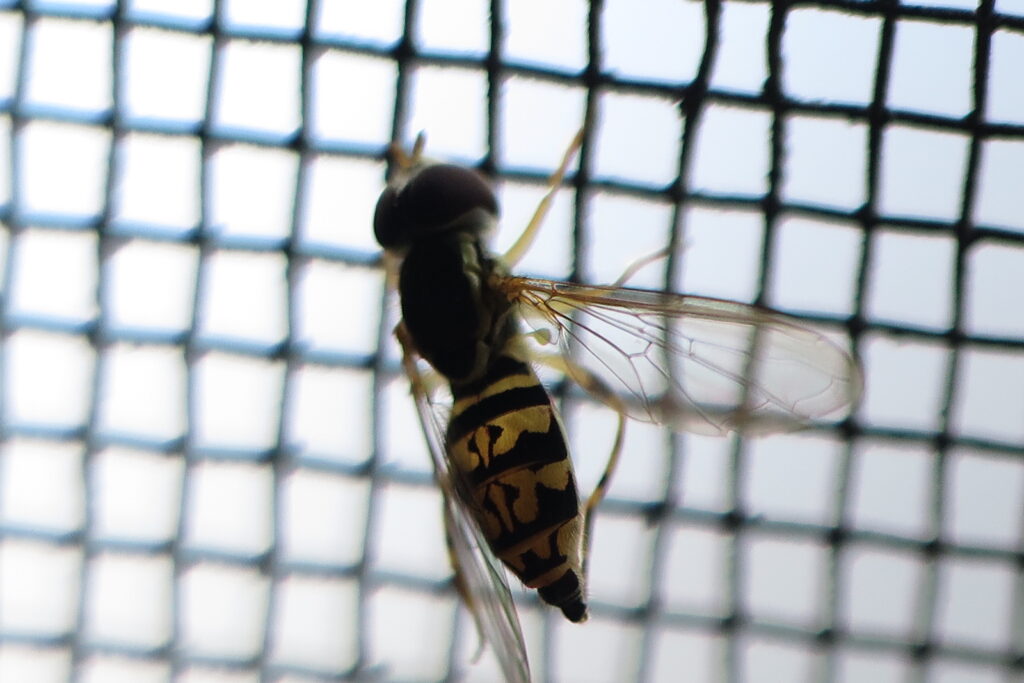
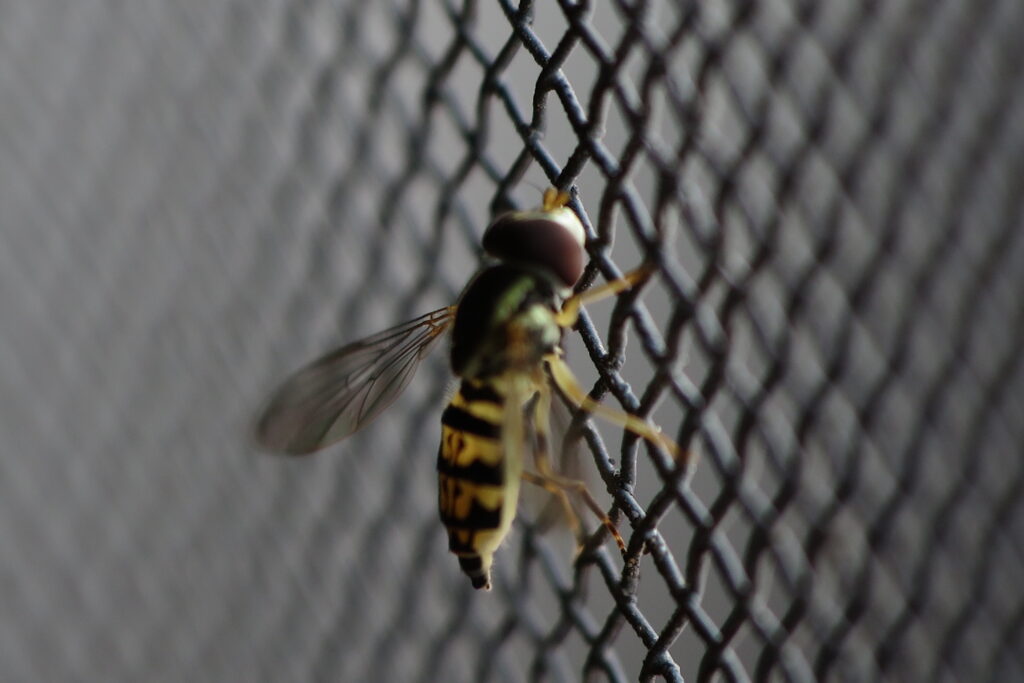
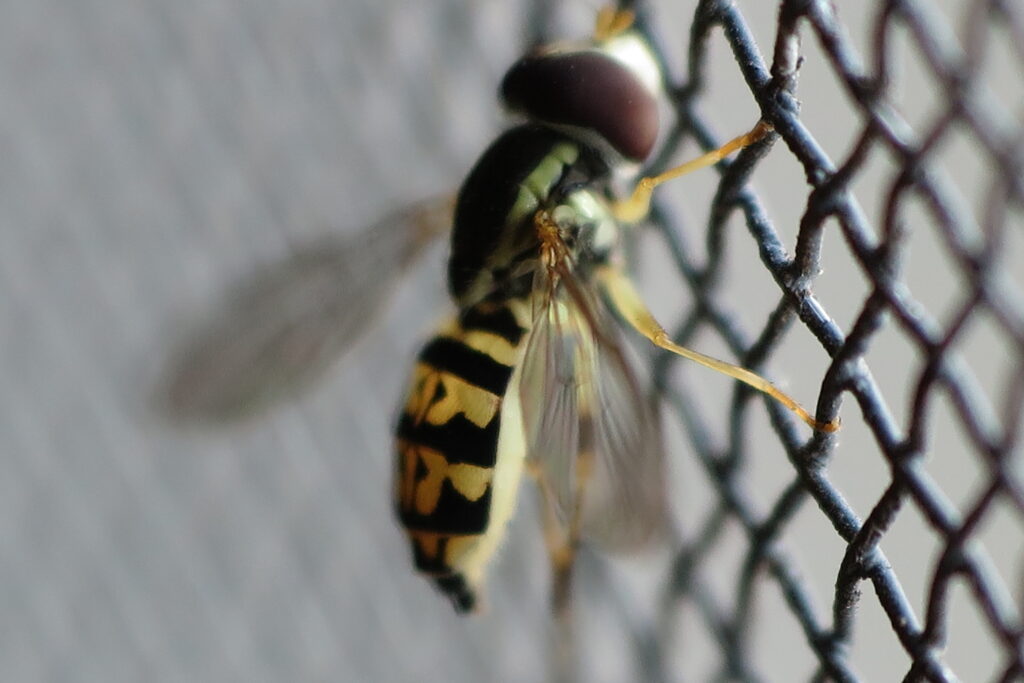
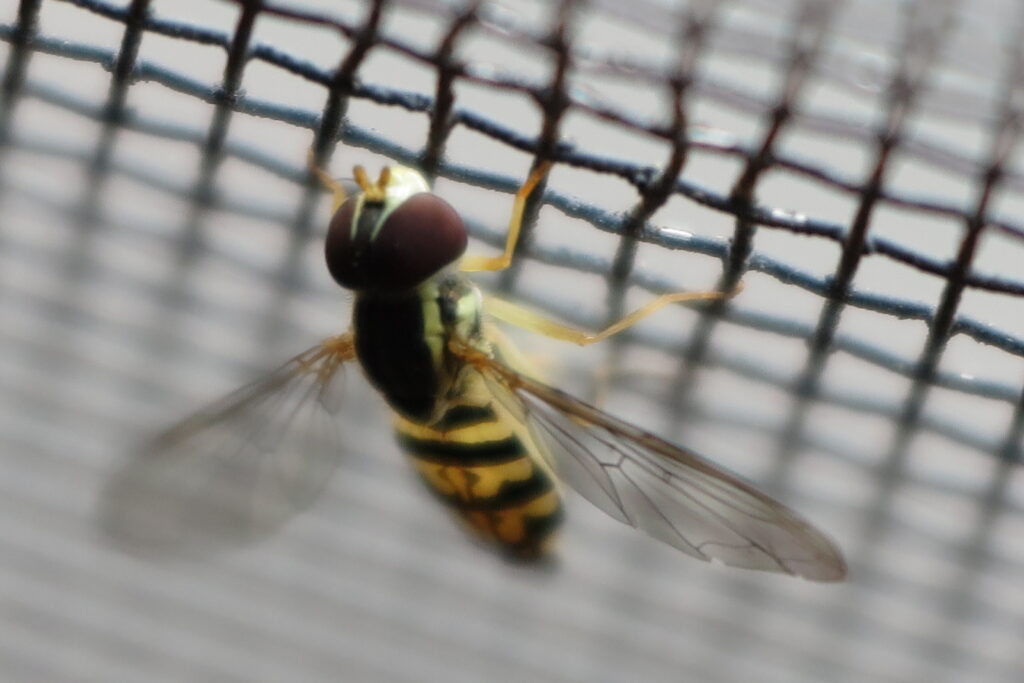
The adult stage is the form most people recognize. Bright yellow-and-black markings, large compound eyes, and transparent wings distinguish mature calligrapher flies from their earlier developmental stages. At this point, the insect has reached its final body form and will not undergo further structural changes.
Adult life focuses on reproduction, dispersal, and continuation of the species. Males and females locate one another, mate, and eventually contribute to the next generation. Successful reproduction ensures that the life cycle continues beyond a single individual.
The adult stage also allows the species to expand its distribution. Winged individuals can travel between areas, colonize new locations, and locate resources necessary for survival. This mobility contributes to the broad geographic range observed throughout the Americas.
Lifespan varies depending on environmental conditions, predators, weather, and overall resource availability. Some adults may survive only a relatively short period, while others persist long enough to reproduce successfully and contribute significantly to population growth.
The cycle concludes when adult females lay eggs in suitable locations. Those eggs eventually hatch, producing a new generation that repeats the same developmental process. This continuous cycle has allowed the genus to remain successful across diverse environments and climates.
Viewed as a whole, the calligrapher fly’s life cycle is a remarkable example of complete metamorphosis. From a tiny egg to a winged adult, each stage performs a specialized function that contributes to survival, reproduction, and the long-term success of the species.
Popular Searches About Calligrapher Flies
Explore Calligrapher Fly Guide
Explore More Wildlife

Support Encounters World
Help support wildlife photography and get behind the scenes discoveries on Patreon.