
Land Planarian Adaptations Guide: Unique Features That Help Terrestrial Flatworms Survive
Quick Facts
Adaptation Type: Structural, sensory, and physiological
Primary Survival Trait: Regeneration ability
Defense Adaptation: Mucus production and chemical protection
Movement Adaptation: Muscular gliding on slime trails
Environmental Adaptation: Moisture conservation and concealment
Understanding Land Planarian Adaptations
Land planarians are among the most unusual invertebrates found in terrestrial ecosystems. Although they lack claws, shells, venomous stingers, or powerful jaws, they possess a collection of specialized adaptations that allow them to survive successfully in environments around the world. These adaptations have helped terrestrial flatworms persist for millions of years despite their seemingly simple body design.
Species occur across North America, Europe, Asia, Australia, South America, and numerous islands. Throughout this broad geographic range, terrestrial flatworms face different environmental challenges, including changing temperatures, predators, competition, and fluctuating moisture levels. Their survival depends on adaptations that help them respond to these pressures.
At first glance, a land planarian may appear vulnerable because of its soft body and slow movement. However, appearances can be misleading. Beneath this simple exterior are biological traits that make terrestrial flatworms remarkably effective at surviving in ground-level ecosystems.
Adaptations can be defined as features that improve an organism’s ability to survive and reproduce. In land planarians, these adaptations include body structure, sensory abilities, defensive mechanisms, and physiological characteristics. Together, these traits form an integrated survival strategy.
Many of their adaptations work quietly in the background and are rarely noticed by casual observers. Unlike the obvious camouflage of a chameleon or the protective shell of a turtle, terrestrial flatworm adaptations often involve subtle biological processes. These hidden advantages contribute significantly to long-term survival.
Understanding these specialized traits reveals why land planarians have become successful across such a wide range of environments. Their adaptations demonstrate that survival does not always require speed or strength. Sometimes efficiency and biological flexibility are equally powerful.
Physical Adaptations of the Land Planarian Body
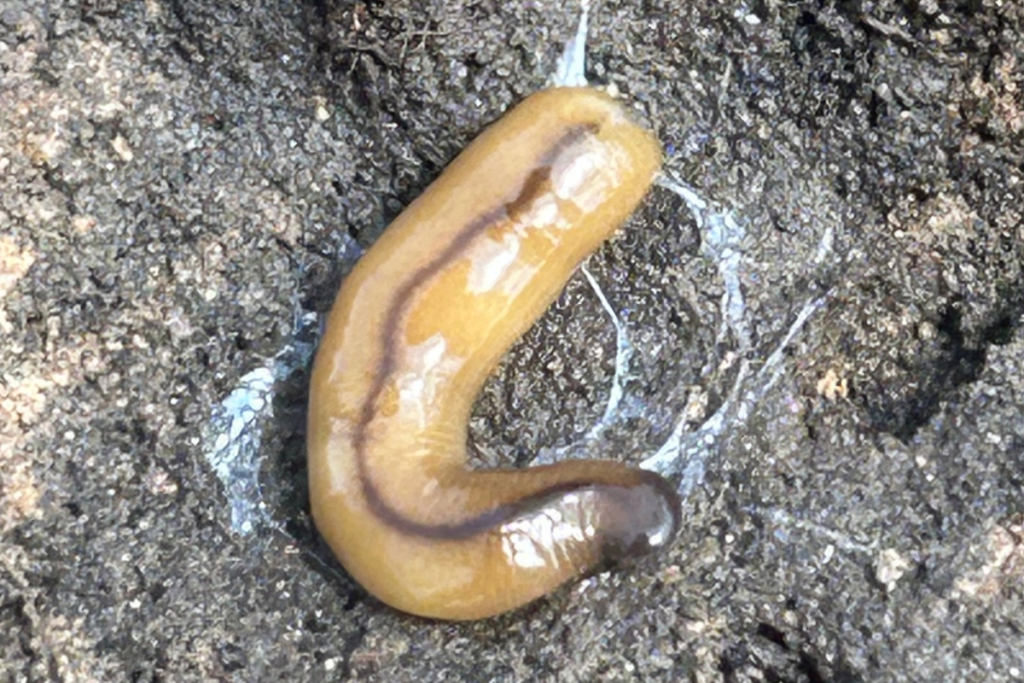
One of the most recognizable adaptations of a land planarian is its flattened body shape. This ribbon-like structure allows the animal to move through narrow spaces beneath rocks, logs, bark, and other surface cover. Areas inaccessible to many larger animals can easily be navigated by a terrestrial flatworm.
The soft body also provides flexibility. Unlike animals with rigid skeletons, land planarians can conform to irregular surfaces and squeeze into confined spaces. This ability expands the number of locations available for shelter and protection.
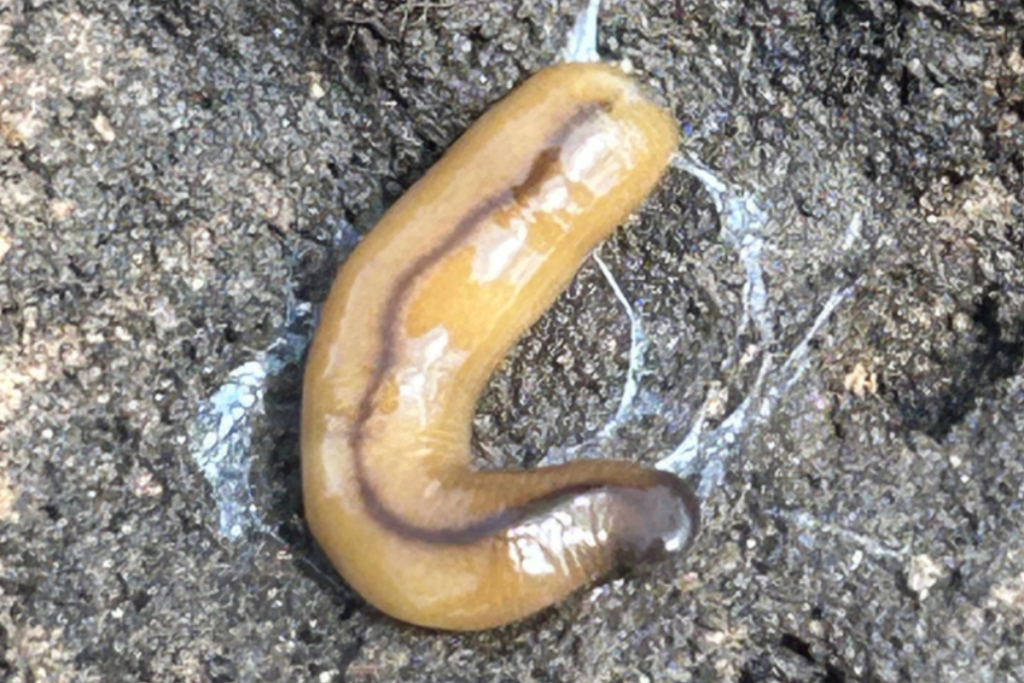
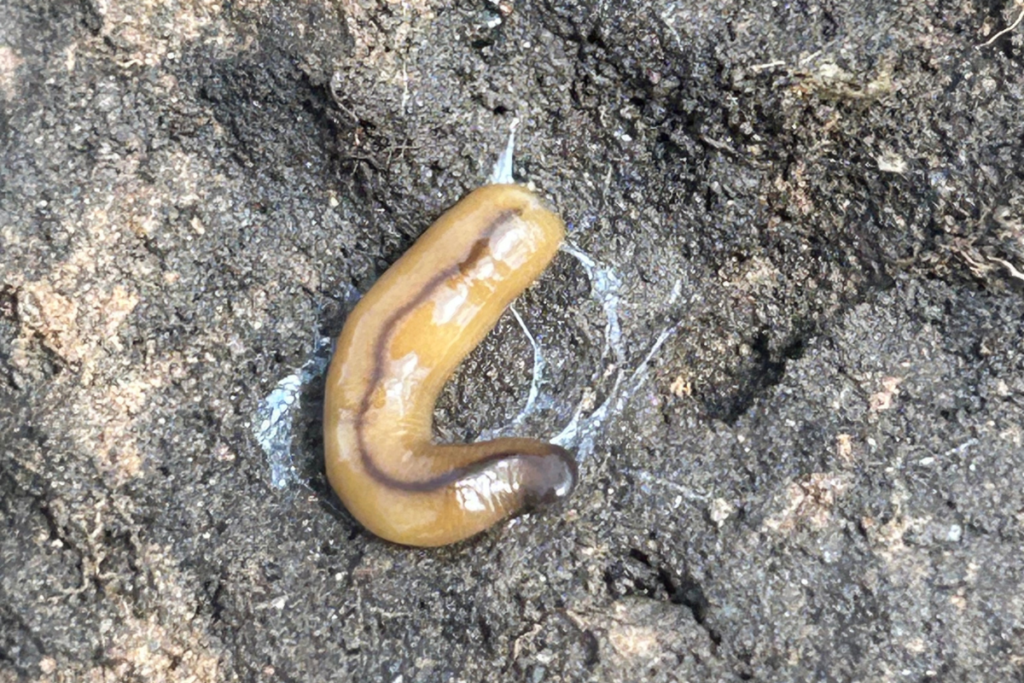
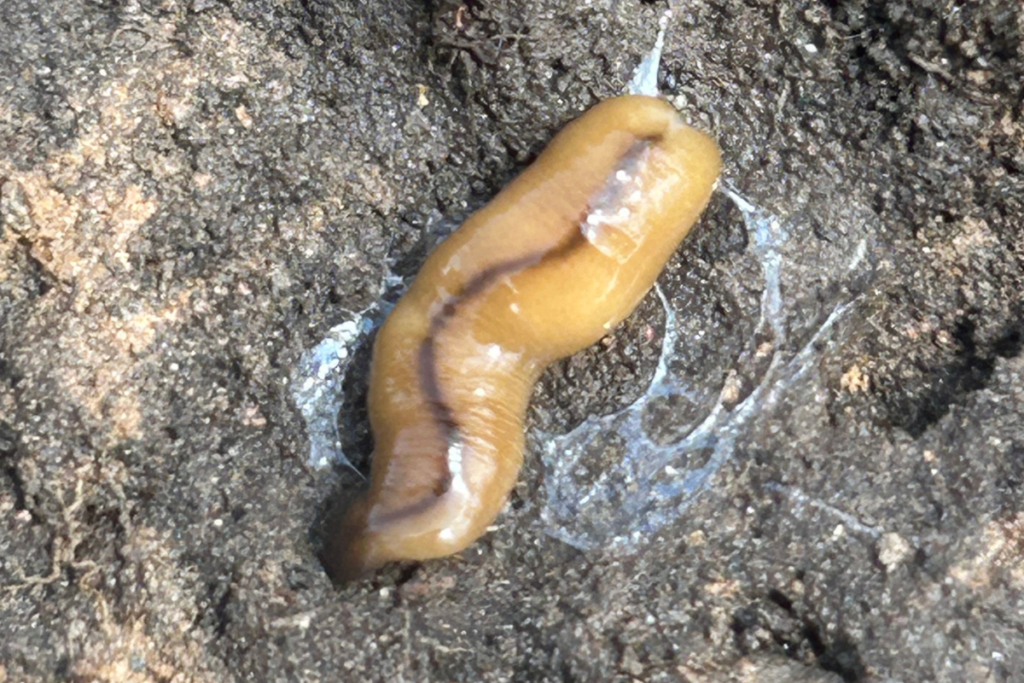
Mucus production represents another important physical adaptation. The slippery coating reduces friction during movement while helping maintain body moisture. Without this adaptation, traveling across rough surfaces would be far more difficult and water loss would increase significantly.
The smooth outer surface contributes to efficient movement and environmental interaction. Its streamlined design allows the flatworm to glide across soil, leaves, and other materials with minimal resistance. This efficiency is particularly important for an animal that moves slowly.
Body coloration may also function as an adaptation. Many species display shades of brown, gray, black, or tan that blend naturally with surrounding materials. This coloration reduces visibility and helps the flatworm remain unnoticed.
A useful comparison is to think of the body as a flexible living ribbon designed for navigating complex terrain. Every aspect of its structure supports movement, concealment, and survival. These physical adaptations form the foundation of the land planarian’s success.
Sensory and Feeding Adaptations for Survival
Although land planarians lack advanced eyes like those of insects or vertebrates, they possess sensory adaptations that help them interpret their surroundings. These abilities allow them to gather information about environmental conditions and nearby organisms. Survival often depends on accurately responding to these cues.
Chemical detection is among their most important sensory adaptations. Specialized cells help identify chemical traces present in the environment. This capability allows terrestrial flatworms to locate resources and navigate effectively without relying heavily on vision.
Light sensitivity provides another useful adaptation. While they cannot form detailed images, many species can detect differences in light intensity. This helps them avoid unfavorable conditions and remain within suitable environments.
Their feeding adaptations are equally impressive. Specialized anatomical structures allow terrestrial flatworms to process food efficiently. These features help them obtain nutrients necessary for growth, maintenance, and reproduction.
Compared to animals that depend primarily on eyesight, land planarians rely more heavily on chemical and environmental information. This strategy works particularly well in locations where visibility is limited. By focusing on alternative sensory systems, they remain effective despite lacking complex visual organs.
The combination of sensory awareness and specialized feeding structures creates a highly functional system. These adaptations help land planarians locate resources and respond appropriately to changing conditions throughout their lives.
Defense and Regenerative Adaptations of Terrestrial Flatworms
Regeneration is perhaps the most famous adaptation associated with flatworms. Many terrestrial flatworm species possess the ability to replace damaged tissues and recover from injuries that would be fatal to many other animals. This remarkable capability has fascinated scientists for decades.
The regenerative process improves survival by reducing the consequences of physical damage. An individual capable of replacing lost tissue has a greater chance of reaching reproductive maturity and contributing to future generations. Few terrestrial animals possess such impressive recovery abilities.
Mucus production serves a defensive function as well. In addition to aiding movement, the slippery coating can discourage certain predators. Some species may also produce chemical compounds that make them less appealing as prey.
Concealment is another important adaptation. Body coloration and a low-profile shape help many species remain hidden from predators. By avoiding detection in the first place, they reduce the need for active defensive responses.
A practical example of these defenses can be seen when a terrestrial flatworm encounters danger. Rather than fighting directly, it often relies on camouflage, protective mucus, and access to sheltered spaces. These strategies reduce risk while conserving energy.
Together, regeneration, chemical protection, concealment, and moisture-preserving adaptations form a highly effective survival package. While land planarians may appear simple compared to larger animals, their specialized adaptations have allowed them to thrive across diverse environments worldwide. Their success demonstrates how evolutionary innovation can take many forms, even within the smallest and most overlooked creatures.
Popular Searches About Land Planarians
Explore Land Planarian Guide
Explore More Wildlife

Support Encounters World
Help support wildlife photography and get behind the scenes discoveries on Patreon.