
Land Planarian vs Earthworm: Key Differences, Identification, and Ecological Roles
Quick Facts
Land Planarian Scientific Name: Order Tricladida
Earthworm Scientific Name: Subclass Oligochaeta
Common Names: Terrestrial Flatworm vs Earthworm
Body Shape: Flat vs Cylindrical
Average Size: 1–12 inches vs 2–14 inches
Global Range: Worldwide vs Worldwide
Conservation Status: Varies by species
Most Noticeable Difference: Flat body versus segmented round body
Land Planarian vs Earthworm Introduction and Identification Basics
Land planarians and earthworms are frequently confused because both are elongated, soft-bodied animals that are often discovered beneath rocks, logs, flowerpots, and leaf litter. At first glance, an observer may assume they are closely related simply because they share a worm-like appearance. In reality, these animals belong to entirely different groups and possess distinct anatomy, biology, and ecological functions.
Earthworms are members of the phylum Annelida, a group characterized by segmented bodies and specialized internal structures. Land planarians belong to the phylum Platyhelminthes, which contains flatworms with a completely different evolutionary history. Although they may occupy similar environments, their relationship is more distant than many people realize.
Both animals occur across much of the world and are commonly encountered in gardens, forests, parks, and other outdoor environments. Their widespread distribution contributes to the frequent confusion between them. For homeowners, gardeners, and wildlife enthusiasts, learning the differences can make identification much easier.
The confusion becomes even more understandable when environmental conditions bring both species to the surface at the same time. Following rainfall, for example, earthworms and land planarians may be found in close proximity. Without careful observation, they can appear surprisingly similar.
Fortunately, distinguishing between the two is often straightforward once a few key features are understood. Body shape, surface texture, segmentation, and overall appearance provide reliable clues. Even a brief examination usually reveals whether an individual is a flatworm or a true worm.
Understanding these differences is valuable because each animal plays a very different role in nature. Accurate identification provides insight into local ecosystems and helps observers better appreciate the diversity of life hidden beneath their feet.
Physical Appearance Differences Between Land Planarians and Earthworms
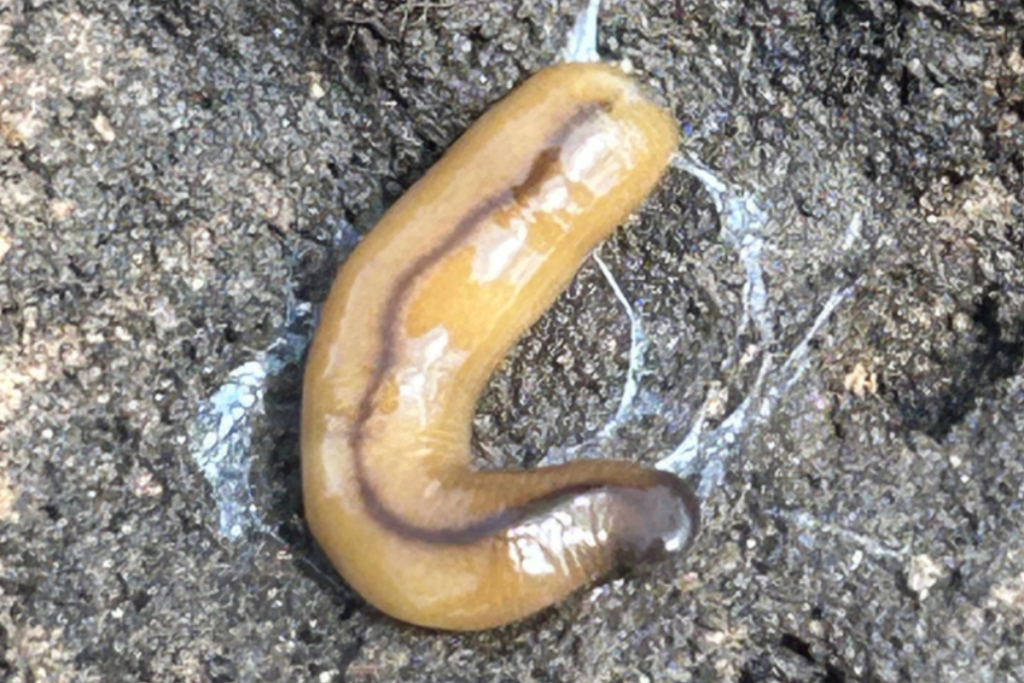
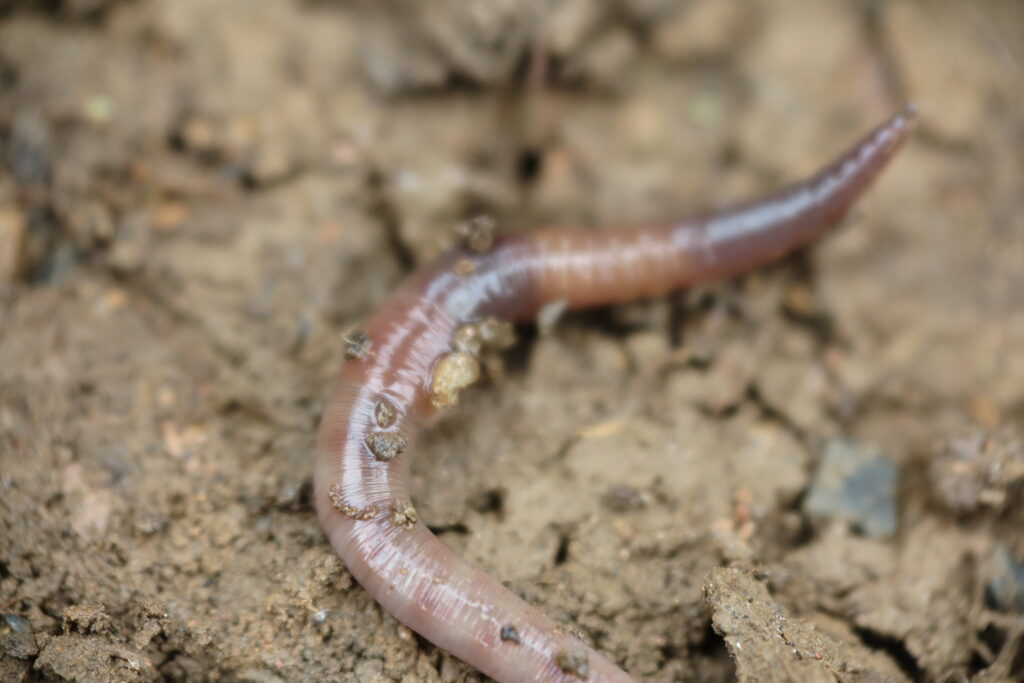
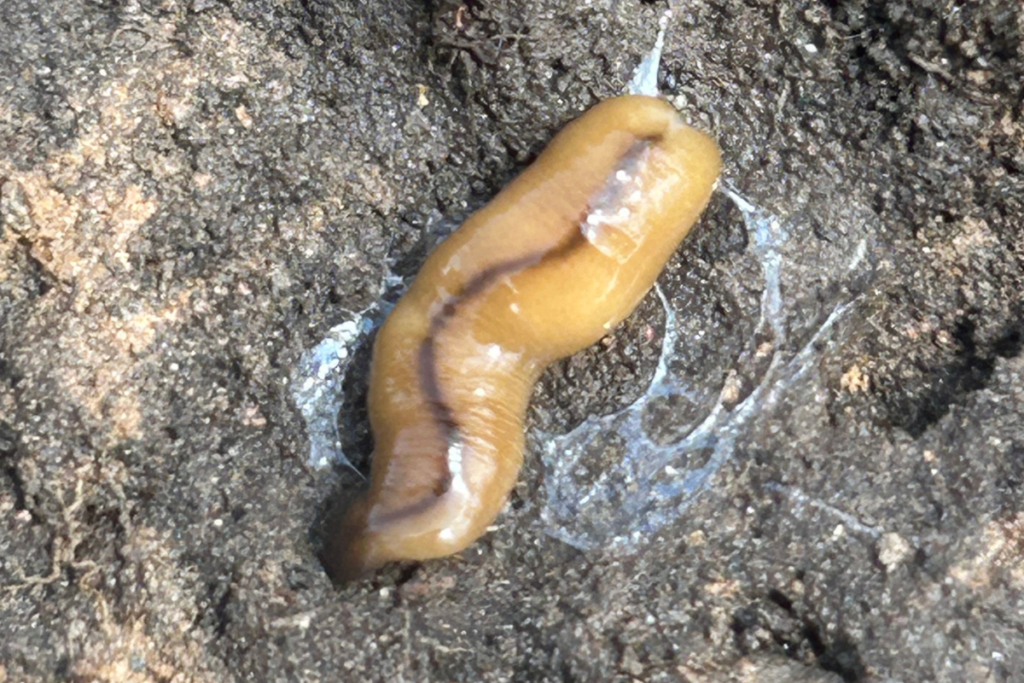
The most obvious difference between a land planarian and an earthworm is body shape. A terrestrial flatworm has a flattened body that resembles a ribbon or strip of soft leather. An earthworm, by contrast, has a cylindrical body that appears round when viewed from the front or rear.
Segmentation provides another reliable identification feature. Earthworms possess visible body segments that create a ringed appearance along their entire length. Land planarians lack these obvious segments, giving them a smoother and more uniform appearance from head to tail.
The surface texture also differs noticeably. Earthworms often display a slightly ridged appearance because of their segmented structure. Land planarians typically appear smooth, glossy, and almost polished, especially when moisture is present on the body surface.
Head shape offers another useful clue. Many terrestrial flatworms possess a distinct front end that may appear widened, rounded, or shovel-shaped depending on the species. Earthworms generally lack a clearly defined head region and appear relatively similar at both ends of the body.
Color patterns vary as well. Earthworms are usually shades of pink, reddish-brown, gray, or tan. Land planarians may display stripes, central lines, contrasting bands, or darker patterns that make them appear more decorative than most earthworms.
A simple comparison is to imagine an earthworm as a flexible tube and a land planarian as a living ribbon. This visual distinction alone is often enough to identify them correctly. Once observers recognize the difference in body profile, confusion becomes much less common.
Land Planarian and Earthworm Characteristics Compared
Earthworms possess a specialized body plan designed around segmentation. Each segment contains muscles and structures that help the worm move efficiently through soil. This segmented design contributes to their recognizable appearance and ecological success.
Land planarians rely on a completely different anatomical arrangement. Their bodies are unsegmented and flattened, creating a structure unlike that of annelid worms. This flat design is one of the defining characteristics of the group and immediately separates them from earthworms.
Another major difference involves regeneration and tissue organization. While some earthworms can recover from minor injuries, land planarians are famous for their remarkable regenerative capabilities. Certain species can replace significant portions of lost tissue through biological processes that continue to interest scientists today.
Internal complexity differs as well. Earthworms possess specialized systems adapted for life within soil environments. Land planarians exhibit a simpler overall organization while still maintaining highly effective biological functions. These differences reflect separate evolutionary pathways rather than variations of the same design.
The two animals also differ in how they are typically perceived by observers. Earthworms are often recognized as familiar garden residents that contribute positively to soil health. Land planarians, with their unusual appearance and flattened bodies, frequently generate curiosity because they seem more exotic and unfamiliar.
A useful comparison is to think of them as two vehicles designed for entirely different purposes. Both may travel through similar terrain, but their construction, capabilities, and operating methods differ substantially. The same principle applies to land planarians and earthworms despite their superficial resemblance.
Ecological Roles of Land Planarians and Earthworms
Perhaps the most important difference between these animals lies in their ecological roles. Earthworms function primarily as decomposers and soil engineers. By processing organic material and moving through soil, they contribute to nutrient cycling and help improve soil structure.
Land planarians occupy a different position within terrestrial ecosystems. Rather than acting as decomposers, they function as predators within ground-level food webs. This role places them at a higher trophic level than earthworms and gives them a very different ecological influence.
Earthworms often benefit plants indirectly through their effects on soil quality. Their tunneling activities improve aeration, water infiltration, and nutrient distribution. Because of these contributions, earthworms are frequently regarded as some of the most valuable invertebrates in healthy soil systems.
Terrestrial flatworms influence ecosystems through their interactions with other invertebrates. Their presence can affect local populations of ground-dwelling organisms and contribute to the overall structure of soil communities. In some regions, introduced species have attracted attention because of their impact on native invertebrate populations.
Both animals play important roles, but those roles are fundamentally different. One contributes primarily through decomposition and soil improvement, while the other participates as a predator within complex food webs. Together, they demonstrate the diversity of ecological functions performed by seemingly simple invertebrates.
When viewed side by side, land planarians and earthworms reveal how appearances can be misleading. Although both are worm-like animals commonly found beneath logs and rocks, they differ in anatomy, classification, ecological purpose, and biological characteristics. Learning these distinctions allows observers to identify them confidently and better understand the hidden world of soil-dwelling wildlife.
Popular Searches About Land Planarians
Explore Land Planarian Guide
Explore More Wildlife

Support Encounters World
Help support wildlife photography and get behind the scenes discoveries on Patreon.