
Land Planarian Identification Guide: How to Identify a Terrestrial Flatworm
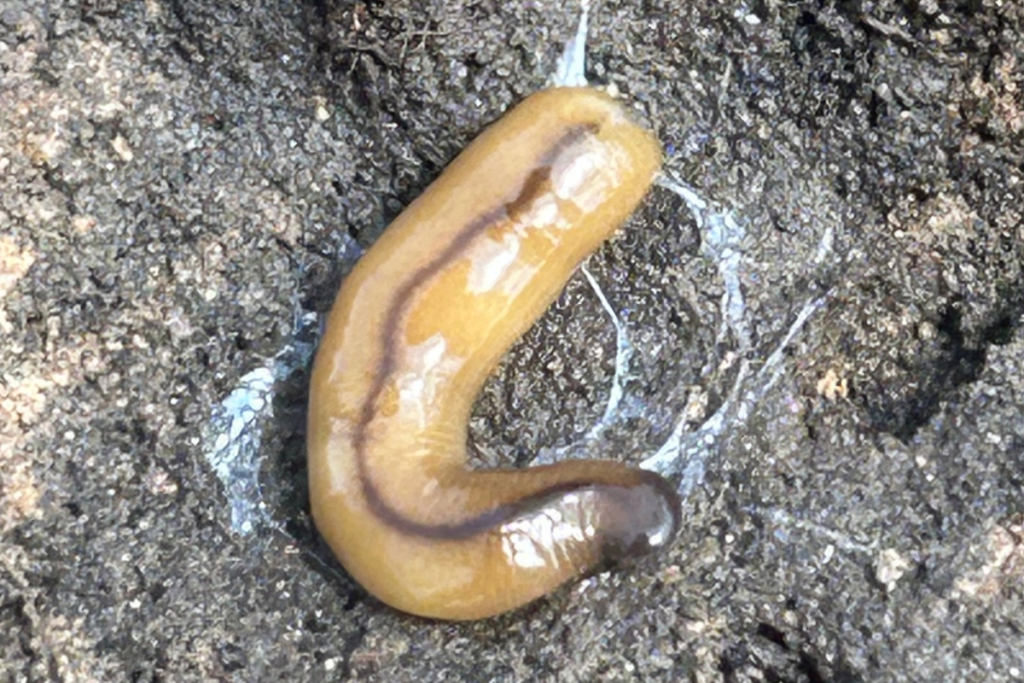
Quick Facts
Scientific Name: Order Tricladida
Common Name: Land Planarian, Terrestrial Flatworm
Identification Difficulty: Easy to Moderate
Average Size: 1–12 inches (2.5–30 cm) depending on species
Key Identification Features: Flattened body, smooth texture, lack of segmentation
Similar Species: Earthworms, slugs, leeches, hammerhead worms
Global Range: Worldwide
Conservation Status: Varies by species
How to Identify a Land Planarian in the Wild
Land planarians are among the most unusual invertebrates encountered in terrestrial environments. Their elongated bodies often cause them to be mistaken for earthworms, slugs, or other soft-bodied creatures. However, a closer examination quickly reveals several features that make terrestrial flatworms distinct from these more familiar animals.
Species within the land planarian group occur across much of the world and can be found in a variety of regions. Observers often encounter them unexpectedly while lifting rocks, moving logs, gardening, or exploring leaf-covered ground. Because they are less frequently seen than earthworms, many people are unsure of what they have discovered.
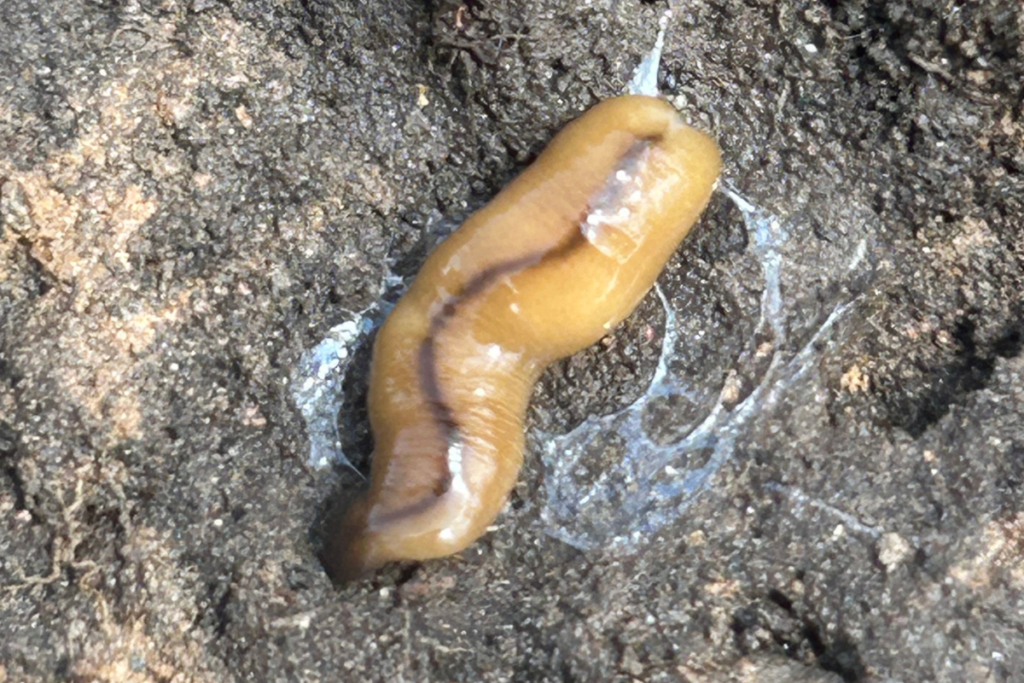
At first glance, the overall shape of a land planarian provides the strongest identification clue. Rather than appearing cylindrical like a traditional worm, the body looks compressed and ribbon-like. This flattened profile immediately separates it from many other invertebrates found in similar environments.
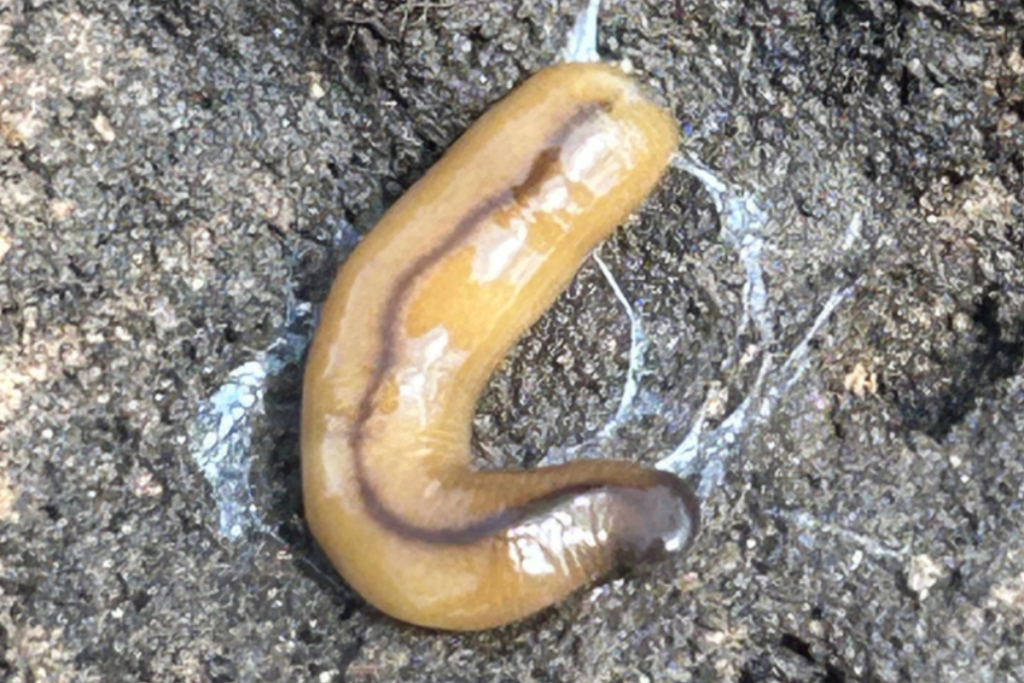
The smooth, glossy surface also contributes to its unique appearance. Moisture on the body often creates a reflective sheen, making the animal appear almost polished. This texture differs noticeably from the segmented appearance of earthworms and the fleshy structure of slugs.
Coloration varies considerably between species. Some terrestrial flatworms are plain brown, gray, or black, while others display stripes, central lines, or contrasting patterns. These markings can help narrow identification but should be considered alongside body shape and structure.
For most observers, successful identification begins with recognizing the flattened body form. Once this feature is noticed, distinguishing a land planarian from other worm-like animals becomes much easier. The combination of shape, texture, and overall appearance provides a reliable foundation for identification.
Land Planarian Appearance and Physical Identification Features
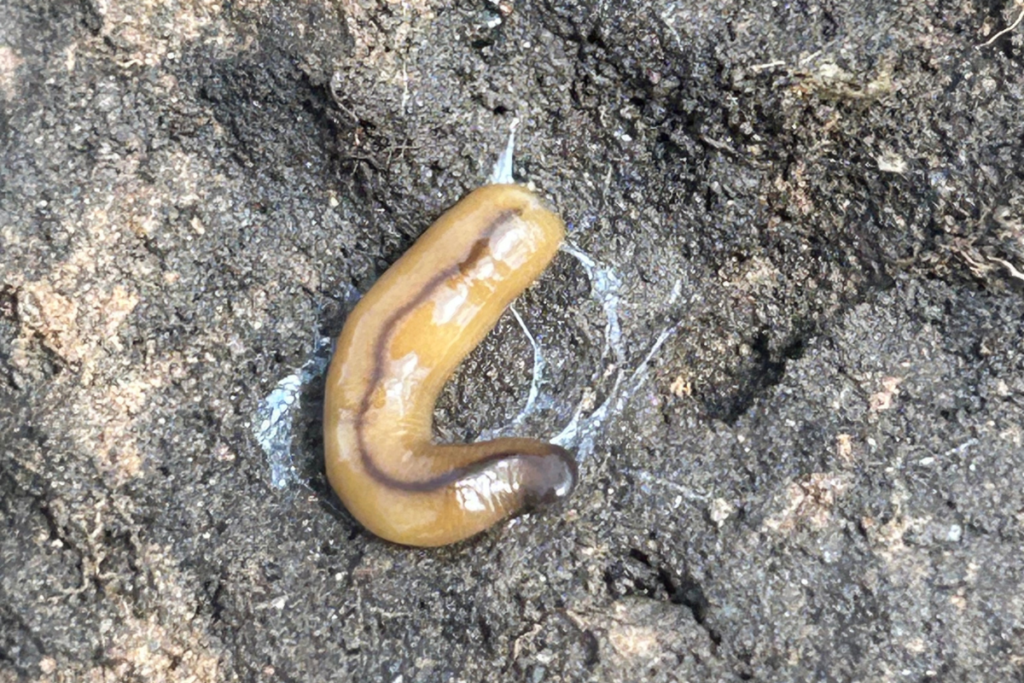
The defining characteristic of a land planarian is its flattened body. Unlike earthworms, which maintain a round profile, terrestrial flatworms appear compressed from top to bottom. When viewed from above, they often resemble narrow strips of ribbon resting on the ground.
Body width varies depending on species. Some individuals are only a few millimeters wide, while larger species may be noticeably broader. This variation creates considerable diversity within the group while preserving the overall flattened design.
Color patterns can range from simple to striking. Certain species display a single dark stripe running down the center of the body, while others possess multiple bands or contrasting margins. These markings frequently help distinguish one species from another.
The surface of the body is smooth and lacks visible segmentation. Earthworms display ring-like divisions along the length of their bodies, but land planarians maintain a more continuous appearance. This difference is often one of the easiest features to recognize in the field.
Head shape may provide additional clues. Some terrestrial flatworms possess a rounded front end, while others exhibit a broader or shovel-like shape. These characteristics can assist with identification when combined with other visible traits.
A useful comparison is to imagine the difference between a shoelace and a ribbon. Earthworms resemble flexible shoelaces because of their rounded bodies, while land planarians resemble living ribbons because of their flattened profile. This visual comparison helps explain one of the most important identification features.
Key Characteristics That Separate Land Planarians from Similar Animals
Earthworms are the animals most commonly confused with land planarians. Although both are elongated and soft-bodied, earthworms possess distinct segmentation that is visible along the entire body. Land planarians completely lack these obvious ring-like divisions.
Slugs represent another frequent source of confusion. At a quick glance, both animals may appear smooth and moist. However, slugs possess a thicker body, visible tentacles, and a mantle near the front of the body, features that terrestrial flatworms do not have.
Leeches can occasionally be mistaken for land planarians as well. Both groups have flattened bodies, but leeches typically possess visible suckers used for attachment. Land planarians lack these specialized structures and generally maintain a smoother body outline.
Hammerhead worms belong to a subgroup of terrestrial flatworms and share many characteristics with other land planarians. The most obvious difference is the expanded, hammer-shaped head found in hammerhead species. Other terrestrial flatworms usually possess simpler head shapes.
The absence of legs, antennae, shells, or external appendages further helps narrow identification. The body appears streamlined and uncomplicated compared to many other invertebrates. This simplicity is one of the defining characteristics of the group.
When identifying an unknown specimen, it is helpful to evaluate multiple features rather than relying on a single trait. Body shape, segmentation, surface texture, and head structure all contribute to a more reliable identification. Together, these characteristics clearly separate land planarians from most lookalike animals.
Common Identification Mistakes and Recognition Tips
One of the most common mistakes is assuming that any long, soft-bodied animal found beneath a rock is an earthworm. While earthworms are certainly common, land planarians often occupy similar locations. Taking a few extra seconds to examine body shape usually resolves the confusion.
Another frequent error involves confusing terrestrial flatworms with slugs. Moisture and similar coloration can make these animals appear alike from a distance. Looking for tentacles and checking whether the body is flat or thick typically provides a quick answer.
Juvenile individuals can present additional challenges because their small size makes details harder to observe. In these situations, the overall body profile becomes especially important. Even young land planarians generally maintain the flattened appearance characteristic of the group.
Photographs are often useful for identification. Zooming in on a high-quality image allows observers to examine patterns, body shape, and texture more carefully than they might in the field. This approach frequently reveals important details that are easy to miss during a brief encounter.
A practical field tip is to view the animal from multiple angles. A top-down view highlights coloration and patterns, while a side view emphasizes the flattened profile. Combining these perspectives greatly improves identification accuracy.
With experience, recognizing a land planarian becomes relatively straightforward. The smooth ribbon-like body, lack of segmentation, and distinctive overall appearance create a combination of traits unlike most other terrestrial invertebrates. Once these features are learned, terrestrial flatworms become much easier to identify wherever they are encountered.
Popular Searches About Land Planarians
Explore Land Planarian Guide
Explore More Wildlife

Support Encounters World
Help support wildlife photography and get behind the scenes discoveries on Patreon.