
Canada Goose Nesting Guide: Nest Sites, Eggs, and Family Development
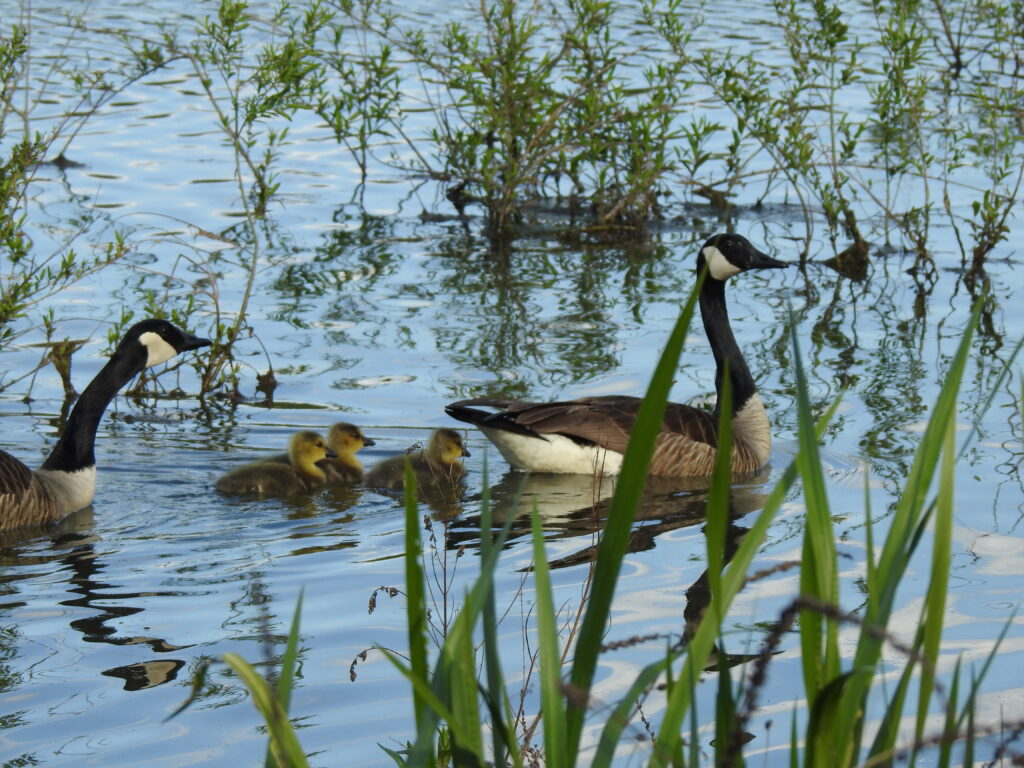
Quick Facts
Nesting Season: Spring
Nest Location: Ground Near Water
Clutch Size: 2–10 Eggs
Incubation Period: Approximately 25–30 Days
Parental Care: Both Parents Protect Young
Nest Defense: Aggressive Territorial Behavior
Canada Goose Nesting Season Overview
The Canada Goose (Branta canadensis) begins its nesting season during late winter and early spring across much of North America. As temperatures increase and daylight becomes longer, breeding pairs return to established nesting areas or select suitable locations for raising young. This period marks one of the most important stages in the annual cycle of the species.
Many breeding pairs remain together for multiple years, often returning to familiar nesting regions. These long-term pair bonds contribute to successful reproduction and allow experienced adults to use locations that have proven productive in previous seasons. The return of nesting geese often signals the arrival of spring in many areas.
Shorelines, wetlands, islands, and grassy landscapes frequently become occupied as nesting territories develop. Individual pairs establish space around their chosen locations while preparing for egg laying. During this period, the normally social behavior of geese becomes more focused on family units.
Observing nesting geese can resemble watching homeowners prepare for the arrival of a new family member. Adult birds become increasingly attentive to their surroundings while concentrating on the security of the nesting site. These seasonal changes help ensure the successful development of the next generation.
Canada Goose Nest Sites and Nest Construction
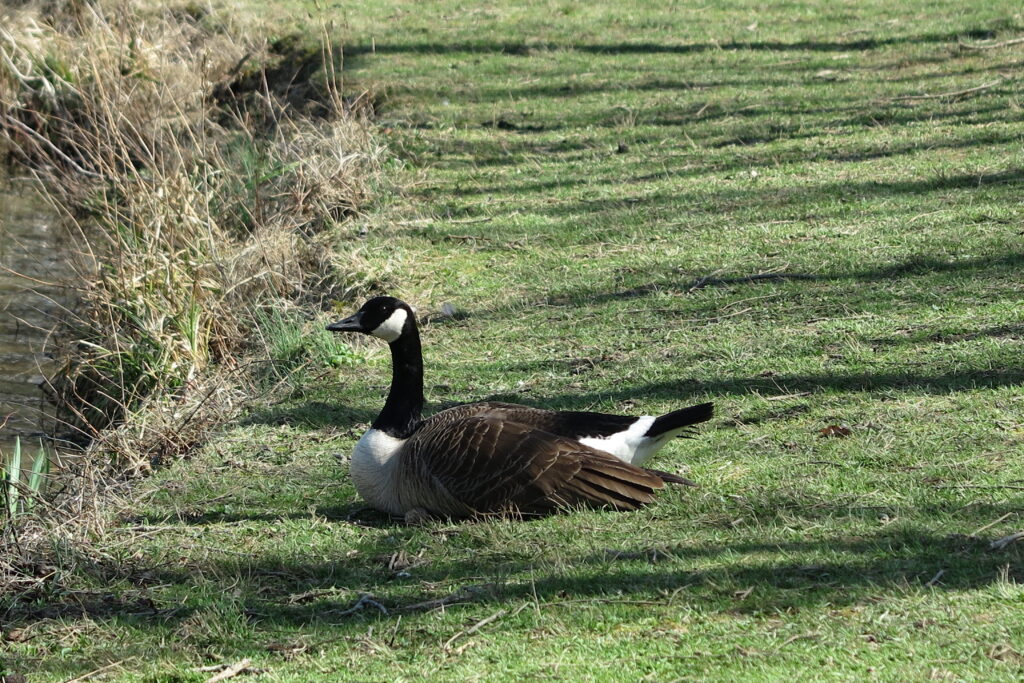
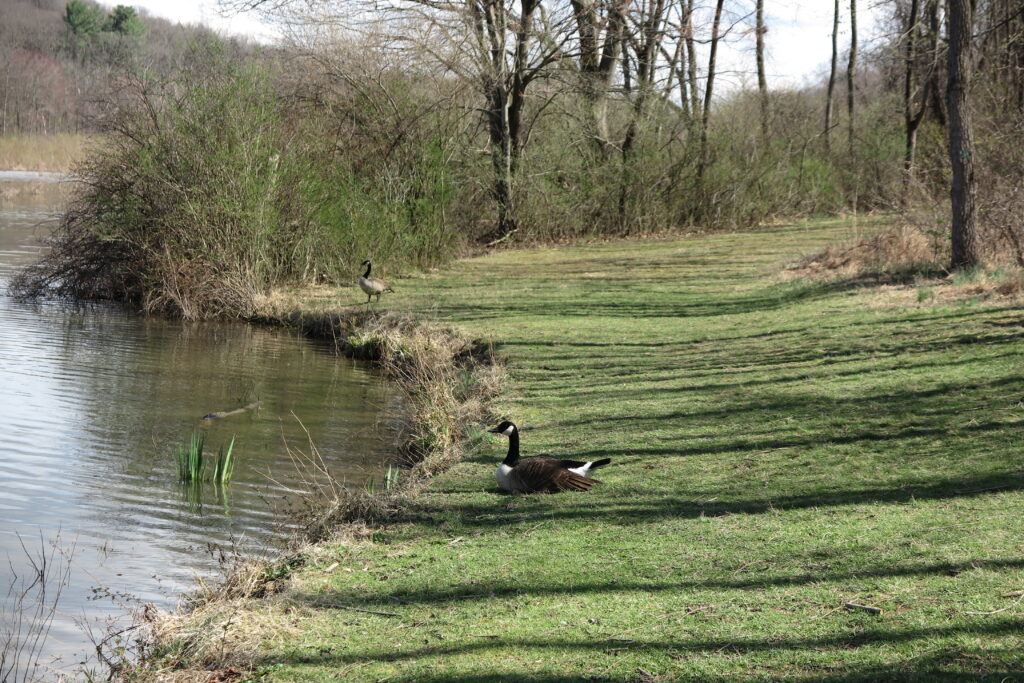
Canada Geese usually construct their nests directly on the ground. Locations often provide good visibility and easy access to nearby water. Elevated areas, small islands, shorelines, and grassy banks frequently serve as nesting sites.
The female performs most of the nest construction. Plant material such as grasses, reeds, and stems forms the basic structure. As the nest develops, soft down feathers from the female’s body are added to provide insulation.
Many nests appear as shallow bowls lined with vegetation and feathers. Although the structure may seem simple, it effectively protects eggs from changing weather conditions. The down lining helps maintain stable temperatures throughout incubation.
Some pairs select highly visible locations, while others nest near shrubs, vegetation, or other cover. This variation depends upon local conditions and available nesting areas. Certain birds even nest in urban environments where suitable sites exist.
A useful comparison can be made to a carefully prepared nursery. The nest provides warmth, protection, and stability during the earliest stages of life. Despite its modest appearance, it serves as the center of the breeding season.
Canada Goose Eggs and Gosling Development
Female Canada Geese typically lay between two and ten eggs, although clutch size varies among individuals. The eggs possess a creamy white coloration and are relatively large compared to many other waterfowl. Each egg contains the resources necessary to support developing embryos.
Incubation usually lasts between 25 and 30 days. During this period, the female remains on the nest for much of the day while the male stays nearby and defends the surrounding area. This division of responsibilities contributes to successful nesting.
After hatching, goslings emerge covered with soft yellow and gray down. They are capable of walking and swimming within a short period after leaving the nest. This rapid development allows young birds to accompany their parents soon after hatching.
Young geese grow quickly during their first weeks of life. Their down gradually gives way to juvenile feathers as they develop. Over time, the birds gain strength and eventually become capable of sustained flight.
The growth of a gosling can be compared to the rapid development of many large mammals. Young individuals increase dramatically in size within only a few months. This fast growth helps improve survival before the arrival of colder weather.
Canada Goose Nest Defense and Family Protection
Protection of the nest represents one of the strongest behaviors displayed by Canada Geese. Adult birds become highly defensive during nesting and while raising goslings. Their responses help reduce threats to eggs and young birds.
The male frequently serves as the primary defender of the nesting territory. He monitors the surrounding area and reacts to approaching animals, people, or other geese. Loud calls and warning displays often provide the first indication of danger.
When threats continue approaching, adults may lower their heads, spread their wings, and move directly toward the disturbance. Hissing and vocalizations frequently accompany these displays. Such behaviors often discourage predators without requiring physical contact.
A common example occurs when people unknowingly approach a family group near a pond. Adult geese position themselves between the young and the perceived threat. The goslings are often guided toward water while the adults remain nearby.
Family bonds remain strong after hatching. Goslings stay close to their parents for several months, learning important behaviors while receiving protection. These relationships contribute significantly to survival during early life.
The nesting season can be compared to a highly organized family effort in which each adult performs specific responsibilities. One parent incubates the eggs while the other provides security. After hatching, both adults work together to guide and protect the young.
Through careful nest selection, parental cooperation, and strong defensive behavior, Canada Geese successfully raise their young across much of North America. Their nesting strategy combines long-term pair bonds, attentive care, and protective instincts that have contributed to the continued success of the species.
Popular Searches About Canada Goose
Explore Canada Goose Guide
Explore More Wildlife

Support Encounters World
Help support wildlife photography and get behind the scenes discoveries on Patreon.