
Canada Goose Identification Guide: How to Identify Canada Geese in the Wild
Quick Facts
Identification Difficulty: Easy
Primary Colors: Black, Brown, White, and Tan
Average Length: 30–43 inches (76–110 cm)
Wingspan: 50–73 inches (127–185 cm)
Distinctive Feature: White cheek patch on a black head
Common Lookalikes: Snow Goose and Cackling Goose
Canada Goose Identification Overview
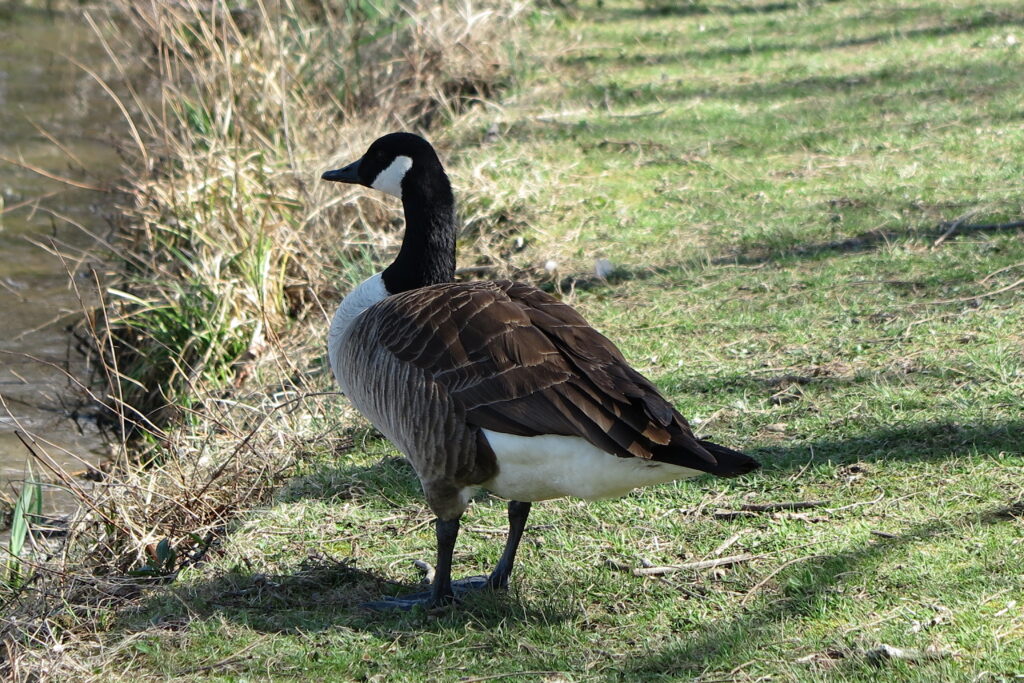
The Canada Goose (Branta canadensis) is one of the easiest large birds in North America to identify. Its long black neck, white cheek patch, and brown body create a distinctive appearance that stands out in wetlands, parks, rivers, and open landscapes. Even people with little birdwatching experience often recognize the species immediately.
Throughout its extensive range, the Canada Goose maintains consistent field marks that remain visible during every season. Adult birds display nearly identical patterns regardless of whether they occur in northern breeding areas or southern wintering grounds. This consistency helps make identification relatively straightforward.
Many observations occur from considerable distances as geese fly overhead or rest near water. Their upright posture and large body shape often attract attention before smaller details become visible. As observers move closer, the bold contrast between the black neck and white facial markings becomes apparent.
The species can be compared to a familiar road sign that remains recognizable from far away. Several identifying characteristics work together to create an unmistakable appearance. This combination of size, coloration, and body shape makes the Canada Goose one of the most recognizable waterfowl species in the world.
Canada Goose Size and Body Characteristics
The Canada Goose is a large, heavily built bird. Adults commonly measure between 30 and 43 inches in length and may weigh between 6 and 20 pounds depending on sex and geographic population. Their substantial size immediately separates them from many ducks and smaller waterfowl.
Wingspans often exceed five feet, allowing the birds to appear especially large during flight. Extended wings reveal long, broad feathers designed for sustained travel. The impressive wingspan contributes greatly to the species’ distinctive silhouette.
The body itself appears broad and somewhat elongated. The chest is full, while the rear body gradually narrows toward the tail. This streamlined shape allows efficient movement both on water and in flight.
Legs and feet are black and positioned toward the rear of the body. This placement assists swimming but produces the familiar waddling walk often observed on land. Their posture remains upright, particularly when standing alert.
Compared to Mallards or other common ducks, Canada Geese appear considerably taller and heavier. Their size can be compared to a small turkey or a medium-sized dog. This large body remains one of the easiest identification features visible even from long distances.
Canada Goose Plumage and Facial Markings
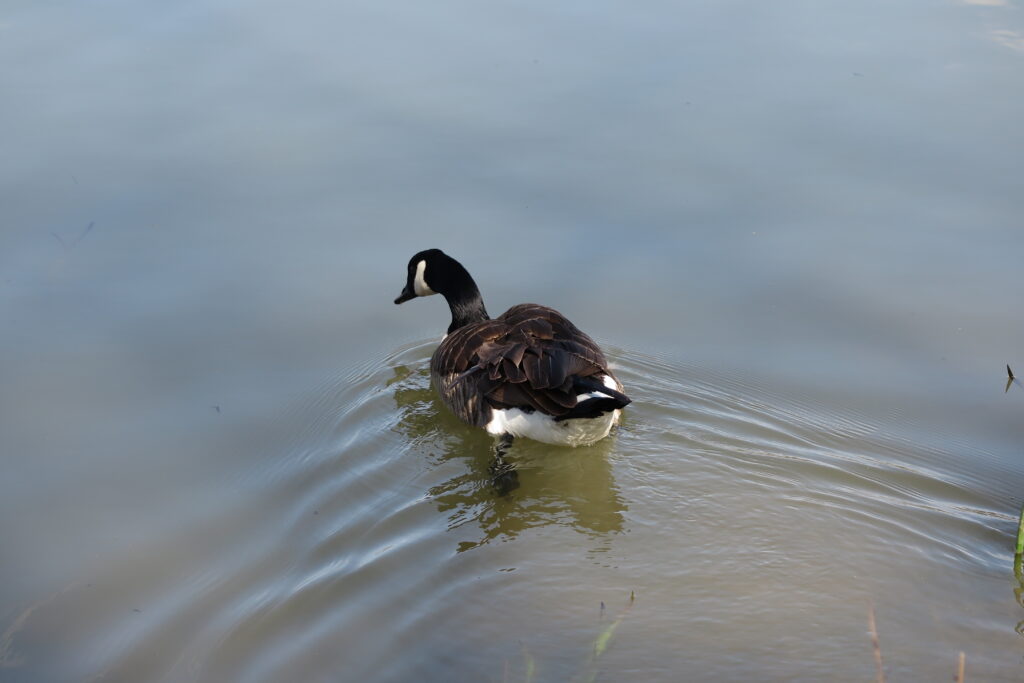
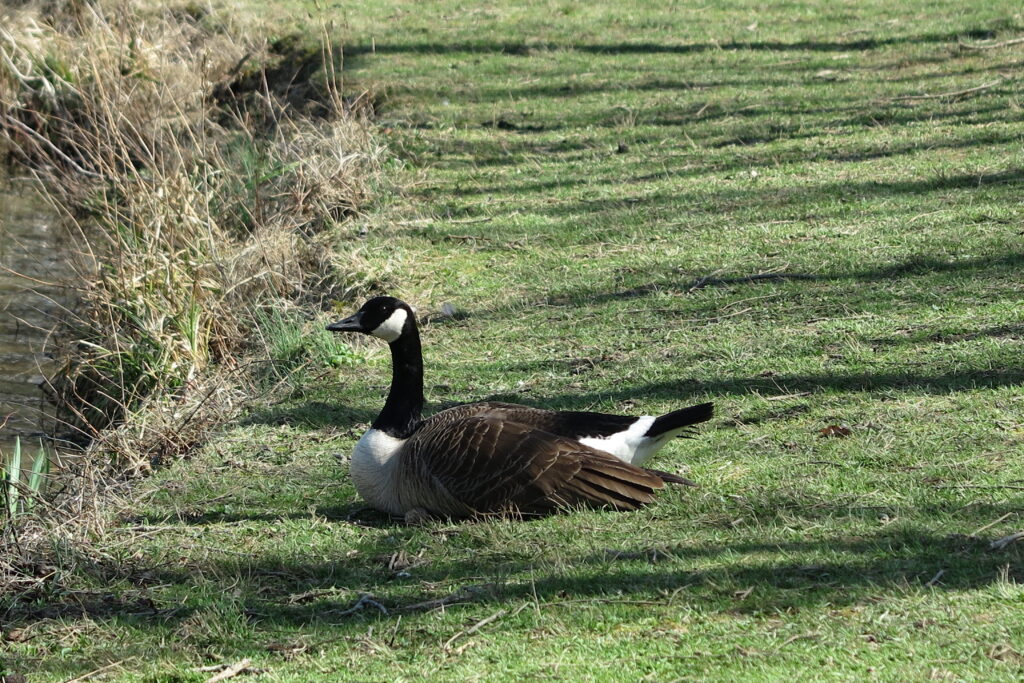
The head and neck of the Canada Goose are glossy black. This dark coloration extends from the bill down the entire length of the neck, creating one of the species’ most recognizable features. The black plumage contrasts strongly with the lighter body.
The white cheek patch serves as the primary field mark. This marking stretches from beneath the throat upward along both sides of the face. Birdwatchers often identify the species solely from this feature.
The breast typically appears light brown, tan, or grayish-brown. Feather coloration gradually becomes lighter along the lower portions of the body. These softer colors balance the dark neck and head.
Back feathers display varying shades of brown with lighter edges. This pattern creates a scaled appearance when viewed closely. Sunlight may reveal additional shades of chestnut, gray, and beige within the plumage.
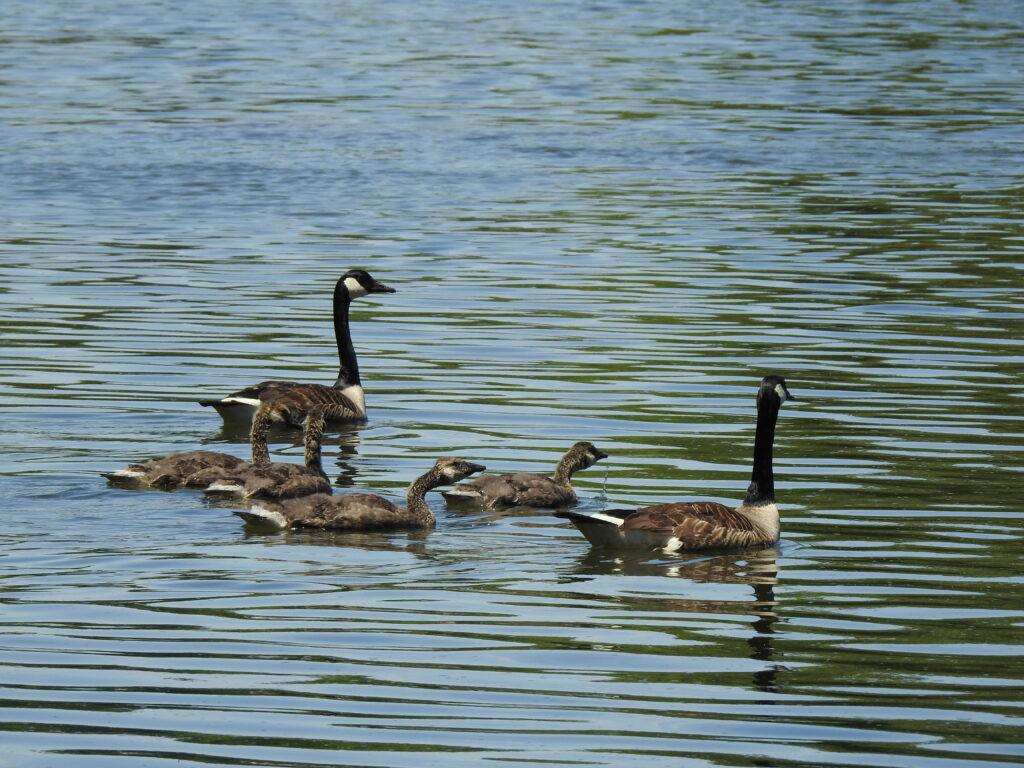
Young birds differ somewhat from adults. Juveniles often possess duller coloration and less sharply defined cheek patches. As they mature, the distinctive adult appearance gradually develops.
The face markings can be compared to a natural mask painted against a dark background. Few North American birds possess such bold facial patterns. This contrast allows rapid identification even in poor lighting conditions.
Canada Goose Lookalikes and Identification Tips
The Cackling Goose represents the species most commonly confused with the Canada Goose. Both birds possess similar coloration and facial markings. However, Cackling Geese are noticeably smaller with shorter necks and smaller bills.
Snow Geese also share portions of the Canada Goose’s range during migration. Adult Snow Geese are primarily white with black wing tips, making them relatively easy to distinguish. Their shorter necks and lighter coloration immediately separate them from Canada Geese.
Domestic geese occasionally create confusion as well. Farm geese may possess white, gray, or mixed plumage patterns and often appear bulkier. The wild Canada Goose maintains a more streamlined appearance and consistent field markings.
A practical identification method involves examining three major characteristics: the long black neck, the white cheek patch, and the large brown body. When these features occur together, the bird is almost certainly a Canada Goose. Few other North American birds combine these traits.
Observers can also use silhouette as an identification tool. A flying Canada Goose displays a long neck extended forward and a broad body positioned between wide wings. This profile remains recognizable even when color patterns are difficult to see.
The easiest way to remember Canada Goose identification is to focus on the face first and the body second. The white cheek patch immediately narrows the possibilities, while the large body confirms the identification. Together, these characteristics make the Canada Goose one of the simplest waterfowl species to recognize in North America.
Popular Searches About Canada Goose
Explore Canada Goose Guide
Explore More Wildlife

Support Encounters World
Help support wildlife photography and get behind the scenes discoveries on Patreon.