Red-Bellied Piranha Overview: Size, Appearance, Range, and Ecosystem Importance
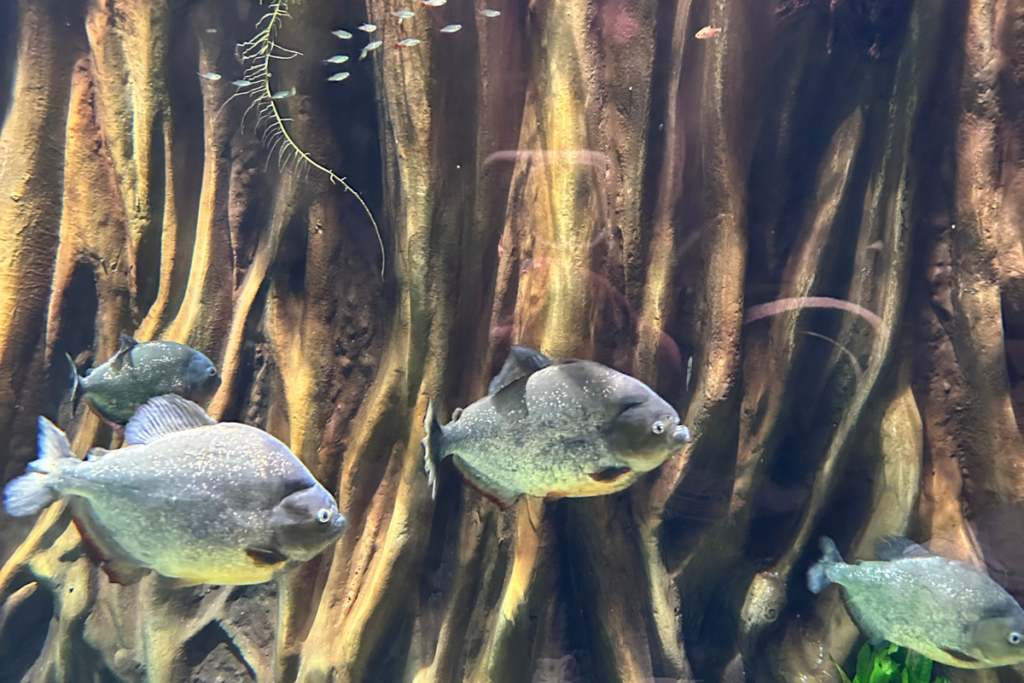
Quick Facts
Scientific Name: Pygocentrus nattereri
Common Name: Red-Bellied Piranha
Location: Freshwater Rivers, Floodplains, and Wetlands
Average Size: 8–14 inches (20–35 cm)
Lifespan: 8–12 years in the wild, up to 15 years in captivity
Global Range: South America
Conservation Status: Least Concern
Notable Feature: Powerful jaws paired with a bright red-orange underside
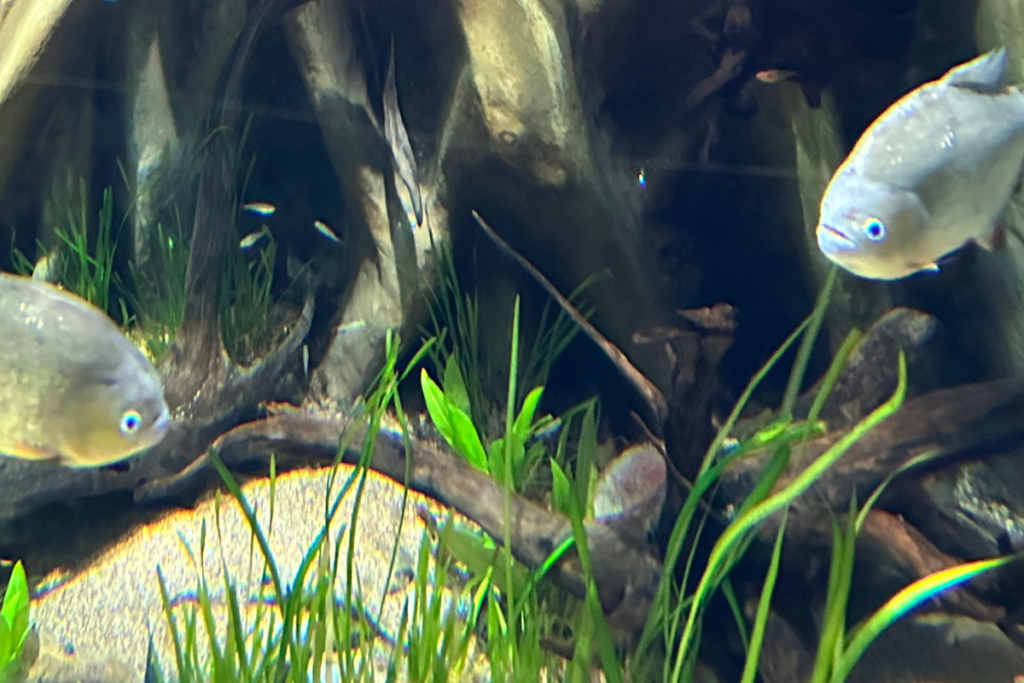
Location Observed: Atlanta Georgia Aquarium, USA
Field Observation
The red-bellied piranhas remained tightly grouped throughout the observation, swimming together as a coordinated school and rarely separating from one another. Even while moving freely through the exhibit, each fish stayed close to the group, suggesting the school provided added security and awareness through numbers.
Red-Bellied Piranha Overview and South American Range
The red-bellied piranha is one of the most recognizable freshwater fish in the world. Known for its deep body, silvery scales, and vibrant red-orange underside, this species has become closely associated with the rivers of tropical South America. Although often portrayed as a fearsome predator in popular media, the real animal is a complex and important part of freshwater ecosystems.
Its natural range extends across much of central and northern South America. Populations are found throughout the Amazon Basin, the Orinoco River system, and portions of the Paraguay-Paraná watershed. Together, these regions contain some of the largest and most biologically diverse freshwater environments on Earth.
The waterways inhabited by red-bellied piranhas flow through rainforests, wetlands, floodplains, and seasonal river channels. During annual flooding cycles, rivers expand into surrounding landscapes, creating vast aquatic networks that connect habitats and support thousands of species. The red-bellied piranha is among the best-known fish living within these dynamic ecosystems.
Few freshwater fish carry the same level of recognition. Whether featured in documentaries, books, or aquarium exhibits, the species immediately captures attention because of its appearance and reputation. Beyond its fame, however, the red-bellied piranha represents a remarkable example of the diversity found within South America’s river systems.
Red-Bellied Piranha Appearance and Physical Features
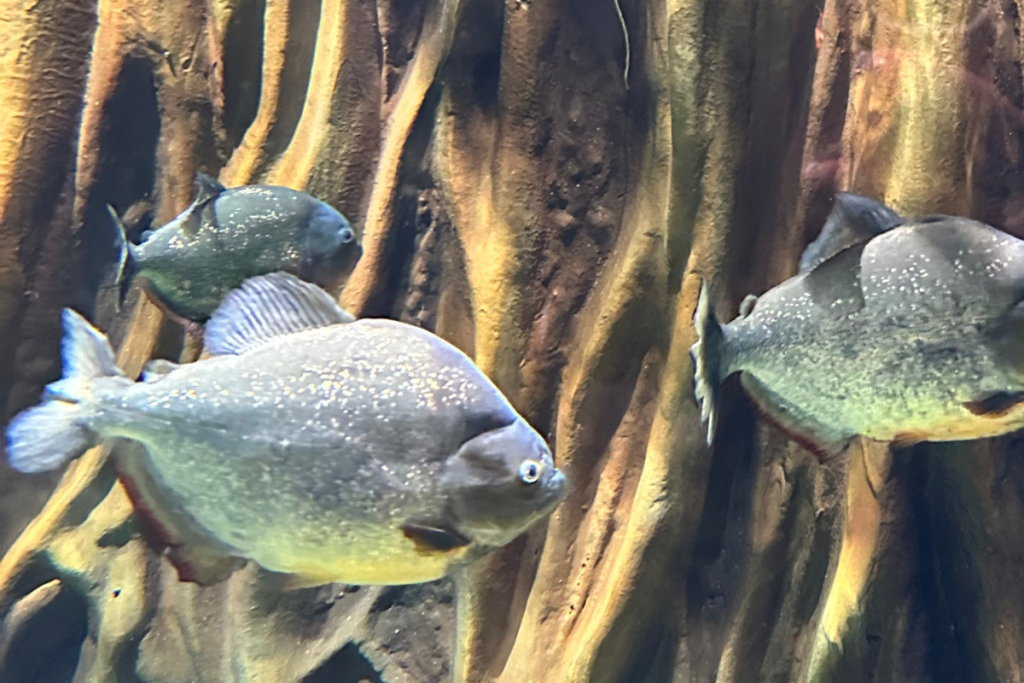
The red-bellied piranha possesses a compact yet muscular body that gives it a sturdy appearance. Adult fish commonly reach between 8 and 14 inches in length, making them similar in size to a standard dinner plate when viewed from the side. Their deep-bodied shape creates a larger visual profile than many freshwater fish of comparable length.
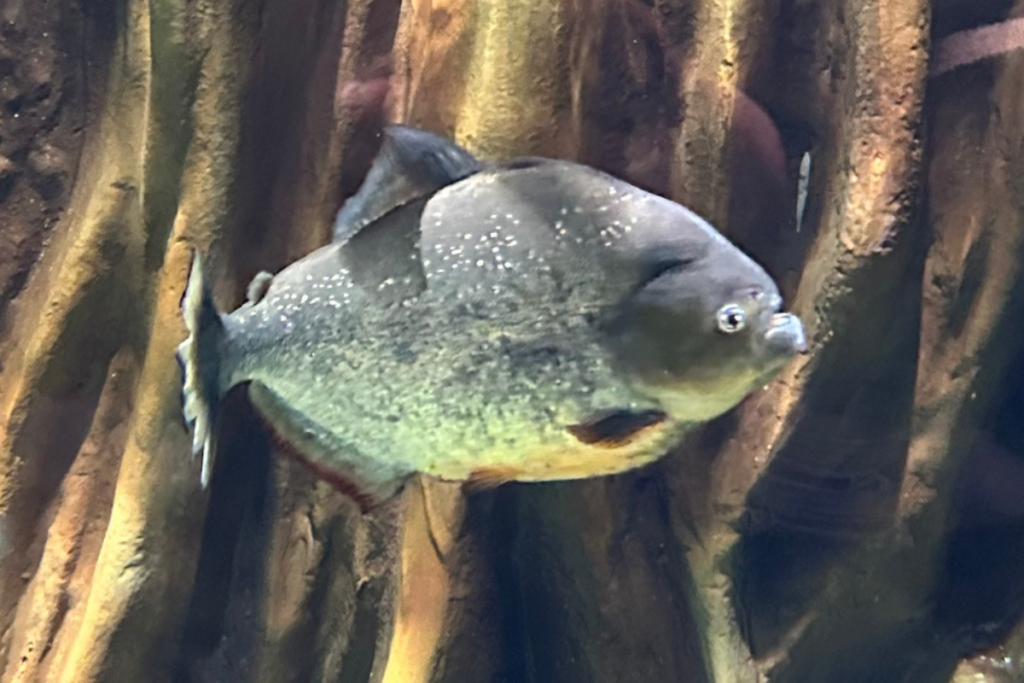
One of the species’ most distinctive characteristics is its coloration. The lower portion of the body often displays vivid shades of orange, red, or reddish-gold, creating a dramatic contrast against the silver-gray coloration covering the sides and upper body. This bright coloration is responsible for the common name that has made the species famous worldwide.
The scales reflect light in a metallic manner, giving the fish a polished appearance when viewed in clear water. Depending on age and location, some individuals may show darker spotting across the flanks. Juveniles often display more pronounced markings than mature adults, creating noticeable differences between age groups.
The head is broad and rounded with large eyes positioned toward the upper portion of the face. This gives the fish a distinctive profile that is easy to recognize even from a distance. The body gradually tapers toward the tail, creating a streamlined form that balances power with efficiency.
Color intensity can vary throughout the species’ range. Some populations display especially bright red undersides, while others exhibit more subdued orange tones. Despite these differences, the combination of a deep body, metallic scales, and colorful belly makes the red-bellied piranha one of the easiest freshwater fish to identify.
Red-Bellied Piranha Defining Characteristics and Recognition
Perhaps the most famous feature of the red-bellied piranha is its jaw structure. The jaws are short but exceptionally powerful, containing rows of sharp triangular teeth that interlock with remarkable precision. Each tooth fits neatly against neighboring teeth, creating a cutting surface unlike that found in most freshwater fish.
These teeth immediately distinguish the species from many other South American fishes. While numerous fish possess rounded or peg-shaped teeth, the red-bellied piranha displays blade-like structures that resemble miniature wedges. Their uniform shape creates one of the most recognizable dental arrangements in the aquatic world.
The fish’s body shape also contributes significantly to its identity. Compared with slender species such as tetras, minnows, or many river fish, the red-bellied piranha appears noticeably taller and more robust. Its broad chest and deep profile create a strong silhouette that remains recognizable even when viewed in murky water.
Another standout feature is the contrast between the dark upper body and brightly colored underside. This coloration pattern helps create the dramatic appearance for which the species is known. Combined with reflective scales and a rounded head, the result is a fish that stands apart from nearly every other freshwater species in its range.
Large eyes further contribute to the fish’s distinctive appearance. Together with the broad forehead and compact snout, they create a facial profile that is instantly recognizable. These features have helped establish the red-bellied piranha as one of the most iconic freshwater fish species on the planet.
Red-Bellied Piranha Role in Freshwater Ecosystems
The red-bellied piranha plays an important role within South America’s river ecosystems. Like many native fish species, it forms part of an interconnected food web that links aquatic plants, invertebrates, fish, reptiles, mammals, and birds. Its presence contributes to the stability and functioning of these diverse freshwater communities.
Healthy river systems depend on countless species occupying different ecological positions. The red-bellied piranha serves as one of many links that help move energy through aquatic environments. Without such connections, ecosystems become less efficient and less resilient to environmental change.
The species also contributes to natural nutrient cycling. Rivers constantly receive organic material from surrounding forests, floodplains, and aquatic habitats. Through its role within the ecosystem, the red-bellied piranha helps ensure that nutrients continue moving through the environment rather than remaining concentrated in a single location.
In turn, the fish becomes an important resource for larger wildlife. River dolphins, giant otters, caimans, large predatory fish, and various waterbirds all form part of the broader ecological network connected to piranha populations. These relationships demonstrate how even a well-known predator remains dependent upon a larger community of organisms.
The red-bellied piranha ultimately represents far more than its popular reputation suggests. It is a native component of some of the world’s richest freshwater ecosystems and contributes to their long-term balance and health. Across the rivers of South America, this remarkable fish remains an important piece of one of Earth’s most diverse aquatic environments.
Observation Location
Observed in Atlanta Georgia Aquarium, USA
Popular Searches About Red-Bellied Piranha
Explore Red-Bellied Piranha Guide
Explore More Exhibits

Support Encounters World
Help support wildlife photography and get behind the scenes discoveries on Patreon.