
White-Tailed Deer Antler Fragment Surface Features & Landmarks Guide | Identification Characteristics and Bone Structure
Quick Facts
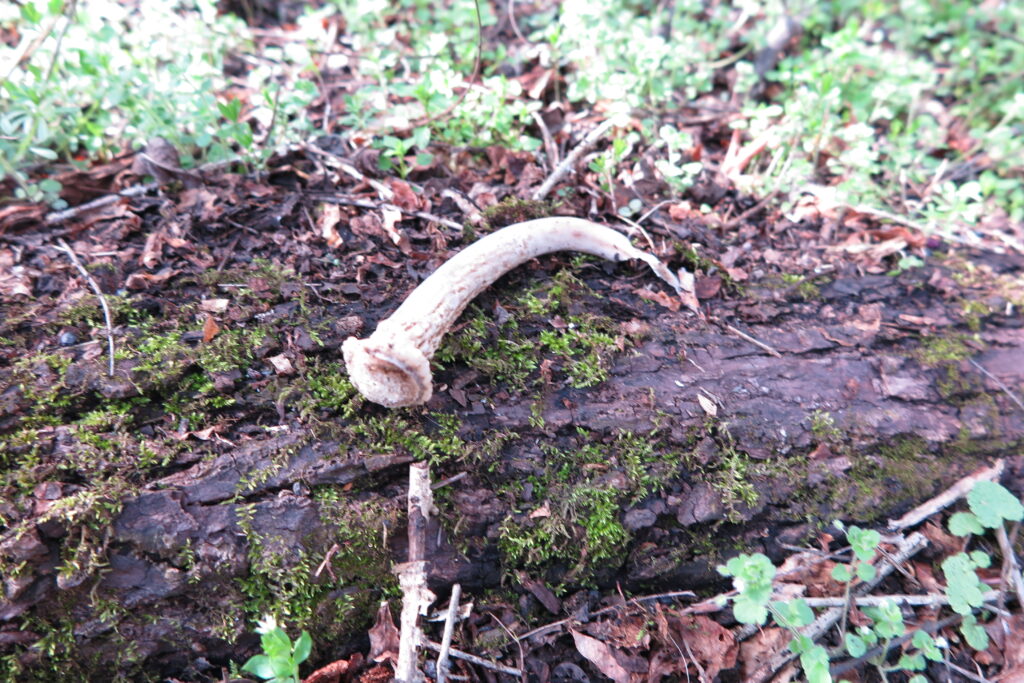
Bone Composition: Dense outer bone with porous internal core visible in damaged areas
Surface Texture: Weathered, grooved, partially smooth with localized chew marks
Bone Thickness: Moderate to thick throughout preserved beam section
Curvature: Gently curved beam-like arc
Edges & Break Pattern: Broken tip with rounded weathered fracture surfaces
Visible Landmarks: Burr, longitudinal grooves, beam surface, fractured tip, chew marks
Weight: Moderate for size due to dense bone composition
Symmetry: Asymmetrical
Structural Strength: High durability with resistance to weathering and impact
White-Tailed Deer Antler Fragment Identification and Discovery
A white-tailed deer antler fragment represents a detached portion of a buck’s antler, a structure unique among North American mammals for its annual cycle of growth and shedding. Unlike permanent horns, antlers are produced, used, and discarded repeatedly throughout the animal’s life. The specimen examined here preserves several recognizable surface features despite weathering and age.
White-tailed deer occur across much of North America, occupying forests, agricultural landscapes, wetlands, brushlands, and suburban green spaces. Because mature bucks shed their antlers each year, fragments occasionally remain on the landscape long after the original antler has broken apart. These remnants provide useful clues for identifying wildlife remains found during outdoor exploration.
Most people encounter antler fragments unexpectedly while hiking, wildlife watching, or exploring wooded areas. A pale curve emerging from leaves, resting on a fallen log, or partially buried beneath soil often attracts attention because it differs noticeably from surrounding natural materials. Even heavily weathered examples tend to retain their distinctive appearance.
At first glance, many observers recognize that an antler fragment is unusual without immediately knowing its origin. The combination of curved form, dense bone texture, and irregular branching characteristics creates a shape rarely confused with ordinary sticks or rocks. Closer examination reveals additional details that confirm its identity.
White-Tailed Deer Antler Fragment Overall Form and Appearance
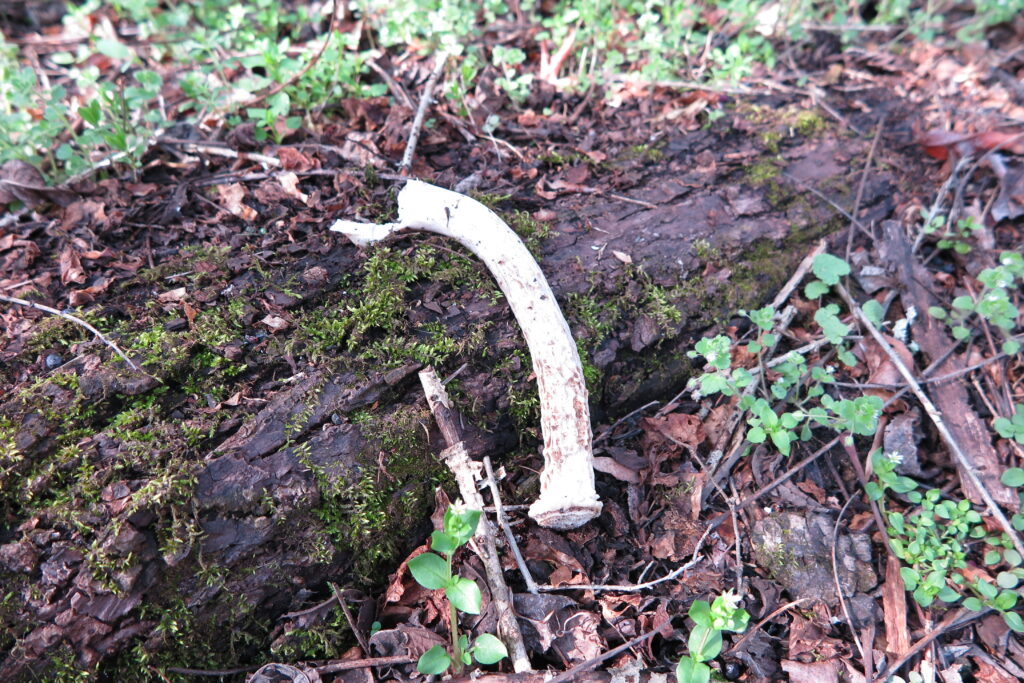
Viewed from a distance, a white-tailed deer antler fragment often resembles a naturally curved handle or section of weathered hardwood. Its sweeping profile immediately distinguishes it from the flatter shapes commonly seen in skeletal fragments. Even incomplete specimens maintain enough of their original form to remain recognizable.
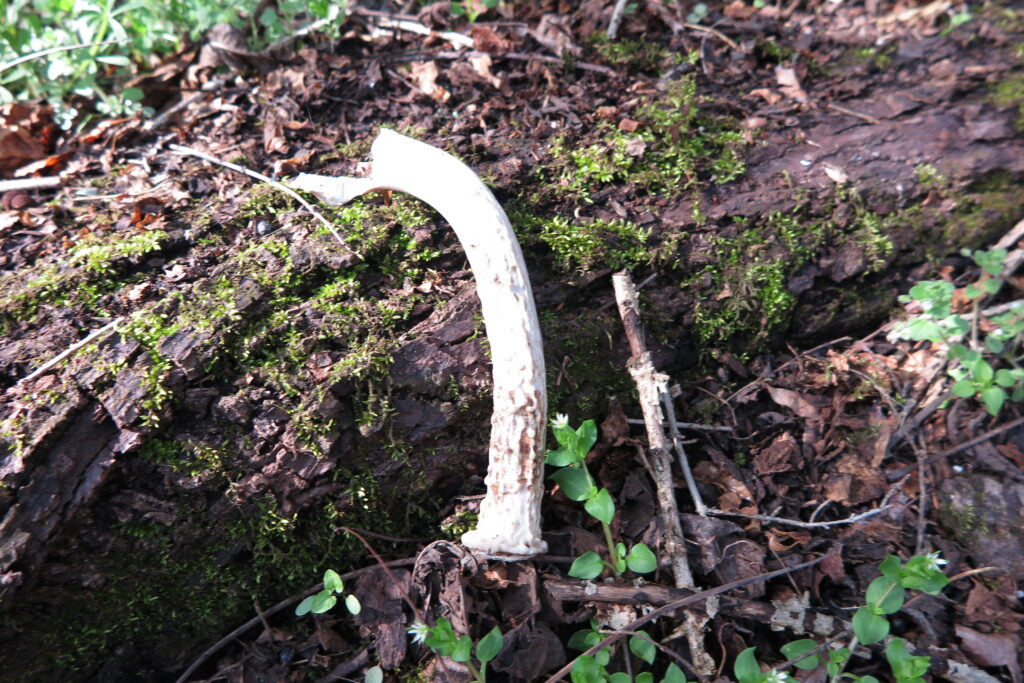
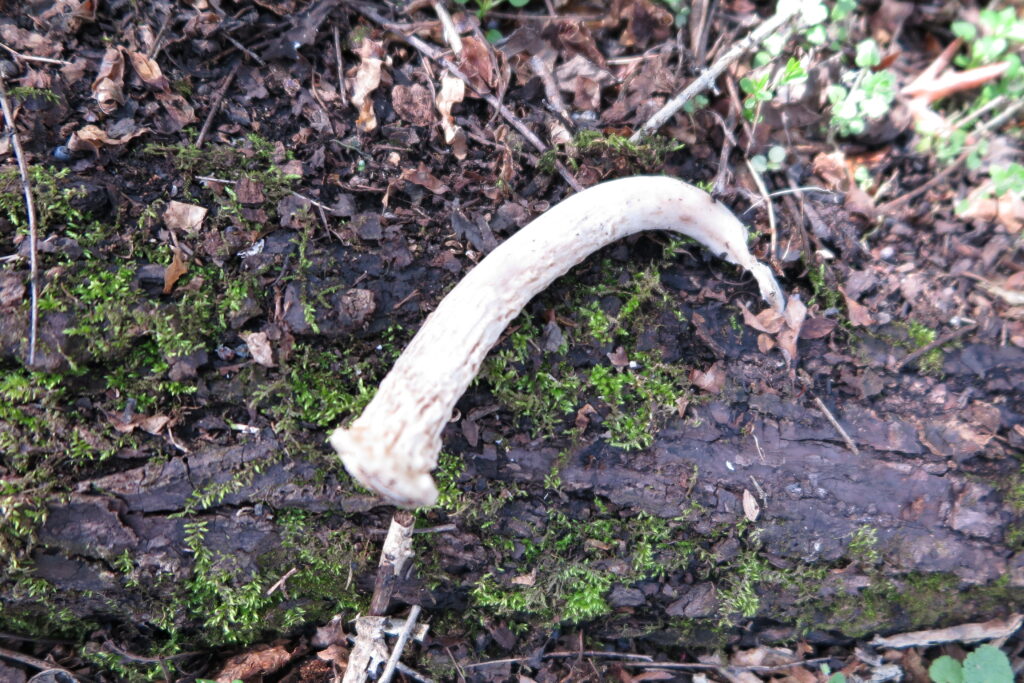
The preserved section examined here displays a substantial beam-like structure with a gradual curve extending along its length. Rather than appearing straight and uniform, the fragment follows a natural arc produced during antler growth. This curvature gives the specimen an organic appearance that reflects the complexity of the original antler.
Surface coloration varies depending on age and exposure, but weathered fragments frequently develop pale cream, gray, or light tan tones. The specimen shown displays evidence of prolonged exposure, creating subtle contrasts across the surface. Small variations in color highlight areas affected differently by sunlight, moisture, and wear.
In broad terms, the fragment can be compared to a worn piece of driftwood shaped into a hook-like curve. While the comparison helps describe the general appearance, the dense bone material quickly separates it from wood upon handling. Its heavier feel and distinctive texture become obvious during close inspection.
White-Tailed Deer Antler Fragment Structural Composition and Physical Build
The physical construction of a deer antler differs from many other skeletal elements. Antlers consist of true bone tissue produced during a rapid seasonal growth period. Although they eventually harden into durable structures, their internal organization remains distinct from the long bones typically found elsewhere in the skeleton.
The preserved beam section demonstrates considerable thickness relative to its overall size. Dense outer layers create a durable shell capable of resisting impacts and environmental wear. Even after years of exposure, the fragment remains structurally intact despite evidence of weathering and chewing.
Curvature is distributed gradually along the length of the specimen rather than concentrated at a single point. This smooth arc reflects the original growth pattern of the antler beam. Similar curvature can sometimes be seen in naturally bent tool handles or walking sticks, though antler possesses a much denser composition.
Where damaged surfaces are visible, the internal structure may reveal a more porous appearance compared with the dense exterior. This contrast between outer compact bone and inner spongier material is common in antlers. The combination creates a structure that balances durability with manageable weight, allowing antlers to reach impressive sizes without becoming excessively heavy.
White-Tailed Deer Antler Fragment Surface Features and Identification Landmarks
Several distinctive landmarks help confirm the identity of this specimen as a white-tailed deer antler fragment. The most significant feature is the preserved burr near the base. This rough, ring-like structure marks the area where the antler was attached to the pedicle of the skull and serves as one of the strongest identification clues available.
Longitudinal grooves extend across portions of the outer surface, creating visible texture even after weathering. These shallow channels follow the natural growth pattern of the antler and remain evident despite years of environmental exposure. Their presence separates antler fragments from many ordinary bone fragments that possess smoother surfaces.
The broken tip represents another important landmark. Rather than ending in a naturally tapered point, the fragment terminates in a fractured surface showing evidence of breakage and subsequent weathering. Rounded edges indicate that the break did not occur recently and has been modified over time by environmental conditions.
Chew marks provide additional identifying detail visible on portions of the specimen. These marks often appear as shallow scrapes, grooves, or irregular worn areas created when rodents and other animals gnaw antlers for minerals. When combined with the burr, beam curvature, and growth grooves, these features create a distinctive set of landmarks that make identification considerably easier. A wildlife enthusiast comparing this fragment to an ordinary branch, root, or skeletal bone would quickly notice that the combination of textures and structures is unique to antler material.
Popular Searches About Deer Antler Fragments
Explore Deer Antler Fragment Guide
Explore More Bones

Support Encounters World
Help support wildlife photography and get behind the scenes discoveries on Patreon.