
Land Planarian (Terrestrial Flatworm) Overview: Identification, Characteristics, and Ecological Role
Quick Facts
Scientific Name: Order Tricladida (Land Planarians)
Common Name: Land Planarian, Terrestrial Flatworm
Location: North America, Europe, Asia, Australia, South America, and other regions worldwide
Average Size: 1–12 inches (2.5–30 cm), depending on species
Lifespan: Several months to multiple years
Global Range: Worldwide in suitable environments
Conservation Status: Not Evaluated
Notable Feature: Flattened body capable of remarkable regeneration
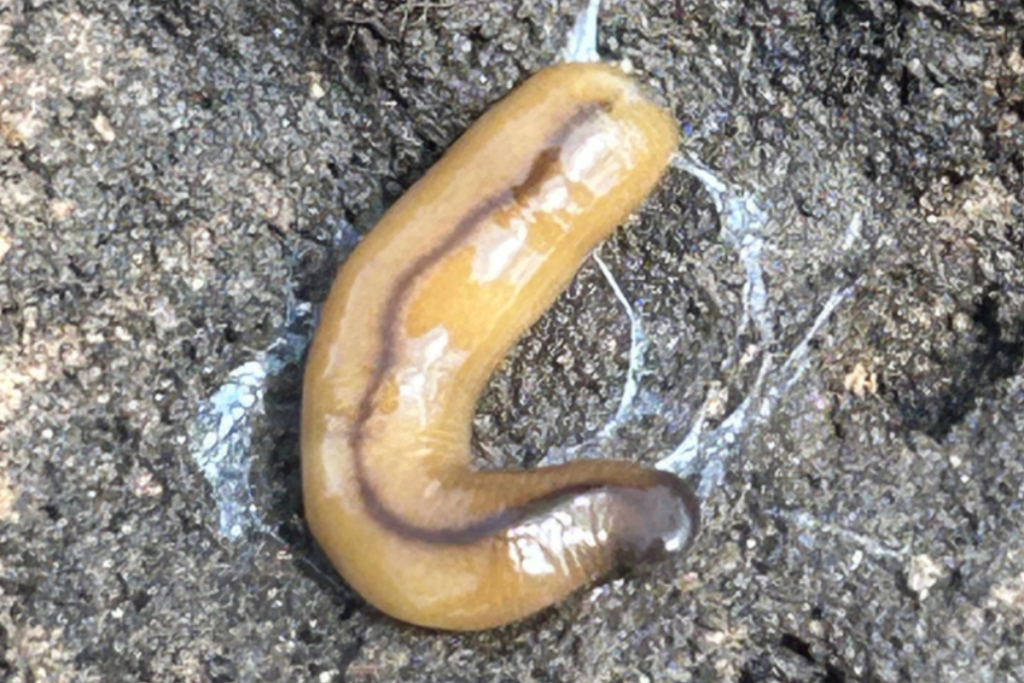
Location Observed: Pennsylvania, USA
Field Observation
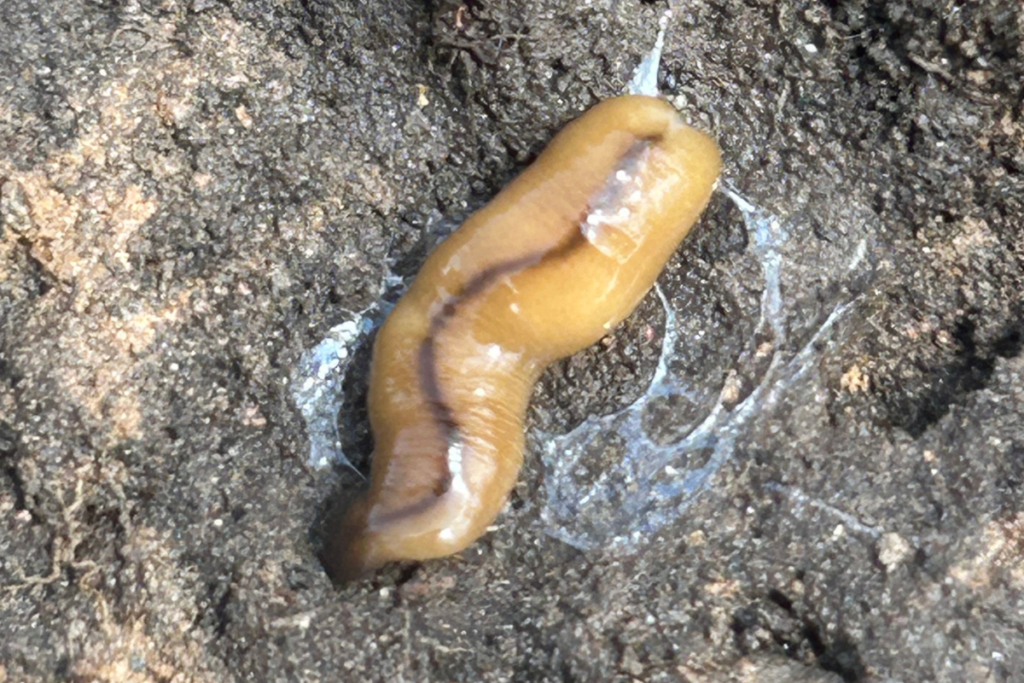
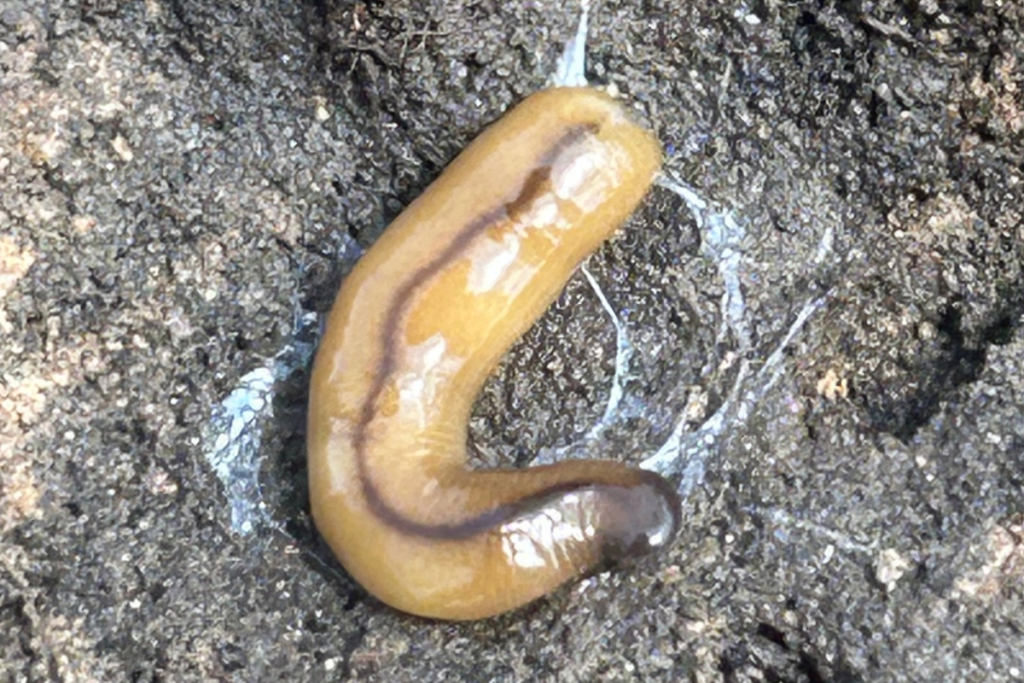
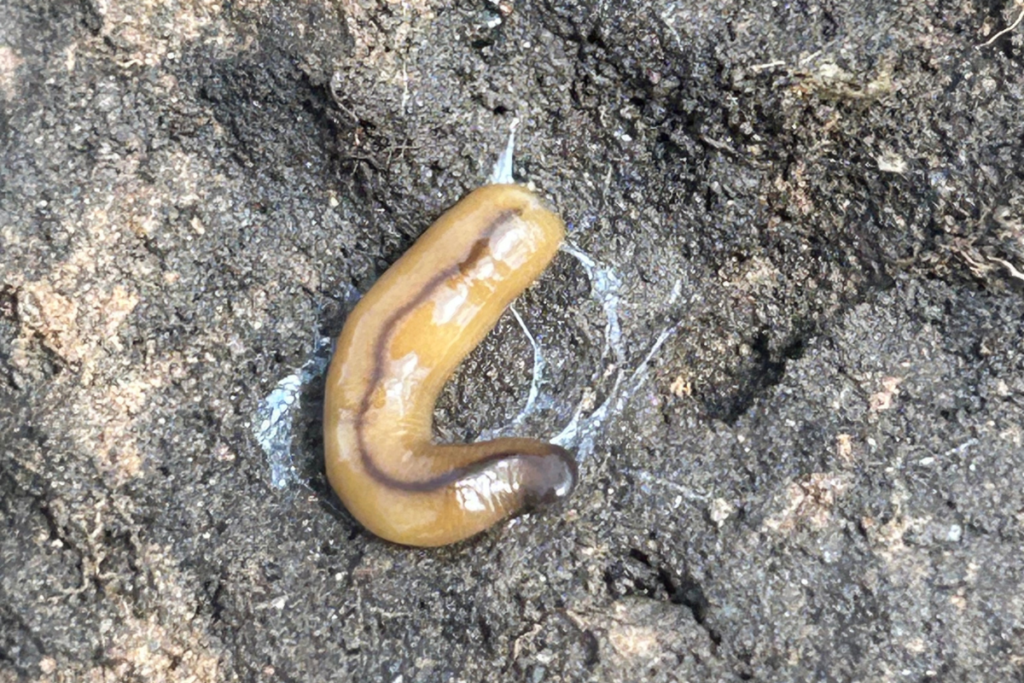
During my observation, this land planarian was found beneath a rock on damp soil, leaving behind a visible trail of mucus as it moved. Its movement was extremely slow and deliberate, yet it rarely remained completely still, continuing to glide steadily across the surface. The constant motion and glossy slime trail made it easy to follow despite its subtle coloration.
Introduction to the Land Planarian and Its Global Presence
The land planarian, commonly known as a terrestrial flatworm, is one of the most unusual invertebrates found on land. Unlike earthworms, insects, or slugs, these animals belong to a group of flatworms that evolved a completely different body structure. Their smooth appearance and ribbon-like form often leave observers wondering exactly what they have encountered.
Land planarians occur in many parts of the world and have been recorded across multiple continents. Various species are found throughout North America, Europe, Asia, Australia, South America, and numerous island regions. Some species are native to their locations, while others have expanded their range through accidental human transport.
Many people first encounter a terrestrial flatworm after rain or while moving rocks, logs, flowerpots, or other objects resting on the ground. Their unusual appearance immediately stands out from more familiar backyard creatures. Because they are less commonly observed than earthworms or slugs, sightings often generate curiosity and questions about identification.
Although numerous species exist, they share a generally recognizable body form that distinguishes them from most other soil-dwelling invertebrates. Some are small enough to fit comfortably on a fingertip, while others reach lengths comparable to a pencil. This variation contributes to the diversity found within the group.
Scientific interest in land planarians has increased in recent decades as researchers have studied their distribution and ecological significance. Their ability to survive in a variety of regions has allowed them to establish populations in places far from their original range. As a result, they have become increasingly familiar to naturalists and wildlife observers.
Despite their simple appearance, land planarians represent a fascinating branch of animal life. Their unique anatomy, worldwide distribution, and unusual biological characteristics make them one of the more intriguing invertebrates encountered in terrestrial ecosystems.
Land Planarian Appearance and Distinctive Body Structure
The most recognizable feature of a land planarian is its flattened body. Unlike the rounded form of an earthworm, a terrestrial flatworm appears compressed from top to bottom, giving it a ribbon-like profile. This characteristic immediately separates it from many other animals found in soil environments.
Coloration varies significantly between species. Some individuals display shades of brown, tan, gray, or black, while others possess striking stripes, bands, or contrasting patterns. Certain species feature a dark line running down the center of the body, creating a highly distinctive appearance when viewed from above.
Size can differ dramatically depending on species and age. Smaller land planarians may measure only an inch in length, while larger species can exceed ten inches. A medium-sized individual often resembles a narrow strip of wet leather or a flattened shoelace resting on the ground.
The head region is another notable feature. Some species possess a simple rounded front end, while others display a widened or shovel-like head shape. These differences can be useful for identification and help distinguish one group of terrestrial flatworms from another.
The body surface often appears glossy due to a coating of mucus. In sunlight, this moisture can create a reflective sheen that makes the animal look almost polished. This smooth appearance contributes to the distinctive look that separates land planarians from rougher-bodied invertebrates.
Although simple in overall design, the combination of flattened shape, varied coloration, and smooth texture creates an unmistakable appearance. Even individuals unfamiliar with terrestrial flatworms often recognize that they are observing something different from the more common worms and slugs found in similar environments.
General Characteristics That Make Land Planarians Unique
Land planarians possess several characteristics that make them stand out among terrestrial invertebrates. One of the most remarkable is their extremely simple yet efficient body organization. Unlike animals with complex skeletal systems, terrestrial flatworms rely entirely on soft tissues for support and movement.
Their flattened anatomy increases surface area while maintaining a relatively thin profile. This design gives them an appearance similar to a living ribbon or strip of fabric laid across the ground. Compared to the cylindrical shape of an earthworm, the difference is immediately noticeable.
Perhaps the most famous characteristic of land planarians is their ability to regenerate damaged body parts. Some species can replace lost sections through biological processes that continue to fascinate scientists. This regenerative capability has made flatworms important organisms in scientific research.
Another defining trait is the absence of obvious external appendages. There are no visible legs, antennae, wings, or shells. The body appears streamlined and minimalistic, creating a form that differs dramatically from insects, spiders, and many other terrestrial animals.
The texture of the body further contributes to its unusual appearance. The smooth, moist surface often resembles polished rubber or soft gelatin. This quality gives terrestrial flatworms a distinctive look that remains memorable even after a brief observation.
Taken together, these features create an animal unlike almost anything else commonly encountered outdoors. Their combination of flat anatomy, regenerative ability, and simplified body design makes land planarians one of the most recognizable groups of terrestrial invertebrates.
The Ecological Role of Land Planarians in Natural Systems
Land planarians occupy an important position within soil and ground-level ecosystems. As part of broader invertebrate communities, they contribute to the balance of organisms living beneath logs, stones, leaf litter, and other protected areas. Their presence reflects the complexity of life occurring below the surface of everyday landscapes.
Within food webs, terrestrial flatworms function as both consumers and potential prey. This dual role allows them to participate in the movement of energy through ecosystems. Like many invertebrates, they help connect smaller organisms with larger predators higher in the food chain.
Their influence extends beyond direct interactions with individual species. By participating in soil-level ecological processes, land planarians contribute to the diversity and structure of underground communities. Healthy ecosystems often depend on a wide variety of organisms occupying different ecological roles.
In some regions, introduced species have attracted attention because of their effects on local invertebrate populations. These situations highlight the importance of understanding ecological relationships and monitoring species distributions. The impact of a single organism can sometimes extend throughout an entire community.
A useful comparison is to think of soil ecosystems as a complex neighborhood. Every resident performs a different function, and changes affecting one group can influence many others. Land planarians represent one of the specialized residents that help shape how these systems operate.
Although rarely noticed by the average person, terrestrial flatworms play a meaningful role in the environments they inhabit. Their presence contributes to ecological complexity, biodiversity, and the intricate interactions that help natural systems function over time.
Observation Location
Observed in York, Pennsylvania, USA
Popular Searches About Land Planarians
Explore Land Planarian Guide
Explore More Wildlife

Support Encounters World
Help support wildlife photography and get behind the scenes discoveries on Patreon.