Red Ant (Myrmica Ant) Behavior – Activity, Movement, and Colony Interaction Explained
Quick Facts
Activity Type: Primarily diurnal, with activity peaks during warm daylight hours
Social Structure: Highly social, organized colonies with queens and worker castes
Territorial Behavior: Moderately territorial around nest entrances and foraging zones
Movement Style: Quick, erratic bursts with coordinated group flow
Communication Method: Chemical signaling (pheromones) and physical contact
Defense Strategy: Group response, stinging capability, rapid relocation of brood
Introduction to Red Ant (Myrmica Ant) Behavior in Natural Settings
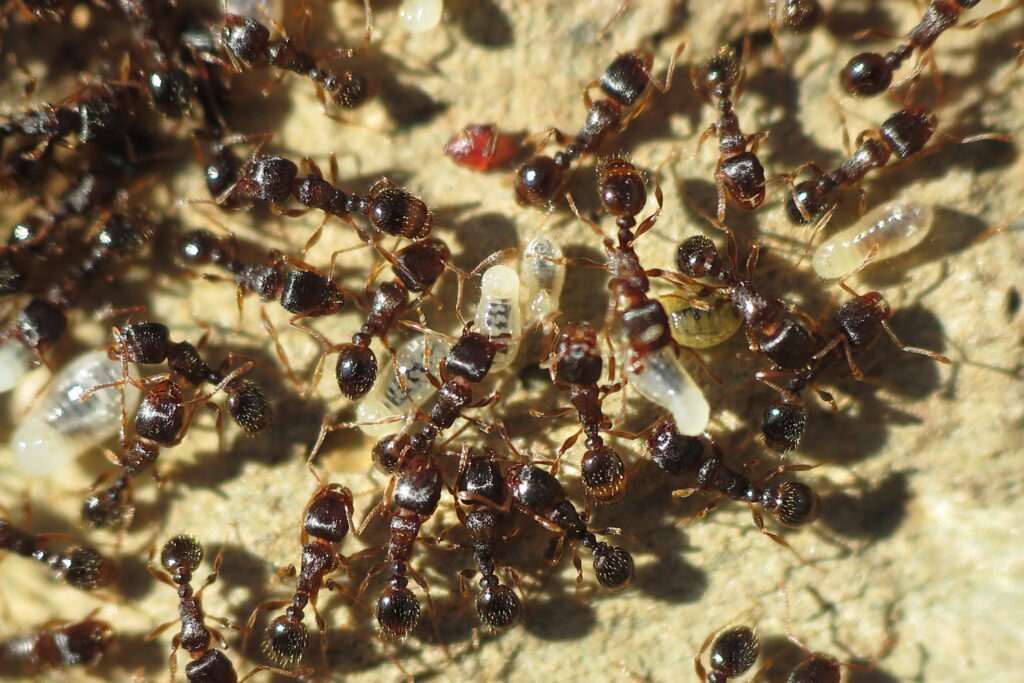
Red ants belonging to the genus Myrmica are small but highly active insects that display a constant sense of motion when observed closely. Their presence is often first noticed through movement rather than appearance, as individuals quickly navigate across soil, leaves, or exposed ground. Even a brief encounter reveals a level of coordination that suggests a larger system at work beneath the surface.
These ants are found across a wide global range, occupying temperate regions in North America, Europe, and Asia. They are commonly encountered in open environments such as grassy fields, forest edges, and garden spaces where soil conditions allow for easy tunneling. In these areas, their behavior becomes visible through surface activity, especially when the ground is disturbed.
From a distance, their activity can appear chaotic, with multiple individuals moving in different directions at once. However, closer observation reveals a structured pattern to their movement, as ants follow invisible chemical trails and respond to subtle cues from one another. This underlying organization gives their activity a sense of purpose, even when it appears random at first glance.
Moments of direct observation often occur when their colony is exposed, such as when a rock is lifted or soil is shifted. In these situations, their behavior becomes more intense and immediate, offering a clear view of how quickly they respond as a group. These brief glimpses provide insight into a complex and highly responsive system operating just beneath the ground.
Red Ant (Myrmica Ant) Behavior Overview and General Activity Patterns
Myrmica ants are consistently active insects that rarely remain still for long periods. When undisturbed, they maintain a steady level of motion, with individuals moving in and out of unseen nest entrances or traveling across the surface in short, purposeful paths. This constant activity gives the impression of a system that is always operating, even at a small scale.
Their behavior can be compared to a busy sidewalk in a city, where each individual appears to have a destination and moves accordingly. While there may be brief pauses or changes in direction, the overall pattern remains fluid and continuous. This level of organization becomes more noticeable when observing multiple ants interacting within a small area.
When left undisturbed, Myrmica ants tend to follow established paths, often moving along subtle trails that are not immediately visible to the human eye. These routes allow them to travel efficiently without unnecessary wandering, creating a sense of flow within their movement. Even without obvious landmarks, they navigate with precision.
Their responsiveness to environmental changes is immediate. A sudden disturbance, such as movement nearby or exposure of their nesting area, triggers a noticeable increase in activity. Ants that were previously moving at a steady pace shift into rapid motion, adjusting direction and speed in response to new conditions. This adaptability highlights their ability to quickly transition from routine activity to heightened alertness.
Movement and Daily Activity Patterns of Myrmica Ants
The movement of Myrmica ants is characterized by quick, stop-and-go motion that appears almost jittery when viewed up close. Individuals move in short bursts, frequently changing direction as they navigate across uneven terrain. This style of movement allows them to respond rapidly to obstacles and adjust their path without hesitation.
Their activity is most noticeable during daylight hours, particularly when temperatures are moderate. Warmer conditions tend to increase movement speed and surface activity, while cooler temperatures may slow their pace or reduce visible activity altogether. This pattern creates a rhythm where activity rises and falls depending on environmental conditions.
Seasonal changes also influence their movement patterns. During warmer months, ants are more frequently seen above ground, while cooler seasons may limit their surface presence. Despite these shifts, the colony remains active beneath the surface, with movement continuing within their underground network even when not visible.
A useful comparison for their motion is that of sparks from a fire—small, quick, and constantly shifting direction. Each ant moves independently, yet collectively they create a dynamic and ever-changing pattern. This combination of individual movement and group flow allows the colony to cover ground efficiently while maintaining flexibility in how they respond to their surroundings.
Interaction and Survival Behavior of Red Ant (Myrmica Ant) Colonies
Myrmica ants rely heavily on interaction with one another to maintain their colony structure and respond to challenges. Physical contact between individuals is frequent, often involving brief touches with their antennae. These interactions allow them to exchange information quickly, coordinating their actions without any visible signals.
When faced with a threat, their response is immediate and collective. Ants that detect danger increase their movement speed and may converge toward the source of disturbance. This group response creates a sudden surge of activity, where multiple individuals act together rather than independently. It is a clear example of how their strength lies in coordination rather than size.
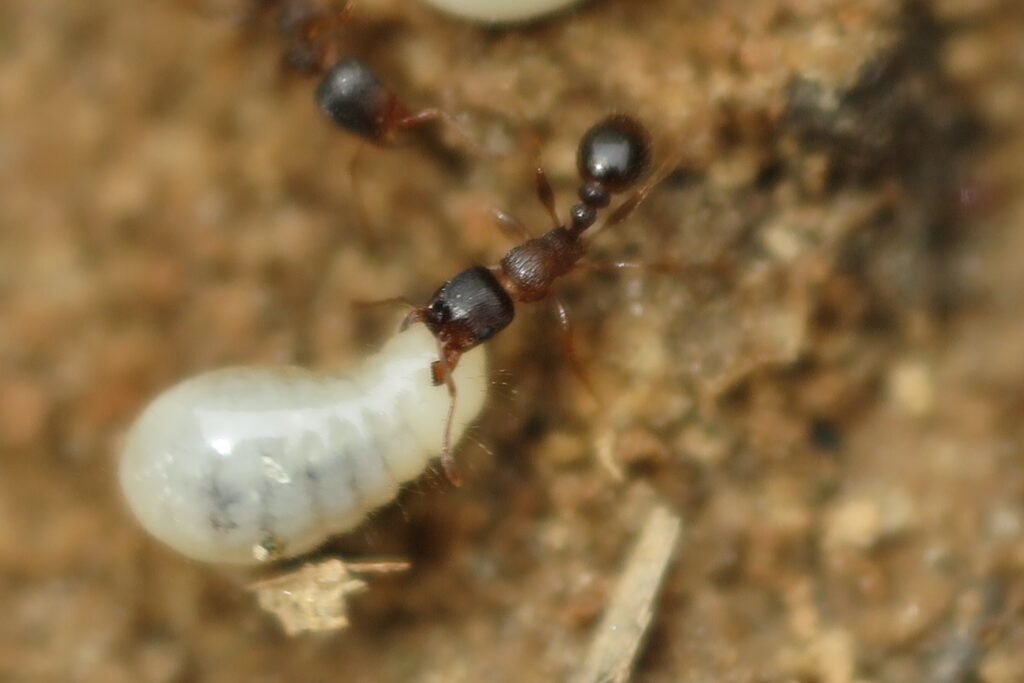
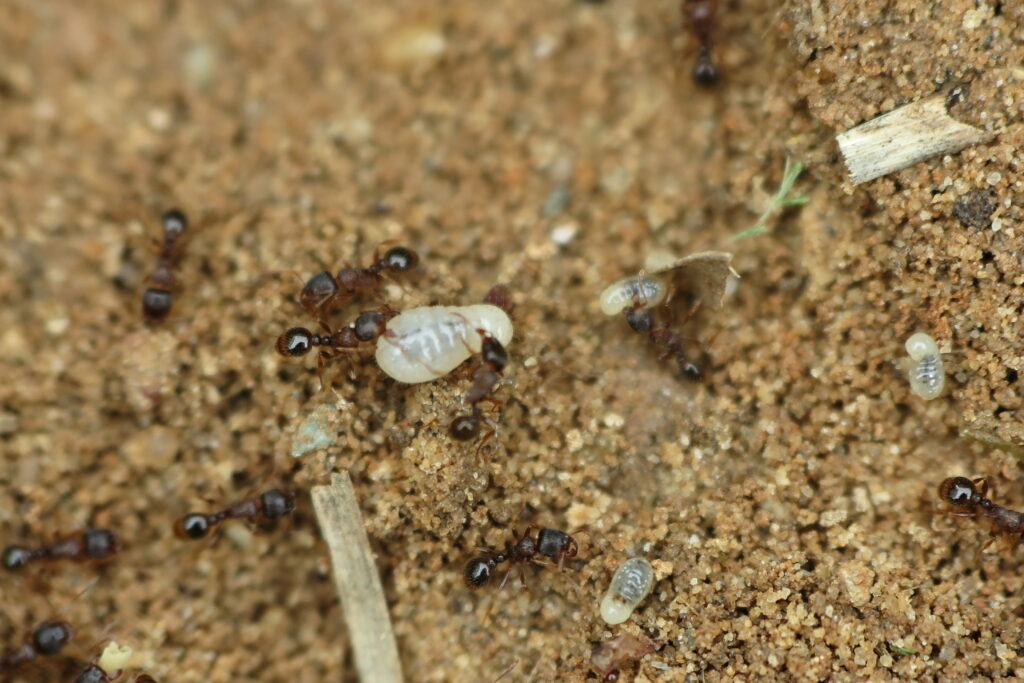
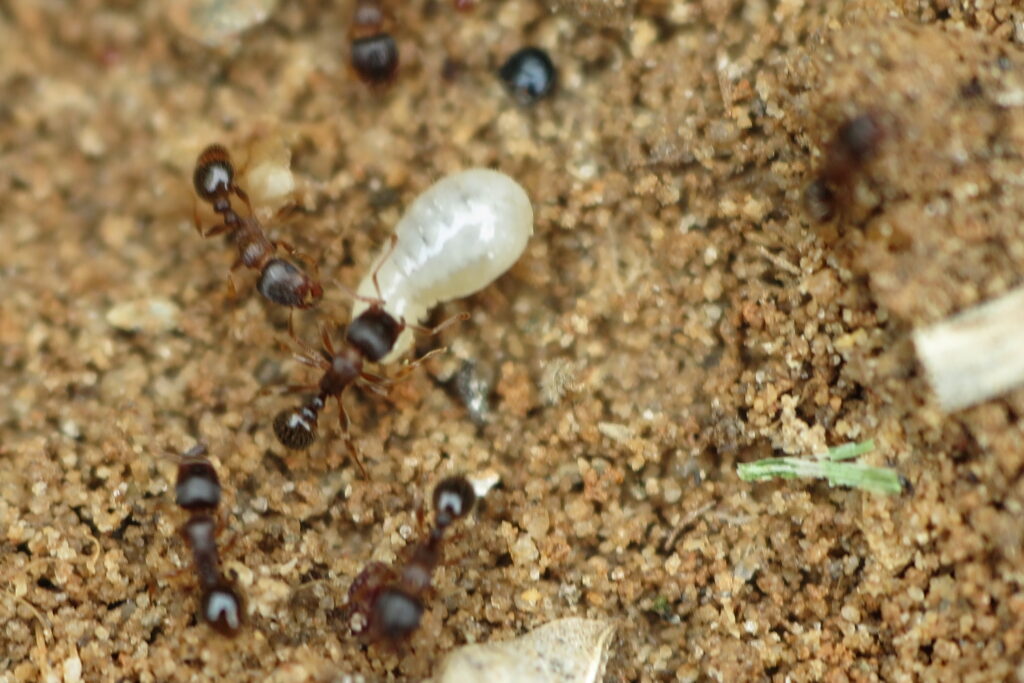
One of the most striking survival behaviors occurs when their colony is exposed. Workers rapidly gather vulnerable members of the colony, such as larvae and pupae, and begin transporting them to safer locations. This process happens quickly and with little hesitation, demonstrating a strong instinct to protect developing individuals.
In addition to relocation, Myrmica ants may use defensive actions to deter threats. Some species are capable of stinging, while others rely on sheer numbers and movement to overwhelm or discourage potential danger. Their ability to switch from routine activity to defensive coordination within seconds highlights the efficiency of their survival strategies, allowing them to persist in a wide range of environments.