Are Black Rat Snakes Poisonous? Venom Facts, Safety, and Human Risk Guide
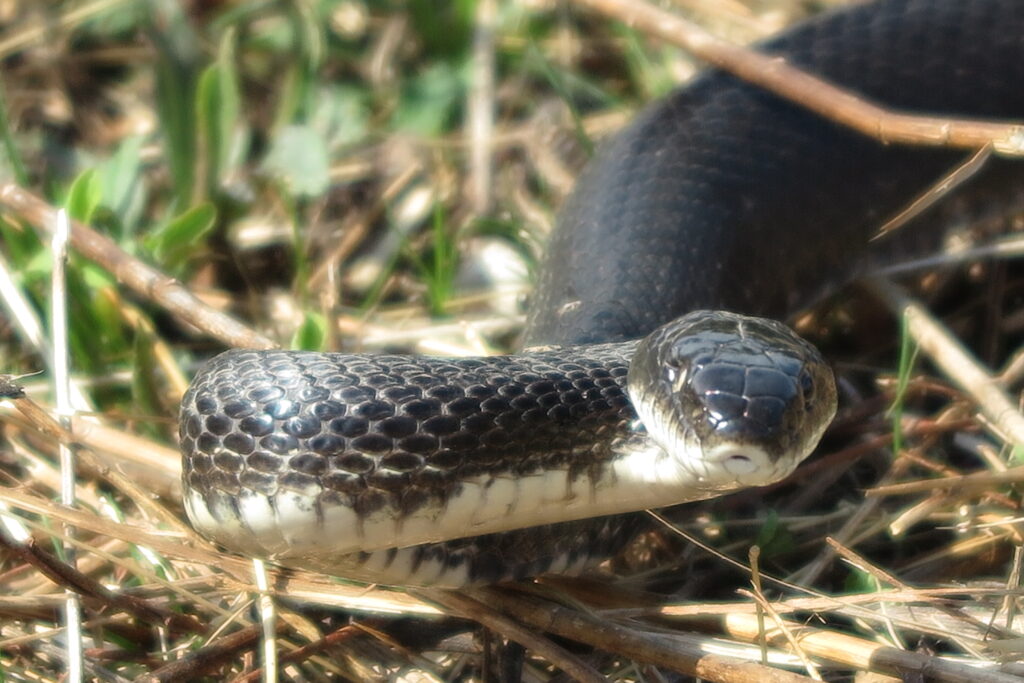
Quick Facts
Venom Status: Nonvenomous
Average Adult Length: 4–7 feet long
Global Range: Eastern and central North America
Conservation Status: Least Concern
Primary Defense: Musking, tail vibration, and escape behavior
Notable Feature: Frequently mistaken for venomous snakes because of its dark coloration and large size
Introduction to Black Rat Snake Safety and Venom Myths
The Black Rat Snake is one of the most misunderstood snakes in eastern North America because of its size, dark coloration, and defensive behavior. Found throughout forests, farmland, rocky hillsides, suburban areas, and woodland edges, black rat snakes are commonly encountered near homes, barns, trails, and wooded environments. Their sudden appearance often causes people to immediately wonder whether the snake is poisonous or dangerous.
Despite their intimidating appearance, black rat snakes are completely nonvenomous. They do not possess medically significant venom and are not considered dangerous to humans under normal circumstances. However, their glossy black scales, thick body, and defensive posture frequently lead to confusion with venomous species such as cottonmouths or copperheads.
Many people also misuse the term “poisonous” when discussing snakes. Poisonous animals cause harm when eaten or touched, while venomous animals inject toxins through bites or stings. Black rat snakes are neither poisonous nor venomous, making them one of the safer large snake species commonly found throughout the eastern United States.
Fear surrounding black rat snakes often comes from misunderstanding rather than actual danger. When threatened, these snakes may vibrate their tail, flatten their body, or release a foul-smelling musk to scare predators away. These behaviors can appear aggressive at first glance, but they are defensive survival instincts rather than signs of true danger to humans.
Black Rat Snake Appearance and Venom Misidentification
Black rat snakes are long muscular constrictor snakes known for their dark glossy appearance and impressive climbing ability. Most adults develop black or very dark gray scales with lighter undersides that may appear white, cream, or patterned depending on lighting conditions. Their smooth reflective scales often create a polished appearance in sunlight.
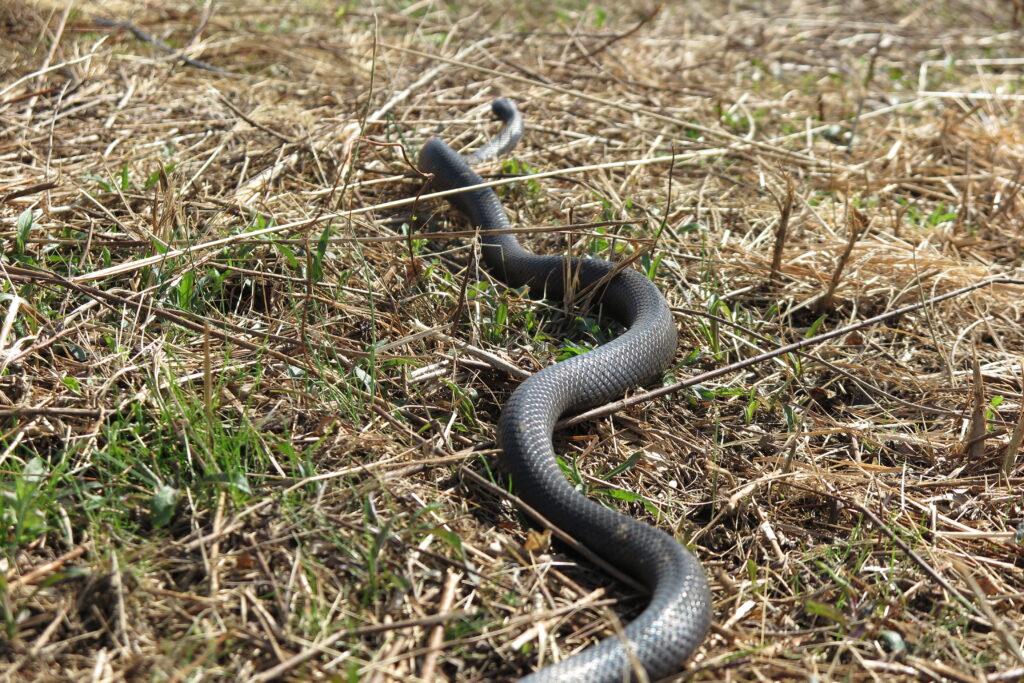
Adult black rat snakes commonly grow between 4 and 7 feet long, although exceptionally large individuals may exceed this range. Their size alone causes many people to assume they are dangerous or venomous. A large black rat snake stretched across a tree branch or moving through grass can appear highly intimidating to someone unfamiliar with native snakes.
Juvenile black rat snakes look dramatically different from adults. Young snakes hatch with gray or tan bodies covered in dark blotches rather than solid black coloration. Because of this pattern, juvenile black rat snakes are often mistaken for other snake species entirely during early life stages.
Compared to the Copperhead, black rat snakes possess a much narrower head and a more elongated body shape. Copperheads display thick triangular heads and bold hourglass patterns, while black rat snakes appear longer, slimmer, and more uniformly dark as adults.
One of the biggest reasons black rat snakes are mistaken for venomous species is their defensive posture. When threatened, they may coil tightly, vibrate the tail rapidly, or strike defensively if cornered. These actions can resemble behaviors associated with rattlesnakes even though black rat snakes lack venom entirely.
Their climbing behavior also surprises many people. Black rat snakes frequently scale trees, barns, fences, and walls while searching for shelter or prey. Seeing a large snake elevated above the ground often increases fear because people do not expect snakes to climb so effectively.
Although black rat snakes may bite defensively when handled roughly, their bites are not venomous. Most bites result only in minor punctures or scratches similar to small pinpricks. Serious medical complications are extremely uncommon compared to bites from truly venomous snake species.
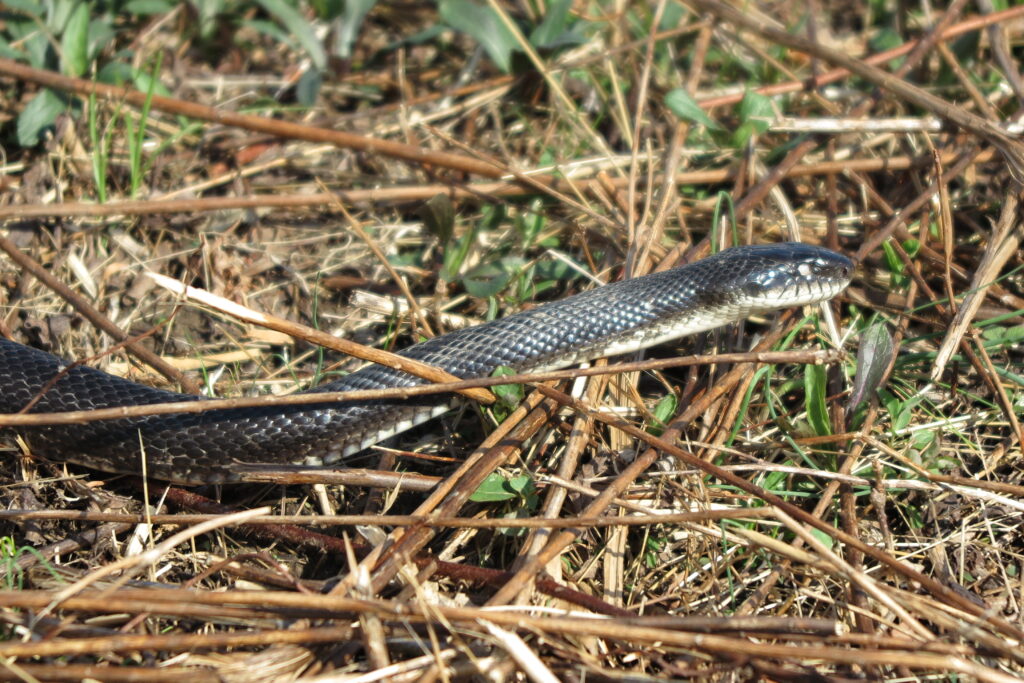
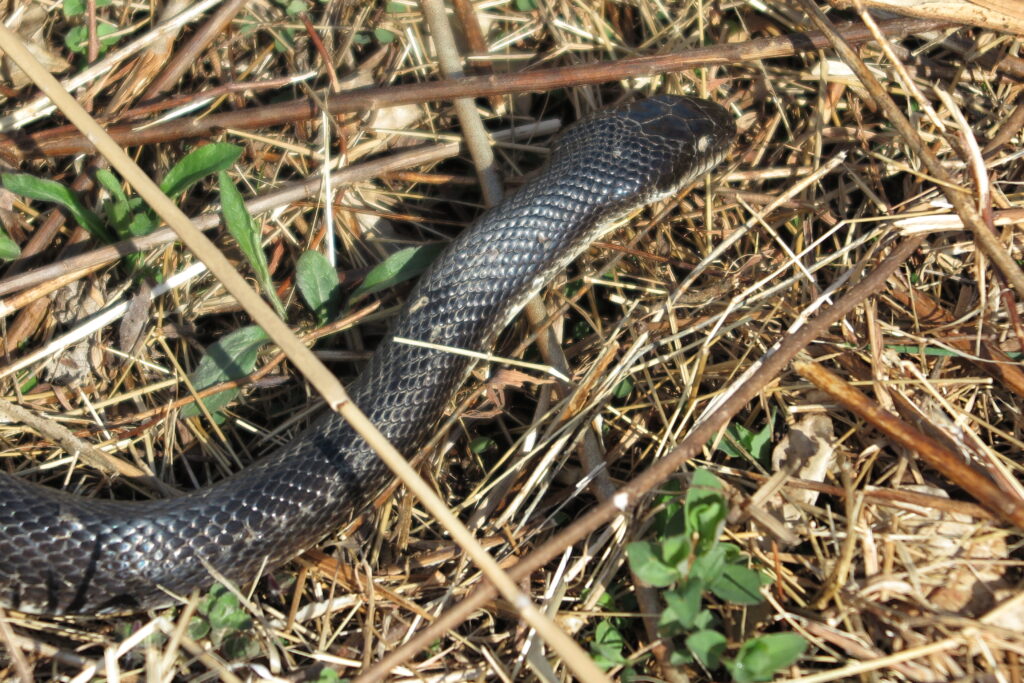
General Characteristics of Black Rat Snake Defensive Behavior
Black rat snakes rely primarily on camouflage, escape, and intimidation rather than venom for survival. Their dark coloration helps them blend naturally into tree bark, shadows, rocks, and dense vegetation. Remaining hidden is often their first line of defense against predators.
When discovered, black rat snakes usually attempt to flee quickly instead of confronting threats directly. They are surprisingly fast-moving snakes capable of climbing trees, navigating rocky terrain, and disappearing into vegetation with little effort. Their instinct is generally avoidance rather than aggression.
Another common defensive characteristic is tail vibration. Black rat snakes rapidly shake their tail against leaves or debris when frightened, creating a rattling sound that may imitate venomous rattlesnakes. This mimicry helps discourage predators even though the snake itself lacks venom.
Compared to the Eastern Garter Snake, black rat snakes appear larger, stronger, and more physically intimidating overall. Garter snakes are smaller and thinner-bodied, while black rat snakes possess muscular constrictor bodies built for climbing and overpowering prey.
Black rat snakes may also flatten portions of their body when threatened to appear larger than they truly are. This behavior makes the snake seem broader and more intimidating to predators. Combined with hissing and tail vibration, the display can look alarming despite being entirely defensive.
Unlike venomous snakes that inject toxins through specialized fangs, black rat snakes kill prey through constriction. After capturing prey, they coil around it tightly until movement stops. This method allows them to consume rodents, birds, and small mammals without relying on venom.
Another important characteristic is their environmental adaptability. Black rat snakes successfully survive in forests, rocky hillsides, farmland, abandoned structures, suburban neighborhoods, and woodland edges. Their ability to thrive near human environments increases the likelihood of encounters with people.
Black Rat Snake Ecological Importance and Human Benefits
Black rat snakes play a major ecological role throughout eastern North America by controlling rodent populations naturally. Mice, rats, and other small mammals make up a significant portion of their prey base, allowing these snakes to help reduce agricultural pests and nuisance rodents around farms and homes.
Because of their strong climbing ability, black rat snakes also access prey sources many ground-based predators cannot easily reach. They may hunt within barns, hollow trees, attics, or elevated nesting areas while helping regulate small animal populations throughout different habitat levels.
Black rat snakes themselves serve as prey for hawks, owls, foxes, raccoons, coyotes, and larger predators. Even large adults remain part of the broader food web within forests and rural ecosystems. Their presence contributes to balanced predator-prey relationships across multiple environments.
Compared to venomous snakes, black rat snakes often provide greater direct benefits around human environments because they significantly reduce rodent activity without posing serious danger to people. Many farmers historically valued rat snakes for their ability to control mice and rats inside barns and grain storage areas.
These snakes also contribute to biodiversity within forests and edge habitats. Their movement through trees, rocky terrain, and woodland floor environments connects multiple ecosystem layers. Few eastern snakes combine climbing ability and large body size as effectively as black rat snakes.
Human fear frequently results in unnecessary killing of harmless black rat snakes because people mistakenly assume they are venomous. Learning proper identification helps reduce these misunderstandings while encouraging coexistence with an ecologically valuable species. Their calm avoidance behavior means most encounters end harmlessly when the snake is left alone.
Black rat snakes additionally help demonstrate how appearance alone does not determine danger in wildlife. Their large size and dark coloration create a powerful visual impression, but scientifically they are harmless nonvenomous constrictors adapted for rodent control and survival within diverse habitats.
Through natural pest control, ecological balance, and rodent reduction, black rat snakes remain one of the most beneficial large snakes in eastern North America. Although often feared because of myths surrounding venom and aggression, these snakes are actually important nonvenomous predators that contribute positively to both wild ecosystems and human-altered environments.
Popular Searches About Black Rat Snakes
Explore Black Rat Snake Guide
Explore More Wildlife

Support Encounters World
Help support wildlife photography and get behind the scenes discoveries on Patreon.