Black Rat Snake Size Guide: How Big Black Rat Snakes Get and Growth Facts
Quick Facts
Average Adult Length: 4–6 feet long
Maximum Recorded Size: Over 8 feet in rare cases
Weight Range: 1–5 pounds depending on age and size
Global Range: Eastern and central North America
Conservation Status: Least Concern
Notable Feature: One of the longest native snakes in eastern North America
Introduction to Black Rat Snake Size and Growth
The Black Rat Snake is widely recognized as one of the largest nonvenomous snakes found throughout eastern North America. Known for its long muscular body and climbing ability, this species commonly reaches impressive lengths that often surprise people during encounters in forests, fields, barns, and suburban environments. Their large size is one reason black rat snakes are frequently mistaken for dangerous species despite being harmless constrictors.
Black rat snakes are found across a broad geographic range stretching through much of the eastern and central United States. Because they occupy forests, farmland, rocky hillsides, wetlands, and woodland edges, people regularly encounter individuals of many different sizes throughout the year. Young hatchlings may appear small and fragile, while older adults can grow long enough to dominate the forest floor visually.
Size plays a major role in how black rat snakes survive within their environment. Larger individuals are capable of climbing trees efficiently, overpowering larger prey, and defending themselves more effectively from predators. Their muscular body structure allows them to move through dense vegetation, rocky terrain, and elevated branches despite their impressive length.
Many people underestimate how large black rat snakes can become because juveniles look dramatically different from adults. Young snakes hatch relatively small with gray blotched patterns, gradually darkening and thickening as they mature. Over several years, these snakes transition from thin patterned juveniles into large glossy black adults capable of reaching remarkable lengths.
Black Rat Snake Size Overview and Body Proportions
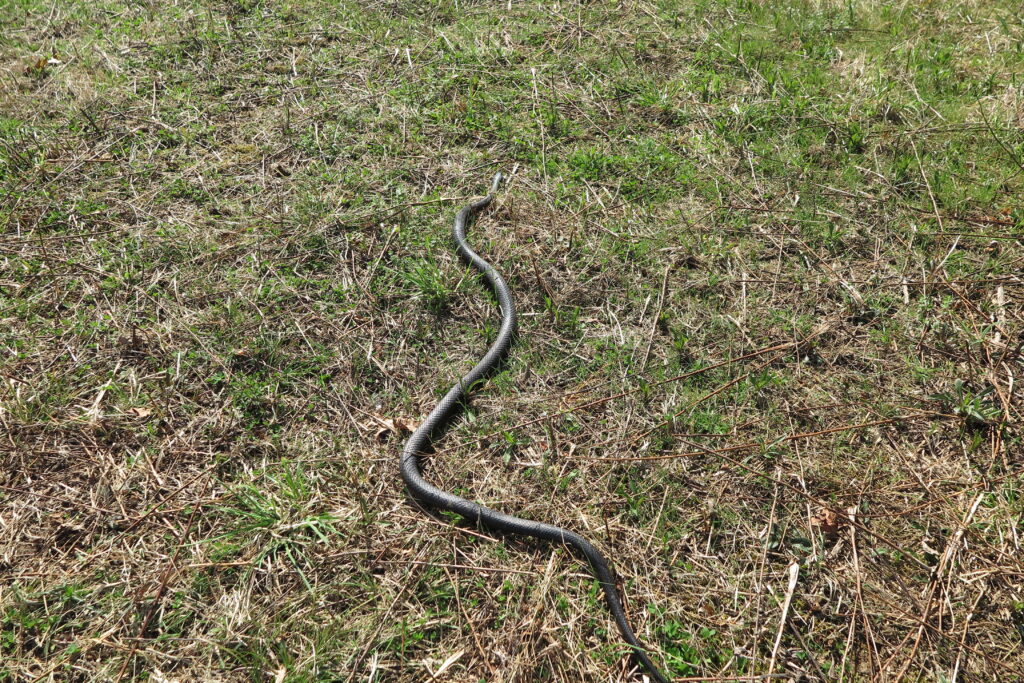
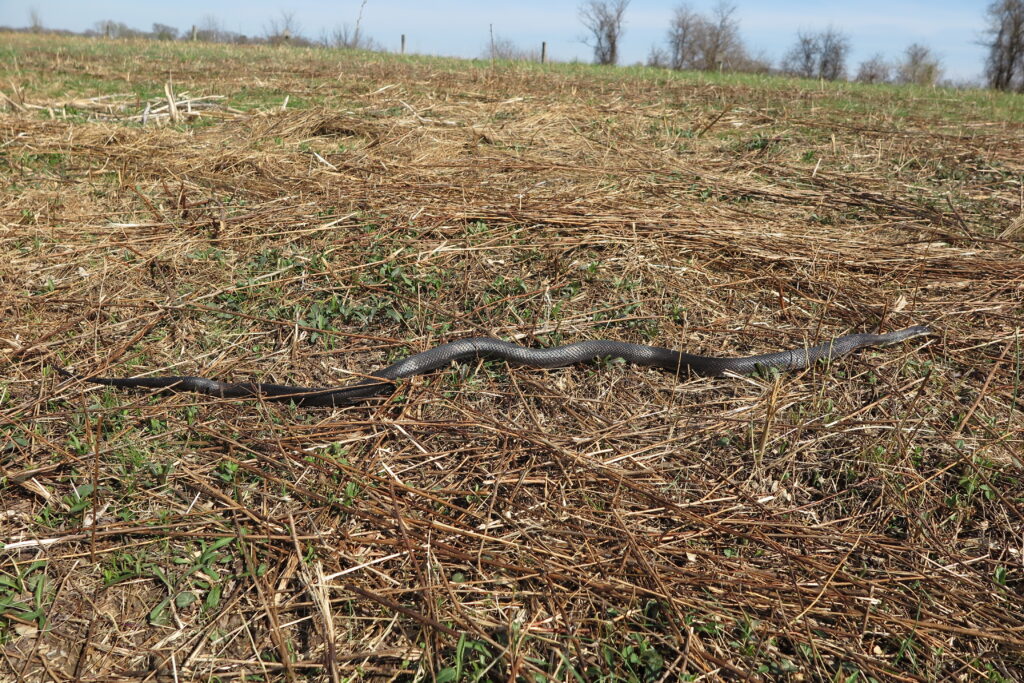
Adult black rat snakes commonly reach lengths between 4 and 6 feet, although exceptionally large individuals may exceed 7 feet under ideal conditions. Rare specimens have even been recorded approaching or surpassing 8 feet long, placing them among the largest snakes native to eastern North America. Encountering a snake of this size unexpectedly can be startling for many people.
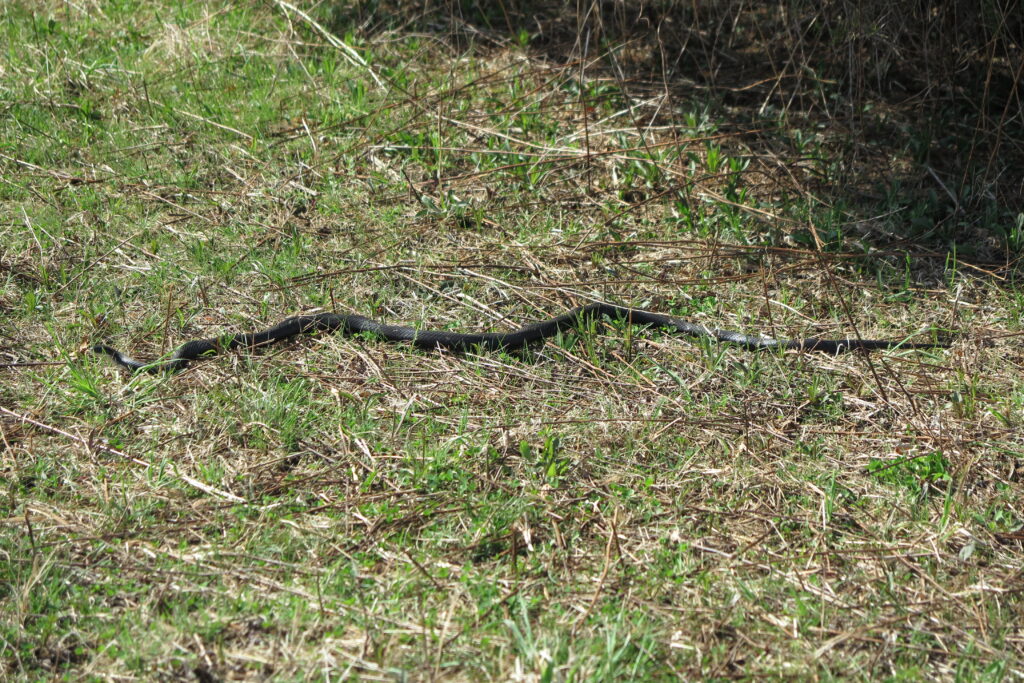
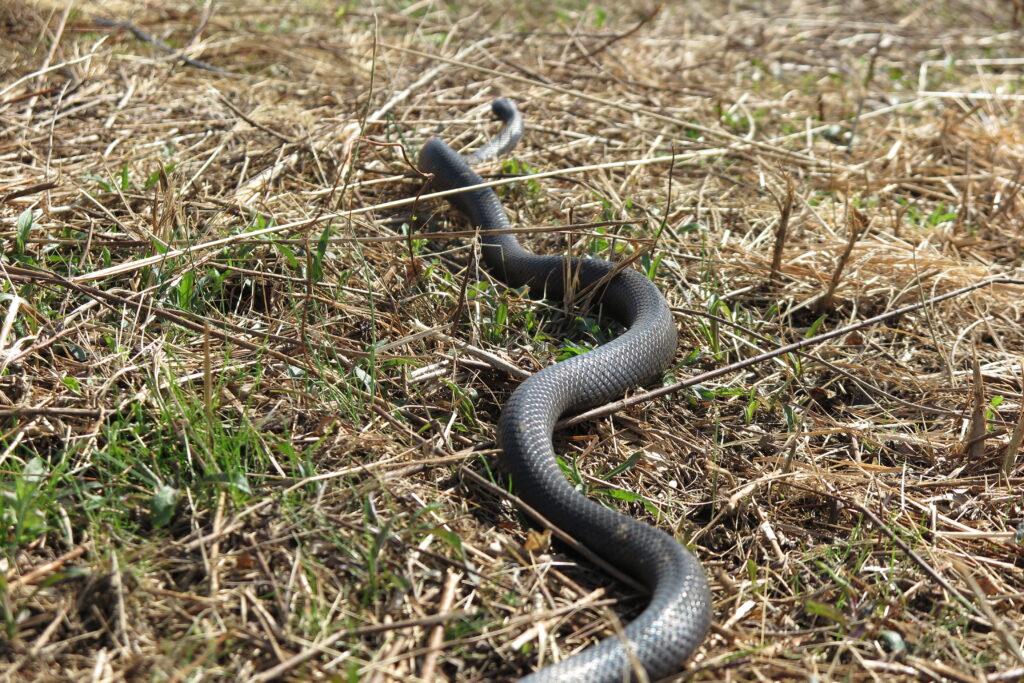
Despite their impressive length, black rat snakes are not extremely thick-bodied compared to heavier constrictor species such as pythons or boas. Their body remains relatively streamlined while still appearing muscular and powerful. A large adult often resembles a thick climbing rope stretched across rocks, branches, or woodland ground.
Young black rat snakes begin life dramatically smaller. Hatchlings typically emerge from eggs measuring only 8–16 inches long and remain pencil-thin during early development. Their growth rate during the first few years is rapid, especially when food availability and environmental conditions remain favorable.
Compared to the Black Racer, black rat snakes generally appear longer, thicker, and heavier overall. Black racers maintain a slim athletic body optimized for speed, while black rat snakes possess more muscular constrictor bodies adapted for climbing and overpowering prey.
Body thickness usually increases noticeably with age. Mature adults often develop powerful midsections that help support climbing ability and constriction strength. Even though they remain relatively slender compared to giant tropical constrictors, large black rat snakes still appear physically imposing within eastern North American ecosystems.
Coloration can also influence perceived size. Their glossy black scales create a solid uninterrupted appearance that visually exaggerates body length in some lighting conditions. A fully extended adult crossing a trail or road may appear even larger than its actual measured length because of this dark uniform coloration.
Environmental factors strongly influence overall growth potential. Snakes living in areas with abundant prey, suitable shelter, and favorable temperatures often grow larger than individuals surviving in harsher environments. As a result, size can vary significantly across different parts of the species’ range.
General Characteristics That Influence Black Rat Snake Growth
Several biological and environmental factors determine how large a black rat snake ultimately becomes. Age is one of the most important influences, as older individuals continue growing gradually throughout much of their life. A mature adult may look dramatically different from a younger subadult only a few years younger.
Food availability also plays a major role in growth. Black rat snakes living in prey-rich habitats often gain size more quickly because they have consistent access to rodents, birds, and other food sources. Areas with limited prey may produce smaller thinner individuals over time.
Climate conditions influence growth as well. Snakes in warmer southern environments often experience longer active seasons, allowing more opportunities for feeding and growth each year. Northern populations may grow more slowly because colder winters shorten their annual activity period.
Compared to the Eastern Garter Snake, black rat snakes grow significantly larger and heavier throughout adulthood. Garter snakes remain much thinner and shorter overall, while black rat snakes develop the elongated muscular bodies associated with large constrictor species.
Another defining characteristic is their climbing ability despite large size. Black rat snakes routinely scale trees, barns, rocky ledges, and fences while supporting their full body weight. Their muscular build and strong grip allow them to move vertically with surprising efficiency.
Growth stages also involve dramatic visual transformation. Juveniles display lighter gray blotched patterns and slimmer bodies, gradually developing darker coloration and thicker proportions with age. By adulthood, many individuals become almost completely black with glossy reflective scales.
Even among adults, body condition can vary noticeably. Healthy well-fed snakes appear thicker and more muscular, while individuals recovering from winter dormancy may look leaner and narrower. Seasonal conditions therefore affect not only activity levels but visible body mass as well.
Black Rat Snake Size and Ecological Importance
The large size of black rat snakes gives them a major ecological advantage within eastern North American ecosystems. Bigger snakes can consume larger prey items, compete more effectively for shelter, and survive encounters with predators more successfully than smaller individuals. Their size allows them to occupy an important role within woodland food webs.
Large black rat snakes are especially valuable for controlling rodent populations around forests, farms, barns, and suburban areas. Their length and climbing ability allow them to reach nests, attics, hollow trees, and elevated locations where smaller predators may struggle to access prey. This makes them highly effective natural rodent controllers.
Their impressive size also reduces vulnerability to many predators once adulthood is reached. Juvenile black rat snakes face threats from birds, mammals, reptiles, and larger snakes, but fully grown adults become difficult for many predators to overpower. Their size therefore contributes directly to survival success.
Compared to smaller snake species, black rat snakes influence ecosystems across broader prey ranges because they can consume animals of varying sizes. Their growth into large muscular adults expands their ecological role substantially over time. A hatchling and a mature adult may occupy very different predator niches despite belonging to the same species.
Large body size additionally supports their climbing lifestyle. Long muscular bodies help distribute weight across branches and rough surfaces while navigating vertical terrain. Few eastern North American snakes combine size and climbing efficiency as effectively as black rat snakes.
Human encounters with especially large individuals often lead to fear because people associate long snakes with danger. In reality, black rat snakes are harmless nonvenomous constrictors whose size mainly reflects adaptation for survival and rodent control. Their intimidating appearance rarely matches their actual behavior around humans.
These snakes also contribute to biodiversity within forests and edge habitats by filling the role of a major mid-level predator. Their presence influences prey populations while also providing food for hawks, owls, coyotes, foxes, and other larger predators capable of targeting snakes.
Through their impressive growth potential, climbing ability, and role as large nonvenomous predators, black rat snakes remain one of the most ecologically important snake species in eastern North America. Their remarkable size continues to fascinate wildlife observers while helping maintain balance within countless natural ecosystems.
Popular Searches About Black Rat Snakes
Explore Black Rat Snake Guide
Explore More Wildlife

Support Encounters World
Help support wildlife photography and get behind the scenes discoveries on Patreon.