Are Black Rat Snakes Dangerous? Safety, Aggression, and Human Risk Guide
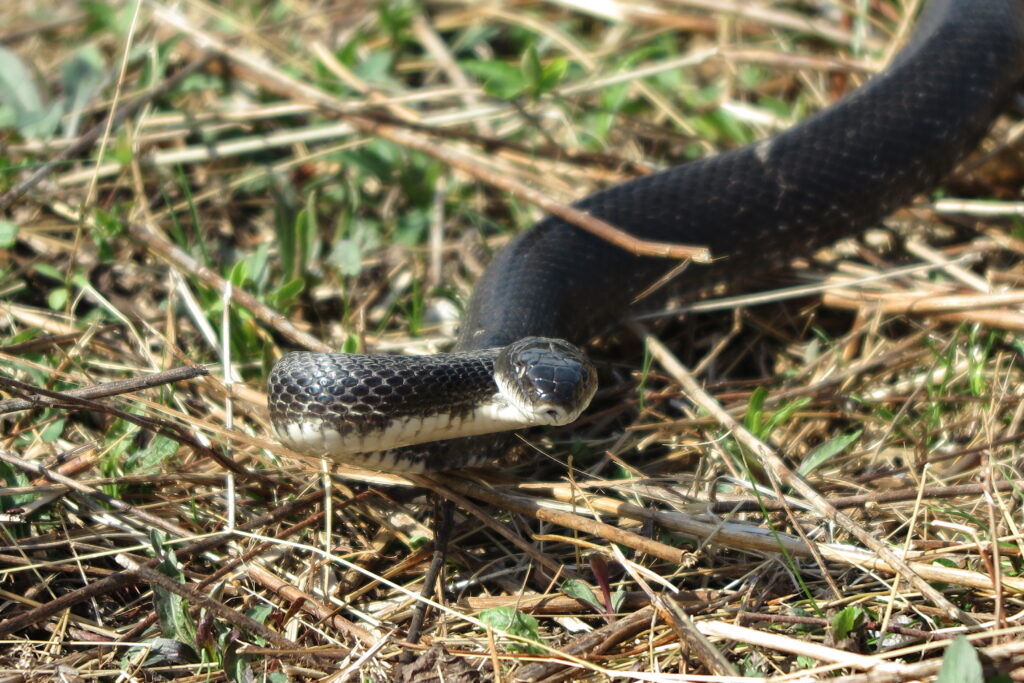
Quick Facts
Danger Level to Humans: Very low
Venom Status: Nonvenomous
Average Adult Length: 4–7 feet long
Global Range: Eastern and central North America
Conservation Status: Least Concern
Primary Defense: Escape, tail vibration, musking, and bluffing behavior
Introduction to Black Rat Snake Danger and Human Safety
The Black Rat Snake is one of the largest and most commonly encountered snakes in eastern North America, leading many people to wonder whether it is dangerous. Its long muscular body, glossy black coloration, and defensive displays can appear intimidating during unexpected encounters. However, despite its appearance, the black rat snake is considered a harmless nonvenomous species with very low danger to humans.
Black rat snakes are commonly found throughout forests, rocky hillsides, farmland, barns, suburban neighborhoods, and woodland edges. Because they often live near human structures while hunting rodents, encounters with people are relatively common. A large black snake moving through grass or climbing a tree naturally attracts attention and sometimes fear.
Many concerns surrounding black rat snakes come from misunderstanding rather than actual threat. Their size alone causes people to assume they may be venomous or aggressive, especially when they hiss, coil, or vibrate their tail defensively. In reality, these behaviors are survival instincts designed to scare predators away rather than attack humans.
Although black rat snakes can bite if cornered or handled roughly, serious injuries are extremely uncommon. Most bites are defensive warnings rather than true attacks, and they typically result in minor scratches or puncture marks. Understanding their behavior and body language helps reduce unnecessary fear while encouraging safer coexistence with these beneficial native snakes.
Black Rat Snake Appearance and Why They Seem Dangerous
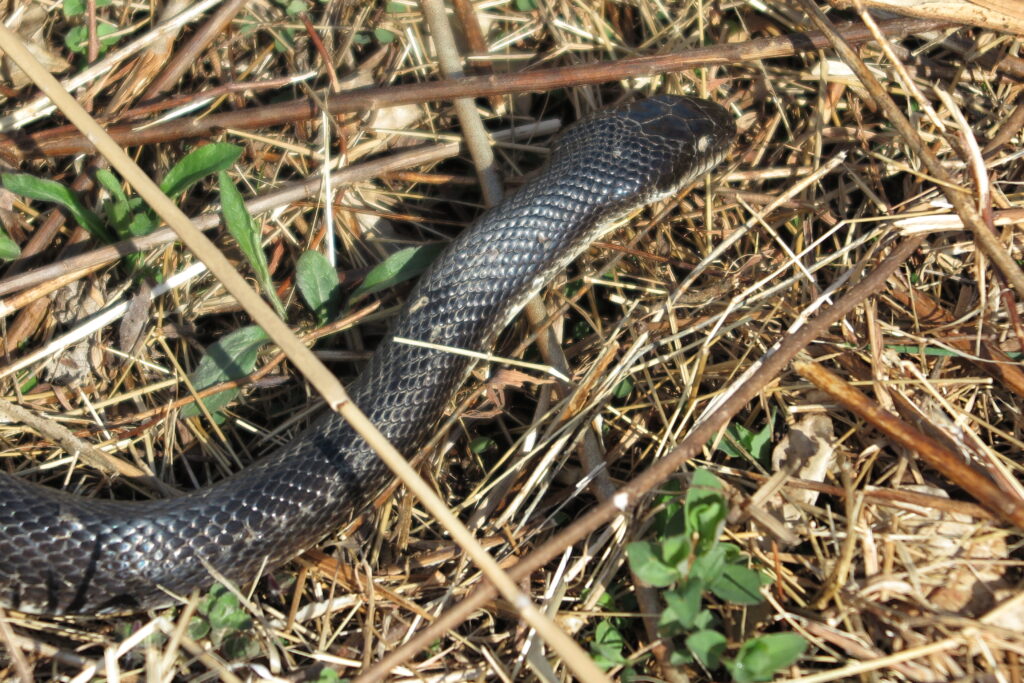
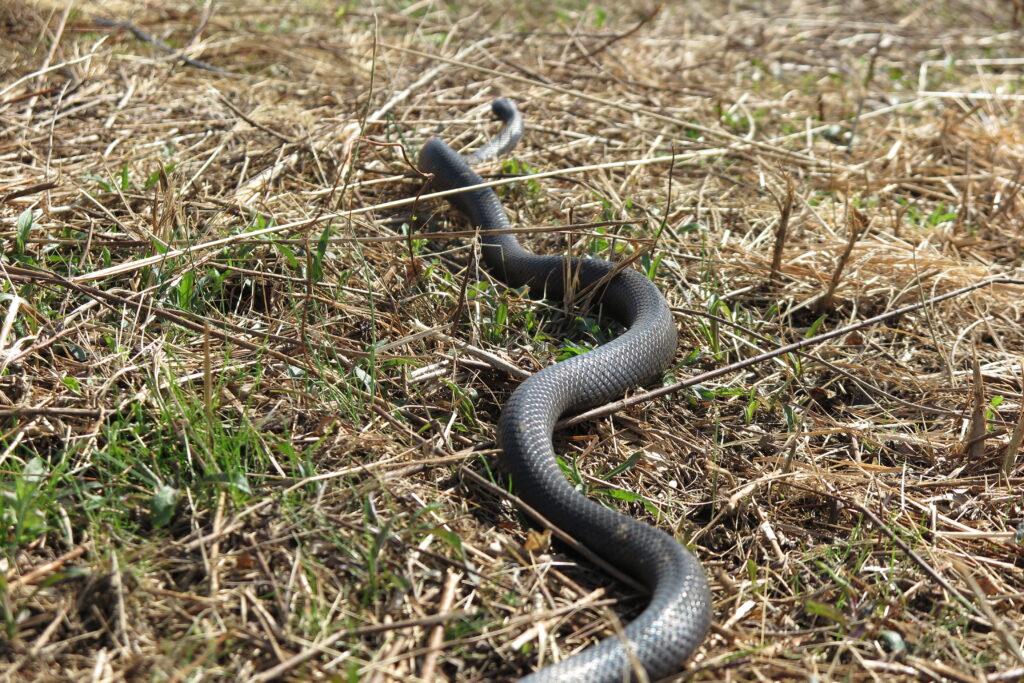
Black rat snakes often appear far more dangerous than they actually are because of their impressive size and dark coloration. Adults commonly grow between 4 and 7 feet long, with some exceptionally large individuals becoming even longer. Seeing a snake of this size stretched across a trail, tree branch, or barn wall can immediately create alarm.
Their glossy black scales add to their intimidating appearance. In sunlight, the body may reflect dark metallic tones that make the snake appear even larger and more dramatic. Combined with muscular movement and climbing ability, black rat snakes often leave a strong impression on anyone encountering them unexpectedly.
The head shape of black rat snakes can also contribute to confusion. When threatened, they sometimes flatten portions of their head and neck, causing the body to appear broader or more triangular. This defensive display may resemble the posture of venomous snakes even though black rat snakes are harmless constrictors.
Compared to the Copperhead, black rat snakes possess narrower heads, longer bodies, and smoother movement patterns. Copperheads are venomous pit vipers with thick triangular heads and bold hourglass patterns, while black rat snakes maintain elongated glossy bodies without venomous fangs.
Juvenile black rat snakes look completely different from adults. Young snakes hatch with gray or tan bodies covered in dark blotches, making them resemble other woodland snakes rather than solid black adults. This changing appearance often causes additional identification confusion.
Another reason black rat snakes seem dangerous is their defensive behavior when cornered. They may hiss loudly, vibrate the tail rapidly, or strike defensively if they feel trapped. These actions are designed to intimidate predators and create space for escape rather than cause serious harm.
Despite their intimidating appearance, black rat snakes lack venom entirely. They overpower prey through constriction rather than toxins, making them medically insignificant to humans. Their dramatic defensive displays often appear much more threatening than the actual risk they present.
General Characteristics of Black Rat Snake Temperament
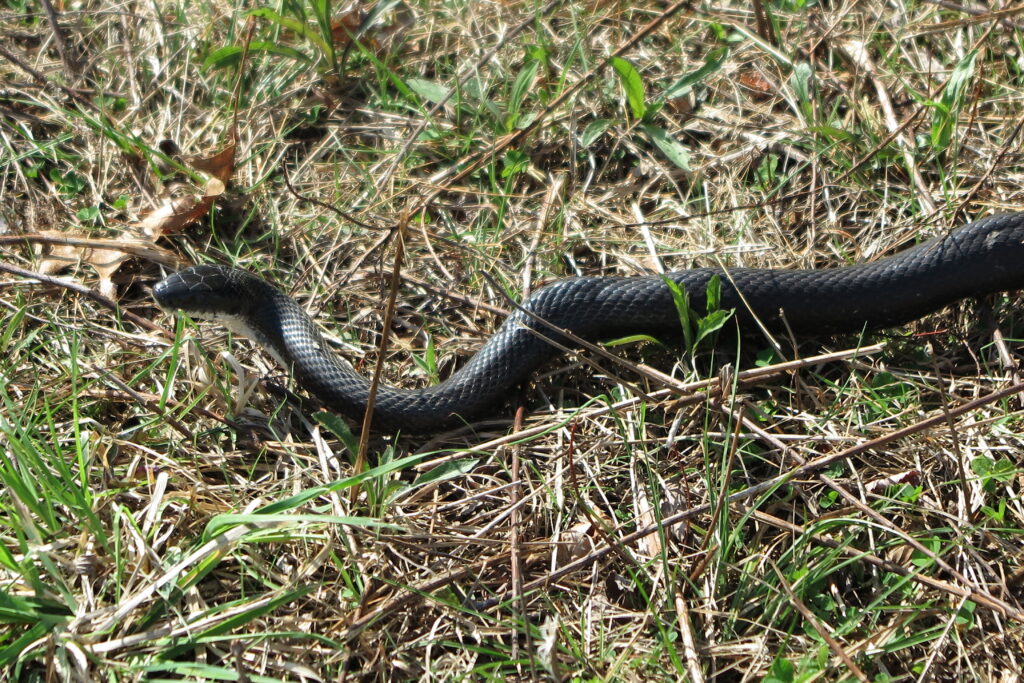
Black rat snakes are generally shy and avoid confrontation whenever possible. Their first instinct during most encounters is escape rather than aggression. When given enough space, they usually retreat quickly into vegetation, rocky crevices, trees, or nearby shelter.
Unlike truly aggressive animals that actively pursue threats, black rat snakes typically react only when cornered or physically restrained. A defensive strike from a black rat snake is usually a last resort after warning displays fail to create distance. Most wild individuals prefer remaining hidden rather than interacting with humans.
One important characteristic of black rat snakes is their intelligence and awareness of surroundings. They constantly use tongue flicking to gather scent information and assess nearby movement. This cautious alert behavior helps them avoid predators and navigate complex environments effectively.
Compared to the Black Racer, black rat snakes are generally calmer and less frantic during encounters. Black racers tend to flee explosively at high speed, while black rat snakes often pause, observe, and slowly retreat into cover.
Another defensive trait is musking. Black rat snakes may release a foul-smelling substance when frightened or handled roughly. Although unpleasant, this defense is harmless and intended purely to discourage predators from continuing contact.
Their climbing ability also contributes to their survival strategy. Black rat snakes frequently escape danger by ascending trees, fences, barns, or rocky ledges. Few eastern North American snakes climb as effectively while maintaining such large body size.
Many people misinterpret defensive body language as aggression. Tail vibration, coiling, flattening the body, and hissing are all warning signals rather than hunting behavior directed at humans. These snakes simply want threats to leave them alone so they can escape safely.
Black Rat Snake Ecological Importance and Benefits Around Humans
Black rat snakes provide enormous ecological value throughout eastern North America by naturally controlling rodent populations. Mice, rats, and other small mammals make up a major portion of their prey base, allowing these snakes to reduce pests around farms, barns, sheds, and suburban environments.
Because they are skilled climbers, black rat snakes can reach elevated nesting areas, attics, hollow trees, and rafters where rodents frequently hide. Their ability to hunt in both ground-level and elevated environments makes them especially effective natural pest controllers.
Large black rat snakes also contribute to balanced ecosystems by helping regulate populations of birds, rodents, and smaller prey animals. At the same time, they remain part of the food web themselves, serving as prey for hawks, owls, coyotes, foxes, and larger predators.
Compared to venomous snakes, black rat snakes offer far greater environmental benefits with minimal risk to humans. Their nonvenomous nature means they can live near people without creating serious danger while still providing important rodent control services.
These snakes additionally contribute to biodiversity within forests and edge habitats. Their movement through trees, rocky terrain, and woodland floor environments links multiple ecosystem layers together. Their ecological role extends across both natural and human-altered landscapes.
Fear often causes harmless black rat snakes to be killed unnecessarily. Misidentification and misunderstanding remain major reasons people panic during encounters. Learning that these snakes are nonvenomous and generally nonaggressive helps reduce unnecessary harm toward native wildlife.
Black rat snakes also demonstrate how visual appearance alone does not determine danger in animals. Their size and coloration create a powerful impression, but their actual behavior is cautious and defensive rather than aggressive. Most encounters end peacefully when the snake is simply left alone.
Through rodent control, ecological balance, and coexistence with human environments, black rat snakes remain one of the most beneficial large snakes in eastern North America. Although they may appear intimidating because of their size and defensive displays, these nonvenomous snakes pose very little real danger while providing valuable ecological services across countless habitats.
Popular Searches About Black Rat Snakes
Explore Black Rat Snake Guide
Explore More Wildlife

Support Encounters World
Help support wildlife photography and get behind the scenes discoveries on Patreon.