Black Rat Snake vs Copperhead: Key Differences, Identification, and Safety Guide
Quick Facts
Black Rat Snake Scientific Name: Pantherophis alleghaniensis
Copperhead Scientific Name: Agkistrodon contortrix
Common Names: Black Rat Snake and Copperhead
Venom Status: Black rat snake is nonvenomous; copperhead is venomous
Average Adult Size: Black rat snakes are usually longer; copperheads are thicker-bodied
Global Range: Eastern and central North America
Conservation Status: Least Concern for both species
Main Identification Feature: Copperheads have hourglass bands while black rat snakes are mostly solid black as adults
Introduction to Black Rat Snake vs Copperhead Identification
The Black Rat Snake and the Copperhead are two snakes commonly confused throughout eastern North America. Because both species may inhabit forests, rocky hillsides, woodland edges, and suburban environments, encounters with either snake often create uncertainty and fear. Correct identification is important because one species is harmless while the other is venomous.
Black rat snakes are nonvenomous constrictors known for their glossy dark coloration and climbing ability. Copperheads are venomous pit vipers recognized for their thick body, triangular head, and copper-colored patterning. Despite these major differences, quick encounters or poor lighting can cause people to mistake one species for the other.
Confusion becomes especially common when juvenile black rat snakes are involved. Young black rat snakes possess gray or tan bodies covered in dark blotches rather than the solid black appearance seen in adults. At a glance, these blotched patterns may resemble copperhead markings to inexperienced observers.
Understanding the differences between black rat snakes and copperheads helps improve safety while reducing unnecessary fear toward harmless snakes. Although both species are important predators within their ecosystems, they differ dramatically in body structure, coloration, venom status, and overall behavior when examined carefully.
Black Rat Snake vs Copperhead Appearance Differences
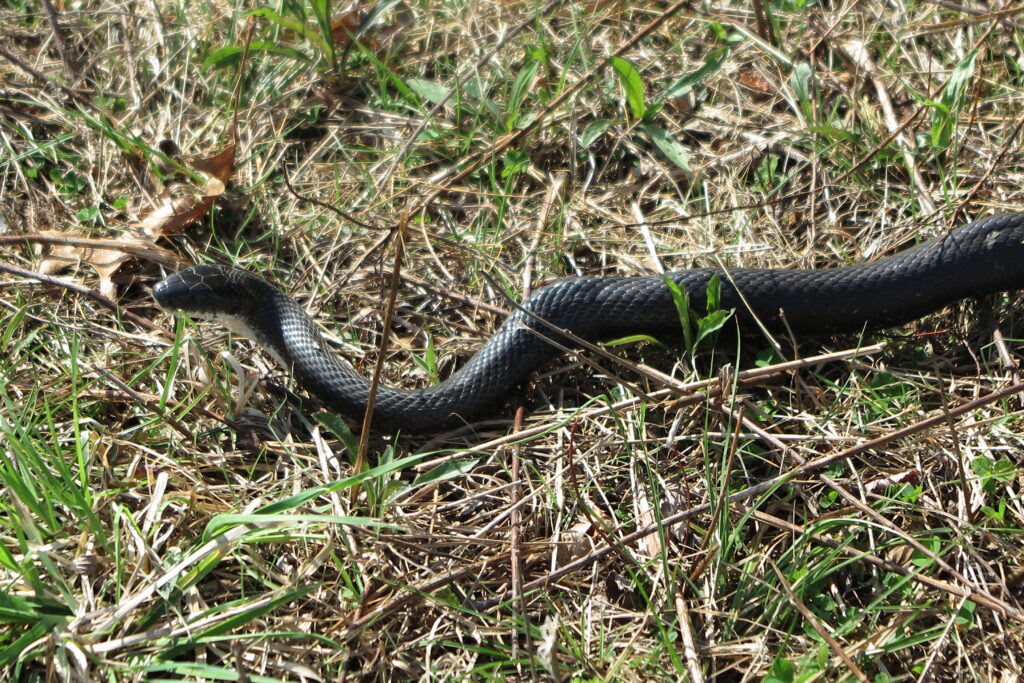
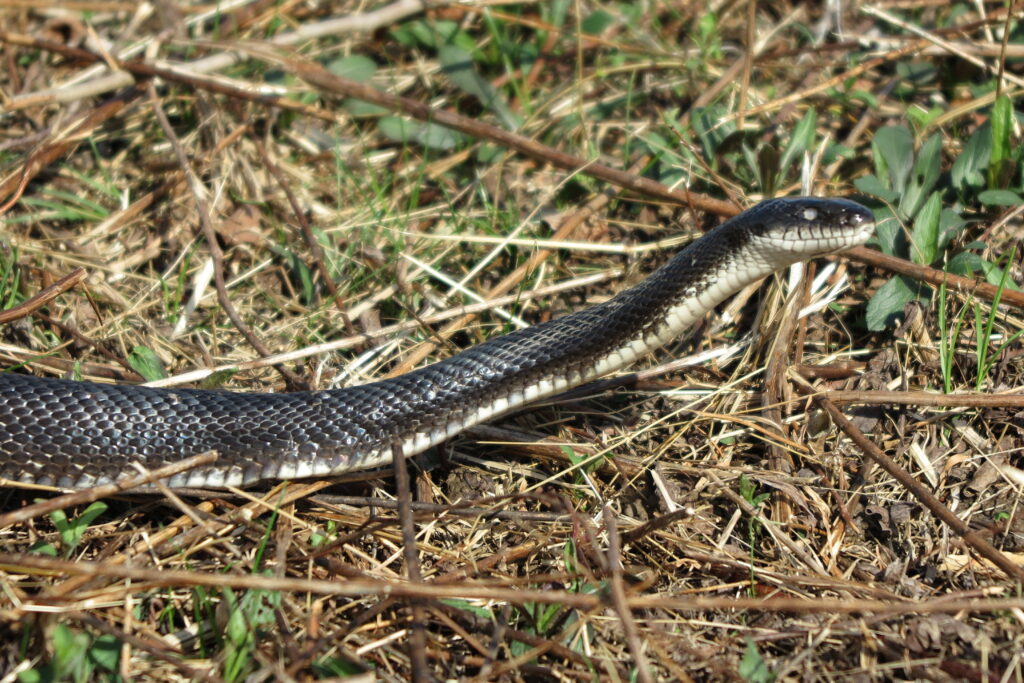
Adult black rat snakes are typically long and slender with glossy black or dark gray scales covering most of the body. Their underside often appears lighter with cream or checker-like patterns depending on lighting and age. Copperheads, by contrast, display light tan, copper, or pinkish-brown backgrounds covered in darker hourglass-shaped crossbands.
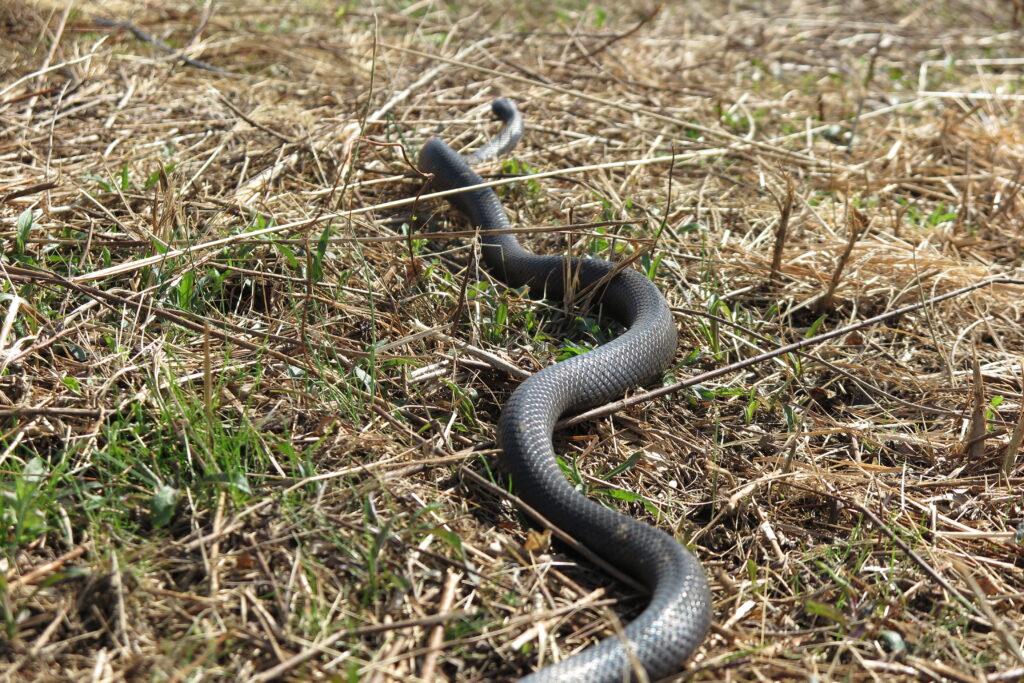
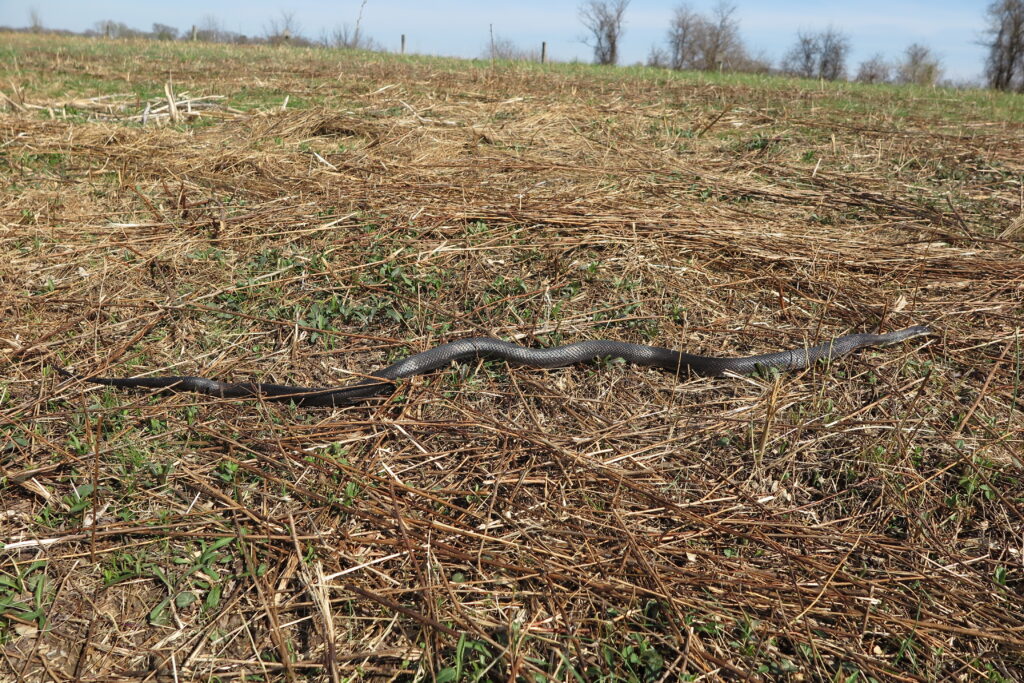
Body shape is one of the easiest ways to separate the two species. Black rat snakes possess elongated muscular bodies that taper gradually from head to tail. Copperheads appear much thicker and stockier overall, especially through the middle of the body.
Head structure also differs significantly. Copperheads possess broad triangular heads characteristic of pit vipers, while black rat snakes have narrower more elongated heads. When relaxed, a black rat snake’s head blends more smoothly into the neck compared to the sharply defined shape of a copperhead.
Compared to the Black Racer, black rat snakes and copperheads both appear heavier-bodied overall. However, copperheads remain distinctly thicker and shorter compared to the long climbing-oriented structure of black rat snakes.
Juvenile coloration creates much of the identification confusion. Young black rat snakes display blotched patterns that may superficially resemble copperhead markings. However, copperhead bands usually form cleaner hourglass shapes that narrow across the spine, while juvenile rat snake blotches appear more irregular and saddle-like.
Scale texture offers another useful clue. Black rat snakes possess faintly keeled scales that may create a slightly rough appearance under close inspection. Copperhead scales also contain texture, but their bold patterned coloration is usually the more obvious distinguishing feature.
Eye appearance differs as well. Copperheads possess vertical cat-like pupils typical of pit vipers, while black rat snakes have round pupils. Although pupil shape should never be used as the only identification method from a dangerous distance, it remains another useful visual difference during proper observation.
General Characteristics That Separate the Two Species
Behavior around humans differs greatly between black rat snakes and copperheads. Black rat snakes usually attempt escape quickly when disturbed and often climb trees, fences, or nearby vegetation for safety. Copperheads rely more heavily on camouflage and may remain motionless when approached, making them harder to notice.
Movement style is another useful characteristic. Black rat snakes move with smooth climbing-oriented motion and frequently travel through branches or elevated terrain. Copperheads generally remain closer to the ground and move with slower heavier motion due to their thicker body structure.
Defensive displays also differ. Black rat snakes commonly vibrate their tail, hiss loudly, flatten the body, or release foul-smelling musk when threatened. Copperheads are less dramatic visually but may coil tightly into striking posture when disturbed at close range.
Compared to the Eastern Garter Snake, both black rat snakes and copperheads appear much larger and more intimidating. However, black rat snakes remain harmless constrictors while copperheads possess medically significant venom.
Another defining difference involves climbing behavior. Black rat snakes are exceptional climbers capable of scaling trees, barns, rocky ledges, and walls with ease. Copperheads may occasionally climb low vegetation but are far less arboreal overall compared to rat snakes.
Habitat overlap contributes heavily to mistaken identity. Both species may occur in wooded environments, rocky slopes, forest edges, and brushy suburban areas. However, black rat snakes are more commonly associated with barns, attics, woodland canopies, and elevated hiding locations.
Their feeding method also differs dramatically. Black rat snakes kill prey through constriction using powerful muscular coils. Copperheads inject venom through specialized fangs before consuming prey. This biological difference shapes much of their body design and ecological role.
Ecological Role and Safety Importance of Proper Identification
Both black rat snakes and copperheads play valuable ecological roles as predators within eastern North American ecosystems. They help regulate populations of rodents, insects, amphibians, birds, and other small animals. Their presence contributes to balanced predator-prey relationships across forests and edge habitats.
Black rat snakes are especially beneficial around farms and suburban areas because they consume large numbers of rodents naturally. Their climbing ability allows them to reach nests, rafters, attics, and elevated prey sources that many predators cannot access. Farmers historically valued these snakes for pest control.
Copperheads also contribute ecologically by controlling rodent and prey populations within forests and rocky environments. Despite their venomous nature, they remain important native predators rather than aggressive threats seeking human interaction. Most bites occur only when people accidentally step on or handle them.
Compared to copperheads, black rat snakes present almost no danger to humans under normal circumstances. Their bites are nonvenomous and usually minor. Copperhead bites require medical attention because of venom effects, making accurate identification extremely important during encounters.
Fear often leads harmless black rat snakes to be killed unnecessarily because people mistake them for venomous species. Learning key visual differences such as body thickness, head shape, patterning, and climbing behavior helps reduce these misunderstandings while improving human safety.
Both species additionally support biodiversity within eastern forests and woodland ecosystems. They serve as both predators and prey within larger food webs involving hawks, owls, foxes, coyotes, raccoons, and other wildlife. Removing snakes unnecessarily can disrupt ecological balance over time.
Another important ecological distinction involves behavior around humans. Black rat snakes commonly coexist near barns, homes, and woodland neighborhoods with minimal conflict. Copperheads tend to remain more hidden and secretive, relying heavily on camouflage to avoid detection.
Through rodent control, predator-prey interaction, and ecological balance, both black rat snakes and copperheads remain important components of eastern North American ecosystems. Understanding how to identify these species correctly helps people appreciate harmless black rat snakes while remaining cautious and respectful around venomous copperheads.
Popular Searches About Black Rat Snakes
Explore Black Rat Snake Guide
Explore More Wildlife

Support Encounters World
Help support wildlife photography and get behind the scenes discoveries on Patreon.