Black Rat Snake Facts Guide: Interesting Facts, Identification, and Survival Traits
Quick Facts
Average Adult Length: 4–7 feet long
Lifespan: 10–20+ years in favorable conditions
Global Range: Eastern and central North America
Conservation Status: Least Concern
Main Defense Method: Escape, climbing, and bluffing displays
Notable Feature: One of the best climbing snakes in North America
Introduction to Black Rat Snake Facts and Identification
The Black Rat Snake is one of the most recognizable and widespread nonvenomous snakes found throughout eastern North America. Known for its impressive size, glossy black coloration, and excellent climbing ability, this species commonly inhabits forests, rocky hillsides, farmland, woodland edges, and suburban environments. Because of its dark appearance and length, black rat snakes are frequently misunderstood despite being harmless to humans.
One of the most interesting facts about black rat snakes is how adaptable they are across different habitats. These snakes thrive in heavily wooded mountains, open farmland, abandoned barns, rocky outcrops, and even residential neighborhoods. Their ability to survive near both wild and human-altered environments has helped them remain highly successful across a broad geographic range.
Black rat snakes are also famous for their climbing ability. Unlike many large snakes that remain mostly ground-oriented, black rat snakes regularly climb trees, fences, rocky cliffs, rafters, and walls while searching for food or shelter. Seeing a large snake high above the ground often surprises people unfamiliar with their behavior.
Although their size and appearance can look intimidating, black rat snakes are generally shy animals that prefer escape over confrontation. Most encounters end with the snake retreating into vegetation or climbing away from danger. Their ecological role as rodent predators makes them extremely valuable within both natural ecosystems and agricultural environments.
Black Rat Snake Appearance Facts and Physical Features
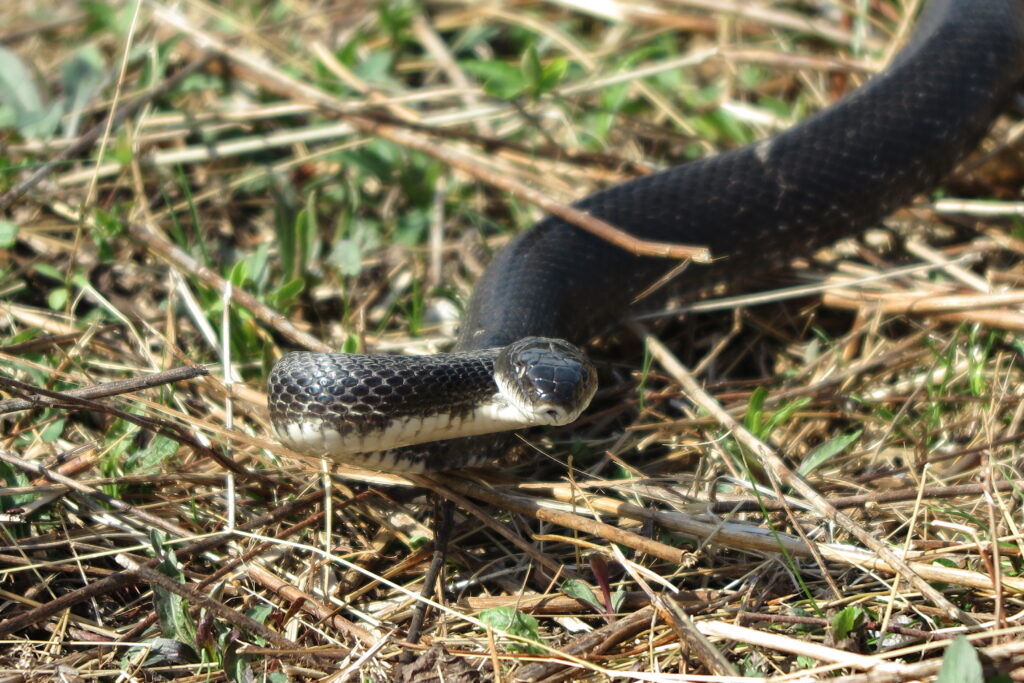
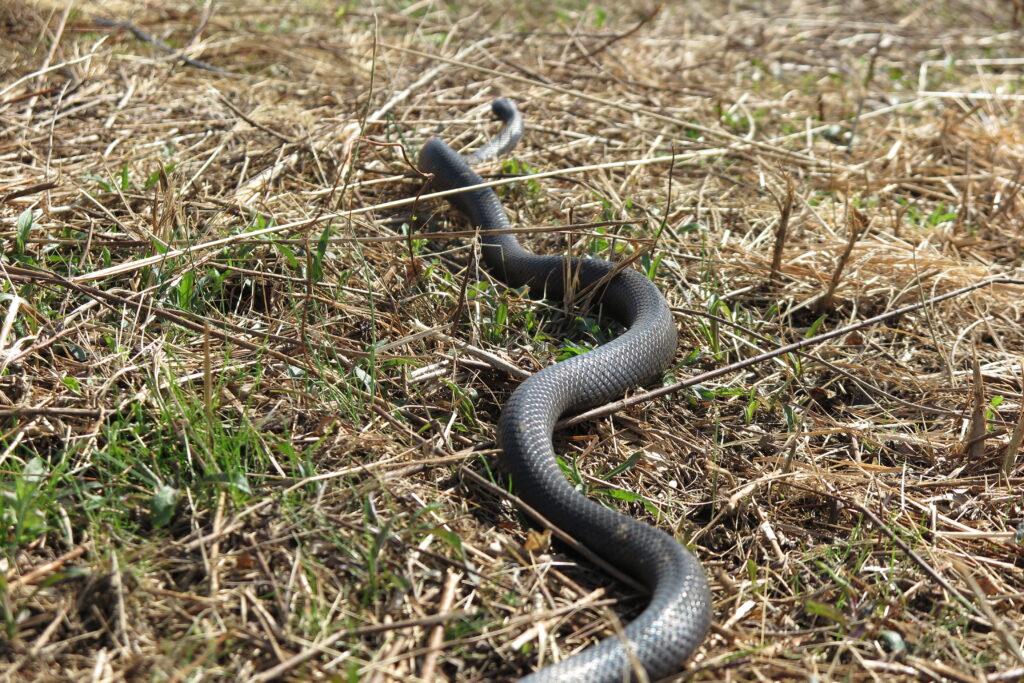
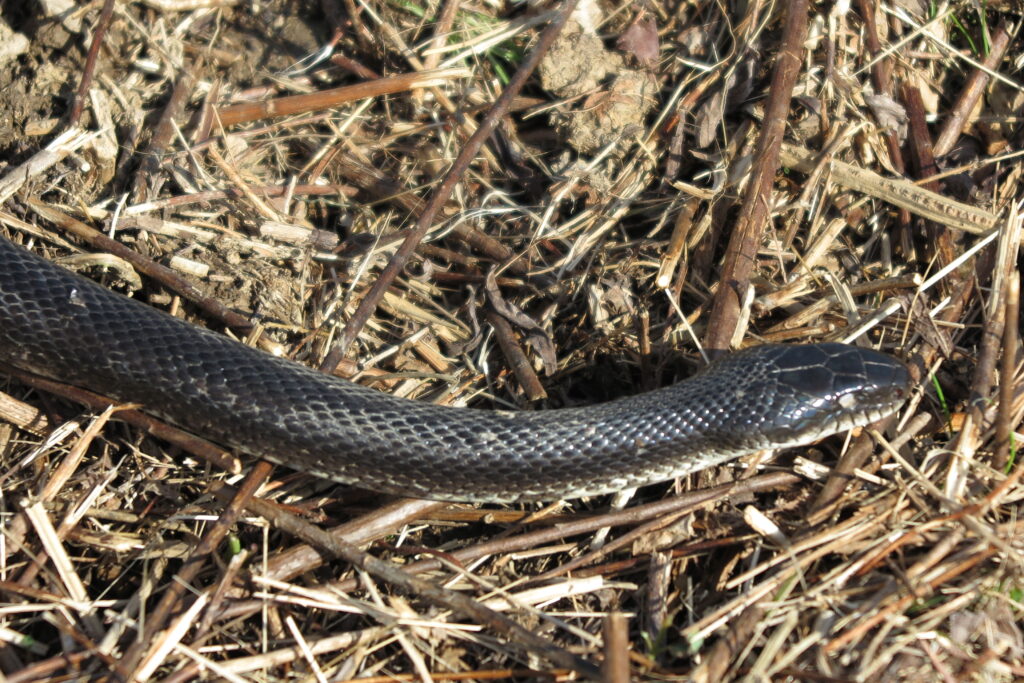
Adult black rat snakes are long muscular snakes usually displaying glossy black or dark gray scales across most of the body. Their underside commonly appears lighter with cream, white, or checker-patterned coloration that contrasts sharply against the darker upper body. In sunlight, their scales may reflect subtle blue or silver tones depending on lighting conditions.
One notable fact about black rat snakes is how dramatically juveniles differ from adults. Young black rat snakes hatch with gray, tan, or silver bodies covered in dark blotches rather than solid black coloration. As they mature over several years, their bodies gradually darken until most adults develop the familiar glossy black appearance.
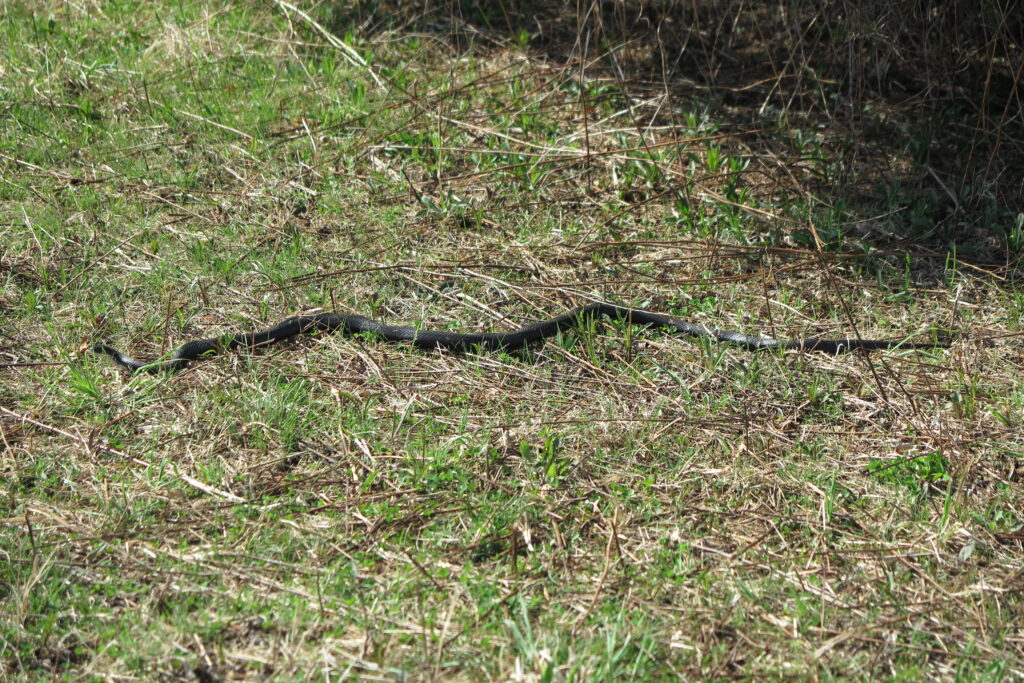
Black rat snakes commonly reach lengths between 4 and 7 feet, making them one of the longest native snakes in eastern North America. Exceptionally large individuals may grow even longer under favorable conditions. A fully stretched adult often resembles a thick climbing rope moving through grass or across tree branches.
Compared to the Black Racer, black rat snakes appear heavier-bodied and more muscular overall. Black racers maintain slimmer athletic bodies optimized for speed, while black rat snakes possess stronger constrictor bodies designed for climbing and overpowering prey.
Their scales are faintly keeled, meaning each scale contains a subtle ridge that creates slight texture along the body. This texture becomes easier to notice when the snake is viewed closely under direct light. It gives black rat snakes a rougher appearance than smoother-scaled species.
Another fascinating physical trait involves their climbing adaptations. Black rat snakes possess strong muscular bodies and excellent grip that allow them to move vertically through trees and rocky surfaces with surprising efficiency. Few North American snakes combine such large size with advanced climbing ability.
Their eyes also contribute to their alert appearance. Black rat snakes possess round pupils and dark observant eyes that help them navigate complex woodland environments. Constant tongue flicking further enhances their ability to detect scent particles and movement around them.
General Black Rat Snake Facts and Unique Characteristics
One of the most important black rat snake facts is that these snakes are completely nonvenomous. They kill prey through constriction rather than venom, using powerful muscular coils to overpower rodents and small animals. Despite frequent fear surrounding large snakes, black rat snakes pose little danger to humans under normal circumstances.
Black rat snakes are highly skilled climbers and frequently spend time elevated above the ground. They may rest on tree limbs, explore barn rafters, or move through branches while searching for food. This climbing behavior helps separate them from many other eastern snake species.
Another interesting fact involves their defensive behavior. When frightened, black rat snakes may vibrate their tail rapidly against leaves or debris, producing a rattling sound similar to a rattlesnake. This bluffing tactic helps discourage predators despite the snake lacking venom entirely.
Compared to the Copperhead, black rat snakes are much longer and more slender overall. Copperheads possess thick triangular heads and venomous fangs, while black rat snakes maintain narrower heads and nonvenomous constrictor anatomy.
Black rat snakes also produce a strong foul-smelling musk when threatened. This unpleasant scent acts as another defensive mechanism intended to discourage predators from continuing contact. Although harmless, the odor can be surprisingly strong during close encounters.
Another unique characteristic is their adaptability near human structures. Black rat snakes commonly enter barns, sheds, attics, and abandoned buildings while hunting rodents. Historically, many farmers considered them beneficial because they naturally reduced mice and rat populations around stored grain and livestock areas.
These snakes are also relatively long-lived compared to many reptiles. Individuals surviving predation and environmental hazards may live well over a decade in favorable conditions. Their slow steady growth allows them to become impressive predators within eastern ecosystems over time.
Black Rat Snake Ecological Facts and Environmental Importance
Black rat snakes play a major ecological role throughout eastern North America by naturally controlling rodent populations. Mice, rats, voles, and other small mammals make up a large portion of their prey base, allowing these snakes to reduce agricultural pests and nuisance rodents around human environments.
Because they can climb effectively, black rat snakes also access prey hidden in elevated locations. Bird nests, attics, rafters, hollow trees, and elevated rodent shelters all become accessible hunting areas. This gives them ecological advantages many ground-based predators do not possess.
Black rat snakes additionally serve as prey for hawks, owls, foxes, coyotes, raccoons, and larger predators. Juveniles are especially vulnerable because of their smaller size and lighter body structure. Even large adults remain part of broader forest food webs throughout their range.
Compared to smaller snake species, black rat snakes influence ecosystems across multiple habitat layers because they move between forest floor environments and elevated climbing areas. Their ability to hunt both on the ground and in trees expands their ecological role significantly.
Another important ecological fact is their contribution to biodiversity. Black rat snakes help maintain balanced prey populations while supporting predator communities that rely on snakes as food sources. Their presence reflects healthy woodland and edge ecosystems with stable prey availability.
Human fear often leads to unnecessary killing of black rat snakes because people mistake them for venomous species. In reality, these snakes provide significant environmental benefits while presenting little actual danger. Educating people about their ecological importance helps encourage conservation and coexistence.
Black rat snakes also demonstrate how predators contribute positively to human environments. Their rodent control around farms, sheds, barns, and neighborhoods reduces pest activity naturally without chemicals or traps. In many rural areas, they function as highly effective natural pest management predators.
Through climbing ability, rodent control, adaptability, and ecological balance, black rat snakes remain one of the most important nonvenomous snakes in eastern North America. Their combination of size, intelligence, and environmental value makes them one of the most fascinating native reptiles found throughout forests and woodland ecosystems.
Popular Searches About Black Rat Snakes
Explore Black Rat Snake Guide
Explore More Wildlife

Support Encounters World
Help support wildlife photography and get behind the scenes discoveries on Patreon.