Red-Bellied Piranha Aquarium Guide: Tank Size, Care Requirements, and Aquarium Life
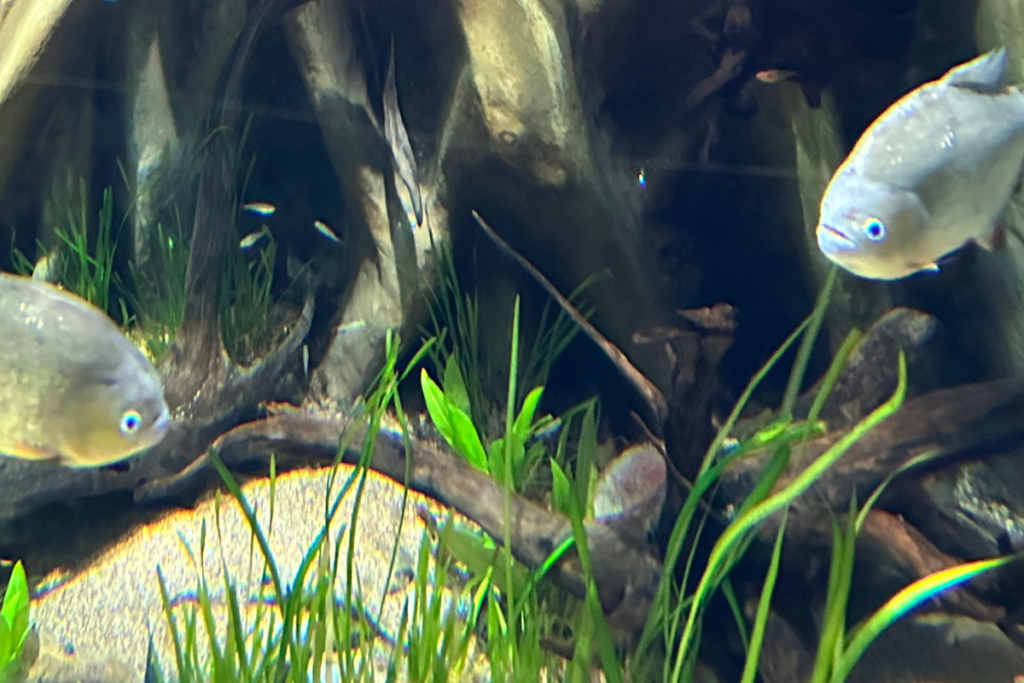
Quick Facts
Recommended Tank Size: 100–150+ Gallons for a Small Group
Aquarium Lifespan: Up to 15 Years
Water Type: Freshwater
Temperature Range: 75–82°F (24–28°C)
Global Range: South America
Notable Feature: Schooling Fish That Requires Significant Swimming Space
Red-Bellied Piranha Aquarium Care Overview
The red-bellied piranha is one of the most recognizable freshwater fish kept in large public aquariums around the world. Native to South America’s Amazon Basin, Orinoco watershed, and Paraguay-Paraná river system, this species attracts attention due to its striking appearance and famous reputation. In captivity, however, observers often discover a fish that behaves very differently from the aggressive image portrayed in movies.
Public aquariums frequently feature red-bellied piranhas as centerpiece exhibits because of their impressive appearance. Their metallic scales, deep body shape, and vibrant reddish underside create a display that immediately draws visitors. When maintained in spacious environments, groups of piranhas often become one of the most photographed freshwater exhibits.
Keeping this species successfully requires understanding its long-term needs. Unlike many smaller aquarium fish, red-bellied piranhas can reach substantial adult sizes and require considerable swimming room. Their eventual dimensions mean they quickly outgrow tanks that may appear adequate when the fish are young.
Aquarium life provides a unique opportunity to observe characteristics that can be difficult to see in the wild. Clear viewing conditions allow visitors to appreciate details such as scale patterns, body coloration, and physical adaptations. These observations often reveal a highly specialized freshwater fish rather than the exaggerated predator commonly imagined by the public.
Red-Bellied Piranha Aquarium Appearance and Display Characteristics
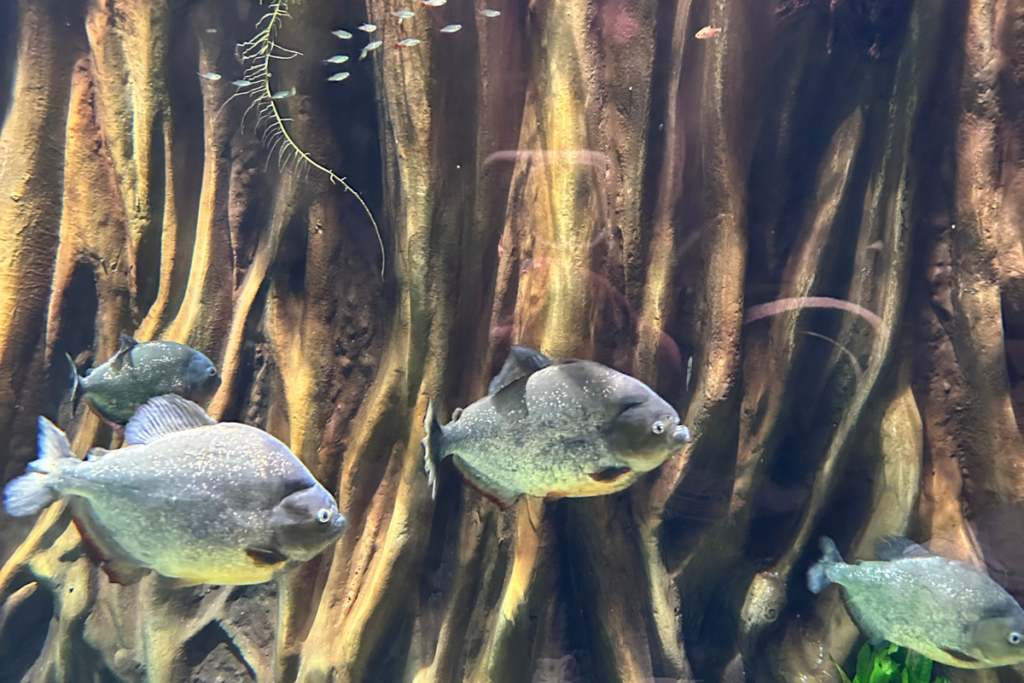
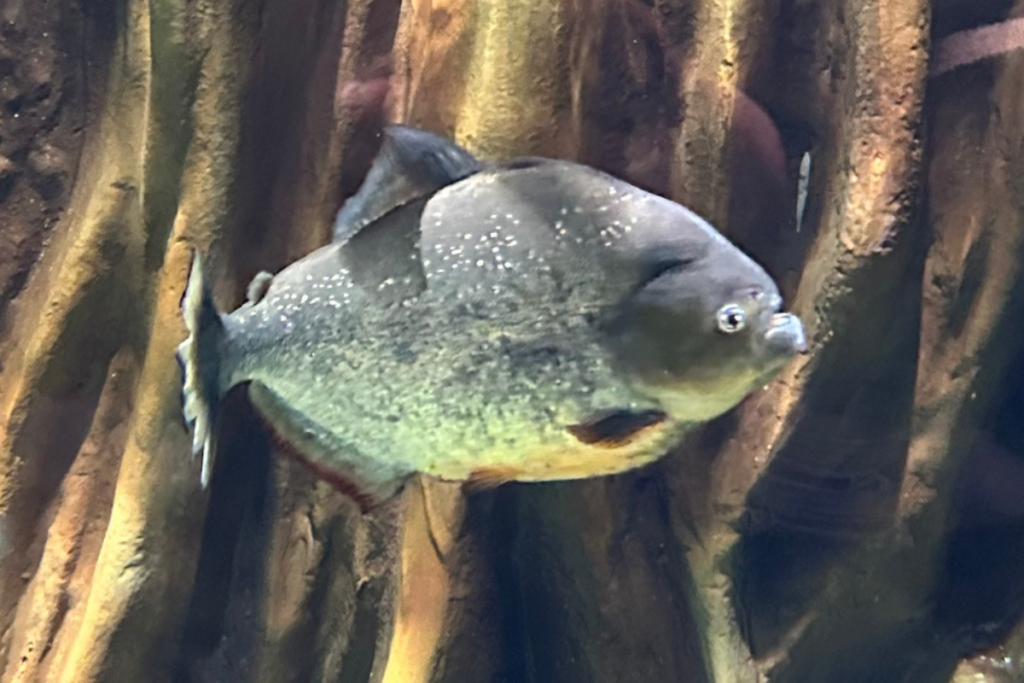
A healthy red-bellied piranha can be an exceptionally attractive aquarium fish. Adults typically develop bright orange to deep red coloration along the lower portion of the body, creating a dramatic contrast with the silver-gray scales covering the sides and upper regions. Under aquarium lighting, these colors can appear particularly vivid.
The fish possesses a deep-bodied profile that gives it a larger appearance than its actual length might suggest. An adult measuring 10 to 12 inches often looks considerably bigger than many similarly sized fish because of its height and muscular build. This shape helps make aquarium specimens visually impressive even from across a large exhibit.
Color intensity may vary between individuals. Some fish display brilliant red-orange undersides, while others exhibit softer shades of gold, orange, or crimson. These variations create visual diversity within groups and contribute to the overall appeal of a well-maintained display.
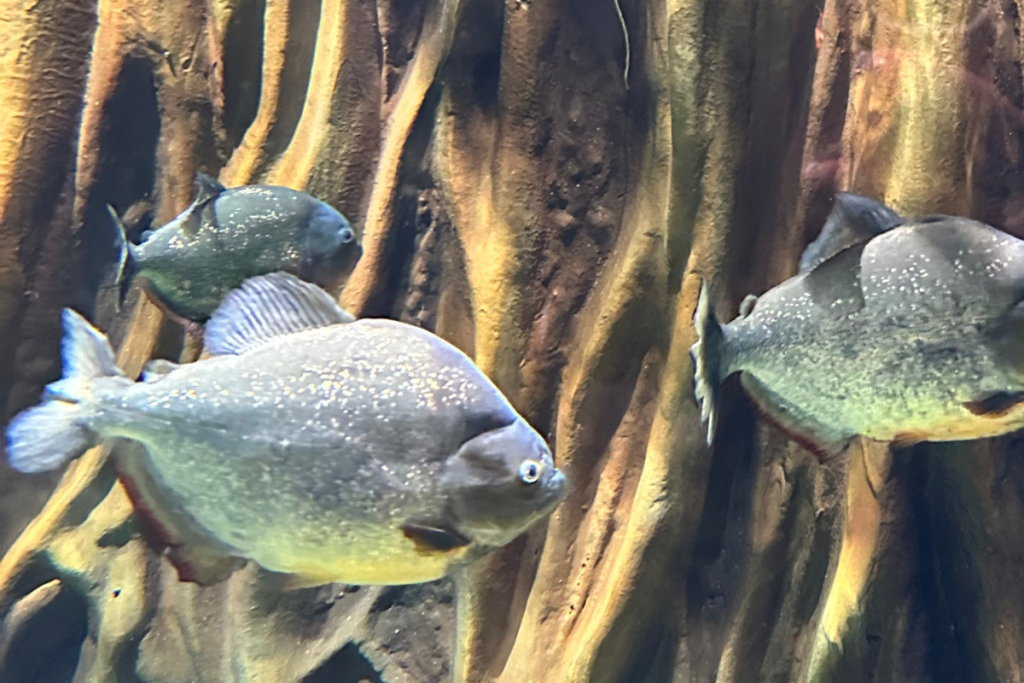
Large eyes, reflective scales, and a broad head further enhance the species’ appearance. Visitors frequently notice the polished metallic sheen produced when aquarium lights reflect from the fish’s scales. This effect can make an entire school appear to flash as individuals change direction.
Compared with many popular freshwater aquarium species, the red-bellied piranha presents a distinctive combination of size, coloration, and body shape. The result is a fish that stands out immediately among other exhibit animals. These visual qualities explain why piranhas remain among the most popular attractions in freshwater aquarium displays.
Red-Bellied Piranha Tank Requirements and Aquarium Setup
Tank size is one of the most important considerations when housing red-bellied piranhas. Juveniles may begin life in relatively modest enclosures, but adult fish require substantial space to accommodate their size and schooling tendencies. Many experienced keepers recommend aquariums exceeding 100 gallons for long-term care.
Large swimming areas help replicate the open-water conditions these fish utilize in nature. A spacious aquarium allows individuals to move comfortably while maintaining natural spacing within the group. Tanks that are too small can restrict movement and limit the display of normal behaviors.
Water quality is equally important. Stable temperatures, efficient filtration, and regular maintenance contribute significantly to the long-term health of aquarium specimens. Because piranhas can produce considerable waste compared to smaller fish, filtration systems must be capable of handling the biological load.
Aquascaping often includes driftwood, submerged branches, and open swimming zones. These features create a visually appealing environment while providing structure within the aquarium. Many public aquariums use naturalistic displays that resemble sections of South American river systems.
Lighting and water clarity also influence the viewing experience. Clear water highlights the species’ coloration and physical features, while appropriate lighting enhances the metallic appearance of the scales. Together, these elements create exhibits that showcase the fish in a manner that is both educational and visually striking.
Red-Bellied Piranha Aquarium Importance and Educational Value
Red-bellied piranhas serve an important role in public aquarium education. For many visitors, an aquarium provides the first opportunity to observe the species up close. Seeing living piranhas often replaces myths and misconceptions with a more accurate understanding of the animal.
Aquarium exhibits demonstrate that piranhas are part of complex freshwater ecosystems rather than isolated predators. Interpretive displays frequently highlight South America’s river systems and the biodiversity they support. This broader perspective helps visitors appreciate the ecological significance of the species.
The fish also acts as an ambassador for tropical freshwater conservation. By attracting public interest, piranhas encourage discussions about habitat protection, river health, and biodiversity. Their fame creates opportunities to educate audiences about environmental issues affecting aquatic ecosystems.
Large exhibits often showcase schooling groups, allowing visitors to observe interactions that are difficult to witness in natural settings. Watching multiple individuals move together creates a powerful visual experience and provides insight into how the species functions within a group environment.
The red-bellied piranha remains one of the most iconic freshwater fish displayed in aquariums worldwide. Its combination of striking appearance, impressive adaptations, and educational value makes it a favorite among visitors and aquarium professionals alike. Whether viewed in a home aquarium or a world-class public exhibit, the species continues to inspire curiosity about the remarkable wildlife of South America’s freshwater ecosystems.
Popular Searches About Red-Bellied Piranha
Explore Red-Bellied Piranha Guide
Explore More Exhibits

Support Encounters World
Help support wildlife photography and get behind the scenes discoveries on Patreon.