
White-Tailed Deer Scapula Identification Guide: How to Recognize a Deer Shoulder Blade

Quick Facts
Bone Type: Scapula Fragment (Shoulder Blade)
Likely Animal: White-Tailed Deer
Common Name: White-Tailed Deer Scapula
Scientific Name: Odocoileus virginianus
Bone Category: Shoulder Girdle Bone
Side of Body: Unknown
Age Class: Adult
Condition: Weathered, Fragmented
Key Identification Features: Glenoid cavity, narrowed scapular neck, broad blade section, flat profile, flared margins
Size Estimate: Approximately 6–9 inches (15–23 cm) preserved length
White-Tailed Deer Scapula Bone Identification Guide
The white-tailed deer scapula is a shoulder blade bone located within the front limb assembly of the skeleton. It forms part of the shoulder region and creates the connection between the body and upper front leg. Even when incomplete, portions of the scapula often preserve distinctive characteristics that make identification possible.
White-tailed deer occur throughout much of North America and are among the most widespread large mammals on the continent. Because of their abundance, deer bones are frequently encountered by hikers, hunters, wildlife enthusiasts, and bone collectors. Shoulder blade fragments are especially common because the broad bone often survives long after soft tissue has disappeared.
Unlike antlers or skull fragments, a scapula can initially appear unfamiliar to many people discovering bones outdoors. Weathering, breakage, and exposure may alter its appearance considerably. Despite these changes, several key features remain reliable indicators of identification.
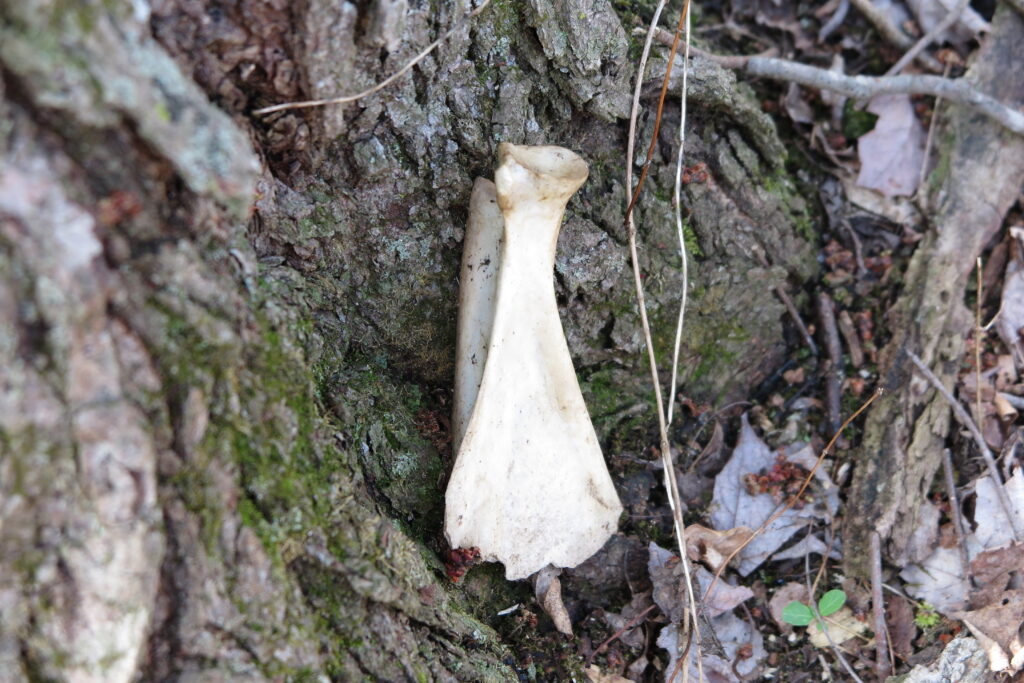
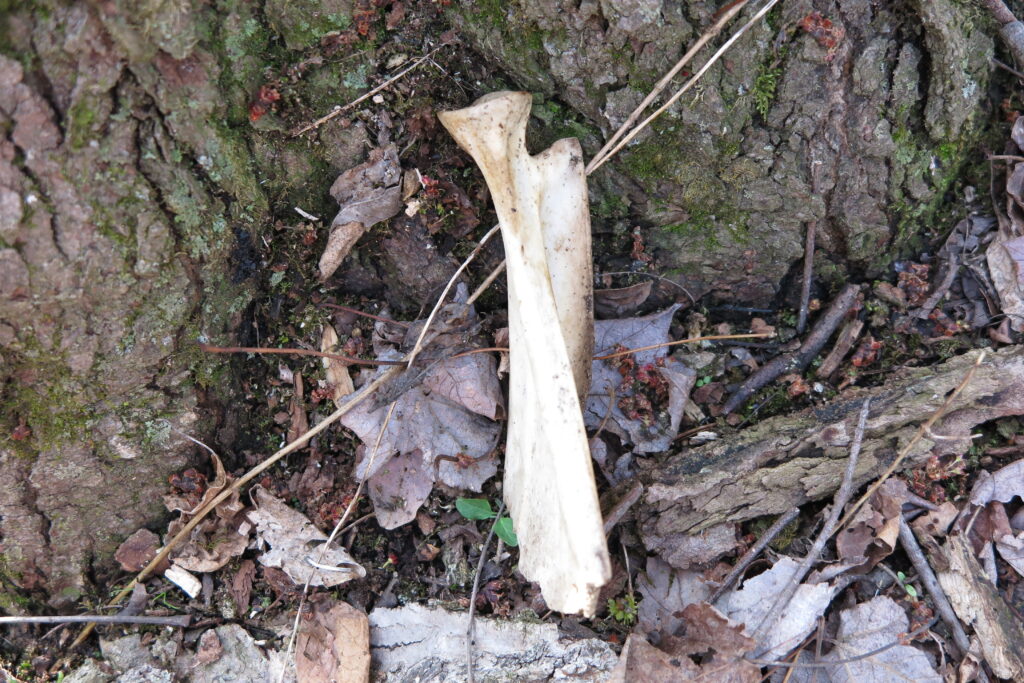
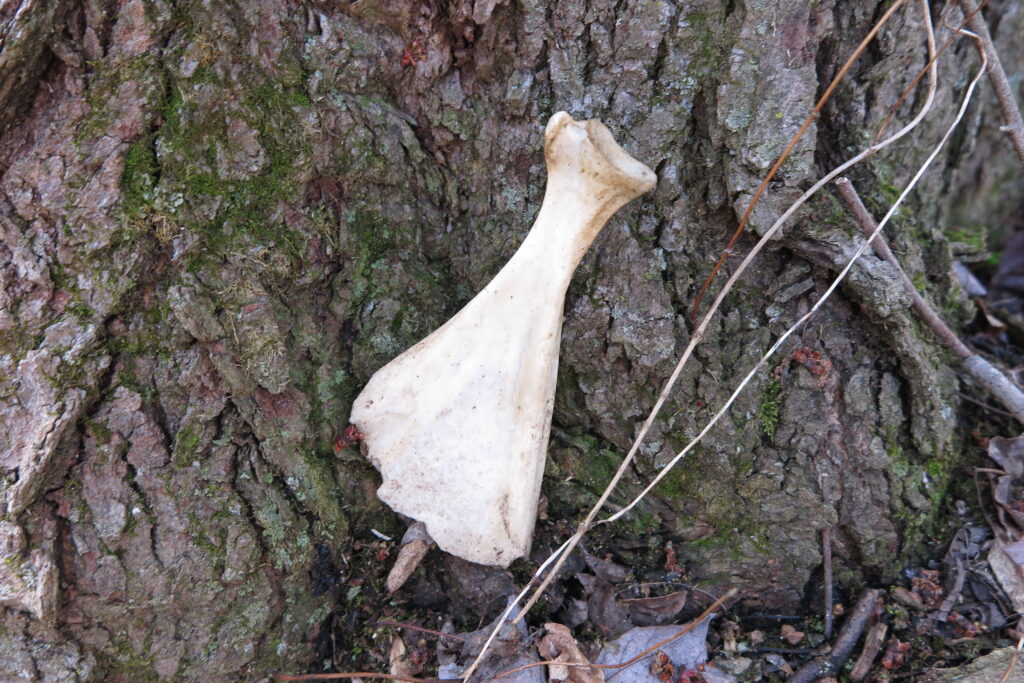
This specimen represents a partial scapula rather than a complete shoulder blade. While sections of the original blade are missing, the remaining structure preserves enough identifying landmarks to confidently classify it as a white-tailed deer scapula. Learning to recognize these surviving features is often the key to successful field identification.
White-Tailed Deer Scapula Recognition Characteristics
One of the easiest ways to identify a deer scapula is by its overall shape. Even when fragmented, the bone typically displays a broad blade-like section that narrows toward a more compact shoulder region. This widening and narrowing pattern creates a silhouette that differs significantly from most other skeletal elements.
At first glance, the scapula resembles a flattened triangular plate or weathered paddle blade. Unlike leg bones that possess thick cylindrical shafts, the scapula spreads outward across a broad surface. This flattened appearance immediately separates it from bones such as the femur, humerus, radius, or tibia.
The specimen shown here retains part of the blade section and the narrowed neck region. These surviving areas provide valuable identification clues because they preserve the original proportions of the shoulder blade. Even with missing sections, the overall outline remains recognizable.
The surface texture further contributes to identification. Deer scapulae often appear smooth across large portions of the blade while displaying subtle ridges and raised areas near attachment points. Weathered specimens may develop cracks or discoloration, but the general form usually remains visible.
Another important recognition feature is the bone’s thin construction. Compared to many other large mammal bones, the scapula maintains a relatively lightweight appearance despite its size. The broad shape combined with limited thickness creates a distinctive profile.
The edges of the blade typically expand outward rather than remaining parallel. This gradual flare gives the scapula its characteristic shoulder-blade appearance. Broken specimens frequently preserve portions of this widening pattern even when substantial sections are missing.
Many beginners mistake scapula fragments for pelvis bones because both can appear broad and flattened. However, the scapula lacks the large openings commonly associated with the pelvis. Instead, it maintains a cleaner blade-like shape with fewer interruptions across its surface.
When viewed as a whole, the combination of a flattened profile, expanding blade, narrowed neck, and smooth broad surfaces creates a set of characteristics rarely duplicated by other deer bones. These visual traits provide the foundation for successful identification.
White-Tailed Deer Scapula Diagnostic Features and Bone Landmarks
The most important identifying landmark on a deer scapula is the glenoid cavity, also known as the shoulder socket. This rounded joint surface occurs near the narrowed end of the bone and represents the point where the humerus once articulated. When preserved, it is often the strongest confirmation that a fragment belongs to the shoulder region.
Adjacent to the glenoid cavity is the scapular neck. This narrower section connects the joint area to the broader blade of the scapula. The transition between these two regions creates a distinctive shape that helps separate scapula fragments from other skeletal remains.
The blade itself provides another diagnostic feature. Although portions may be missing, the remaining section typically displays a broad, flattened form. Unlike ribs, which curve into long narrow arcs, the scapula expands into a larger surface area resembling a shallow plate.
Raised attachment areas may also remain visible. These subtle ridges and elevations create texture variation across portions of the bone. While weathering can soften these details, traces often survive long enough to assist with identification.
A useful comparison involves distinguishing a scapula from a deer pelvis. Both bones may appear flattened, but the pelvis contains large openings and more complex curves. The scapula instead displays a cleaner profile focused around a single major joint surface.
Skull fragments are another source of confusion for inexperienced collectors. However, cranial bones typically contain sutures, openings, and irregular contours associated with sensory structures. The uninterrupted surfaces found on a scapula generally appear much simpler.
Broken specimens often retain diagnostic features near the shoulder region because this area is naturally thicker and more durable. As a result, fragments may preserve the glenoid cavity and neck even after much of the blade has been lost. This pattern is visible in many field-collected examples.
When several landmarks appear together—including the shoulder socket, scapular neck, blade expansion, and smooth broad surfaces—identification becomes considerably more reliable. These features collectively distinguish the deer scapula from nearly every other large skeletal fragment commonly encountered outdoors.
Where White-Tailed Deer Scapula Fragments Are Commonly Found
White-tailed deer scapula fragments are most often discovered in wooded environments where deer populations are abundant. Forests provide food, shelter, and travel corridors, making them natural locations for skeletal remains to occur. Bones may remain concealed beneath leaves for months or years before becoming visible.
Trail systems frequently produce discoveries because both deer and people use predictable pathways through the landscape. A scapula fragment resting beside a trail often stands out due to its pale coloration and unusual shape. Reduced vegetation during cooler seasons further increases visibility.
Field edges and woodland openings are also productive locations. Deer commonly move between feeding areas and cover, creating opportunities for remains to accumulate nearby. Bone discoveries in these areas often occur where vegetation transitions between forest and open ground.
Water features such as creeks, drainage channels, and ponds sometimes reveal skeletal material through erosion. Rainfall can expose bones that were previously buried beneath soil or leaf litter. In some cases, water movement may relocate fragments short distances from their original position.
A real-world example involves a deer carcass decomposing within a forest. Over time, scavengers remove soft tissue while environmental processes gradually separate skeletal elements. Months later, an individual scapula fragment may remain exposed beside a tree root while other bones remain hidden nearby.
Scavengers can influence discovery locations significantly. Coyotes, foxes, raccoons, and vultures may move portions of a carcass away from the original site. As a result, bones often appear scattered rather than concentrated in a single location.
Disturbed ground created by storms, fallen trees, trail maintenance, or erosion frequently exposes previously hidden remains. These events may suddenly reveal bones that had remained buried for years. Such discoveries are common after periods of heavy rainfall or seasonal flooding.
Understanding where deer scapula fragments are commonly found helps narrow identification possibilities. When a broad, flattened bone with a preserved shoulder socket appears in a deer-rich habitat, the likelihood of a white-tailed deer scapula increases substantially. Combined with the diagnostic features described above, habitat context provides another valuable tool for accurate identification.
Popular Searches About Deer Scapula
Explore Deer Scapula Guide
Explore More Bones

Support Encounters World
Help support wildlife photography and get behind the scenes discoveries on Patreon.