
Finding White-Tailed Deer Scapula Guide: Where and How to Locate Deer Shoulder Blades
Quick Facts
Most Common Discovery Areas: Forests, Trails, Field Edges, Creek Corridors
Best Search Season: Late Fall, Winter, Early Spring
Visibility Level: Moderate to High When Exposed
Common Condition: Weathered, Fragmented
Likely Scavengers: Coyote, Raccoon, Red Fox, Turkey Vulture
Location Observed: Pennsylvania, USA
White-Tailed Deer Scapula Finding Guide
The white-tailed deer scapula is one of the more recognizable deer bones encountered during outdoor exploration. As part of the shoulder region, the bone often survives long after soft tissues have disappeared, making it a common discovery for hikers, hunters, wildlife photographers, and bone collectors. Even fragmented specimens frequently retain enough of their shape to remain identifiable.
White-tailed deer inhabit a vast geographic range extending across much of North America. Their abundance means skeletal remains can occasionally be found in areas where deer regularly travel, feed, or seek shelter. Because deer occupy such diverse habitats, scapula discoveries can occur in many different landscapes.
Unlike antlers, which are shed annually in predictable locations, scapulae are usually discovered as part of natural decomposition events. This makes finding them less predictable and often dependent on careful observation. Many specimens remain hidden beneath leaves, vegetation, or soil for extended periods before becoming visible.
Locating a deer scapula often involves understanding where deer spend their time and how natural processes expose skeletal remains. Recognizing these patterns increases the likelihood of finding shoulder blade fragments during field exploration.
Best Places to Search for White-Tailed Deer Scapula
Forested environments consistently rank among the best locations for finding deer scapulae. White-tailed deer spend significant portions of their lives within wooded habitats where food, cover, and travel routes are readily available. As a result, many skeletal remains eventually occur within forests.
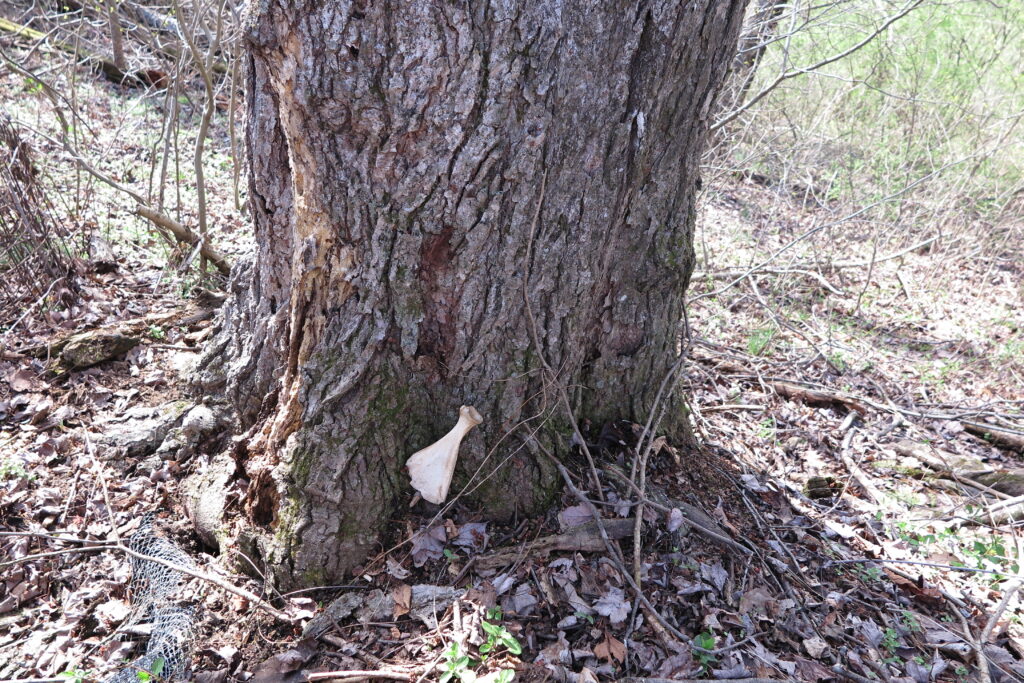
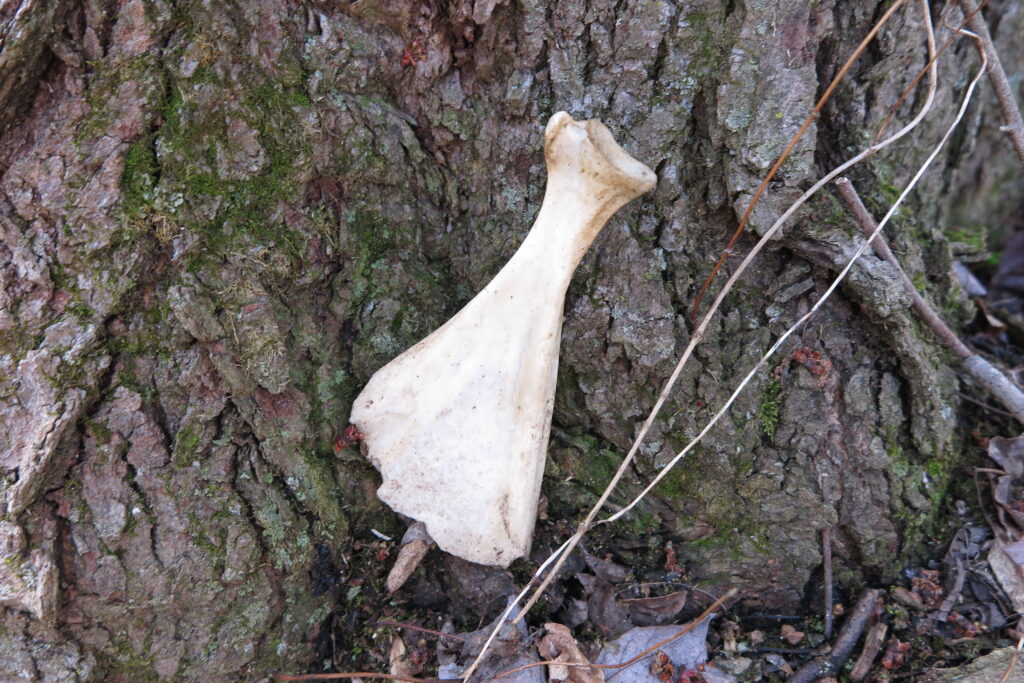
Tree bases can be particularly productive areas to examine. Falling leaves often accumulate around trunks and root systems, partially covering bones while still allowing portions to remain exposed. The scapula documented here was found resting beside a tree, a location that commonly produces similar discoveries.
Game trails represent another valuable search area. Deer frequently use the same routes for movement between feeding and bedding sites. While animals rarely die directly on these paths, nearby skeletal remains often become visible due to increased observation opportunities along travel corridors.
Field edges provide excellent transition zones for searching. Deer commonly move between forest cover and open feeding areas, creating habitats where skeletal remains occasionally appear. Bones found along these boundaries may have originated from animals utilizing both environments.
Creek corridors and drainage systems also deserve attention. Water can expose previously buried remains through erosion while transporting bones short distances downstream. Gravel bars, stream banks, and seasonal flood zones frequently reveal skeletal material.
Woodland clearings offer another useful location. Open spaces within forests provide visibility while still supporting regular deer activity. Bones resting in these areas often stand out against surrounding vegetation and leaf litter.
Abandoned fence lines and overgrown property edges can produce surprising discoveries as well. These locations frequently serve as wildlife travel routes and may accumulate remains over time. Reduced human disturbance often allows bones to persist for extended periods.
Although scapulae can theoretically occur almost anywhere deer are present, forests, tree bases, trails, field margins, and creek systems consistently provide the highest probability of successful discoveries.

Seasonal Strategies for Finding Deer Shoulder Blade Fragments
The time of year significantly affects bone visibility. Seasonal vegetation changes often determine whether a scapula remains hidden or becomes easily detectable. Understanding these patterns can dramatically improve search success.
Winter is widely considered one of the best seasons for locating deer bones. Leaf drop exposes ground surfaces that remain concealed during warmer months. Without dense vegetation, pale bones become easier to spot against darker forest backgrounds.
Early spring offers another productive search window. Snowmelt, rainfall, and shifting leaf litter frequently uncover skeletal remains that were hidden throughout winter. Newly exposed bones often appear before grasses and understory plants regain full growth.
Autumn can also be effective, particularly after leaves begin falling. As vegetation dies back, visibility improves throughout forests and field edges. Bones that remained concealed during summer may suddenly become noticeable.
Summer generally presents the greatest challenge for bone hunting. Thick vegetation, dense undergrowth, and rapid plant growth can obscure even large skeletal elements. A scapula lying only a few feet away may remain completely hidden beneath foliage.
Weather events can temporarily improve search conditions regardless of season. Heavy rain may wash away leaves and soil, revealing bones previously buried beneath surface debris. Strong winds can expose skeletal remains by redistributing forest litter.
Morning sunlight often helps identify bones because pale surfaces reflect light differently than surrounding materials. This contrast can make weathered scapula fragments easier to detect while walking trails or exploring woodland habitats.
Patience remains one of the most valuable tools when searching for deer bones. Many successful discoveries occur after slowly scanning the ground rather than covering large distances quickly. Careful observation often reveals details that would otherwise be overlooked.
By combining seasonal timing with strategic habitat selection, searchers significantly improve their chances of locating white-tailed deer scapula fragments in natural settings.
How Deer Scapula Become Exposed and Discoverable
The appearance of a deer scapula on the landscape is the result of multiple natural processes working together over time. Following the death of a deer, decomposition gradually removes soft tissues and exposes skeletal elements. The scapula often remains intact long enough to become visible after this process begins.
Scavengers play an important role in exposing and distributing bones. Coyotes, raccoons, foxes, and vultures frequently feed on carcasses, separating skeletal elements from one another. This activity often explains why a scapula may be found far from the rest of the skeleton.
Weather contributes significantly to bone exposure. Rainfall removes soil and organic debris, while seasonal temperature changes influence decomposition and preservation. Over time, these forces gradually reveal bones that were previously concealed beneath the surface.
A real-world example might involve a deer that dies within a forested area. As decomposition progresses, scavengers scatter portions of the skeleton across the surrounding landscape. Months later, a scapula fragment becomes visible beside a tree where erosion and leaf movement expose part of the bone.
Water movement can further redistribute skeletal remains. Small streams and drainage channels occasionally carry lighter bones short distances before depositing them along banks or exposed ground. These locations often become productive search areas for bone collectors.
Falling leaves can both hide and protect skeletal remains. While thick leaf litter reduces visibility, it may also shield bones from direct sunlight and physical disturbance. This protective effect can help preserve important identification features for years.
Human activity occasionally exposes long-hidden specimens as well. Trail maintenance, storm cleanup, and land management projects can reveal bones that have remained buried beneath vegetation or soil. Such discoveries often occur unexpectedly during routine outdoor work.
Understanding how deer scapulae become exposed helps explain why these bones appear in certain locations and conditions. Rather than occurring randomly, most discoveries result from a combination of decomposition, scavenger activity, weather, and environmental change working together over time.
Popular Searches About Deer Scapula
Explore Deer Scapula Guide
Explore More Bones

Support Encounters World
Help support wildlife photography and get behind the scenes discoveries on Patreon.