
White-Tailed Deer Scapula vs Human Scapula: Key Differences and Identification Guide
Quick Facts
Bone Type: Scapula (Shoulder Blade)
Comparison Species: White-Tailed Deer and Human
Scientific Names: Odocoileus virginianus and Homo sapiens
Bone Category: Shoulder Girdle Bone
Major Similarity: Shoulder Blade Supporting Arm or Front Limb Movement
Major Difference: Shape, Orientation, and Locomotion Adaptation
Joint Type: Ball-and-Socket Shoulder Joint
Mobility Style: Quadrupedal vs Bipedal Movement
Identification Difficulty: Moderate
White-Tailed Deer Scapula vs Human Scapula Comparison Guide
The scapula, commonly called the shoulder blade, is present in both white-tailed deer and humans. Although the bone serves a similar purpose in each species, its shape and proportions reflect very different lifestyles. Comparing the two provides insight into how anatomy adapts to movement and body structure.
White-tailed deer are four-legged mammals that depend on speed, endurance, and agility. Humans, by contrast, are upright bipeds whose upper limbs are specialized for manipulation, lifting, and fine motor control. These differences influence the structure of the shoulder region and the appearance of the scapula.
At first glance, deer and human scapulae share a recognizable blade-like form. Both possess a shoulder socket, broad body, and multiple muscle attachment surfaces. Despite these similarities, several important features make identification relatively straightforward when the bones are examined side by side.
For bone collectors and wildlife enthusiasts, distinguishing between a deer scapula and a human scapula is usually possible through overall shape, proportions, and orientation. Learning these differences helps prevent misidentification while improving skeletal recognition skills.
White-Tailed Deer and Human Scapula Shape Comparison
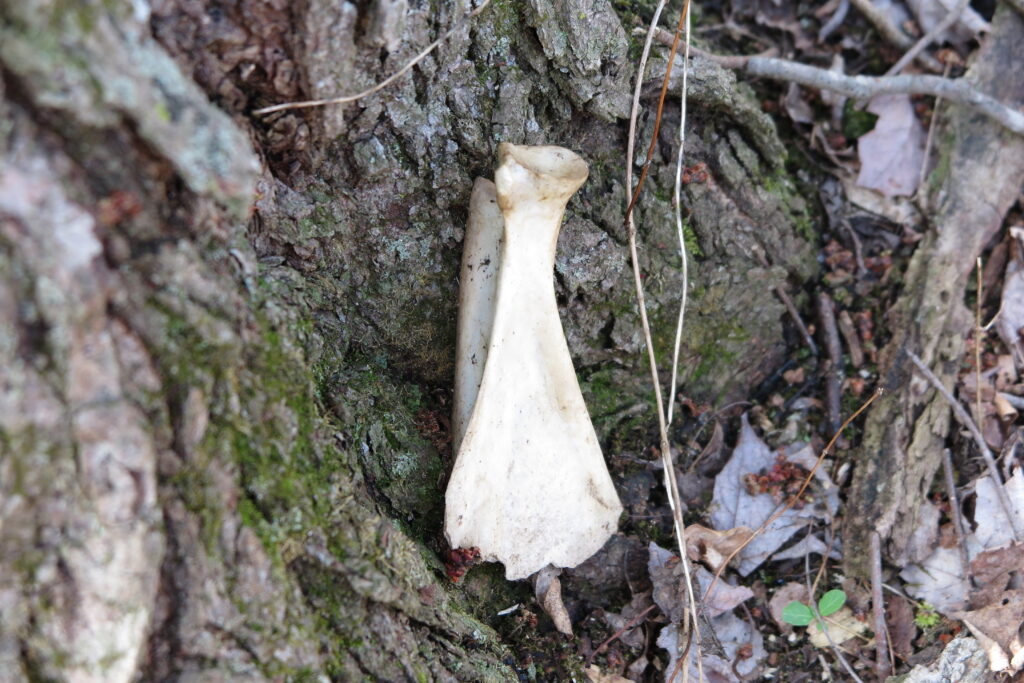
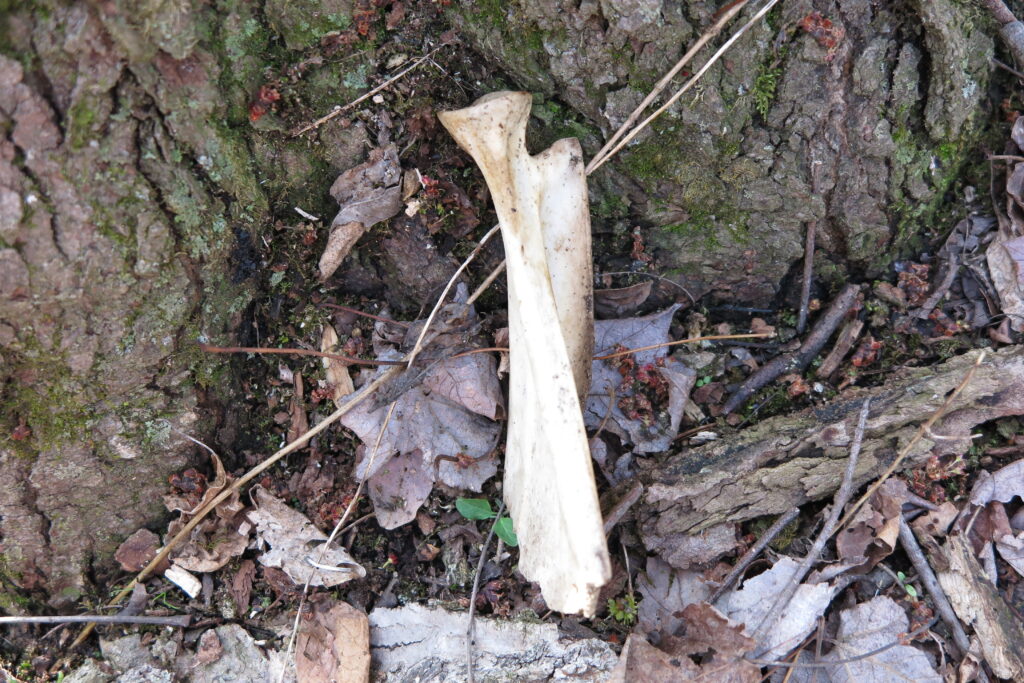
One of the most obvious differences between the two bones is overall shape. A white-tailed deer scapula is generally longer and narrower, producing a more elongated profile. The blade often appears stretched compared to the broader proportions of the human shoulder blade.
Human scapulae tend to be wider relative to their height. The overall shape resembles a broad triangular plate with a noticeably expanded upper region. In contrast, the deer scapula often displays a more streamlined outline adapted to quadrupedal movement.
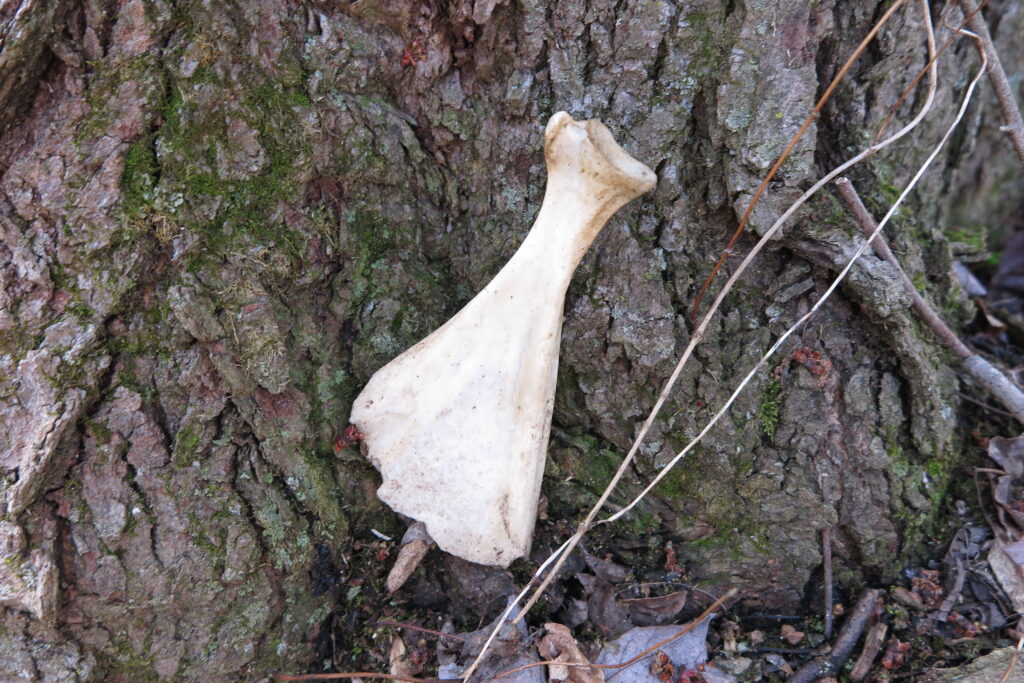
The shoulder socket region also differs in appearance. Deer scapulae typically possess a narrower neck leading into the glenoid cavity, while human scapulae often appear more compact around the joint area. These proportional differences become easier to recognize with experience.
Viewed from a distance, a deer scapula frequently resembles a long blade or paddle. A human scapula, however, often appears shorter and broader. This distinction remains one of the quickest ways to separate the two during field identification.
The upper borders display additional variation. Human scapulae contain more prominent anatomical contours associated with upright posture and arm movement. Deer scapulae generally maintain smoother transitions along portions of the blade.
Size alone is not always reliable because large deer and smaller human individuals may overlap in some dimensions. However, the relationship between length and width usually remains consistent enough to provide useful clues.
Another notable difference involves overall proportions. Deer scapulae emphasize forward-and-back limb motion, creating a more elongated structure. Human scapulae support a wider range of arm positions, contributing to a broader and more versatile shape.
These shape differences allow most complete specimens to be identified quickly. Even fragmented examples often retain enough of their original proportions to suggest whether the bone belonged to a deer or a human.
White-Tailed Deer vs Human Shoulder Anatomy
Although both species possess a shoulder blade, the surrounding anatomy differs considerably. In white-tailed deer, the scapula forms part of a front-limb system designed primarily for locomotion. The bone supports movement patterns associated with walking, running, and jumping.
Human anatomy places different demands on the shoulder region. Rather than serving as a primary locomotion structure, the shoulder supports arm movement used for lifting, carrying, throwing, and manipulating objects. This functional shift influences the overall organization of the shoulder girdle.
The glenoid cavity appears in both species and serves as the socket of the shoulder joint. Despite sharing this feature, the orientation and proportions of the surrounding bone differ. Deer anatomy favors efficient limb cycling during movement, whereas human anatomy emphasizes flexibility and range of motion.
Muscle attachment regions also reflect contrasting lifestyles. Deer scapulae support powerful muscles associated with forward propulsion and weight support. Human scapulae provide attachment sites for muscles involved in arm positioning, rotation, and complex upper-body movements.
The relationship between the scapula and rib cage varies as well. Deer shoulder blades rest along the sides of the chest in a configuration optimized for four-legged movement. Human shoulder blades sit across the upper back, reflecting the upright posture characteristic of bipedal locomotion.
The position of the shoulder socket contributes to additional differences. In deer, the joint is aligned to support efficient front-leg movement beneath the body. In humans, the orientation supports a broader range of arm motions extending in multiple directions.
A useful comparison is to think of the deer shoulder as a system built for distance and speed, while the human shoulder functions more like a highly flexible tool platform. Both require strength, but the priorities differ considerably.
Understanding these anatomical distinctions helps explain why the two scapulae appear different despite sharing the same basic skeletal role.
How to Identify a Deer Scapula from a Human Scapula
Field identification often begins with examining overall proportions. If the bone appears noticeably elongated with a narrow profile, it is more likely to belong to a deer. A broader triangular shape often points toward a human scapula.
The neck region provides another useful clue. Deer scapulae typically display a more pronounced narrowing between the blade and shoulder socket. Human scapulae generally appear less elongated in this area and maintain a more compact overall structure.
The blade itself can reveal important differences. Deer shoulder blades often resemble a long, flattened paddle, particularly when viewed from the side. Human specimens tend to appear wider and more expanded across the upper portions of the bone.
A practical example involves discovering a weathered shoulder blade fragment in the woods. If the preserved section shows an elongated blade with a narrow neck leading to the shoulder socket, a deer identification becomes increasingly likely. Habitat context may further support this conclusion.
The orientation of surviving landmarks can also help. Human scapulae possess anatomical features associated with extensive arm mobility, while deer scapulae emphasize forward limb movement. These differences influence the arrangement of ridges, borders, and attachment areas.
Comparing the bone to known reference images is often beneficial. Even experienced bone collectors rely on visual comparisons when evaluating unusual specimens. Side-by-side examination quickly highlights proportional differences.
It is important to remember that fragmentation can complicate identification. Broken specimens may preserve only a portion of the original blade or joint region. In these situations, multiple characteristics should be considered rather than relying on a single feature.
By evaluating shape, proportions, neck structure, blade form, and overall anatomy, most deer and human scapulae can be distinguished with confidence. These characteristics make the comparison one of the more straightforward exercises in large mammal bone identification.

Popular Searches About Deer Scapula
Explore Deer Scapula Guide
Explore More Bones

Support Encounters World
Help support wildlife photography and get behind the scenes discoveries on Patreon.