
White-Tailed Deer Scapula vs Pelvis: Key Differences and Identification Guide
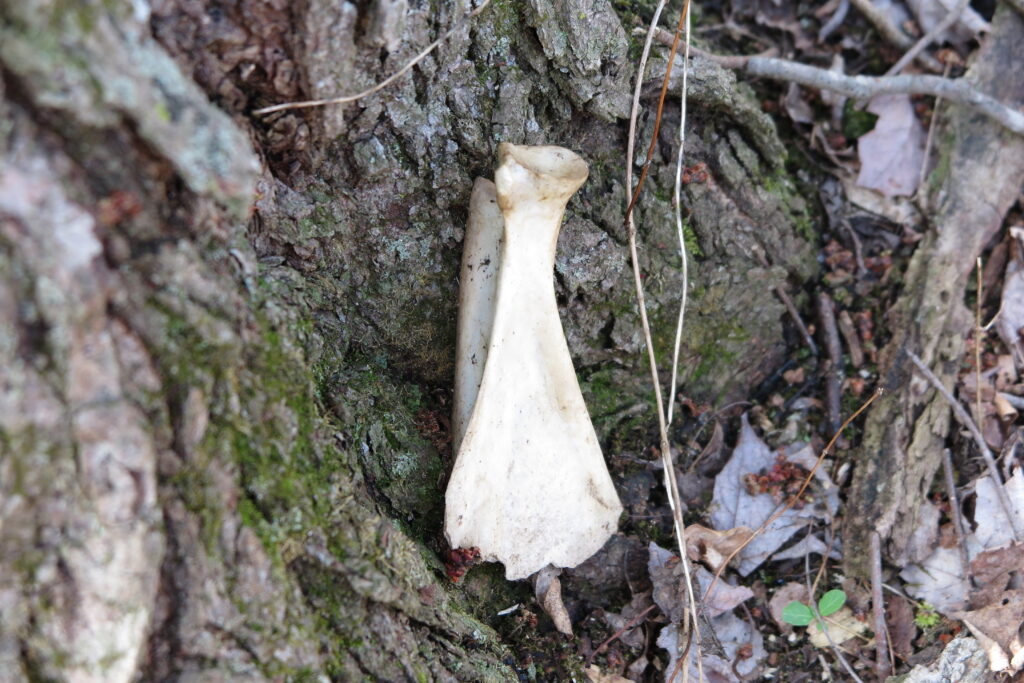
Quick Facts
Bone Type: Scapula (Shoulder Blade) vs Pelvis (Hip Bone)
Likely Animal: White-Tailed Deer
Scientific Name: Odocoileus virginianus
Bone Categories: Shoulder Girdle Bone vs Pelvic Girdle Bone
Most Common Misidentification: Scapula Fragment Mistaken for Pelvis Fragment
Major Similarity: Broad, Flat Bone Structure
Major Difference: Joint Placement and Overall Shape
Identification Difficulty: Moderate
Best Identification Feature: Glenoid Cavity vs Pelvic Openings
White-Tailed Deer Scapula vs Pelvis Identification Guide
The white-tailed deer scapula and pelvis are two of the most commonly confused bones encountered during skeletal identification. Both are broad, relatively flat bones that can appear similar when weathered or fragmented. For people discovering bones in the field, distinguishing between the two can initially be challenging.
The scapula belongs to the shoulder region and forms part of the front limb assembly. The pelvis, by contrast, occupies the rear portion of the skeleton and serves as the foundation of the hind limbs. Although both contribute to movement, they originate from entirely different areas of the body.
White-tailed deer possess a highly specialized skeleton designed for speed and agility. Both the scapula and pelvis play important roles within this system, but each has evolved for different purposes. These differences become visible through their shape, proportions, and identifying landmarks.
Learning to recognize these distinctions is one of the most useful skills for wildlife bone identification. Once the major features are understood, separating a scapula from a pelvis becomes much easier, even when only partial specimens are available.
White-Tailed Deer Scapula and Pelvis Shape Comparison
At first glance, both bones may appear flattened and plate-like. This shared characteristic explains why beginners often confuse them. However, the overall outline of each bone differs considerably once examined more closely.
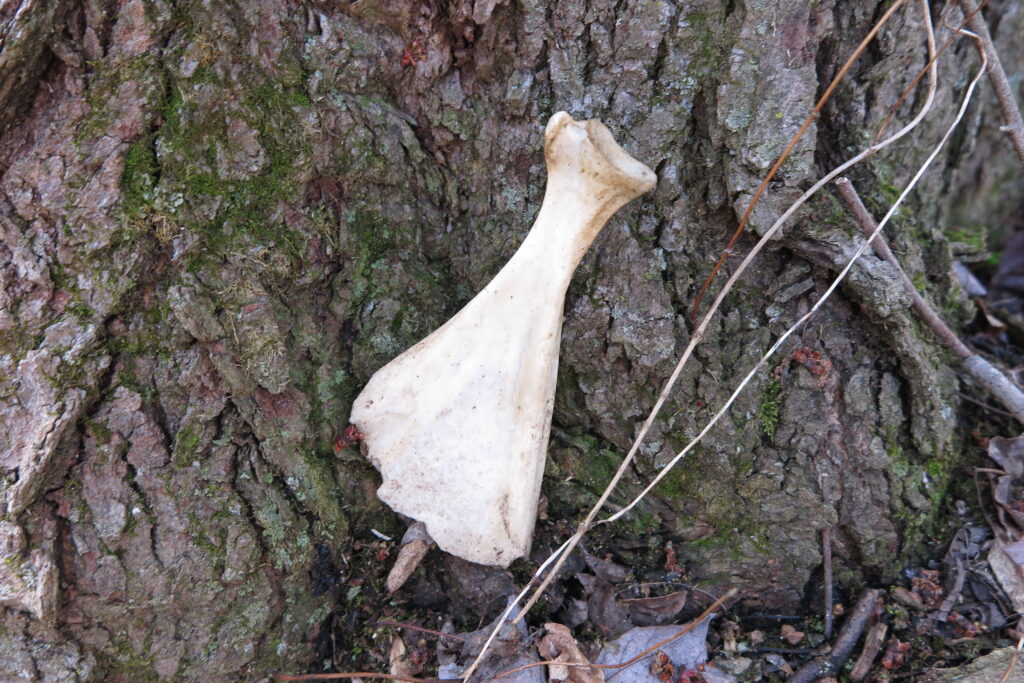
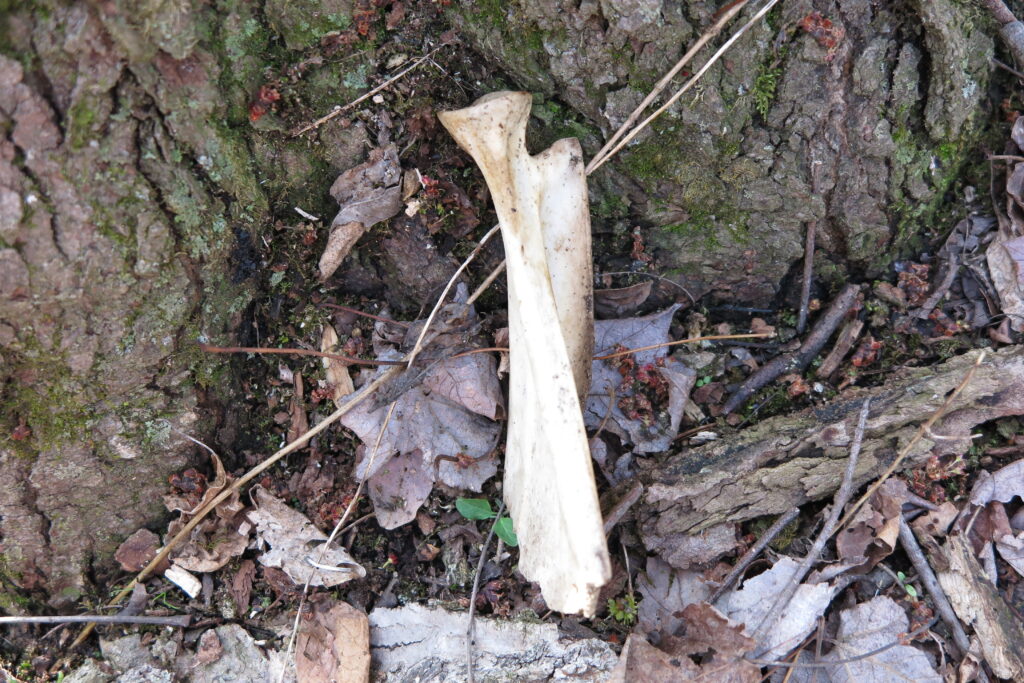
A deer scapula generally resembles a broad blade or elongated triangular plate. One end widens while the opposite end narrows toward the shoulder socket. This creates a streamlined appearance that is often compared to a paddle blade or flattened shovel.
The pelvis has a more complex shape with multiple curves, projections, and openings. Rather than forming a simple blade, the bone expands in several directions and contains distinct anatomical regions. Its outline tends to appear more irregular than the smooth profile of a scapula.
One of the easiest differences to recognize is overall symmetry. A scapula often displays a cleaner, more balanced appearance. A pelvis fragment frequently contains multiple angles and contours that create a more complicated silhouette.
When viewed from the side, the scapula usually appears thinner and more uniformly flattened. The pelvis often exhibits greater variation in thickness and includes areas that project outward. These features become especially noticeable on larger fragments.
Another useful comparison involves the edges of the bone. Scapular margins typically flow smoothly around the blade, while pelvic edges often change direction abruptly as they follow the contours of the hip region. This creates a noticeably different visual impression.
Weathering can obscure some of these distinctions, particularly on heavily fragmented specimens. Even so, the overall shape usually remains one of the strongest clues available during identification.
For many bone collectors, recognizing the difference between a blade-like scapula and a more complex pelvis is the first step toward accurate classification.
Deer Scapula and Pelvis Anatomical Landmarks
The most reliable way to separate a scapula from a pelvis is by examining specific anatomical landmarks. These features remain identifiable even when portions of the bone have broken away.
A scapula contains the glenoid cavity, which forms the shoulder socket. This smooth, rounded depression occurs near the narrowed end of the bone and serves as the articulation point for the humerus. Finding this feature strongly suggests a scapula.
The pelvis lacks a glenoid cavity entirely. Instead, it contains structures associated with the hip joint and hind-limb attachment. These landmarks differ significantly in appearance and location from those found on the shoulder blade.
One of the defining characteristics of a pelvis is the presence of large openings known as pelvic foramina. These openings create visible holes within the bone that are absent on a scapula. Even fragmented pelvic specimens often preserve portions of these openings.
The blade of the scapula generally forms a broad uninterrupted surface. This smooth expanse contrasts sharply with the more segmented appearance of the pelvis. The absence of large openings is often enough to rule out a pelvic identification.
The scapular neck provides another valuable clue. This narrowed section connects the blade to the shoulder socket and creates a distinctive transition in width. Comparable anatomy is not present on the pelvis.
Pelvic fragments often display thicker joint surfaces and more pronounced curves. These characteristics reflect the pelvis’s role in supporting the hind limbs and connecting to the spine. The resulting anatomy appears considerably more robust.
A practical field example might involve finding a weathered flat bone beside a trail. If the specimen preserves a shoulder socket and broad blade but lacks large openings, a scapula becomes the most likely identification. If large holes are present, the bone is far more likely to be pelvic material.
These landmarks provide the strongest evidence for distinguishing between the two bones and remain reliable even when specimens are incomplete.
How to Identify a Deer Scapula Instead of a Pelvis
Field identification becomes much easier when a systematic approach is used. Rather than focusing on a single characteristic, it is best to evaluate multiple features together. This reduces the likelihood of misidentification.
Start by examining the overall shape. If the specimen resembles a flattened blade that gradually narrows toward one end, it is likely a scapula. If it appears broader, more irregular, and contains multiple curves, a pelvis becomes more probable.
Next, search for openings within the bone. A true deer pelvis almost always contains large pelvic openings that interrupt the surface. A scapula maintains a much more continuous blade and lacks these obvious holes.
The presence of a glenoid cavity strongly favors a scapula identification. This rounded shoulder socket is one of the most diagnostic features found on the bone. Pelvic fragments do not possess an equivalent structure.
Thickness can provide additional clues. Although both bones contain reinforced areas, the pelvis generally appears heavier and more complex. The scapula tends to maintain a thinner, more lightweight appearance across much of its surface.
A useful real-world comparison is to imagine the scapula as a paddle and the pelvis as a frame. The shoulder blade emphasizes a broad uninterrupted surface, while the pelvis incorporates openings and multiple attachment regions. This mental image often helps beginners remember the difference.
Habitat context alone should never determine identification, but it can provide supporting information. Deer remains are commonly scattered by scavengers, meaning either bone may be found in forests, fields, or along trails. Anatomical features should always remain the primary evidence.
By focusing on shape, openings, joint surfaces, blade structure, and overall proportions, most white-tailed deer scapulae can be separated from pelvic fragments with confidence. These distinctions make the comparison one of the most useful exercises in wildlife bone identification.

Popular Searches About Deer Scapula
Explore Deer Scapula Guide
Explore More Bones

Support Encounters World
Help support wildlife photography and get behind the scenes discoveries on Patreon.