
White-Tailed Deer Scapula Facts Guide: Interesting Facts About the Deer Shoulder Blade

Quick Facts
Bone Type: Scapula (Shoulder Blade)
Likely Animal: White-Tailed Deer
Common Name: White-Tailed Deer Scapula
Scientific Name: Odocoileus virginianus
Bone Category: Shoulder Girdle Bone
Position in Skeleton: Upper Front Limb
Main Joint: Shoulder Joint (Glenoid Cavity)
Most Distinctive Feature: Broad Blade with Shoulder Socket
Common Discovery Condition: Weathered or Fragmented
White-Tailed Deer Scapula Facts and Information Guide
The white-tailed deer scapula is one of the most recognizable bones found within the shoulder region of the skeleton. Commonly referred to as the shoulder blade, it occupies an important position between the body and front limb. Even when discovered as a fragment, the bone often retains enough characteristics to remain identifiable.
White-tailed deer are among the most widespread large mammals in North America. Their adaptability allows them to thrive in forests, wetlands, agricultural landscapes, and suburban environments. Because of this extensive range, deer bones are commonly encountered by outdoor enthusiasts throughout much of the continent.
Unlike antlers, which are unique to members of the deer family, the scapula is a permanent part of the skeleton. Every white-tailed deer possesses a left and right shoulder blade that remain present throughout life. These paired bones contribute to the overall structure of the shoulder region.
Many people discover scapula fragments while hiking, hunting, exploring trails, or examining wildlife remains. The unusual combination of a broad blade and shoulder socket often sparks curiosity. Learning a few key facts helps place the bone within the larger story of deer anatomy and natural history.
Fascinating Facts About the White-Tailed Deer Shoulder Blade
One interesting fact about the scapula is that it is classified as a flat bone rather than a long bone. This classification is based on its broad shape and relatively thin structure. Flat bones serve different roles within the skeleton than cylindrical limb bones.
Every white-tailed deer possesses two scapulae, one on each side of the body. These bones mirror one another and occupy corresponding positions within the shoulder region. Together, they create the foundation of the front limb system.
The scapula is often one of the easiest deer bones for beginners to identify. Its broad blade-like shape stands out from ribs, vertebrae, and leg bones. Even incomplete specimens frequently preserve enough of their original form to remain recognizable.
Unlike the pelvis, the scapula lacks large openings within its structure. This simple blade-like appearance helps distinguish it from many other broad skeletal elements. The uninterrupted surface is one of its defining visual traits.
The shoulder socket, known as the glenoid cavity, is one of the most important landmarks on the bone. This feature creates the connection point between the scapula and humerus. Even weathered specimens often retain portions of this distinctive structure.
Many field-collected scapulae are discovered in fragmented condition. Broad flat bones can break more easily than dense limb bones when exposed to weather, scavengers, and environmental stress. As a result, complete specimens are less common than partial examples.
The scapula has remained a consistent feature throughout the evolution of deer. Although species vary in size and proportions, the basic shoulder-blade design remains remarkably similar. This stability highlights the effectiveness of its anatomical layout.
Because the scapula combines recognizable shape, useful landmarks, and frequent occurrence, it has become one of the most studied and collected bones among wildlife enthusiasts interested in skeletal identification.
White-Tailed Deer Scapula Facts About Anatomy and Identification
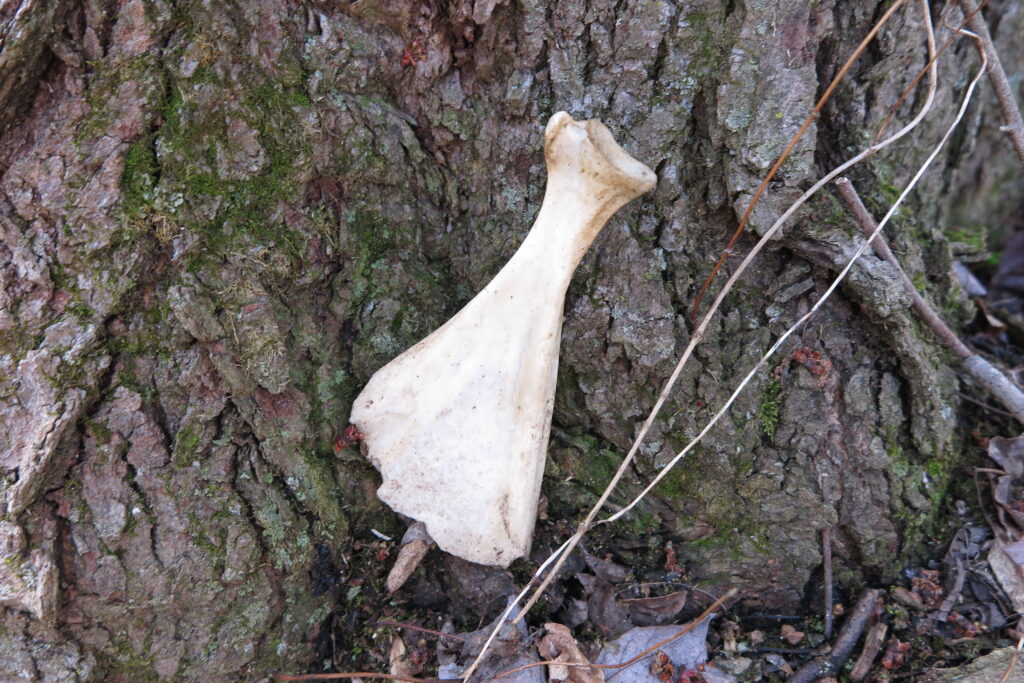
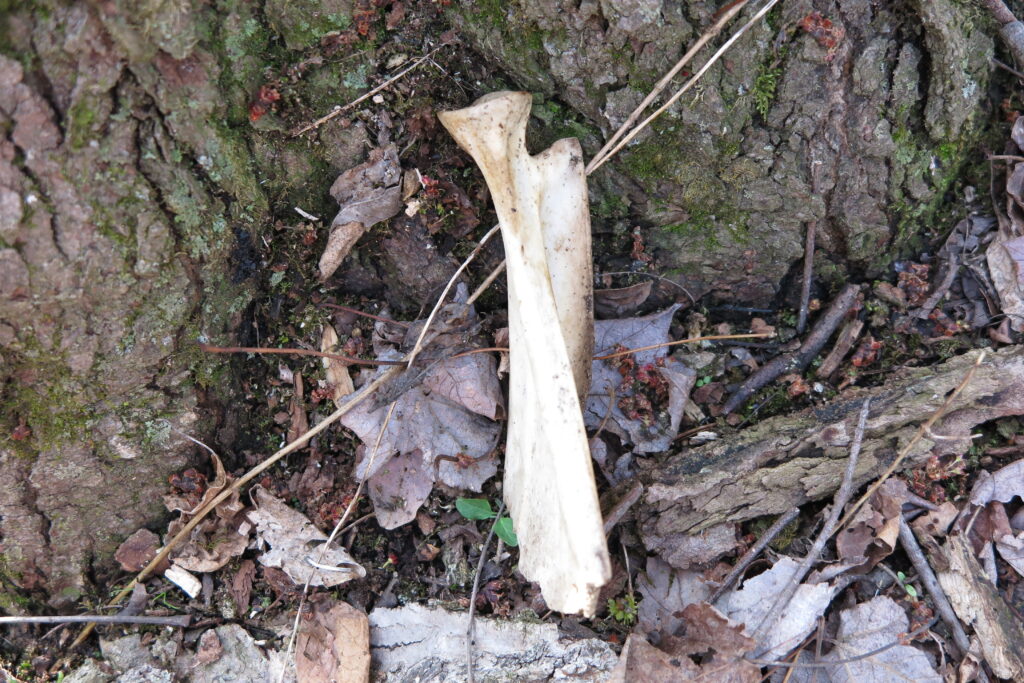
The broad blade portion forms the largest region of the scapula. This area creates the familiar shoulder-blade appearance associated with the bone. On complete specimens, the blade expands outward before narrowing toward the shoulder socket.
One useful fact for identification is that the scapula contains a distinct neck region. This narrowed section connects the broad blade to the glenoid cavity. The transition between these areas creates a profile that is often preserved even on fragments.
The glenoid cavity serves as the most diagnostic anatomical feature. Located at the lower end of the bone, it forms the shoulder socket where the humerus attached during life. Finding this landmark greatly increases identification confidence.
Scapula fragments are commonly mistaken for pelvis bones by inexperienced collectors. However, the pelvis contains large openings and more complex contours. The scapula generally presents a smoother, more streamlined shape.
The bone is surprisingly lightweight relative to its size. Although it occupies a large area within the shoulder region, much of the structure remains relatively thin. This balance between size and weight contributes to its distinctive appearance.
Weathering often alters the coloration of the scapula. Fresh bones may appear cream-colored, while older specimens develop white, gray, or brown tones. These changes can provide clues about environmental exposure.
Another useful fact is that the shoulder region of the scapula tends to survive breakage better than portions of the blade. This is why many field-collected specimens preserve the glenoid cavity even when other sections are missing. The thicker construction of the joint area increases durability.
For bone identification purposes, shape, socket location, blade structure, and overall proportions remain more reliable than color or size alone. These characteristics continue to assist researchers, collectors, and wildlife enthusiasts when identifying deer remains.
White-Tailed Deer Scapula Facts From Nature and the Field
White-tailed deer scapulae are most commonly discovered in forests and woodland habitats. These environments support large deer populations and provide conditions where skeletal remains may persist for extended periods. Forest floors often conceal bones beneath leaves until exposure occurs.
Scavengers frequently influence where scapulae are found. Coyotes, raccoons, foxes, and vultures may separate skeletal elements from the original carcass. This activity explains why isolated scapula fragments often appear far from other bones.
Season can dramatically affect visibility. Winter and early spring are often the best times to locate skeletal remains because vegetation is reduced. Pale bone surfaces become easier to spot against the darker colors of the forest floor.
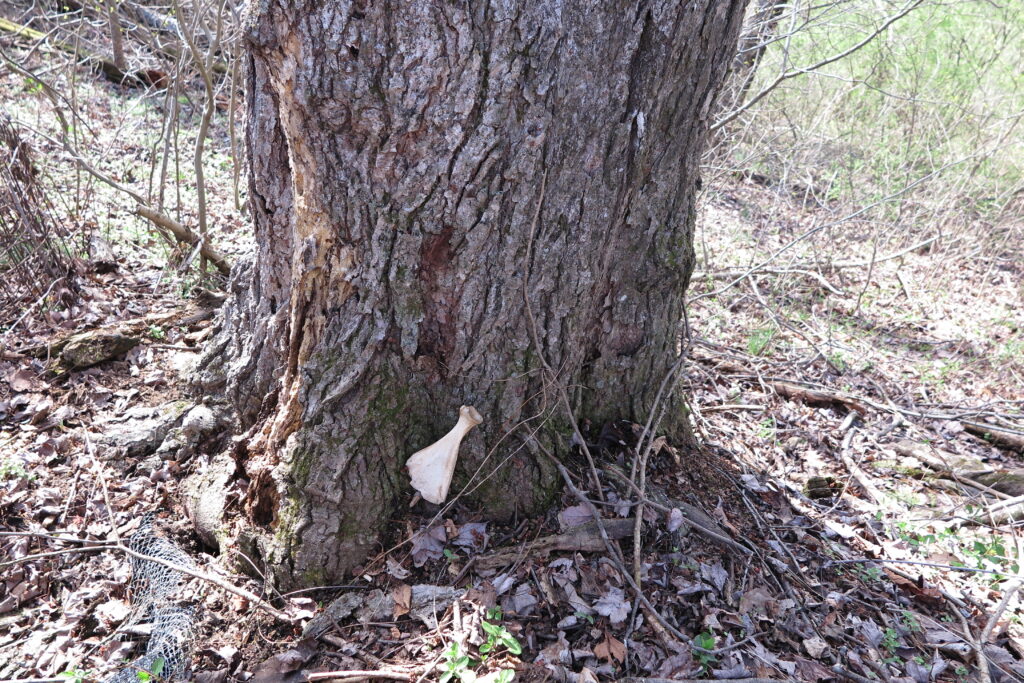
A real-world example involves a scapula fragment resting beside a tree. Such discoveries are common because leaves and root systems can partially protect bones while still allowing them to remain visible. This combination often preserves identifiable landmarks.
Water movement can also expose deer bones. Heavy rainfall and erosion occasionally uncover skeletal remains that have remained hidden beneath soil for years. Streams may even transport lighter bones short distances before depositing them elsewhere.
Weathering patterns vary depending on environmental conditions. Bones exposed to direct sunlight typically age differently than specimens protected beneath leaf litter. These differences create a wide range of appearances among field-collected scapulae.
The scapula often remains recognizable even after significant damage. Because the blade, neck, and shoulder socket create such a distinctive combination of features, identification is frequently possible despite fragmentation. This resilience contributes to its popularity among bone collectors.
Whether found along a trail, beneath a tree, near a creek, or within a remote woodland, the white-tailed deer scapula provides a fascinating glimpse into deer anatomy and natural processes. Its recognizable shape, common occurrence, and unique landmarks make it one of the most interesting bones encountered during wildlife exploration.
Popular Searches About Deer Scapula
Explore Deer Scapula Guide
Explore More Bones

Support Encounters World
Help support wildlife photography and get behind the scenes discoveries on Patreon.