
Calligrapher Fly vs Yellowjacket: How to Tell the Difference Between These Lookalike Insects
Quick Facts
Calligrapher Fly Scientific Name: Toxomerus sp.
Yellowjacket Scientific Name: Vespula spp. / Dolichovespula spp.
Common Confusion: Both have yellow-and-black markings
Can They Sting?: Calligrapher Fly – No | Yellowjacket – Yes
Wing Count: Calligrapher Fly – 1 Pair | Yellowjacket – 2 Pairs
Body Shape: Calligrapher Fly – Slender Hoverfly | Yellowjacket – Robust Wasp
Danger Level: Calligrapher Fly – Harmless | Yellowjacket – Defensive and capable of stinging
Location Observed: Pennsylvania, USA
Why Calligrapher Flies and Yellowjackets Are Often Confused
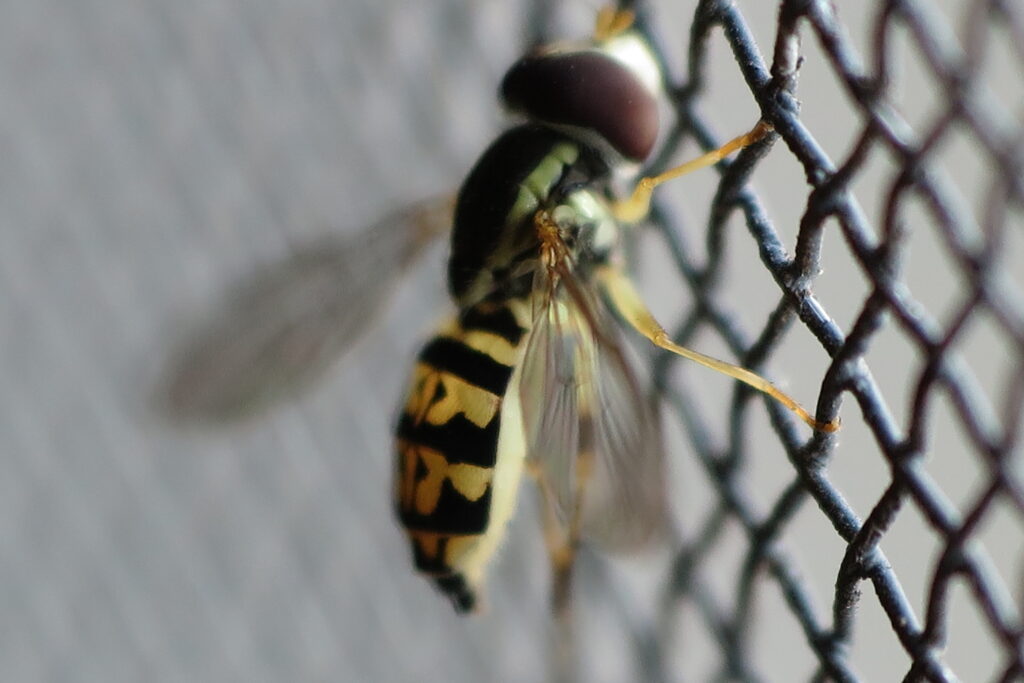
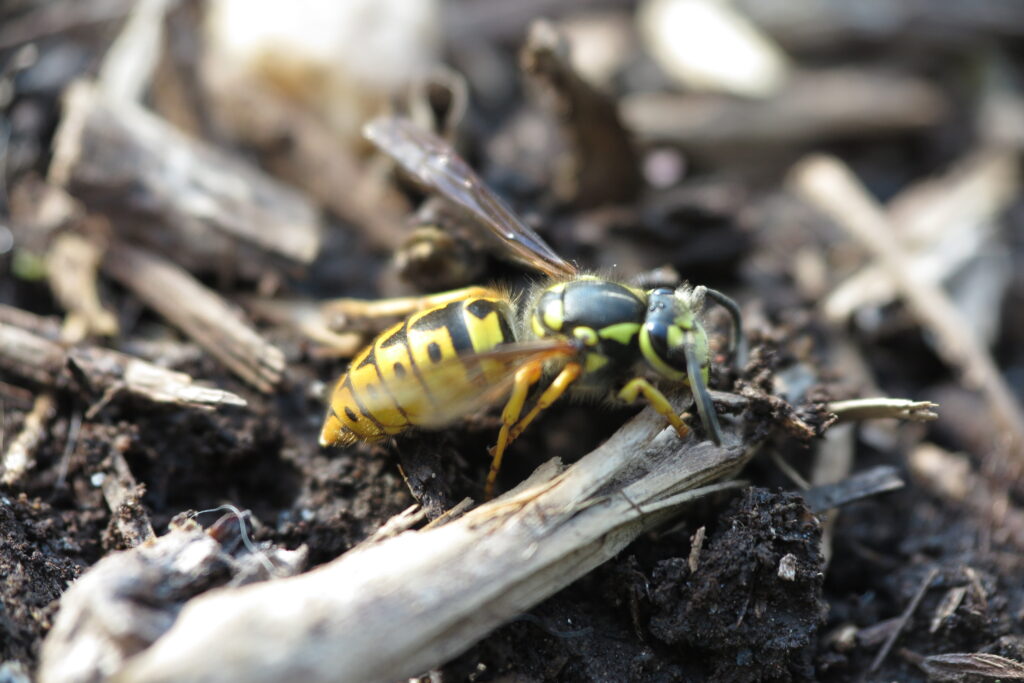
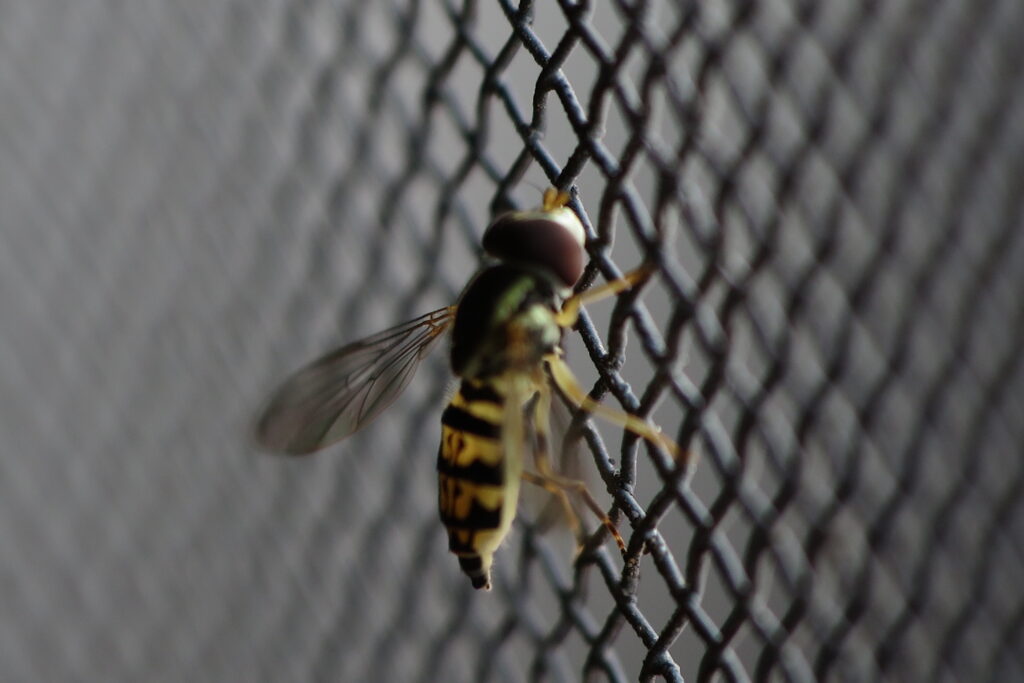
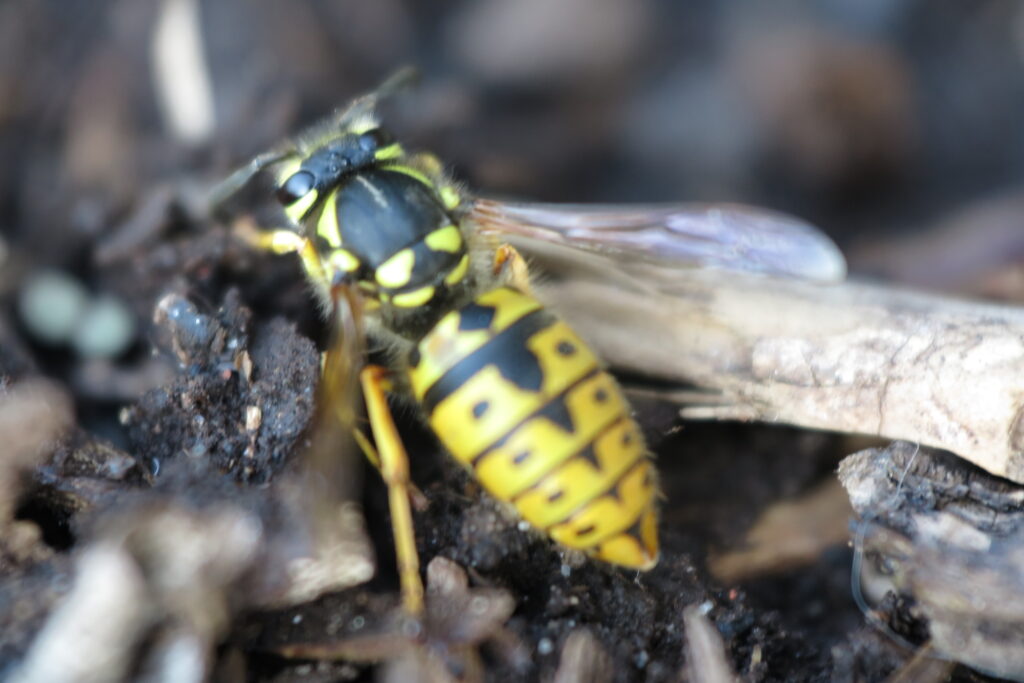
The calligrapher fly (Toxomerus sp.) and the yellowjacket (Vespula spp.) are two insects that frequently cause identification confusion. At first glance, both display bright yellow-and-black coloration that immediately catches the eye. For many observers, this shared color pattern is enough to assume they are looking at the same type of insect.
The confusion becomes even more understandable when viewed from a distance. A calligrapher fly resting on vegetation may appear nearly identical to a small yellowjacket. Without close inspection, the differences between the two species can be surprisingly difficult to notice.
Despite their similar appearance, these insects belong to entirely different groups. The calligrapher fly is a hoverfly within the fly family Syrphidae, while yellowjackets are social wasps within the family Vespidae. Their evolutionary histories, physical structures, and ecological roles differ significantly.
Nature has shaped the calligrapher fly to resemble insects that predators generally avoid. This resemblance is not accidental. By looking similar to a stinging wasp, the fly gains protection even though it lacks a sting itself.
Many people only discover the difference after examining photographs or observing the insects closely. What initially appears to be a dangerous wasp often turns out to be a harmless hoverfly. Learning the distinguishing features helps prevent misidentification and allows both species to be appreciated for their unique characteristics.
Understanding these differences is valuable for homeowners, gardeners, photographers, and wildlife enthusiasts. Accurate identification reduces unnecessary concern while improving knowledge of the insects commonly encountered outdoors.
Physical Appearance Differences Between Calligrapher Flies and Yellowjackets
The easiest way to distinguish these insects is by examining their body structure. Calligrapher flies typically have a smoother, more streamlined appearance with a relatively broad connection between the thorax and abdomen. Yellowjackets possess the classic narrow “wasp waist” that creates a more segmented appearance.
Wing count provides another highly reliable identification feature. Like all true flies, calligrapher flies have only one pair of wings. Yellowjackets possess two pairs of wings, although this difference may require a close view or photograph to confirm.
The eyes are often noticeably different as well. Calligrapher flies have large compound eyes that occupy a significant portion of the head. Yellowjackets have smaller eyes relative to their head size and a more angular facial appearance.
Abdominal markings can provide additional clues. Many calligrapher flies display decorative patterns that resemble brush strokes, loops, or artistic symbols. Yellowjackets generally possess cleaner, more symmetrical bands and warning stripes across the abdomen.
A comparison to vehicles can help illustrate the difference. A calligrapher fly resembles a compact sports car with smooth lines and rounded features. A yellowjacket appears more like an armored utility vehicle, built with a stronger and more aggressive-looking structure.
When viewed side by side, these distinctions become obvious. However, because most encounters occur briefly, observers often focus only on the yellow-and-black coloration rather than the finer structural details.
Calligrapher Fly vs Yellowjacket Behavior and Human Interaction
Behavior is another useful tool for separating these insects. Calligrapher flies are generally calm, non-aggressive, and uninterested in human activity. They spend much of their time moving through vegetation or hovering around areas where resources are available.
Yellowjackets have a very different reputation. While they are not constantly aggressive, they are capable of becoming highly defensive when disturbed. Individuals may investigate food sources, approach people, or aggressively defend a nest if they perceive a threat.
Hovering behavior is particularly common in calligrapher flies. They can remain suspended in the air for several seconds while appearing almost motionless. This precise flight resembles a miniature helicopter holding position in the sky.
Yellowjackets usually fly with a more direct and purposeful style. Their movements often involve straight flight paths and rapid travel between locations. While they can briefly hover, they typically do not remain suspended as effortlessly as hoverflies.
Human encounters often reveal the biggest difference. A calligrapher fly typically leaves when approached closely. A yellowjacket may continue investigating an area and, in certain situations, can become defensive if provoked.
These contrasting behaviors influence public perception. People generally view yellowjackets with caution because of their stinging ability. Calligrapher flies, once correctly identified, are usually regarded as harmless and beneficial insects.
Sting Risk, Safety, and Ecological Roles Compared
The most important difference for many people is whether the insect can sting. Calligrapher flies cannot sting because they lack a stinger entirely. No matter how convincing their appearance may be, they are physically incapable of delivering a wasp-like sting.
Yellowjackets, by contrast, possess a functional stinger and venom. They can sting repeatedly when defending themselves or their colony. This ability makes them one of the more commonly feared social wasps in many regions.
From a safety perspective, the calligrapher fly presents virtually no threat to humans. Observers can photograph and watch them closely without concern. Yellowjackets require greater caution, especially near nests or during periods of heightened defensive behavior.
Both insects nevertheless play important roles in nature. Calligrapher flies contribute to pollination and support ecological balance throughout their range. Yellowjackets also provide ecological benefits by helping regulate populations of various insects and serving as part of complex food webs.
A useful comparison is that one insect relies on appearance for protection, while the other possesses genuine defensive weaponry. The calligrapher fly survives through mimicry, whereas the yellowjacket survives through a combination of warning coloration and actual stinging capability.
Although they may appear similar at first glance, the differences become clear once their structure, behavior, and defensive abilities are examined. Learning these distinctions allows observers to quickly determine whether they are looking at a harmless calligrapher fly or a true yellowjacket wasp.
Popular Searches About Calligrapher Flies
Explore Calligrapher Fly Guide
Explore More Wildlife

Support Encounters World
Help support wildlife photography and get behind the scenes discoveries on Patreon.