
Calligrapher Fly Predators Guide: What Eats Toxomerus Hoverflies in the Wild?
Quick Facts
Primary Predators: Birds, spiders, predatory insects, and amphibians
Predator Avoidance Strategy: Wasp mimicry and rapid flight
Most Vulnerable Life Stage: Egg and larval stages
Defense Type: Visual deception and quick escape
Food Web Role: Prey species and pollinator
Understanding Predators of the Calligrapher Fly
The calligrapher fly (Toxomerus sp.) may appear protected because of its yellow-and-black coloration, but it still faces numerous predators throughout its life cycle. From the moment an egg is laid until adulthood, various animals and insects view the hoverfly as a potential food source. Survival depends on avoiding detection, escaping threats, and taking advantage of natural defenses.
Throughout North, Central, and South America, calligrapher flies occupy ecosystems containing countless insect-eating predators. Birds, spiders, amphibians, reptiles, and larger insects all contribute to natural mortality. Although the fly’s appearance helps reduce risk, it does not eliminate danger entirely.
Predation pressure varies depending on the life stage involved. Eggs and larvae face different threats than winged adults. As a result, survival strategies must change throughout development, with each stage encountering its own set of challenges.
Many wildlife enthusiasts notice adult hoverflies around flowers but rarely consider how many predators are searching for them. In reality, a calligrapher fly exists within a complex food web where it serves both as a beneficial insect and as prey for larger animals.
Predators help regulate hoverfly populations and contribute to ecological balance. Without natural predation, certain insect populations could increase beyond sustainable levels. The relationship between predator and prey plays an important role in maintaining healthy ecosystems.
Understanding what eats calligrapher flies provides insight into their ecological role. Rather than existing independently, they are connected to a network of animals that rely on insects as an important source of nutrition.
Birds and Other Vertebrates That Hunt Calligrapher Flies
Birds are among the most significant predators of adult calligrapher flies. Many insect-eating species actively search vegetation, flowers, and open spaces for small flying insects. A hoverfly resting in the open can quickly become a target for a hungry bird.
Flycatchers, warblers, swallows, and other insectivorous birds regularly consume flying insects of similar size. These birds possess excellent vision and quick reaction times, allowing them to capture prey that might escape slower predators. Even a fast-moving hoverfly can become vulnerable when confronted by a skilled aerial hunter.
Amphibians also contribute to predation pressure. Frogs and toads frequently consume insects that come within range of their sticky tongues. Although they may not specifically target calligrapher flies, any individual that lands nearby could become part of their diet.
Small reptiles, including certain lizards, may also prey upon hoverflies when opportunities arise. These predators often rely on ambush tactics rather than active pursuit. A fly that lands within striking distance may have little warning before an attack occurs.
Compared to larger insects, calligrapher flies are relatively small and easy to swallow. Their size makes them suitable prey for a wide variety of vertebrates. As a result, they contribute energy to numerous food chains throughout their range.
The relationship between hoverflies and vertebrate predators demonstrates how insects support larger wildlife communities. Even a tiny fly can play an important role by providing food for birds, amphibians, and reptiles across diverse ecosystems.
Insect and Spider Predators of Calligrapher Flies
Not all threats come from vertebrates. Many invertebrates actively hunt and consume calligrapher flies throughout their lives. Predatory insects and spiders are often among the most effective hunters because they occupy the same spaces as their prey.
Spiders pose a particularly significant threat. Orb-weaving spiders construct sticky webs capable of capturing flying insects that accidentally fly into them. Once trapped, a hoverfly may struggle to escape before the spider reaches it.
Jumping spiders represent a different type of danger. Rather than relying on webs, these active hunters use excellent vision and rapid movements to capture prey directly. Their ability to stalk insects makes them formidable predators despite their small size.
Predatory insects such as assassin bugs, robber flies, and mantises may also feed on hoverflies. Robber flies are especially impressive hunters, intercepting flying insects in midair. Their speed and precision make them among the most capable insect predators in many ecosystems.
Even other hoverfly life stages can face predation from small predatory arthropods. Eggs and larvae are particularly vulnerable because they cannot escape as effectively as adults. Numerous insects take advantage of these exposed developmental stages.
The presence of these predators creates constant pressure on calligrapher fly populations. Survival often depends on avoiding detection long enough to reproduce and contribute to the next generation.
Survival Defenses Against Predators
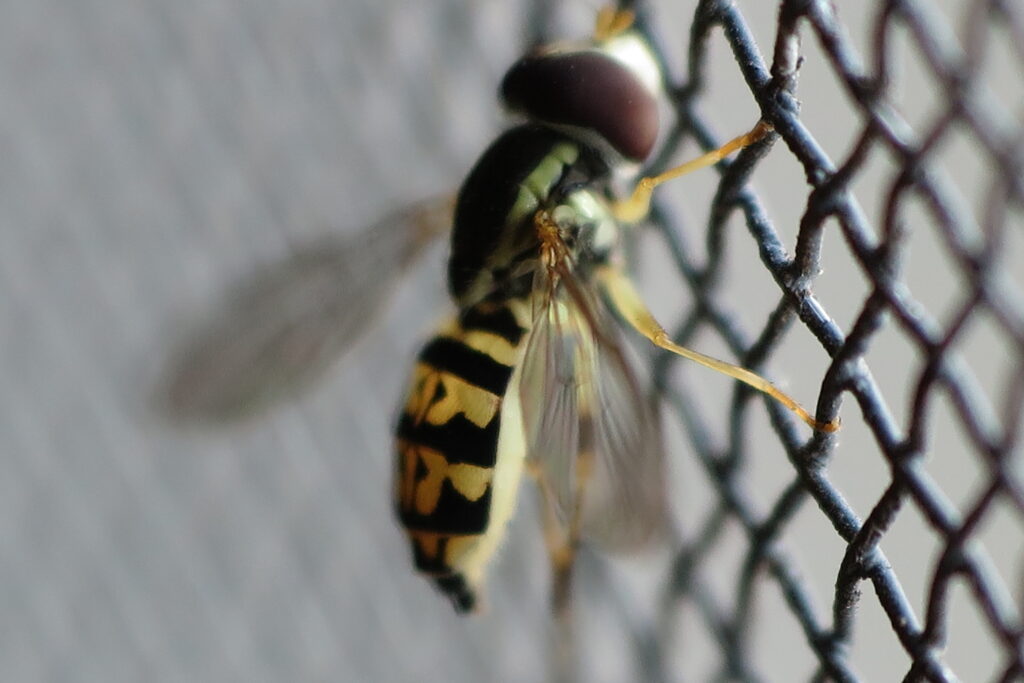
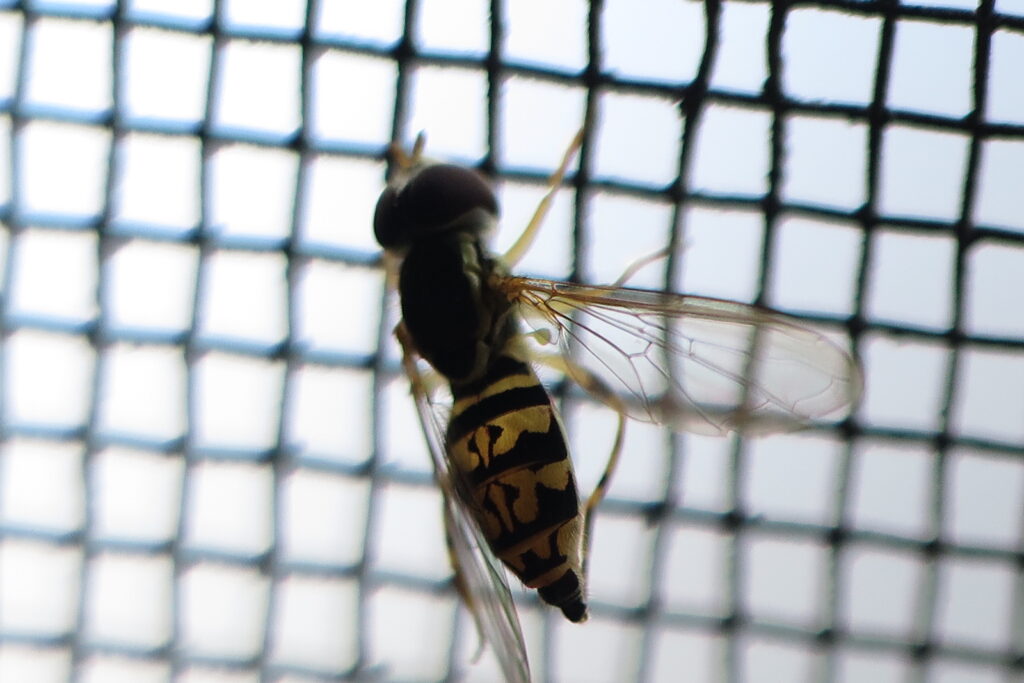
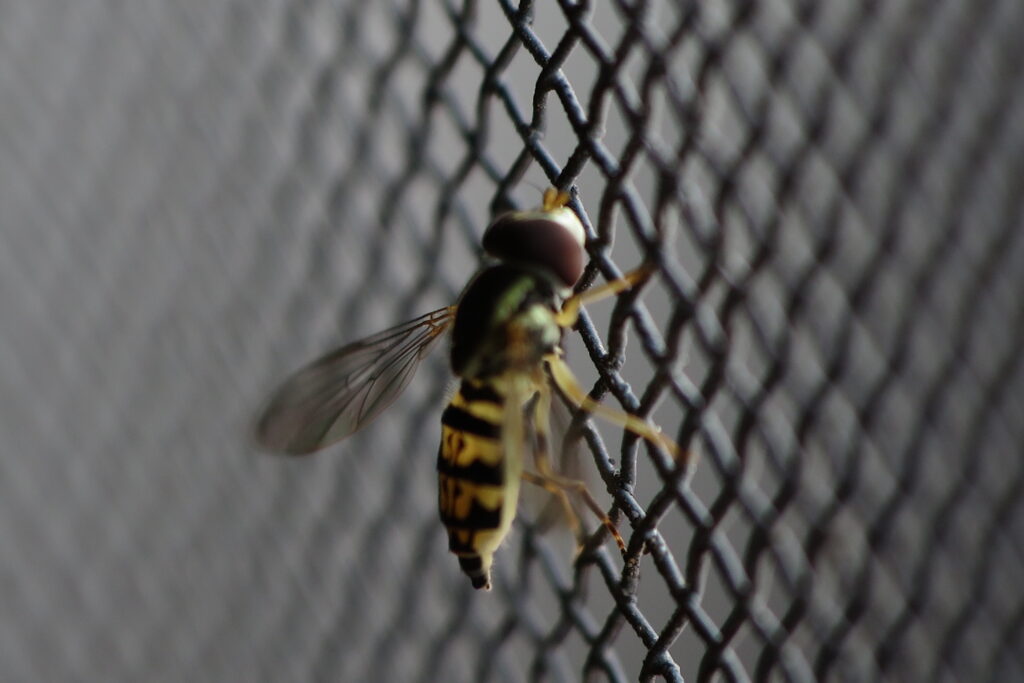
One of the most effective defenses possessed by the calligrapher fly is mimicry. Its yellow-and-black markings closely resemble those of yellowjackets and small wasps. Many predators avoid insects displaying these warning colors because they associate them with painful stings.
This defensive strategy is known as Batesian mimicry. Rather than developing a real sting, the hoverfly gains protection by looking like something dangerous. It is similar to a harmless actor wearing the uniform of a security guard—appearance alone can discourage potential threats.
Rapid flight provides another important defense. When danger approaches, a calligrapher fly can quickly leave the area before a predator gets close enough to attack. This combination of speed and agility helps reduce successful predation attempts.
Hovering ability also contributes to survival. By remaining suspended in the air, the fly can monitor its surroundings and react quickly to threats. Constant awareness allows it to detect danger before physical contact occurs.
A practical example can be seen when a bird approaches a flowering area. The hoverfly may instantly change direction and disappear into nearby vegetation. This immediate response often makes the difference between survival and capture.
Despite facing numerous predators throughout its life, the calligrapher fly remains successful across much of the Americas. Mimicry, flight agility, awareness, and rapid escape behaviors work together to reduce predation and help maintain healthy populations across a wide geographic range.
Popular Searches About Calligrapher Flies
Explore Calligrapher Fly Guide
Explore More Wildlife

Support Encounters World
Help support wildlife photography and get behind the scenes discoveries on Patreon.