
Land Planarian Life Cycle: Growth, Development, and Reproduction Stages
Quick Facts
Life Cycle Type: Direct Development
Development Stages: Egg, Juvenile, Adult
Reproductive Method: Sexual reproduction and regeneration in some species
Egg Location: Protective capsules in moist environments
Average Development Time: Several weeks to months depending on species
Understanding the Land Planarian Life Cycle
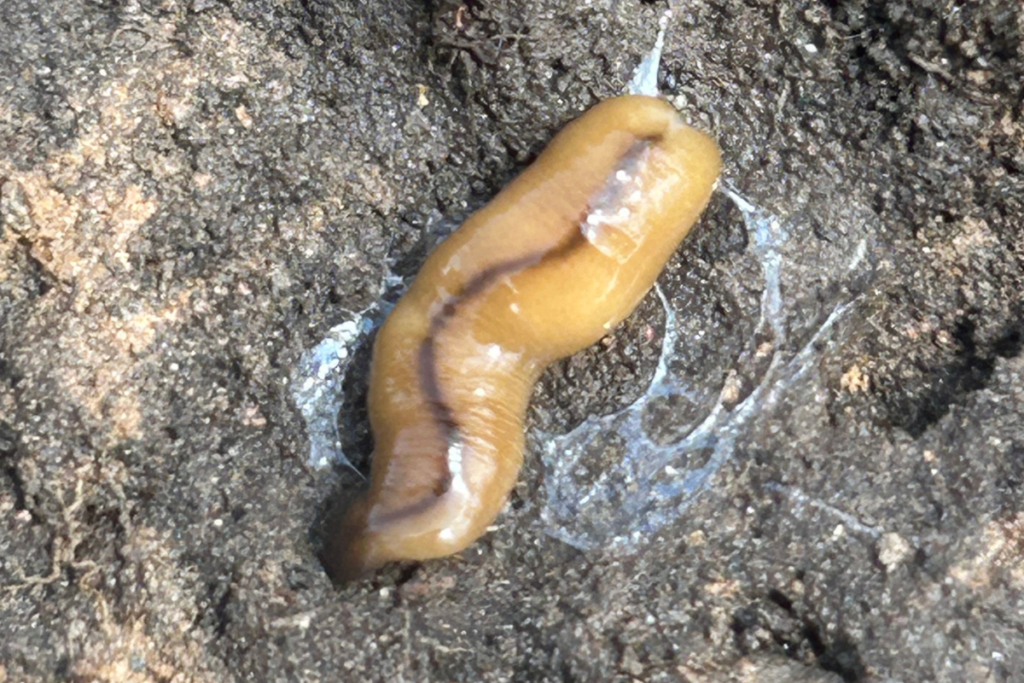
The life cycle of a land planarian differs significantly from that of many insects and other invertebrates. Unlike butterflies, beetles, or flies that undergo complete metamorphosis, terrestrial flatworms do not pass through dramatic larval and pupal stages. Instead, they develop through a simpler process that gradually transforms a young individual into an adult.
Land planarians occur across much of the world, including North America, Europe, Asia, Australia, and South America. Throughout these regions, their life cycle follows a similar pattern despite differences in climate and species diversity. Environmental conditions influence the timing of development, but the overall sequence remains relatively consistent.
Most people only encounter adult terrestrial flatworms and rarely observe the earlier stages of development. Eggs and juveniles often remain hidden within soil, leaf litter, or other protected locations. As a result, much of the life cycle takes place out of sight.
The absence of a dramatic metamorphosis makes the process different from that of many familiar invertebrates. Young flatworms resemble miniature versions of adults rather than transforming into completely different body forms. This direct development simplifies the transition between life stages.
Growth, survival, and reproduction are closely linked throughout the life cycle. Each stage contributes to the long-term success of the species and helps maintain populations across a wide geographic range. Environmental stability often plays a major role in successful development.
Understanding the life cycle provides valuable insight into how terrestrial flatworms persist in natural ecosystems. Although their developmental process may seem simple compared to insects, it remains highly effective and has allowed these animals to survive for millions of years.
Land Planarian Egg Stage and Early Development
The life cycle begins when a mature land planarian produces eggs. These eggs are typically enclosed within protective capsules that shield developing embryos from environmental hazards. The capsules provide a stable environment during the earliest stages of growth.
Egg capsules are usually small and difficult to detect in the wild. Their coloration often blends with surrounding organic material, making them easy to overlook. Many people never realize they are present even when observing suitable habitat.
Inside the capsule, embryonic development occurs gradually. During this period, tissues and organs begin forming as the young flatworm develops. Although little is visible from the outside, important biological changes are taking place.
Environmental conditions strongly influence egg development. Temperature, moisture, and overall stability affect both survival and development speed. Favorable conditions generally increase the likelihood that embryos will reach maturity successfully.
Compared to species that produce large numbers of exposed eggs, the protective capsule offers significant advantages. The developing flatworms remain sheltered from many environmental threats during this vulnerable stage. This protection improves survival rates and supports successful reproduction.
Eventually, development reaches a point where the young flatworms are ready to emerge. At that stage, they leave the capsule and begin independent life as juveniles. This marks the transition into the next phase of the life cycle.
Juvenile Growth and Maturation of Terrestrial Flatworms
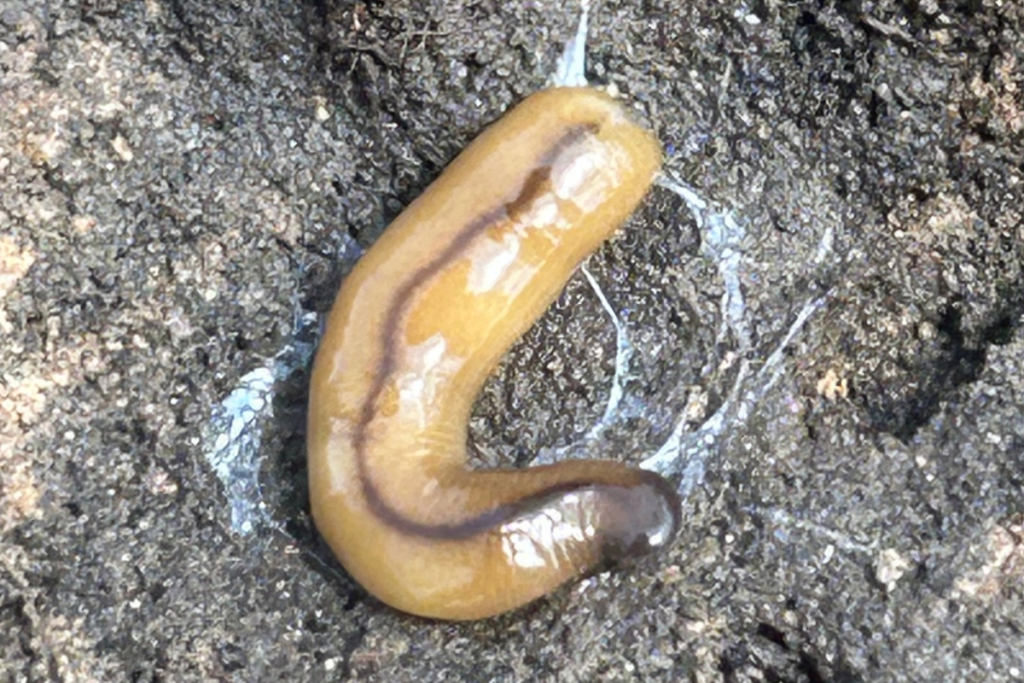
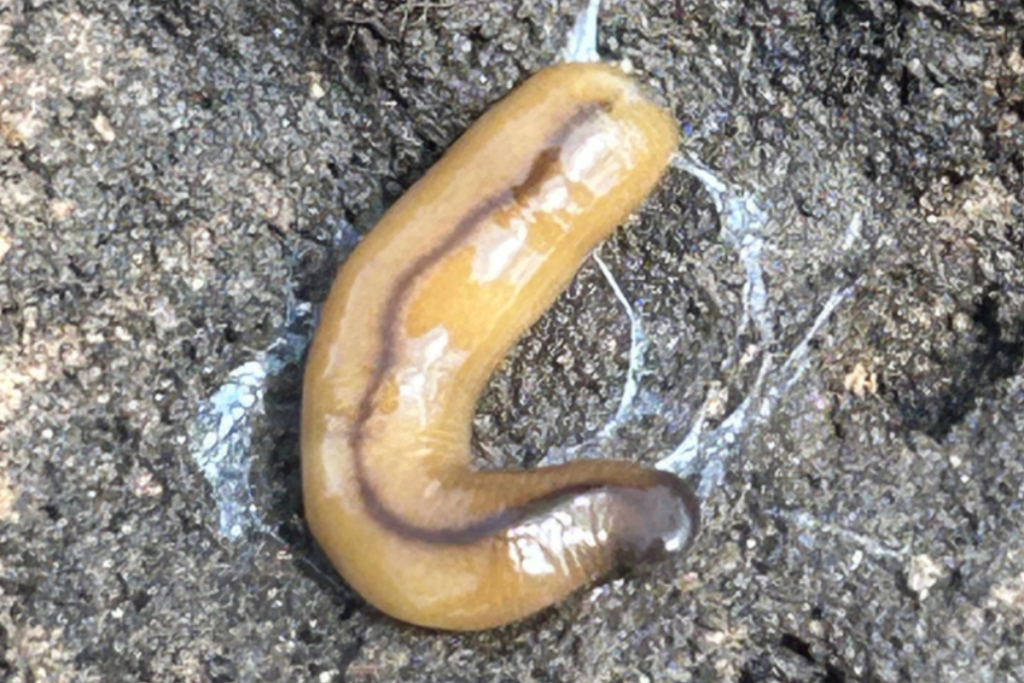
Newly emerged juvenile land planarians resemble tiny versions of adults. Unlike caterpillars, tadpoles, or insect larvae, they do not possess a dramatically different body form. Their appearance remains broadly similar throughout development, with size being the primary difference.
The juvenile stage focuses heavily on growth. During this period, individuals gradually increase in body length, width, and overall mass. As development progresses, their anatomy becomes more refined and capable of supporting adult functions.
Growth rates vary among species and environmental conditions. Warm temperatures and stable moisture levels often support faster development. In less favorable conditions, maturation may take longer as growth slows.
As juveniles increase in size, they become more similar to mature adults in appearance. Distinctive coloration and body patterns often become easier to recognize during this stage. Observers who encounter larger juveniles may have difficulty distinguishing them from small adults.
Unlike insects that shed external skins during dramatic molts, land planarians grow more gradually. Their development appears continuous rather than divided into obvious transformation stages. This gradual progression contributes to the direct nature of their life cycle.
The juvenile phase concludes when reproductive maturity is reached. At that point, the flatworm transitions into adulthood and becomes capable of contributing to future generations. This milestone marks one of the most important stages in the life cycle.
Adult Reproduction and Life Cycle Continuation
The adult stage represents the final phase of the land planarian life cycle. Mature individuals possess fully developed reproductive systems and are capable of producing offspring. Reproduction ensures the continuation of populations across generations.
Many terrestrial flatworms are hermaphroditic, meaning each individual possesses both male and female reproductive structures. This arrangement increases reproductive flexibility and improves opportunities for successful breeding. It is a common characteristic among many flatworm species.
In addition to sexual reproduction, some species possess remarkable regenerative abilities. Under certain circumstances, body fragments may regenerate missing tissues and form complete individuals. This capability is one of the most famous biological traits associated with flatworms.
Adult lifespan varies considerably depending on species and environmental conditions. Some individuals may survive for only a limited period, while others persist for multiple years. Survival is influenced by factors such as climate, predation, food availability, and overall habitat quality.
Once reproduction occurs, new egg capsules are deposited in suitable locations. These capsules begin the developmental process again, creating the next generation of terrestrial flatworms. The cycle then repeats continuously as long as conditions remain favorable.
Viewed as a whole, the land planarian life cycle is a streamlined and efficient process. From protected eggs to independent juveniles and reproductive adults, each stage contributes to the survival of the species. This simple yet effective developmental strategy has helped terrestrial flatworms remain successful across a wide range of environments throughout the world.
Popular Searches About Land Planarians
Explore Land Planarian Guide
Explore More Wildlife

Support Encounters World
Help support wildlife photography and get behind the scenes discoveries on Patreon.