
Land Planarian Reproduction Guide: How Terrestrial Flatworms Reproduce and Spread
Quick Facts
Reproduction Type: Primarily sexual, with regeneration in some species
Reproductive System: Hermaphroditic
Egg Production: Encapsulated egg cocoons
Breeding Season: Often associated with favorable environmental conditions
Development Method: Direct development without larval stage
Understanding Land Planarian Reproduction
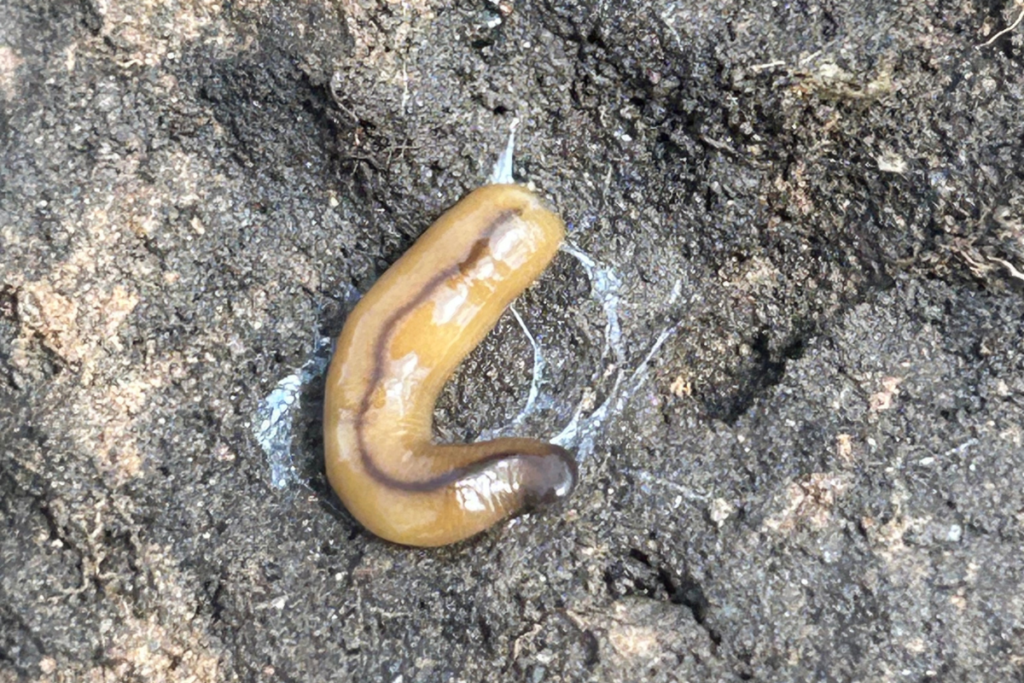
Land planarians possess one of the most interesting reproductive systems among terrestrial invertebrates. Unlike many animals that require separate males and females, most terrestrial flatworms are hermaphroditic. This means a single individual contains both male and female reproductive organs, providing unique reproductive flexibility.
Species occur across North America, South America, Europe, Asia, Australia, and numerous island regions. Despite differences in climate and geography, the basic reproductive strategy remains surprisingly consistent throughout much of the group. This consistency has contributed to the success of terrestrial flatworms worldwide.
Many people encounter adult land planarians without realizing how they reproduce. Because reproduction often occurs beneath surface cover or within concealed environments, direct observations are uncommon. Much of the process takes place out of sight, making it less familiar than the breeding behavior of birds, mammals, or insects.
Reproduction serves as the foundation for population growth and long-term survival. Without successful breeding, even the most adaptable species would eventually disappear. The ability to reproduce efficiently allows terrestrial flatworms to maintain populations across a wide range of environments.
One of the most remarkable aspects of reproduction in some species is its connection to regeneration. While reproduction and regeneration are separate biological processes, both contribute to population persistence and expansion. This combination has attracted significant scientific interest.
Understanding reproduction helps explain how land planarians establish populations and maintain their presence in ecosystems. Their reproductive biology is one of the key reasons these unusual flatworms have remained successful across diverse regions of the world.
Hermaphroditic Reproductive System of Land Planarians
Most land planarians are hermaphrodites, meaning each individual possesses both male and female reproductive structures. This arrangement differs from many familiar animals in which reproductive roles are divided between separate sexes. The system provides greater flexibility when encountering potential mates.
Although a single individual contains both reproductive components, many species still exchange genetic material with another flatworm. This process promotes genetic diversity and helps maintain healthy populations over time. The exchange benefits offspring by increasing variation within the species.
Hermaphroditism offers advantages in environments where encounters with other individuals may be infrequent. A terrestrial flatworm does not need to locate a specific sex before reproduction can occur. This flexibility improves the likelihood of successful breeding when population density is low.
Compared to species that rely on large populations for reproductive success, land planarians can reproduce effectively even when individuals are relatively dispersed. This characteristic contributes to their ability to establish populations in new locations.
The reproductive structures themselves remain hidden within the body and are not obvious during casual observation. Unlike many insects or vertebrates that display visible reproductive characteristics, terrestrial flatworms appear externally similar regardless of reproductive status.
A useful comparison is to think of hermaphroditism as carrying two sets of tools for the same job. Rather than depending on separate individuals to provide different functions, each flatworm possesses a more versatile reproductive system. This flexibility is one of the defining features of their biology.
Egg Production and Development of Young Flatworms
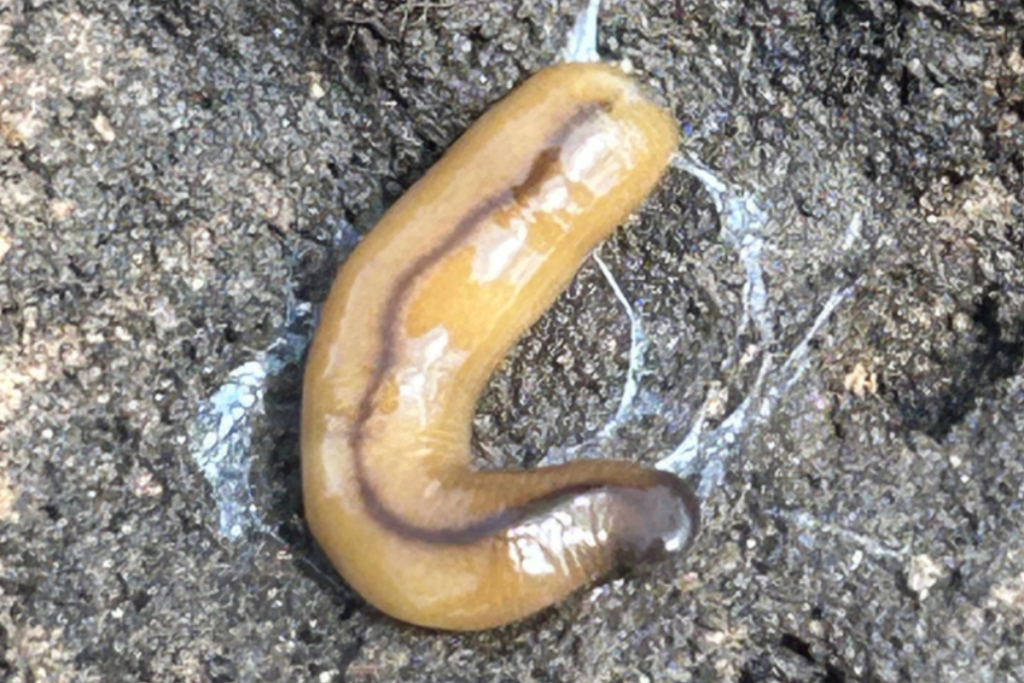
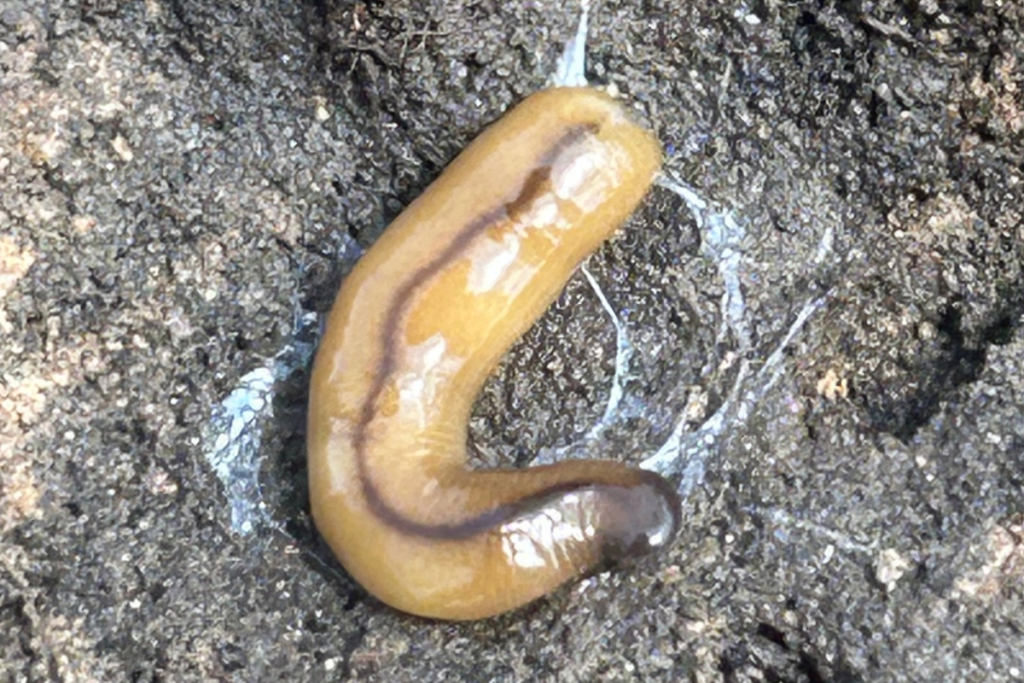
Following successful reproduction, land planarians produce egg capsules that protect developing embryos. These capsules function as secure developmental chambers, shielding the young from environmental hazards during their earliest stages of life. The protective structure improves survival during a vulnerable period.
Egg capsules are often small and difficult to locate in natural settings. Their appearance blends with surrounding organic material, making them easy to overlook. As a result, many people never encounter this stage despite observing adult flatworms.
Inside the capsule, embryos gradually develop into juvenile flatworms. Unlike butterflies, beetles, or flies, terrestrial flatworms do not produce a larval stage that looks dramatically different from the adult. Development proceeds through a more direct pathway.
Environmental conditions influence reproductive success and egg development. Temperature, moisture, and stability all affect the survival of developing embryos. Favorable conditions generally support higher success rates and healthier offspring.
Once development is complete, juvenile flatworms emerge from the capsule. These young individuals already resemble miniature adults and continue growing through gradual development. Their basic body structure is established from the beginning rather than appearing after metamorphosis.
This direct developmental strategy differs significantly from many other invertebrates. Instead of passing through multiple dramatic transformations, young land planarians progress steadily toward adulthood. The result is a simpler but highly effective reproductive system.
Regeneration, Population Growth, and Reproductive Success
One of the most famous characteristics associated with flatworms is regeneration. Certain terrestrial flatworm species possess the ability to replace damaged tissues and recover from injuries that would be devastating to many other animals. This remarkable capability has made them important subjects of biological research.
Although regeneration is not the same as sexual reproduction, it contributes to population persistence. By surviving injuries that might otherwise be fatal, individuals have additional opportunities to reproduce successfully. Increased survival ultimately supports long-term population stability.
Some species exhibit extraordinary regenerative abilities that allow substantial portions of the body to be replaced. Scientists have studied these processes for decades to better understand tissue development and cellular repair. Few terrestrial animals demonstrate comparable capabilities.
Population growth depends on a combination of successful reproduction, juvenile survival, and adult longevity. Each stage contributes to the number of individuals present within a population. When environmental conditions remain favorable, populations can remain stable for extended periods.
Introduced species sometimes demonstrate how effective these reproductive strategies can be. Invasive terrestrial flatworms have successfully established populations in regions far from their native range, illustrating the power of flexible reproduction and strong survival mechanisms.
Together, hermaphroditism, protected egg development, direct growth, and regenerative abilities create a highly effective reproductive system. These characteristics help explain why land planarians have persisted across multiple continents and diverse ecosystems. Their reproductive biology remains one of the most fascinating aspects of terrestrial flatworm natural history.
Popular Searches About Land Planarians
Explore Land Planarian Guide
Explore More Wildlife

Support Encounters World
Help support wildlife photography and get behind the scenes discoveries on Patreon.