Bugleweed Habitat: Where Bugleweed Grows and Environmental Preferences
Quick Facts
Primary Habitat: Woodland Edges and Shaded Groundcover Areas
Secondary Habitat: Gardens, Lawns, Meadows, and Disturbed Ground
Soil Type: Loamy, Organic-Rich, and Well-Drained Soils
Soil pH Preference: Slightly Acidic to Neutral
Moisture Level: Moderate to Consistently Moist
Climate Zone: Temperate Regions
Light Requirements: Partial Shade to Full Sun
Bugleweed Across Landscapes and Temperate Regions
Few groundcover plants have adapted to human-modified landscapes as successfully as Bugleweed (Ajuga reptans). Originally native to parts of Europe, western Asia, and North Africa, this perennial has become familiar in gardens, parks, suburban neighborhoods, and naturalized areas across numerous temperate regions. Its ability to establish attractive colonies has helped it spread far beyond its historical range.
Many people encounter Bugleweed while walking through landscaped spaces where it forms colorful patches beneath trees or along pathways. Others discover it growing outside cultivated settings, where established populations have expanded into nearby natural areas. This flexibility has contributed to the plant’s popularity among gardeners and land managers alike.
The species occupies a unique position between ornamental planting and naturalized vegetation. In some locations it remains carefully maintained as a decorative groundcover, while in others it behaves as a self-sustaining member of the local plant community. These different roles allow Bugleweed to occur in a surprisingly wide variety of settings.
Across much of its introduced range, Bugleweed has become associated with temperate climates that experience distinct seasonal changes. It thrives in regions where winters provide a period of dormancy and spring brings renewed growth. This broad climatic compatibility helps explain why the plant is now found on multiple continents.
Bugleweed Distribution and Habitat Overview
Bugleweed has achieved a far broader distribution than many ornamental groundcovers. Although its origins trace back to portions of Europe, western Asia, and North Africa, cultivation has introduced the species to numerous countries around the world. Today it can be found throughout much of North America, Europe, and other temperate regions where gardening and landscaping have encouraged its spread.
The plant demonstrates impressive adaptability across its range. Some ornamental species remain restricted to carefully maintained gardens, but Bugleweed often succeeds beyond cultivated settings. This flexibility allows populations to persist in both managed and semi-natural environments, increasing its overall distribution.
Compared to specialized plants that require narrowly defined conditions, Bugleweed tolerates a broader range of circumstances. A useful comparison is the difference between a rare orchid and a common shade-loving perennial. While rare orchids may depend on highly specific conditions, Bugleweed performs well across a much wider spectrum of locations.
Its widespread presence is also linked to its long history of cultivation. Gardeners have planted Bugleweed for generations because it provides attractive foliage and seasonal flowers while covering bare ground effectively. As a result, the species has repeatedly been introduced into new regions where suitable environmental conditions exist.
Despite this broad distribution, Bugleweed remains most successful in temperate climates. Extremely hot, arid regions or harsh northern environments tend to limit its abundance. Within suitable zones, however, it can become one of the most familiar and recognizable groundcover plants available.
Common Growing Environments of Bugleweed
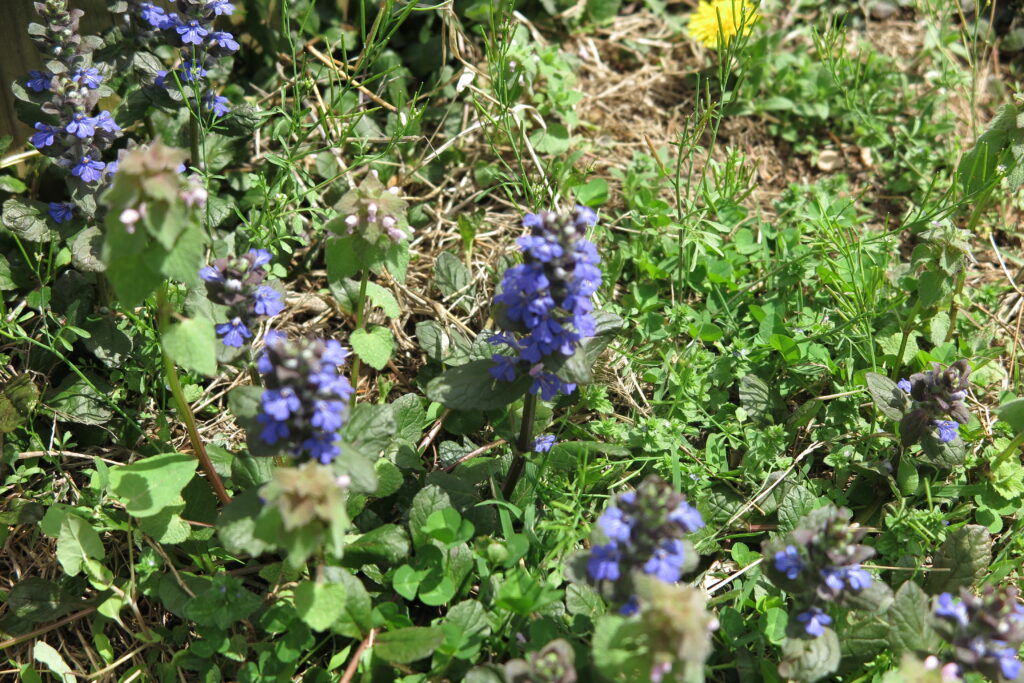
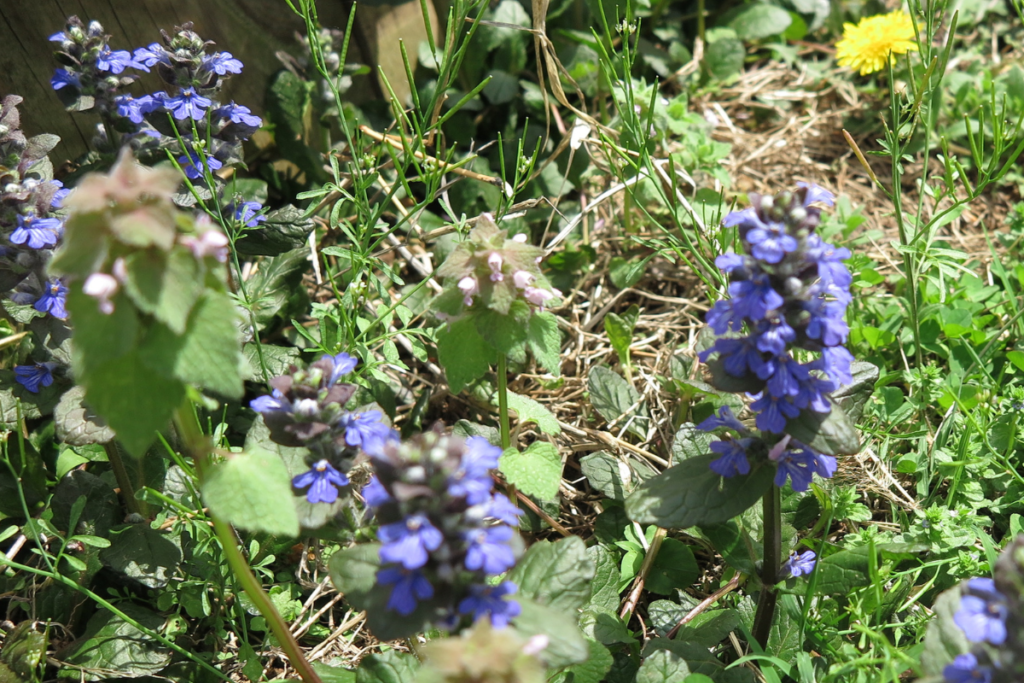
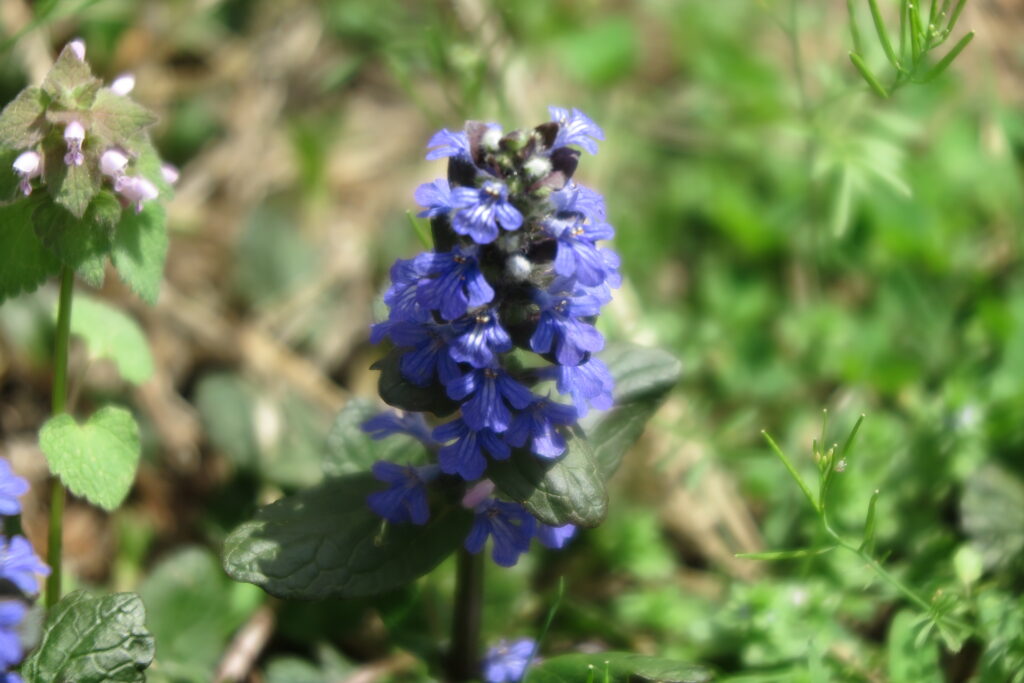
Woodland edges represent one of the classic environments where Bugleweed performs exceptionally well. These transitional areas often provide filtered sunlight, moderate moisture, and reduced competition from taller vegetation. Such conditions allow the plant to form dense colonies while maintaining healthy foliage and flower production.
Gardens are another major habitat for the species. Bugleweed is frequently planted beneath ornamental trees, alongside pathways, around flower beds, and in shaded landscape borders. Its ability to fill open spaces with attractive foliage makes it especially valuable in decorative settings.
The plant also occurs in lawns, parks, and suburban green spaces. In these environments, Bugleweed often grows alongside grasses, ornamental flowers, and other low-growing vegetation. Some populations remain confined to planted areas, while others gradually expand into nearby sections of suitable habitat.
Disturbed ground provides additional opportunities for establishment. Areas that have experienced soil movement, vegetation removal, or landscaping activity sometimes create openings where Bugleweed can become established. These locations often offer reduced competition and ample space for development.
Variation exists even within favorable environments. Some populations thrive beneath tree canopies where shade dominates most of the day, while others occupy more open settings with several hours of direct sunlight. This flexibility allows Bugleweed to occur across a wider variety of landscapes than many groundcover species.
Environmental Conditions That Support Bugleweed
Soil quality plays a major role in Bugleweed success. The plant performs best in loamy or organic-rich soils that provide both nutrients and adequate drainage. A healthy soil structure supports foliage development while helping maintain the moisture levels that the species prefers.
Consistent moisture is another important factor. Although Bugleweed tolerates occasional dry periods, it generally performs best when soil remains moderately moist throughout much of the growing season. A useful comparison is the environment found on a woodland floor after regular spring rainfall—damp but not waterlogged.
Light conditions can vary considerably. Partial shade is often considered ideal, particularly in warmer climates where intense afternoon sun may stress foliage. However, the plant also tolerates brighter conditions when adequate moisture is available. This flexibility contributes significantly to its popularity in landscape design.
Terrain influences local growing conditions as well. Gentle slopes, level garden beds, woodland clearings, and protected landscape borders frequently provide suitable settings. These areas often balance sunlight, moisture retention, and soil stability in ways that favor Bugleweed establishment.
Surrounding vegetation commonly includes shade-tolerant perennials, ornamental shrubs, ferns, and woodland wildflowers. Together, these plants create environments that remain relatively cool and protected throughout the growing season. Within such conditions, Bugleweed finds the combination of soil quality, moisture, light, and climate necessary to develop into the dense, colorful groundcover for which it is widely known.
Popular Searches About Bugleweed
Explore Bugleweed Guide
Explore More Plants

Support Encounters World
Help support wildlife photography and get behind the scenes discoveries on Patreon.