Dusky Salamander Size Guide – How Big Do Dusky Salamanders Get?
Quick Facts
Location: Forest streams, creeks, and freshwater edges
Average Size: 2.5–5 inches long
Lifespan: 5–10 years
Global Range: Eastern North America
Conservation Status: Least Concern
Notable Feature: Slender body with a long tail and flattened stream-adapted form
Introduction to Dusky Salamander Size and Physical Growth
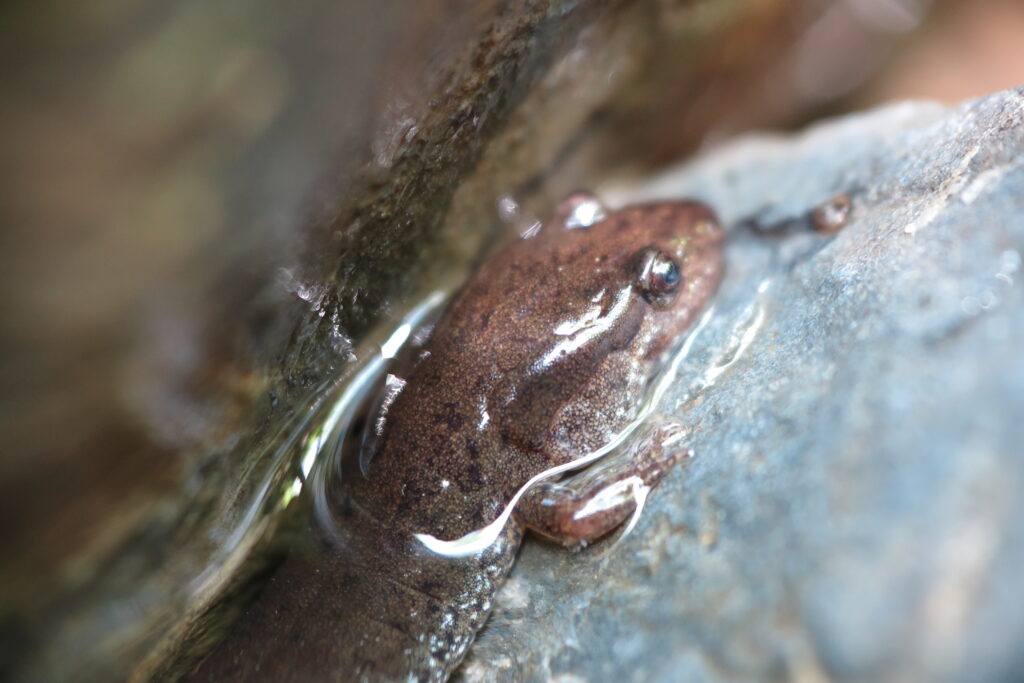
The Northern Dusky Salamander is a small amphibian commonly found throughout eastern North America near freshwater environments and shaded woodland streams. Although often hidden beneath rocks or resting near shallow water, this species attracts attention because of its compact but highly adapted body structure. Its size allows it to move through narrow stream crevices and remain concealed within wet environments where larger animals cannot easily reach.
Across much of its range, dusky salamanders are considered medium-sized compared to other stream salamanders. They are noticeably larger than some tiny woodland salamanders but smaller than bulky aquatic species such as mudpuppies or giant salamanders. Most adults fit comfortably within the palm of a hand, though their long tail makes them appear larger at first glance.
Size can vary slightly depending on age, sex, and environmental conditions. Salamanders living in cooler mountain regions sometimes develop somewhat different body proportions than those found in lower elevation forests. Food availability and moisture levels may also influence overall growth rates within local populations.
Even though dusky salamanders are relatively small animals, their proportions are extremely well suited for stream life. Their elongated bodies, muscular tails, and low profile create an appearance that feels balanced between an aquatic amphibian and a tiny reptile. Observing one closely often reveals far more detail and structure than most people expect from such a small stream-dwelling species.
Dusky Salamander Average Size and Body Proportions
Most adult dusky salamanders measure between 2.5 and 5 inches in total length, including the tail. The tail itself makes up a large portion of the overall size and can account for nearly half the salamander’s length. Without the tail, the body appears much shorter and more compact than many people initially expect.
A fully grown adult is often comparable in length to a house key, a small pocket flashlight, or a marker cap. Their bodies remain relatively narrow despite their muscular appearance, allowing them to squeeze into extremely tight spaces beneath submerged rocks. This slim shape helps them remain hidden within stream environments where shelter gaps may only be a few centimeters wide.
Juvenile dusky salamanders are dramatically smaller than adults and may only measure around an inch long shortly after developing. Young individuals appear delicate and thin, with proportionally larger heads and finer features. As they mature, the body thickens slightly while the tail becomes more muscular and defined.
Body size can also differ slightly between males and females. Mature males sometimes develop broader heads and slightly heavier body proportions, particularly during breeding periods. Females may appear longer and smoother in shape, though overall size overlap between sexes is common.
Compared to brightly colored newts or larger aquatic salamanders, dusky salamanders maintain a more streamlined form throughout adulthood. They never become thick-bodied or oversized. Instead, their growth focuses on efficiency, flexibility, and maintaining a body shape suited for navigating rocky stream systems.
Environmental conditions influence maximum size as well. Salamanders occupying cooler, stable environments with reliable food sources may grow somewhat larger than individuals living in harsher or less productive conditions. However, even large dusky salamanders remain relatively modest in size compared to many amphibians worldwide.
General Characteristics of Dusky Salamander Size and Appearance
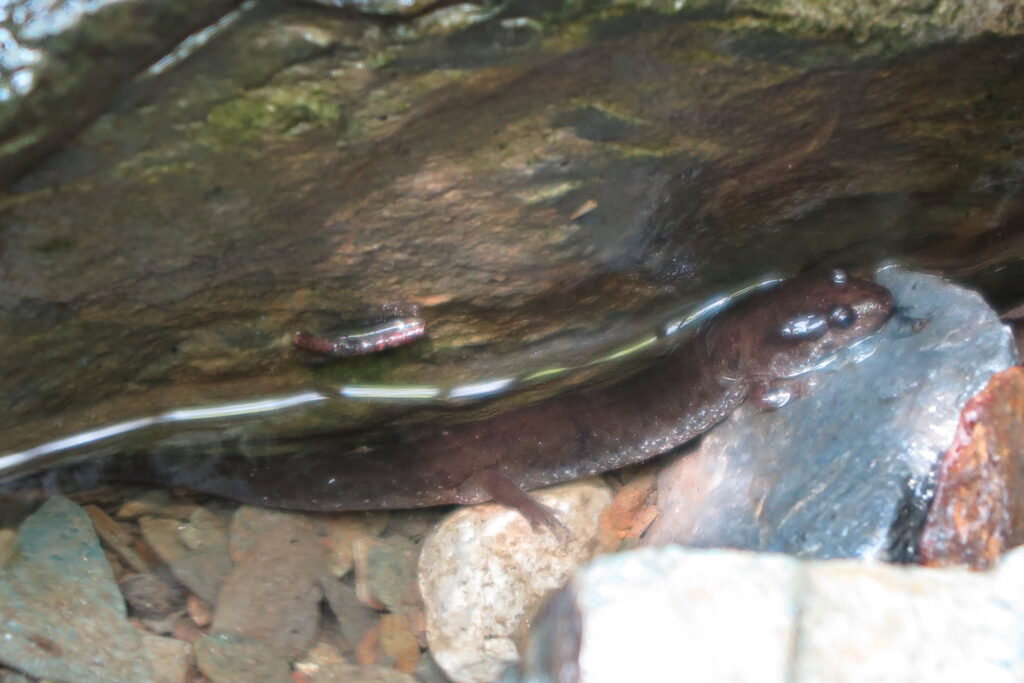
Dusky salamanders possess several physical traits that influence how large they appear in the wild. One of the most important is the elongated tail, which gives the animal a stretched appearance despite its relatively small body mass. This tail is muscular and slightly flattened, helping create a sleek silhouette when viewed from above.
Their bodies remain low to the ground with short sturdy legs positioned close to the sides. This structure makes the salamander appear wider and more solid when resting against wet rock surfaces. In shallow water, the flattened body profile can almost resemble a miniature aquatic lizard rather than a typical salamander.
Coloration also affects perceived size. Darker individuals often appear larger because their body outline blends into shadows and streambed surfaces. Brown, charcoal, gray, and reddish tones help break up the salamander’s shape, especially in low lighting conditions near flowing water.
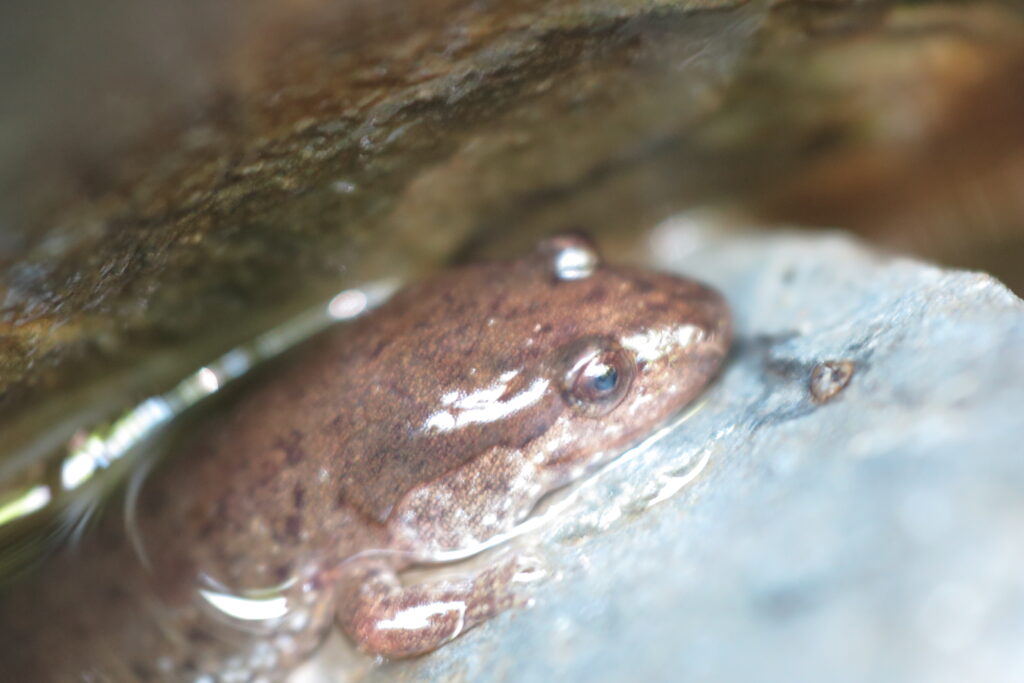
The head is proportionally broad compared to the narrow neck and body. Large eyes and a blunt snout create a strong facial appearance that stands out even on smaller individuals. Compared to slim woodland salamanders with delicate features, dusky salamanders look sturdier and more heavily built.
Their skin texture remains smooth but moist, lacking the rough scales associated with reptiles. When light reflects off wet skin, the salamander may appear slightly glossy or polished, especially while partially submerged. This reflective surface can exaggerate the animal’s apparent thickness in water.
One unusual feature is how flexible the body appears while moving through stream environments. Dusky salamanders can bend sharply around rocks or twist through narrow crevices with surprising ease. Watching one maneuver through shallow water resembles observing a living ribbon carefully threading between stones and debris.
The Role of Dusky Salamander Size in Ecosystem Balance
The moderate size of the dusky salamander plays an important role in how it fits within freshwater ecosystems. Its compact body allows it to occupy ecological spaces too small for larger predators while still being large enough to hunt a variety of tiny invertebrates. This balance helps the species function efficiently within stream food webs.
Because they are neither extremely tiny nor especially large, dusky salamanders interact with a wide range of organisms. Smaller aquatic insects, larvae, and worms may serve as prey, while birds, snakes, fish, and larger amphibians may view the salamander itself as food. Their body size positions them directly in the middle of many stream ecosystem relationships.
Their relatively small size also allows large numbers of salamanders to occupy a single stream system without requiring enormous amounts of food or space. In healthy environments, multiple individuals may exist within short distances beneath rocks or stream edges. This creates an important layer of biodiversity within freshwater habitats.
Compared to larger amphibians requiring ponds or broad aquatic systems, dusky salamanders can survive within surprisingly narrow stream corridors. Tiny springs, seepages, and shaded creek edges may all support populations because the salamanders do not require large bodies of water to function successfully.
Their body structure also contributes to environmental stability in indirect ways. By feeding on small aquatic organisms and serving as prey for larger animals, dusky salamanders help transfer energy throughout stream ecosystems. Their size makes them an ideal connection between microscopic aquatic life and larger predators higher in the food chain.
Even though they are small enough to fit beneath a single stream rock, dusky salamanders remain important components of eastern North America’s freshwater systems. Their size is not a limitation but an adaptation perfectly suited for hidden stream environments where flexibility, concealment, and efficient movement are more valuable than sheer body mass.
Popular Searches About Dusky Salamander
Explore Dusky Salamander Guide
Explore More Wildlife

Support Encounters World
Help support wildlife photography and get behind the scenes discoveries on Patreon.