Dusky Salamander vs Newts – Key Differences, Identification, and Appearance Guide
Quick Facts
Location: Forest streams, ponds, wetlands, and freshwater edges
Average Size: 2.5–5 inches long
Lifespan: 5–15 years depending on species and life stage
Global Range: Eastern North America
Conservation Status: Least Concern
Notable Feature: Dusky salamanders have flattened stream-adapted bodies, while newts often display smoother skin and brighter coloration
Introduction to Dusky Salamanders and Newts in Eastern North America
The Northern Dusky Salamander and the Eastern Newt are two amphibians commonly found throughout eastern North America, yet they are frequently confused with one another. Both species occupy freshwater environments and share similar body shapes, but closer observation reveals major differences in appearance, coloration, and physical structure. Many people encountering a small amphibian near water are unsure whether they are seeing a salamander or a newt.
Dusky salamanders are usually associated with shaded streams and rocky freshwater systems, while eastern newts are more commonly linked to ponds, wetlands, and calmer aquatic environments. Even though both belong to the salamander order, they represent very different lifestyles and visual adaptations. Their differences become especially noticeable when comparing skin texture, body shape, and coloration side by side.
At first glance, both animals appear elongated with tails, short legs, and moist skin. However, dusky salamanders tend to display darker natural camouflage that blends into wet rocks and streambeds. Newts, especially during certain life stages, often appear smoother and far more colorful, ranging from olive-green to bright orange with visible spotting.
Understanding the differences between dusky salamanders and newts helps with accurate wildlife identification and appreciation of freshwater biodiversity. Although they may seem similar from a distance, each species possesses distinct characteristics shaped by different environmental roles and evolutionary adaptations. Careful observation quickly reveals that these amphibians are far more unique than many people initially realize.
Dusky Salamander vs Newt Appearance and Body Comparison
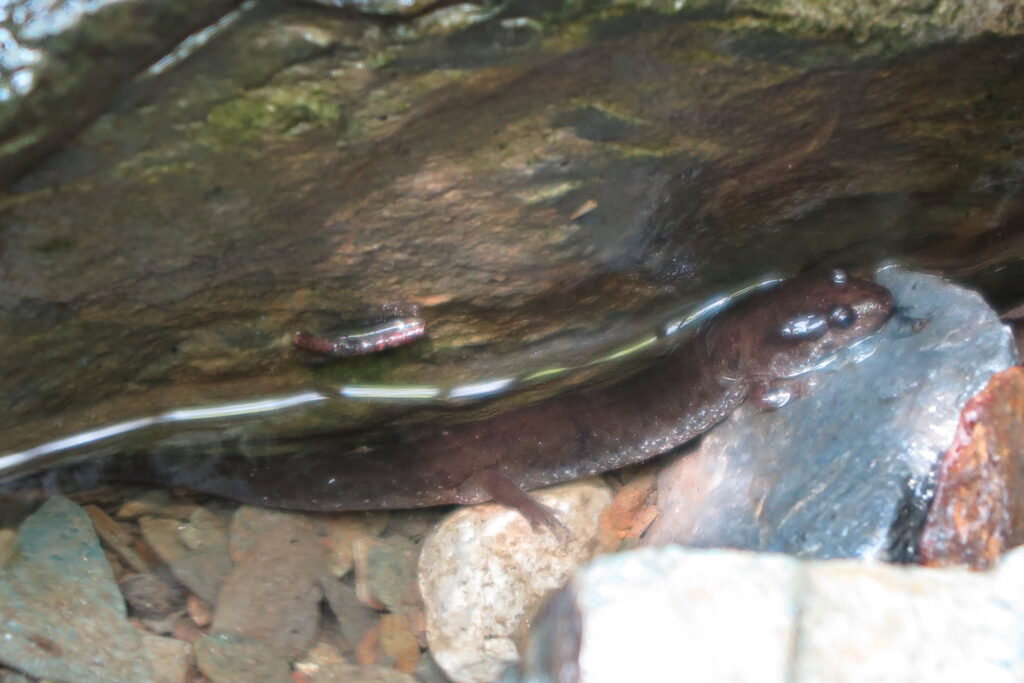
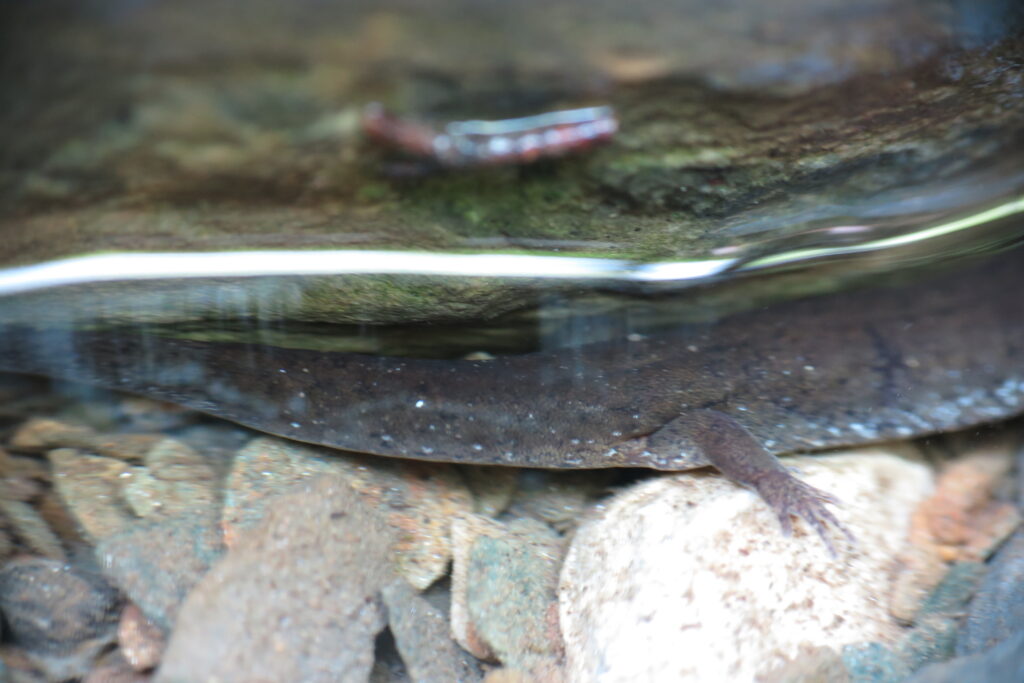
One of the clearest differences between dusky salamanders and newts is overall body shape. Dusky salamanders have flatter, broader bodies designed for resting against stream rocks and squeezing into narrow crevices. Their posture appears low and compact, especially when viewed from above in shallow flowing water.
Eastern newts generally appear smoother and more rounded in shape. Their bodies often look softer and less flattened, with tails that taper more evenly toward the tip. Compared side by side, a newt resembles a sleek aquatic amphibian, while a dusky salamander looks sturdier and more stream-adapted.
Coloration also creates a major visual distinction. Dusky salamanders typically display shades of brown, charcoal, gray, or reddish-brown mixed with mottled camouflage patterns. These colors help them disappear against wet stone, mud, and stream debris. Newts, on the other hand, are frequently brighter and more noticeable, especially during the red eft juvenile stage where vivid orange coloration dominates the body.
Adult eastern newts often show olive, yellow-green, or brownish tones with small darker spots outlined in red or black. This spotted appearance contrasts sharply with the more blended and shadow-like patterning of dusky salamanders. Even darker adult newts usually retain cleaner, smoother coloration than the heavily mottled appearance of dusky salamanders.
Size comparisons between the two species can sometimes overlap, but body proportions remain different. Dusky salamanders usually appear more muscular and flattened, while newts appear slimmer and softer-bodied. A dusky salamander resting beneath water may resemble a tiny aquatic lizard, whereas a newt often looks more delicate and streamlined.
The skin texture of each species is also noticeably different upon close inspection. Dusky salamanders have slightly rougher-looking moist skin with natural camouflage blending into uneven surfaces. Newts typically appear smoother and cleaner in texture, almost resembling polished rubber or wet clay when viewed under light.
General Characteristics That Separate Dusky Salamanders From Newts
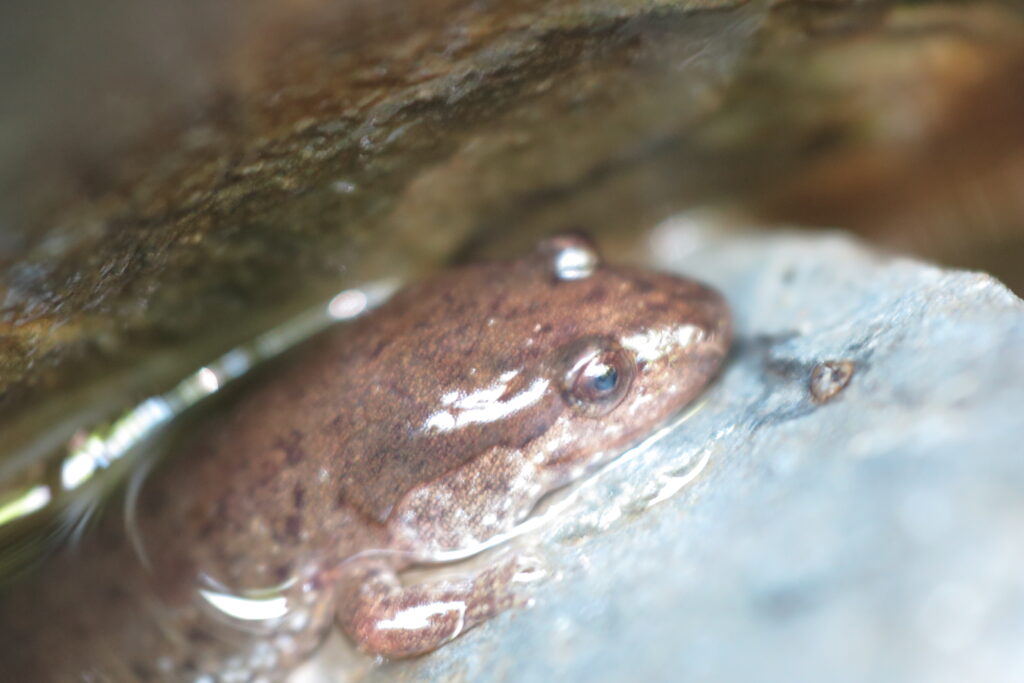
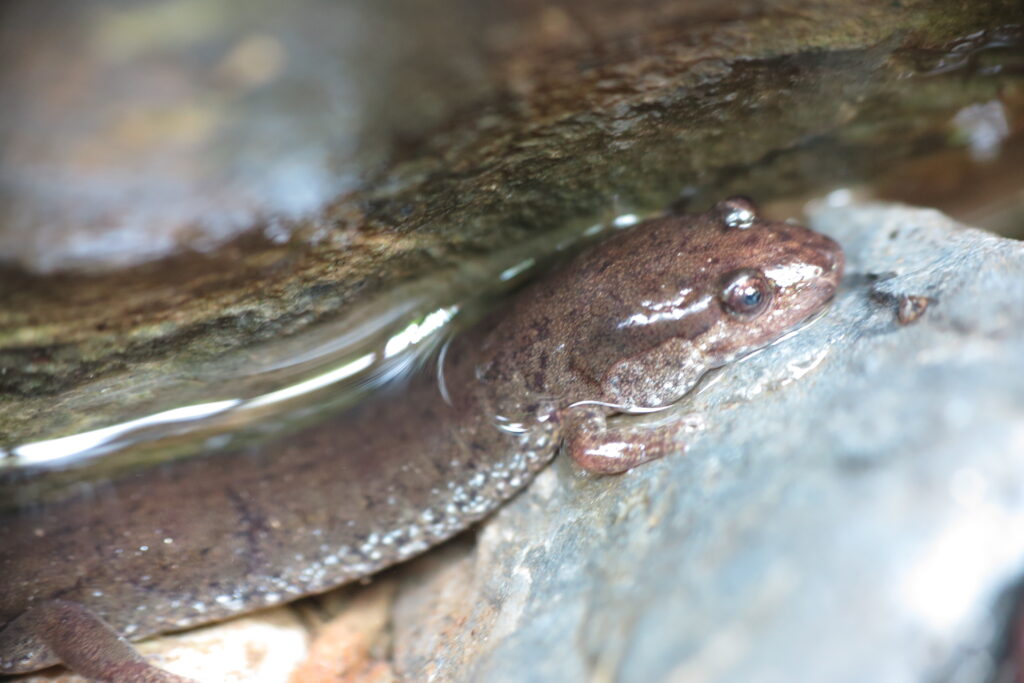
Dusky salamanders possess several defining physical traits that separate them from eastern newts even when coloration is less obvious. One of the most recognizable features is the broad head combined with a visible pale line extending from the eye toward the jaw. This subtle facial marking is especially noticeable on younger individuals.
Their tails are another important identifying feature. Dusky salamanders have muscular tails with a slightly keeled shape that helps stabilize movement within shallow streams. Newt tails are generally smoother and more evenly rounded, lacking the same flattened appearance associated with stream-dwelling salamanders.
The positioning of the legs also differs slightly. Dusky salamanders often appear more crouched against surfaces, with limbs angled outward to maintain grip on wet rocks. Newts usually hold themselves in a smoother, more elevated posture when moving across land or shallow water.
Head shape provides another useful comparison. Dusky salamanders tend to have thicker necks and broader snouts, creating a sturdier overall appearance. Newts possess softer facial contours with narrower heads and more evenly tapered bodies.
The life cycle of eastern newts also creates one of the largest distinctions between the two animals. Juvenile eastern newts pass through a bright terrestrial “red eft” stage that looks dramatically different from any dusky salamander. These vivid orange juveniles are among the easiest amphibians to recognize in eastern forests and are rarely confused with stream salamanders once seen clearly.
Even darker adult newts still maintain physical traits that distinguish them from dusky salamanders. Their smoother skin, spotted patterns, and rounded body shape create a cleaner appearance overall. Dusky salamanders instead appear built for concealment, with muted camouflage and flattened forms that visually merge into rocky freshwater environments.
The Ecological Role of Dusky Salamanders and Newts
Both dusky salamanders and eastern newts contribute important ecological value within freshwater ecosystems across eastern North America. Although they occupy somewhat different environments, each species plays a role in maintaining balance within aquatic and forest food webs. Their presence often reflects healthy environmental conditions and stable freshwater systems.
Dusky salamanders are strongly associated with flowing stream ecosystems where they interact with aquatic insects, larvae, and countless microscopic organisms hidden beneath rocks and submerged debris. Their compact body size allows them to occupy narrow spaces within streams that many larger predators cannot access.
Eastern newts often contribute more heavily to pond and wetland ecosystems. Because they may spend portions of their lives in both aquatic and terrestrial environments, they help connect different layers of freshwater food webs. Their movements between forest floors and aquatic systems contribute to energy transfer across habitats.
Both species also serve as prey for larger animals. Birds, snakes, fish, mammals, and larger amphibians may all rely on salamanders or newts as food sources within broader ecological systems. Their moderate size places them directly within the middle of many natural food chains.
In addition to their food web roles, both amphibians are considered indicators of environmental quality. Amphibians absorb moisture directly through their skin, making them sensitive to pollution, habitat destruction, and water contamination. Healthy salamander and newt populations often suggest cleaner freshwater conditions and stable surrounding ecosystems.
Although dusky salamanders and eastern newts are frequently confused by casual observers, they occupy distinct ecological niches within eastern North America. Together, they represent two highly specialized amphibians adapted to different freshwater lifestyles. Their continued presence helps maintain biodiversity within forests, wetlands, streams, and aquatic ecosystems throughout their shared range.
Popular Searches About Dusky Salamander
Explore Dusky Salamander Guide
Explore More Wildlife

Support Encounters World
Help support wildlife photography and get behind the scenes discoveries on Patreon.