
Coras Funnel Weaver Diet Guide: What Coras Funnel Weavers Eat in the Wild
Quick Facts
Diet Type: Carnivore
Main Food Sources: Small insects, springtails, flies, ants, beetles, and other arthropods
Feeding Time: Primarily nighttime and low-light periods
Foraging Method: Web-based ambush predation
Seasonal Diet Changes: Varies with prey availability throughout the year
Predatory Adaptations: Funnel web, vibration detection, venom, and rapid attack speed
Coras Funnel Weaver Diet Introduction
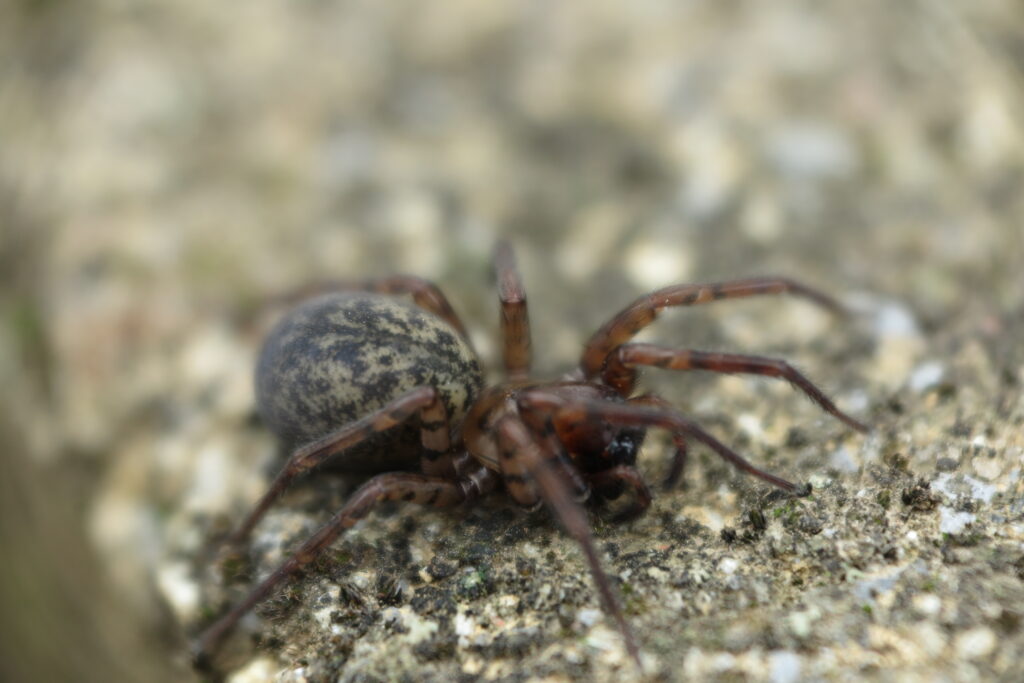
The Coras funnel weaver (Coras sp.) is a small predatory spider belonging to the funnel-weaver family Agelenidae. Found throughout portions of eastern North America, these spiders occupy environments where a steady supply of invertebrate prey supports their survival. Although they often remain hidden from view, feeding plays a central role in their daily activities and long-term success.
Like most spiders, Coras funnel weavers depend entirely on animal prey rather than plant material. Their role as small predators places them among the countless invertebrates responsible for regulating insect populations across natural and developed landscapes. Every successful feeding event contributes to the balance of local ecosystems.
Food availability varies throughout the year depending on weather conditions, seasonal insect abundance, and environmental factors. As a result, Coras funnel weavers must take advantage of opportunities whenever suitable prey becomes available. Their feeding strategy has evolved around efficiency rather than constant pursuit.
A person observing a funnel web may see little movement and assume nothing is happening. In reality, the spider is often positioned nearby, waiting for vibrations that signal the arrival of potential prey. This patient hunting approach allows the Coras funnel weaver to survive without expending unnecessary energy.
Coras Funnel Weaver Diet Overview and Feeding Strategy
Coras funnel weavers are strict carnivores, meaning they obtain nutrition entirely from other animals. Unlike omnivorous species that consume a variety of food sources, these spiders rely exclusively on living prey to meet their nutritional requirements. Their bodies are highly specialized for detecting, subduing, and consuming small invertebrates.
The species can be described as a moderately adaptable predator. Rather than targeting a single insect species, Coras funnel weavers take advantage of whatever appropriately sized prey enters their hunting zone. This flexibility helps them remain successful across different environments and seasons.
Compared to active hunters such as wolf spiders, Coras funnel weavers employ a more stationary feeding strategy. They depend heavily on web structures to intercept prey rather than roaming extensively in search of food. This approach reduces energy expenditure while increasing opportunities to capture passing insects.
Diet composition may vary somewhat depending on location. A spider occupying a woodland environment may encounter different prey species than one living near a stone wall or foundation. Despite these differences, the overall feeding strategy remains remarkably consistent throughout the genus.
Food intake is influenced by prey abundance and environmental conditions. During periods of high insect activity, feeding opportunities may occur frequently. During less productive periods, spiders may wait extended lengths of time between successful captures. This natural fluctuation is common among web-building predators.
The Coras funnel weaver’s dietary strategy balances patience, efficiency, and flexibility. Rather than specializing in one particular prey item, it functions as a generalist predator capable of utilizing a wide range of small arthropods whenever opportunities arise.
Natural Food Sources Consumed by Coras Funnel Weavers
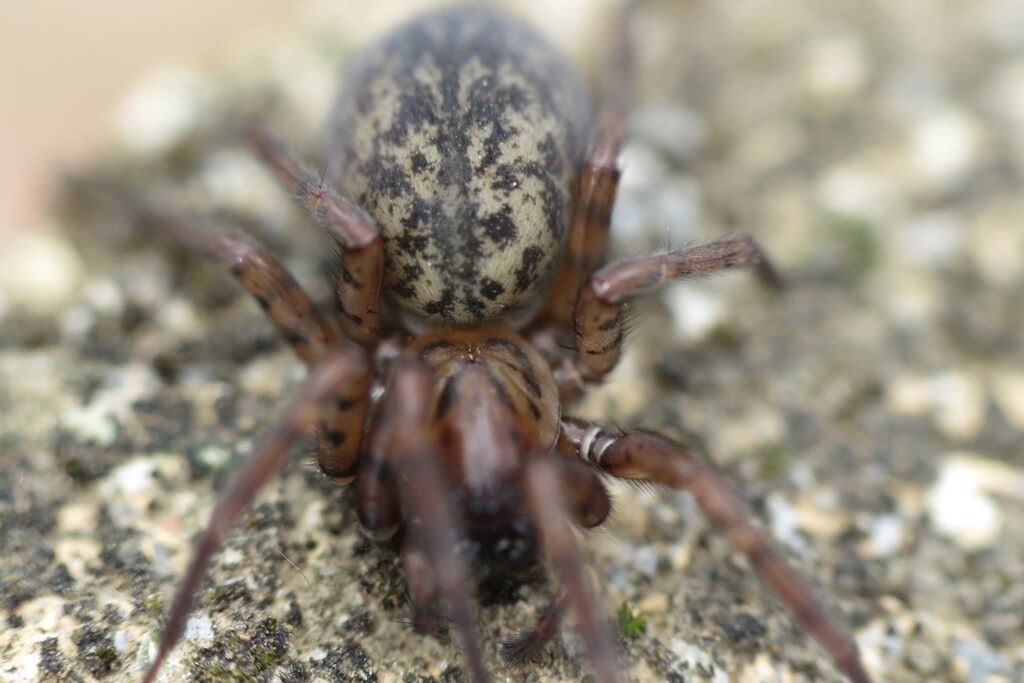
Small insects make up the majority of the Coras funnel weaver’s diet. Flies are among the most commonly captured prey because they frequently move through areas where funnel webs are established. Their abundance provides a reliable food source throughout much of the active season.
Springtails are another important prey item, particularly in environments with abundant leaf litter and moisture. These tiny arthropods occur in large numbers and can provide frequent feeding opportunities. Although individually small, they represent valuable nutritional resources.
Ants occasionally become part of the diet as well. While some ant species can be challenging prey due to defensive behaviors, smaller individuals may be successfully captured when they wander onto the web surface. Their presence adds variety to the spider’s food intake.
Various beetles, true bugs, and other small arthropods are also consumed when available. The exact composition of the diet often reflects the local invertebrate community. A Coras funnel weaver captures what is most accessible rather than seeking out highly specific prey species.
Young spiders generally consume smaller prey than adults. Tiny insects and minute arthropods dominate the diet during early life stages, while mature individuals can handle somewhat larger food items. This progression allows feeding habits to scale naturally with body size.
A fly captured within the funnel web provides a useful example of how prey contributes to survival. Such a meal supplies proteins, fats, and nutrients necessary for growth, maintenance, and reproduction. Repeated feeding events throughout the year support every stage of the spider’s life cycle.
Coras Funnel Weaver Feeding Behavior and Survival Tactics
The Coras funnel weaver’s feeding behavior revolves around its specialized web structure. The sheet portion of the web acts as a detection platform, transmitting vibrations whenever a potential prey item makes contact. This system allows the spider to monitor a larger area than it could through direct observation alone.
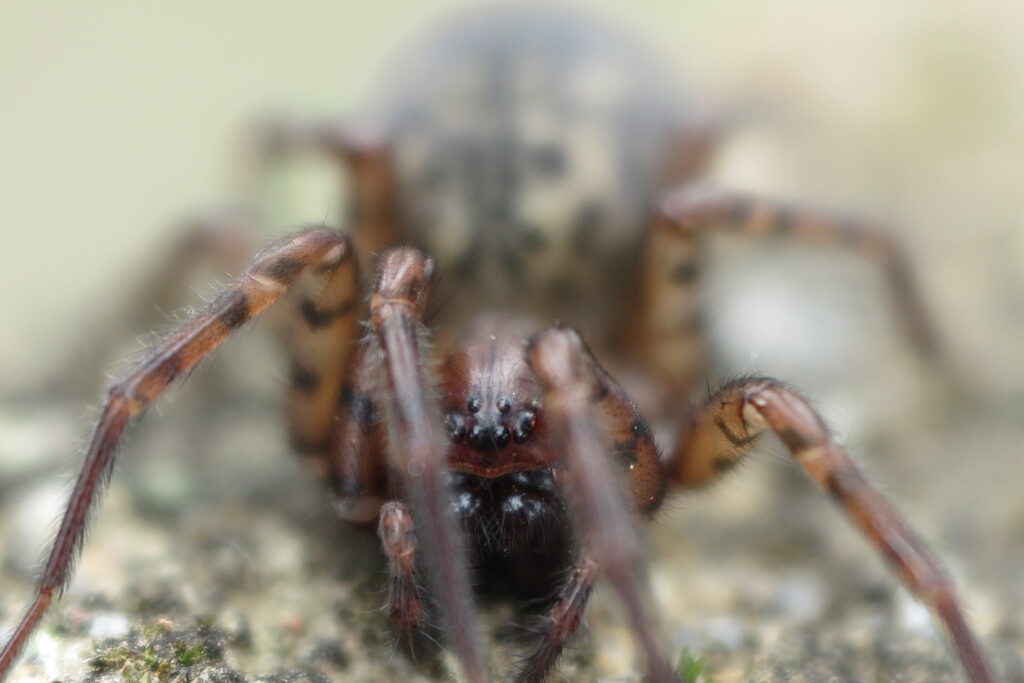
Most feeding activity begins with vibration detection. Sensitive sensory structures located on the legs allow the spider to interpret signals traveling through the web. Even slight disturbances can provide information about the size, location, and movement of a potential prey item.
When prey is detected, the spider responds with remarkable speed. A Coras funnel weaver may emerge from its retreat and reach the prey within fractions of a second. The rapid movement resembles a spring-loaded mechanism suddenly released after remaining motionless for an extended period.
Venom plays an important role once prey is captured. The spider delivers venom through its fangs to immobilize and begin breaking down internal tissues. This process allows nutrients to be consumed efficiently while reducing the risk of injury from struggling prey.
Competition for food can occur when multiple predators occupy the same general area. Coras funnel weavers reduce direct competition through their stationary hunting strategy and reliance on individual web systems. Each spider effectively operates from its own hunting platform rather than actively competing for every available prey item.
When prey becomes scarce, patience becomes a critical survival tool. Instead of wasting energy searching extensively, the spider continues monitoring its web while waiting for opportunities. This strategy allows Coras funnel weavers to survive fluctuations in food availability that might challenge more active predators.
Through vibration detection, web-based ambush tactics, rapid attacks, and efficient prey processing, Coras funnel weavers have evolved into highly effective small predators. Their feeding strategy demonstrates how patience and specialization can be just as successful as speed and constant movement in the natural world.
Popular Searches About Funnel Weaver Spiders
Explore Funnel Weaver Spider Guide
Explore More Wildlife

Support Encounters World
Help support wildlife photography and get behind the scenes discoveries on Patreon.