
Coras Funnel Weaver Venom Guide: Venom Function, Toxicity, and Human Safety
Quick Facts
Venom Purpose: Immobilizing and digesting prey
Venom Type: Mild arthropod-targeting venom
Danger to Humans: Not medically significant
Primary Use: Hunting and defense
Likelihood of Envenomation: Very low
Human Reaction: Typically minor and localized if a bite occurs
Coras Funnel Weaver Venom Introduction
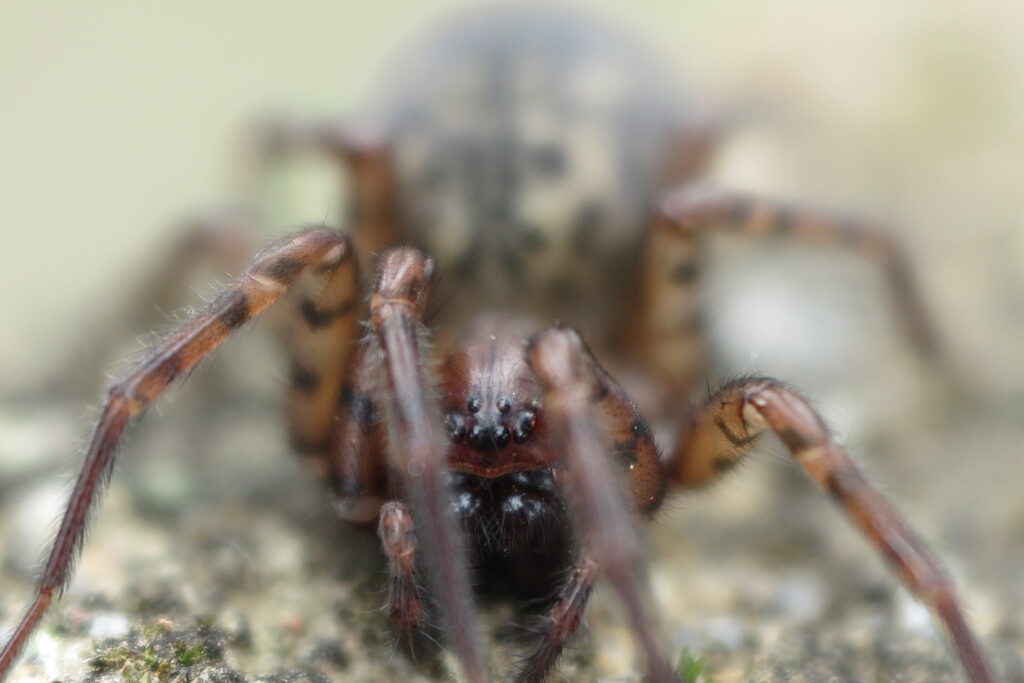
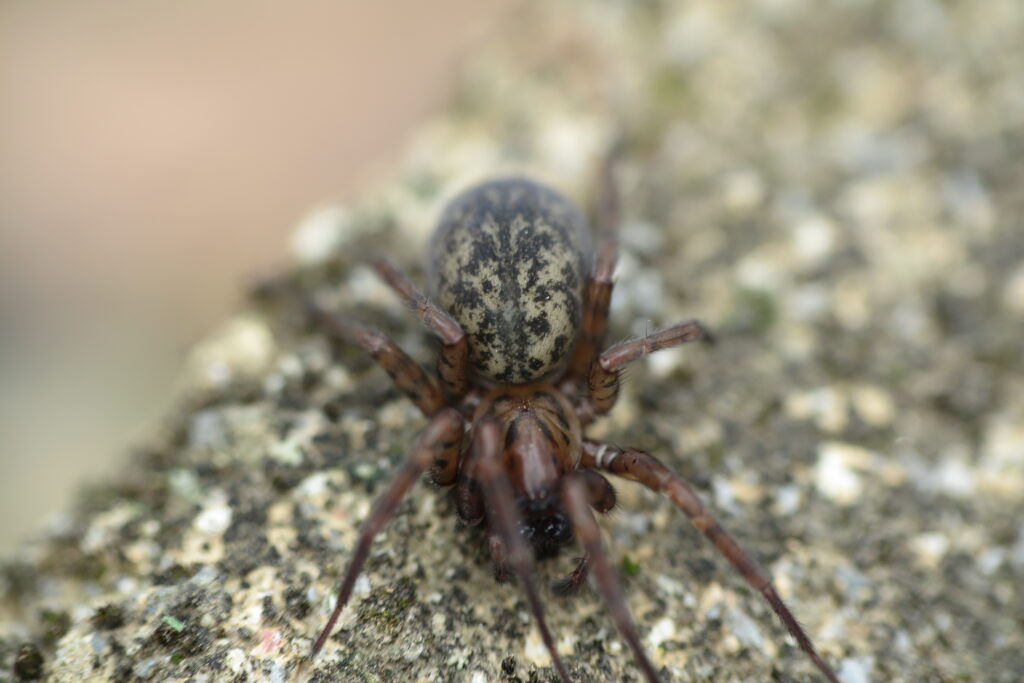
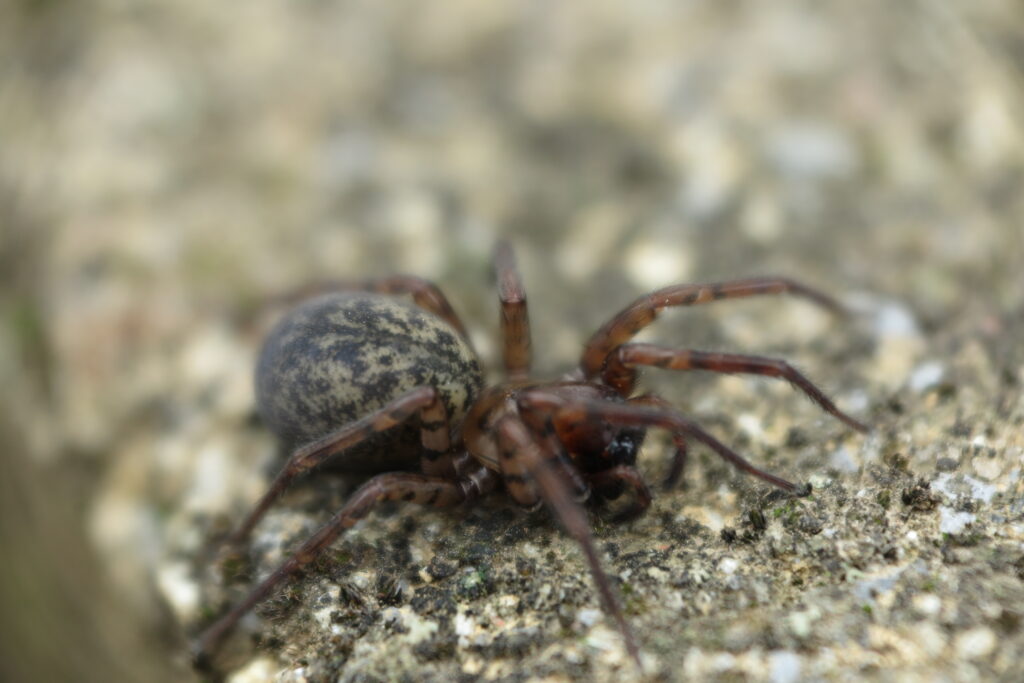
The Coras funnel weaver (Coras sp.) is a small funnel-weaving spider found throughout portions of eastern North America. Like nearly all actively hunting spiders, members of this genus possess venom that helps them capture prey and survive in their environment. Although the word “venom” often creates concern, the role of venom in spiders is primarily related to feeding rather than harming people.
Many people associate venomous animals with danger, but venom exists across a wide range of organisms with varying effects. In the case of Coras funnel weavers, venom serves as a specialized biological tool that allows these spiders to subdue small invertebrates efficiently. Without venom, securing prey would require far greater energy and risk.
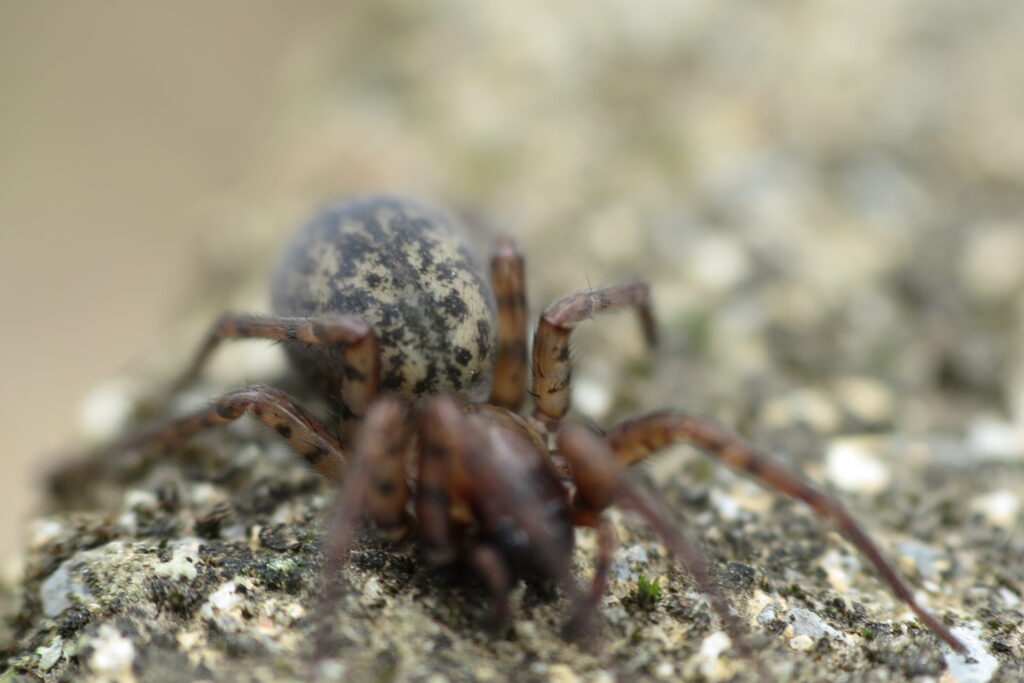
Questions about venom frequently arise when a funnel weaver is discovered beneath a rock, around a foundation, or inside a sheltered outdoor structure. Because these spiders possess fangs and venom glands, observers often wonder whether they pose a threat. Scientific evidence indicates that Coras funnel weavers are not considered medically important to humans.
Understanding how venom functions provides a clearer picture of the spider’s role in nature. Rather than viewing venom as a dangerous weapon, it is more accurate to think of it as an adaptation that supports survival. For Coras funnel weavers, venom is one component of a highly specialized predatory system.
Coras Funnel Weaver Venom Overview and Biological Purpose
The primary function of venom in Coras funnel weavers is prey immobilization. Small insects and other arthropods often possess the ability to escape quickly, making efficient capture essential for survival. Venom helps reduce struggle and allows the spider to gain control of prey shortly after contact.
Venom also plays a role in digestion. Spider venom contains compounds that begin breaking down internal tissues after prey is subdued. This process helps prepare nutrients for consumption and increases feeding efficiency. The venom therefore serves multiple biological functions beyond simple immobilization.
Compared to spiders that target larger or more challenging prey, Coras funnel weavers possess venom adapted to relatively small invertebrates. The effectiveness of venom is closely linked to the prey it evolved to affect. A substance highly effective against insects may have limited impact on large vertebrates such as humans.
The venom system works alongside other adaptations including web construction, vibration detection, and rapid attack speed. These traits function together as parts of a coordinated hunting strategy. Venom alone is not responsible for hunting success but contributes significantly to the spider’s effectiveness.
Coras funnel weavers are similar to many other common spiders in this regard. They possess venom because it is an efficient predatory adaptation rather than because they are dangerous animals. Their biology reflects millions of years of evolution focused on small prey rather than interactions with people.
Coras Funnel Weaver Venom Effects on Prey
When prey becomes trapped or detected within the spider’s hunting area, a rapid attack may follow. During this process, venom is delivered through specialized fangs located near the mouthparts. These fangs function like tiny injection tools that introduce venom directly into the prey’s body.
The effects on small arthropods can occur quickly. Movement becomes increasingly difficult as venom interferes with normal physiological functions. This reduction in mobility helps prevent escape and allows the spider to maintain control over captured prey.
Insects represent some of the most common targets affected by Coras funnel weaver venom. Flies, springtails, beetles, ants, and various other arthropods may become prey depending on availability. For these small animals, venom provides the spider with a significant advantage during capture.
Venom efficiency contributes directly to energy conservation. A prey item that is immobilized quickly requires less effort to restrain and presents a lower risk of injury to the spider. This advantage becomes particularly important because even small prey can possess defensive structures or escape capabilities.
The process can be compared to a hunter using specialized equipment designed for a specific purpose. Coras funnel weaver venom is highly effective within the context of small arthropod prey but is not designed to affect large animals. Its role remains closely tied to feeding and survival rather than defense against large vertebrates.
Human Safety and Coras Funnel Weaver Venom
One of the most common questions regarding Coras funnel weavers concerns whether their venom is dangerous to people. Current knowledge indicates that these spiders are not considered medically significant. Their venom is not known to cause severe reactions in healthy individuals under normal circumstances.
Human exposure to Coras funnel weaver venom is uncommon because bites themselves are rare. These spiders generally avoid confrontation and prefer retreating into sheltered locations when disturbed. As a result, opportunities for envenomation occur infrequently.
If a defensive bite were to occur, expected symptoms would typically remain localized. Mild discomfort, temporary redness, slight swelling, or minor irritation may occur near the bite site. Such reactions are generally comparable to those associated with many harmless arthropod encounters.
The venom of Coras funnel weavers differs substantially from that of medically significant spiders such as widows or recluses. While all of these spiders possess venom, the composition, potency, and effects vary dramatically. Grouping all venomous spiders together can create unnecessary concern and misunderstanding.
A useful comparison is that many animals possess defensive or predatory tools that sound intimidating but rarely pose meaningful danger to humans. Coras funnel weaver venom falls into this category. It is highly useful within the spider’s ecological role yet presents very little risk to people.
Viewed in context, the venom of a Coras funnel weaver is best understood as a specialized adaptation for hunting small prey. It contributes to the spider’s success as a predator while remaining largely insignificant from a human health perspective. For most observers, the spider’s ecological value and fascinating biology are far more noteworthy than any concern about its venom.
Popular Searches About Funnel Weaver Spiders
Explore Funnel Weaver Spider Guide
Explore More Wildlife

Support Encounters World
Help support wildlife photography and get behind the scenes discoveries on Patreon.