
Yellowjacket Life Cycle: Development Stages, Colony Growth, and Seasonal Changes
Quick Facts
Life Cycle Type: Complete Metamorphosis
Development Stages: Egg, Larva, Pupa, Adult
Reproduction Method: Sexual Reproduction
Colony Founder: Fertilized Queen
Peak Colony Growth: Summer
Colony Lifespan: One Season
Queen Lifespan: Up to 1 Year
Notable Feature: Entire Colonies Begin from a Single Queen Each Spring
Yellowjacket Life Cycle and Colony Development Overview
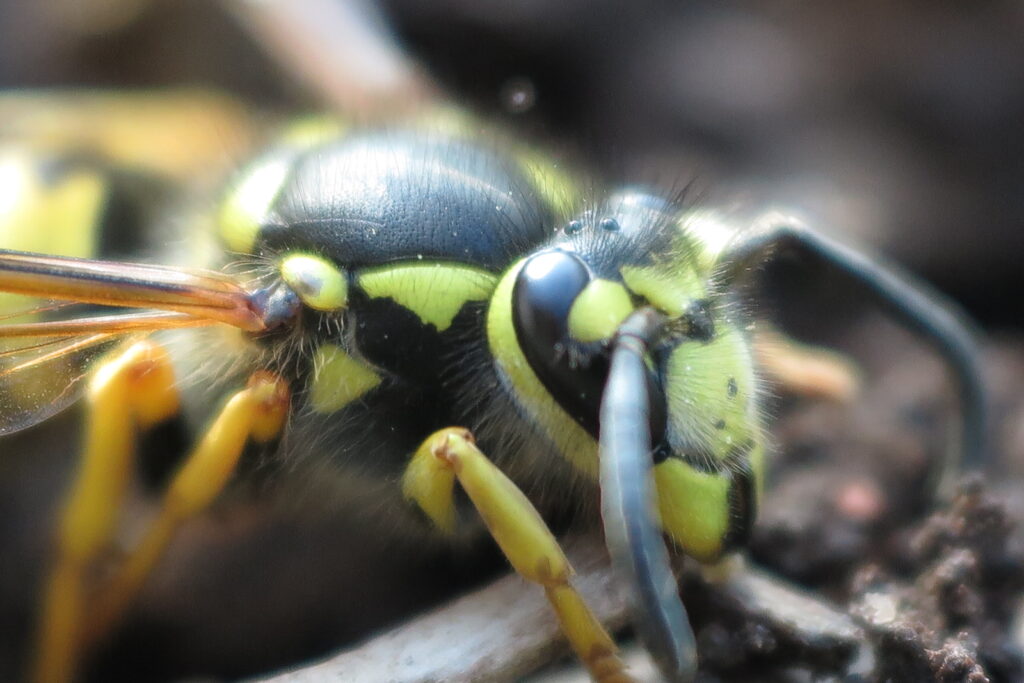
The yellowjacket follows a fascinating life cycle that combines individual development with the growth of an entire colony. Unlike solitary insects that live independently, yellowjackets experience life as part of a highly organized social system. Every colony begins with a single queen and expands into a thriving community over the course of a single season.
Members of the genus Vespula are found throughout North America, Europe, and Asia, where their annual life cycle is closely tied to seasonal changes. Each year follows a predictable pattern of colony establishment, expansion, reproduction, and decline. This cycle allows yellowjackets to take advantage of favorable environmental conditions while surviving periods of seasonal hardship.
One of the most remarkable aspects of yellowjacket biology is that an entire colony can develop from a single surviving queen. What begins as one insect emerging from winter eventually becomes a colony containing hundreds or even thousands of individuals. This dramatic transformation occurs within only a few months.
Unlike insects that remain hidden throughout development, yellowjackets pass through multiple distinct life stages before reaching adulthood. Each stage serves a specific purpose and contributes to the long-term success of the colony. Understanding these stages provides valuable insight into how yellowjackets have become one of the most successful social wasp groups in the world.
Yellowjacket Egg and Larval Development Stages
The yellowjacket life cycle begins when a queen lays eggs within specially constructed cells inside the nest. These eggs are extremely small and remain protected within the colony. Each egg represents the first stage of a future worker, male, or queen.
After a short developmental period, the egg hatches into a larva. At this stage, the young yellowjacket resembles a small white grub rather than an adult wasp. The larva lacks wings, compound eyes, and the distinctive coloration associated with mature individuals.
Larvae remain entirely dependent on adult workers for care and nourishment. They stay within the protective nest cells while developing. This arrangement allows young yellowjackets to grow in a stable environment sheltered from predators and environmental hazards.
As larvae mature, they increase significantly in size. Their appearance changes gradually as internal structures develop in preparation for the next stage of the life cycle. Growth during this period is rapid compared to many other insects.
A useful comparison is the growth of a bird chick inside a nest. Just as young birds rely on parents for food and protection, yellowjacket larvae depend completely on worker wasps. Without constant care, development would not be possible.
The larval stage represents one of the most important periods in colony growth. Large numbers of larvae developing simultaneously allow colonies to expand rapidly during favorable seasons. This continuous production of young individuals supports increasing colony size throughout the summer.
By the end of the larval stage, the developing yellowjacket has accumulated the resources needed to undergo its most dramatic transformation. The next phase introduces major physical changes that prepare it for adult life.
Yellowjacket Pupal Stage and Metamorphosis
Following larval development, the yellowjacket enters the pupal stage. This phase marks the beginning of complete metamorphosis, a process shared with butterflies, beetles, and many other insects. During this stage, the insect undergoes extensive internal and external transformation.
The pupa remains enclosed within the nest cell while development continues. From the outside, activity appears minimal, but major changes are occurring beneath the surface. Structures required for adult life begin forming and replacing larval features.
Wings, compound eyes, antennae, legs, and the familiar segmented body gradually develop during metamorphosis. This transformation can be compared to a complete reconstruction project where an existing structure is redesigned from the inside out. Few life stages in nature involve such dramatic change.
Unlike larvae, pupae do not actively move about the nest or participate in colony activities. Their primary function is development. All energy is directed toward completing the transition into adulthood.
The duration of the pupal stage varies depending on environmental conditions and colony needs. Warmer conditions generally support faster development, while cooler conditions may slow the process. These differences influence the overall rate of colony growth.
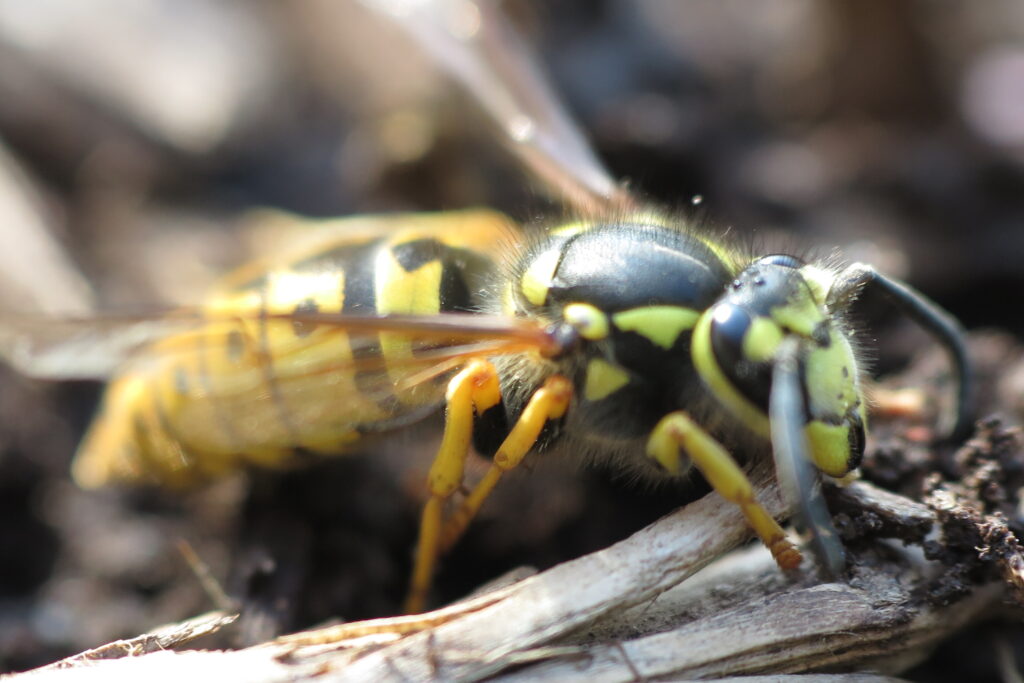
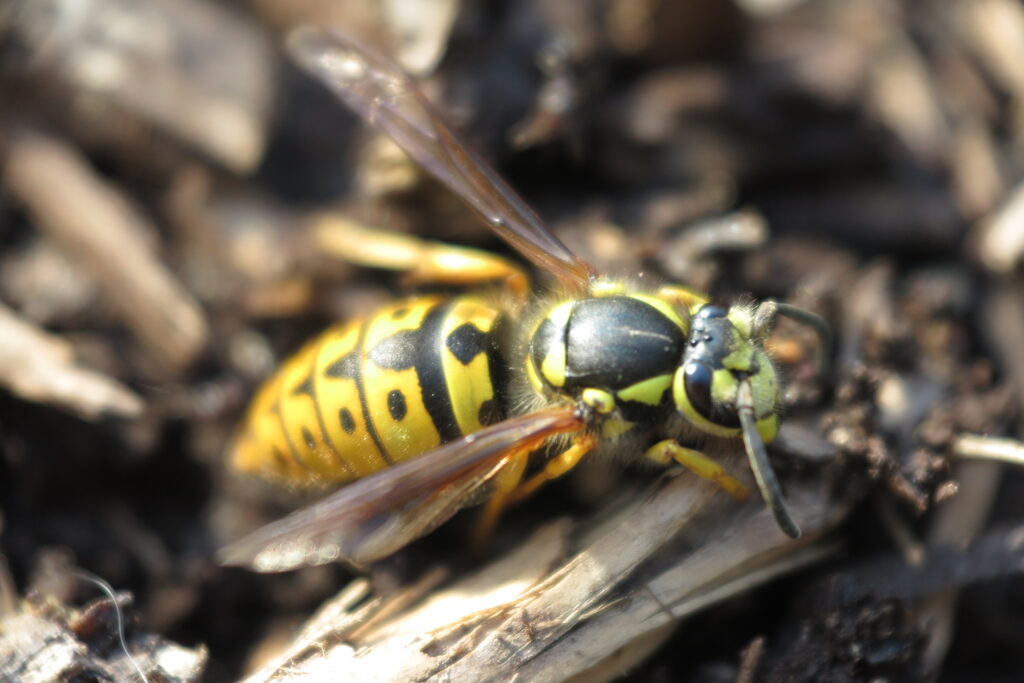
When metamorphosis is complete, a fully formed adult yellowjacket emerges from the cell. The insect now possesses the structures required for flight, communication, defense, and participation in colony activities. This emergence marks one of the most significant milestones in the life cycle.
The pupal stage serves as the bridge between a dependent larva and an independent adult. Without this transformative phase, the remarkable complexity of adult yellowjackets would not be possible.
Yellowjacket Adult Life and Annual Colony Cycle
Adult yellowjackets represent the final stage of individual development and the most visible phase of the life cycle. Workers perform the majority of colony tasks, including nest expansion, resource collection, brood care, and colony defense. Their efforts support the continued growth of the colony throughout the active season.
As summer progresses, worker numbers increase dramatically. Colonies that began with a single queen may eventually contain hundreds or thousands of adults. This population growth allows colonies to reach peak productivity during late summer.
Toward the end of the season, colonies begin producing reproductive individuals rather than additional workers. New queens and males develop within the nest and eventually leave to participate in reproduction. This shift marks the beginning of the colony’s final phase.
After mating, newly fertilized queens seek protected locations where they can survive the winter. These queens represent the future of the species, carrying the genetic material needed to establish new colonies the following year. The rest of the colony gradually declines as environmental conditions become less favorable.
Unlike honey bee colonies, yellowjacket colonies generally do not survive through winter. Workers, males, and the original queen eventually die as temperatures drop. The nest is abandoned and typically remains unused in subsequent years.
A useful comparison is an annual plant that completes its life cycle within a single growing season. While the original plant does not persist indefinitely, seeds ensure the continuation of future generations. Yellowjacket colonies function in a similar manner through the production of new queens.
The yellowjacket life cycle demonstrates one of nature’s most effective seasonal strategies. From a solitary queen emerging in spring to a thriving colony producing future queens in autumn, each stage contributes to the continuation of the species and the remarkable success of social wasps around the world.
Popular Searches About Yellowjackets
Explore Yellowjacket Guide
Explore More Wildlife

Support Encounters World
Help support wildlife photography and get behind the scenes discoveries on Patreon.