
White-Tailed Deer Antler Identification Guide | How to Identify a Deer Antler Fragment
Quick Facts
Bone Type: Shed Antler Fragment
Likely Animal: White-Tailed Deer
Common Name: White-Tailed Deer Antler Fragment
Scientific Name: Odocoileus virginianus
Bone Category: Antler
Side of Body: Unknown
Age Class: Adult
Condition: Weathered, Fragmented
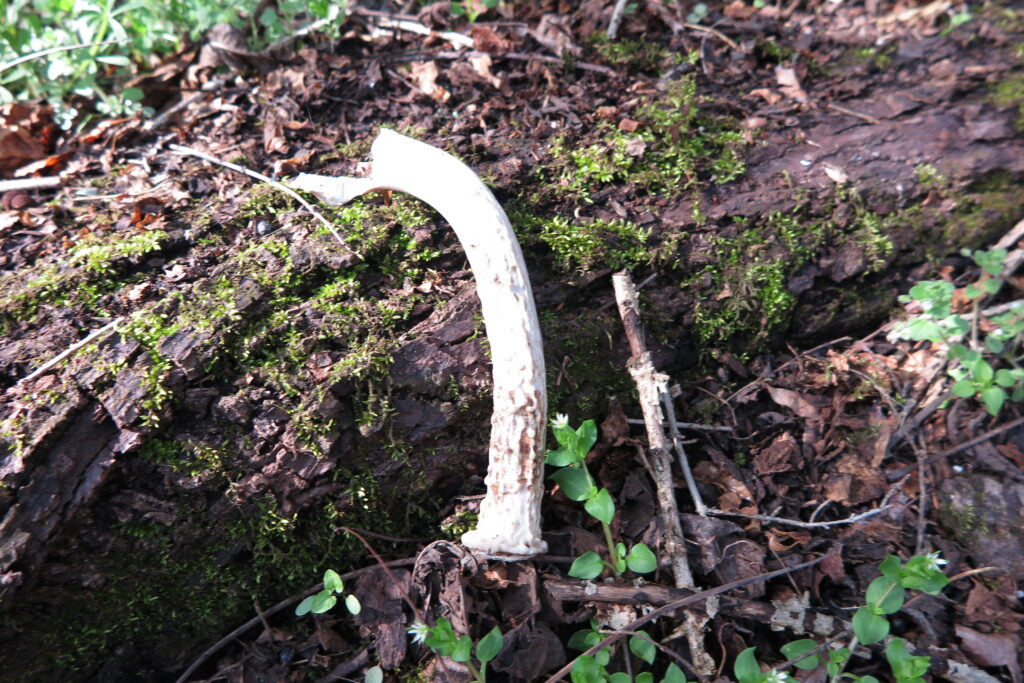
Key Identification Features: Burr near base, curved beam structure, growth grooves, dense bone texture, chew marks, broken tip
Size Estimate: Approximately 8–12 inches
How to Identify a White-Tailed Deer Antler Fragment in the Field
Finding an unfamiliar bone or antler fragment in the woods often raises immediate questions about its origin. White-tailed deer antler fragments are among the most commonly discovered wildlife remains in North America because bucks naturally shed their antlers each year. Even partial specimens can often be identified using a combination of shape, texture, and visible landmarks.
White-tailed deer are widespread throughout much of North America, occupying forests, agricultural regions, wetlands, and suburban landscapes. Their abundance means that antler fragments are encountered far more frequently than many other large mammal remains. A weathered piece found on a trail or fallen log often traces back to a mature buck that shed or broke part of its antler.
Unlike skulls or long bones, antlers possess a distinctive appearance that often remains recognizable even after years of weathering. Curved profiles, branching structures, and rough surface features help separate antler material from ordinary wood or skeletal fragments. These characteristics make antler identification accessible even for beginners.
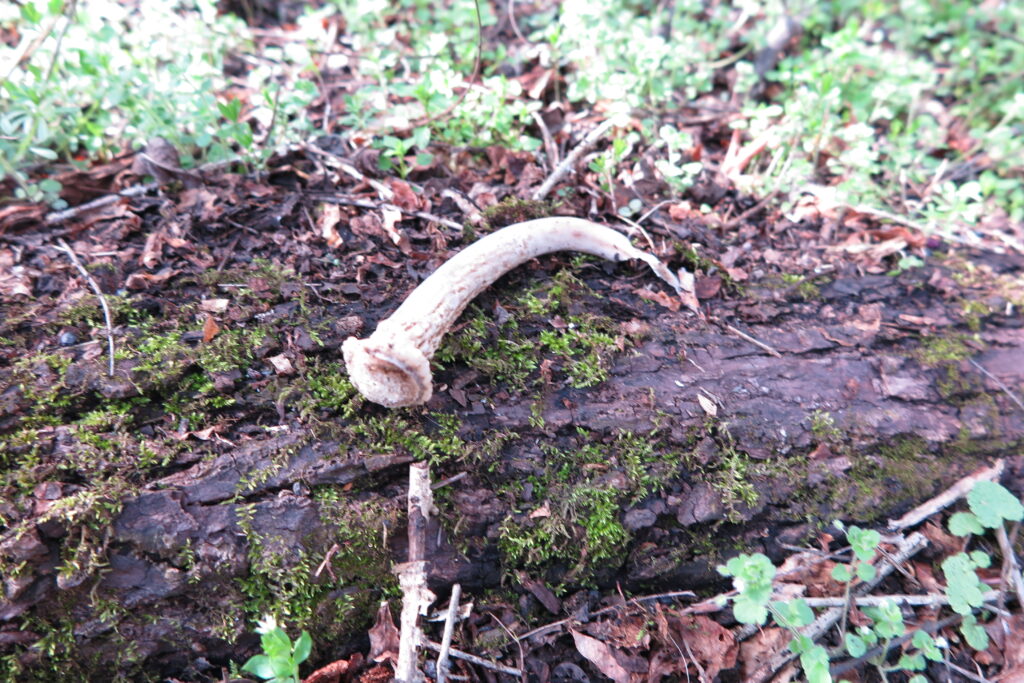
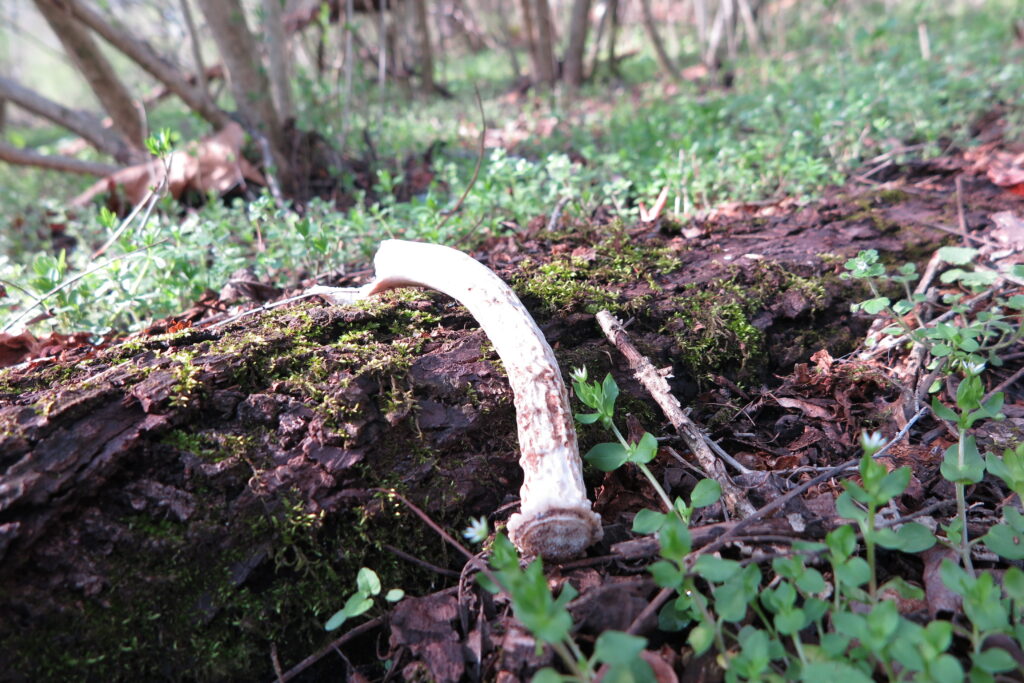
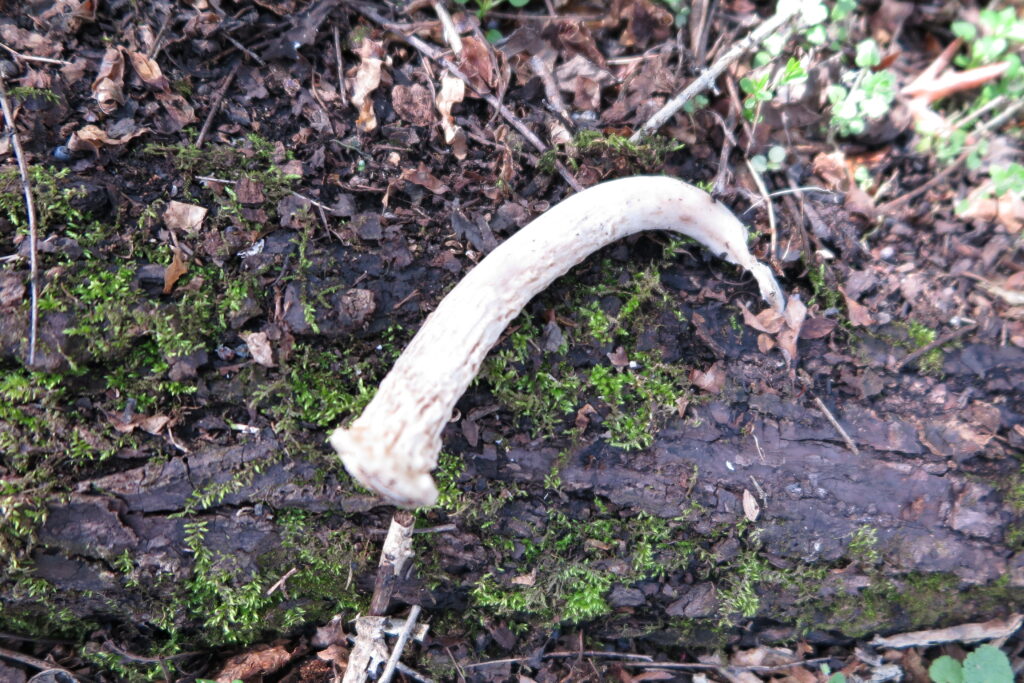
The specimen featured here represents a weathered section of a white-tailed deer antler. Despite a broken tip and signs of age, several identifying traits remain visible. Understanding these features allows observers to confidently distinguish deer antlers from other natural objects encountered outdoors.
Recognizing White-Tailed Deer Antler Shape and Appearance
One of the easiest ways to identify a white-tailed deer antler fragment is by examining its overall shape. Antlers rarely follow perfectly straight lines and instead display smooth curves and natural bends created during growth. The fragment shown here retains a beam-like arc that immediately suggests antler material.
At first glance, many antler fragments resemble weathered branches or pieces of driftwood. A closer look reveals a more organized structure with consistent thickness and distinct contours. Unlike wood, antlers lack bark, grain patterns, and fibrous surfaces.
The profile of this specimen resembles a gently curved handle or hook. That sweeping shape is commonly seen in portions of the main antler beam. Even when tines are missing or broken, the remaining curve can provide an important identification clue.
Coloration may vary considerably depending on age and exposure. Fresh antlers often display tan or brown tones, while older fragments gradually become pale gray or cream-colored. Although color alone should never be used for identification, it can help estimate how long the antler has been exposed to the elements.
White-Tailed Deer Antler Identification Features and Structural Clues
The most valuable identification feature visible on this fragment is the burr. Located near the base of the antler, the burr forms a rough ring-like structure that once sat directly above the pedicle on the skull. Few other bones possess a similar feature, making it one of the strongest indicators of antler material.
Growth grooves provide another useful clue. These shallow ridges and channels run along portions of the antler surface and reflect the pattern of antler development. Even after years of weathering, these grooves often remain visible enough to assist with identification.
Density also separates antlers from many objects they resemble. When handled, antlers feel noticeably heavier than similarly sized pieces of wood. Their solid bone construction creates a weight and texture that becomes obvious once the specimen is examined closely.
The broken tip on this fragment reveals additional evidence. Instead of exposing fibrous plant material, the fracture displays compact bone tissue. This distinction is especially useful when weathered antlers begin to resemble roots, branches, or other natural debris found in wooded environments.
Where White-Tailed Deer Antler Fragments Are Most Commonly Found
White-tailed deer antler fragments are most frequently discovered in areas regularly used by deer. Forest edges, bedding areas, wildlife trails, and feeding locations often produce antler finds because these environments experience consistent deer activity throughout the year. Bucks may shed antlers directly in these locations or lose fragments during movement.
Woodland trails are particularly productive places to search. Deer frequently travel predictable routes connecting food sources and cover. Over time, antlers may become lodged beneath vegetation, hidden under leaves, or exposed by changing seasonal conditions.
Fallen logs and brush piles can also concentrate antler discoveries. The specimen examined here was found resting on a fallen tree, a location where natural movement and environmental exposure can leave antlers visible above surrounding leaf litter. Elevated positions sometimes make fragments easier to spot than those hidden on the ground.
Fields, stream corridors, and disturbed ground occasionally produce antler fragments as well. Water movement, erosion, and scavenger activity may relocate pieces far from where they originally fell. For this reason, an antler fragment discovered today may have undergone years of movement and weathering before finally being noticed by an observer.
Popular Searches About Deer Antler Fragments
Explore Deer Antler Fragment Guide
Explore More Bones

Support Encounters World
Help support wildlife photography and get behind the scenes discoveries on Patreon.