
White-Tailed Deer Shed Antler Guide | When Deer Shed Antlers and How to Identify Them
Quick Facts
Bone Category: Antler
Side of Body: Left, Right, or Unknown
Age Class: Adult
Condition: Fresh, Weathered, or Fragmented
Key Identification Features: Burr at base, detached pedicle connection, beam curvature, branching tines, seasonal shedding signs
Size Estimate: Highly Variable
Understanding White-Tailed Deer Shed Antlers
A shed antler is an antler that has naturally detached from a living white-tailed deer buck. Unlike permanent horns found on some mammals, deer antlers are grown and discarded every year as part of a repeating biological cycle. The fragment examined here originated from one of these seasonal antlers after it was shed and later weathered in the environment.
White-tailed deer occur across much of North America and are among the continent’s most recognizable large mammals. Their adaptability allows them to thrive in forests, agricultural regions, wetlands, and suburban landscapes. Wherever healthy deer populations exist, shed antlers may eventually be found on the landscape.
Many people first discover shed antlers by chance during outdoor activities. A pale object beneath leaves, a curved shape beside a trail, or a fragment resting on a fallen log often catches attention because it contrasts with surrounding vegetation. Even heavily weathered specimens frequently remain recognizable.
Finding a shed antler offers a unique glimpse into the life cycle of a deer. Unlike skulls or skeletal remains associated with mortality, a shed antler represents a natural process that occurs while the animal remains healthy and active. This distinction makes shed antlers especially interesting to wildlife enthusiasts, photographers, and hikers.
White-Tailed Deer Antler Shedding Process Explained
The shedding process begins after the breeding season, commonly known as the rut. During this period, mature bucks use their antlers for displays, sparring, and competition with rivals. Once breeding activity declines, changes in hormone levels trigger the eventual separation of the antler from the skull.
At the base of each antler is a structure called the pedicle. As hormone levels decrease, specialized cells gradually weaken the connection between the antler and the pedicle. Over time, this attachment point breaks down until the antler eventually falls away.
Contrary to popular belief, deer do not actively remove their antlers by rubbing them against trees. Instead, the antlers detach naturally when the connection weakens sufficiently. Some antlers drop while a buck is feeding, walking, resting, or moving through thick vegetation.
The timing of shedding varies between individuals. Older bucks often shed earlier than younger animals, although weather conditions, nutrition, and overall health can influence the exact schedule. Because of these differences, antler drop may occur across several weeks within the same local deer population.
Identifying a White-Tailed Deer Shed Antler
One of the most reliable ways to identify a shed antler is by examining the base. A naturally shed antler typically displays a rounded burr and a smooth or slightly rough shedding surface where it separated from the pedicle. This area differs noticeably from damage caused by breakage or impact.
The overall shape of the antler provides another important clue. White-tailed deer antlers commonly feature curved beams and projecting tines arranged in a branching pattern. Even when only a fragment remains, portions of these structures often survive and assist with identification.
Freshly shed antlers tend to retain darker coloration and smoother surfaces. In contrast, older antlers gradually fade to lighter shades as weathering alters the exterior. Sunlight, moisture, and seasonal temperature changes slowly modify appearance while preserving many identifying characteristics.
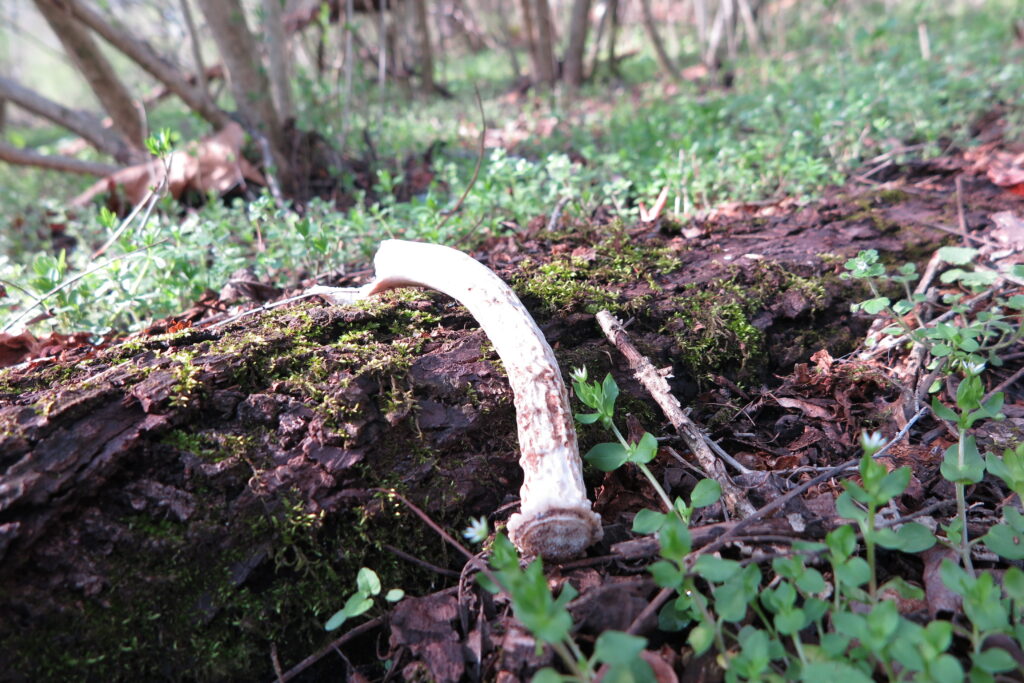
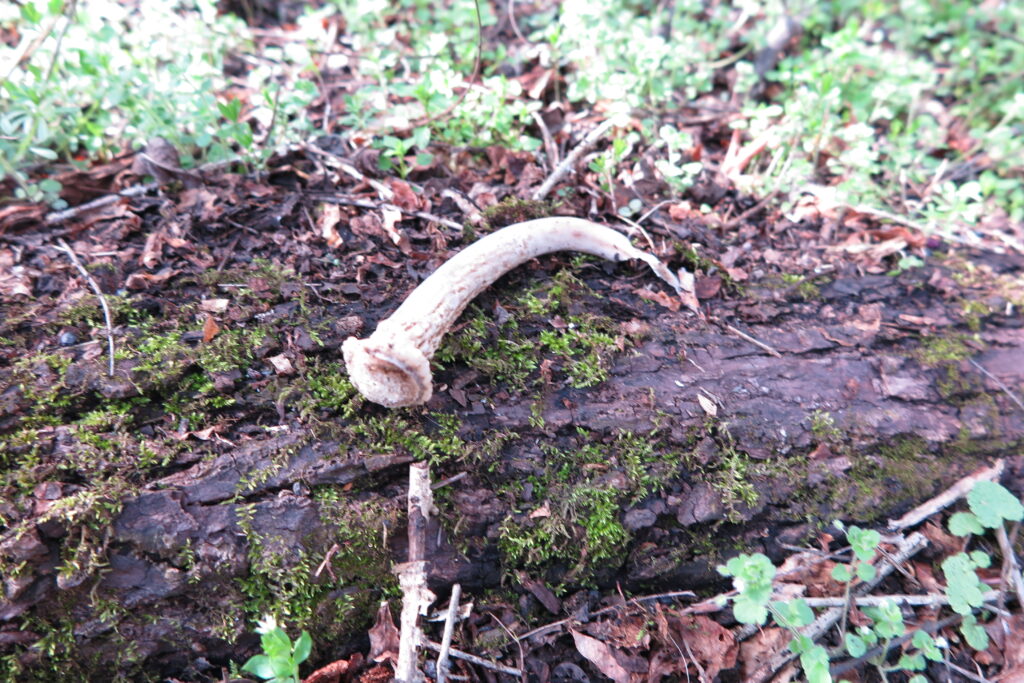
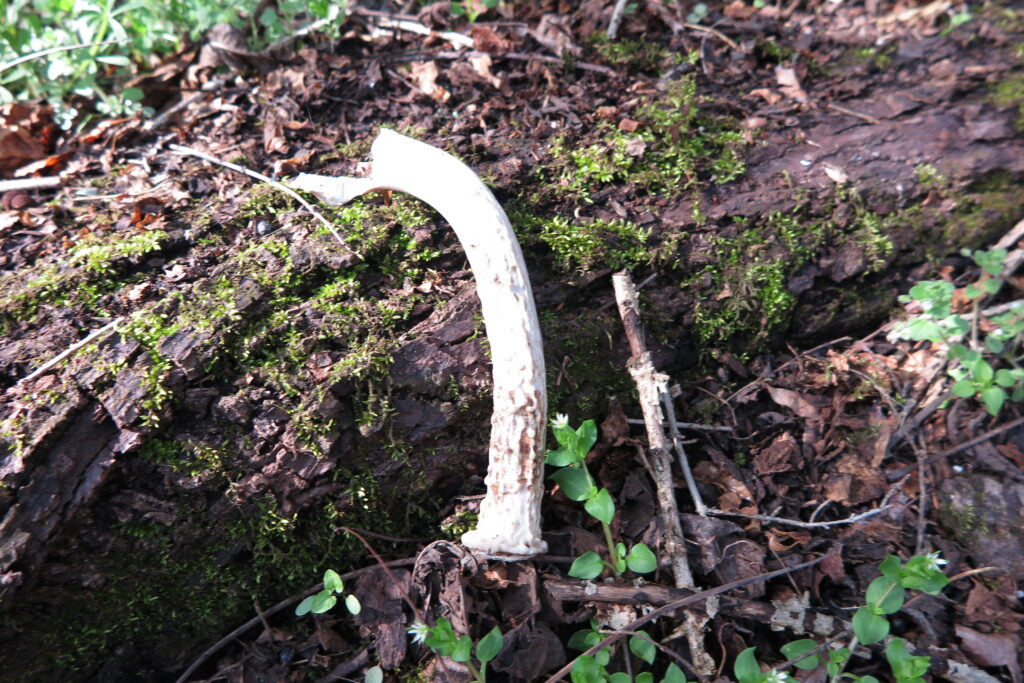
The specimen represented by this fragment retains several recognizable features despite weathering. The visible burr, curved beam section, and dense bone texture all support identification as a shed white-tailed deer antler. These traits remain useful even when parts of the original antler are missing.
Where White-Tailed Deer Shed Antlers Are Commonly Found
Shed antlers are most frequently discovered in areas where deer spend significant portions of the winter season. Bedding cover, feeding locations, travel corridors, and woodland edges often produce the highest number of finds. These environments increase the likelihood that an antler will remain close to where it was originally dropped.
Forested habitats are particularly productive because they provide shelter and security for deer. Fallen leaves, understory vegetation, and woody debris may partially conceal antlers for months or even years. Seasonal changes often expose previously hidden specimens.
Agricultural fields can also yield shed antlers, especially near food sources heavily used during winter. Deer commonly move between feeding and resting areas, creating opportunities for antlers to detach along established travel routes. Open terrain may make antlers easier to spot once vegetation dies back.
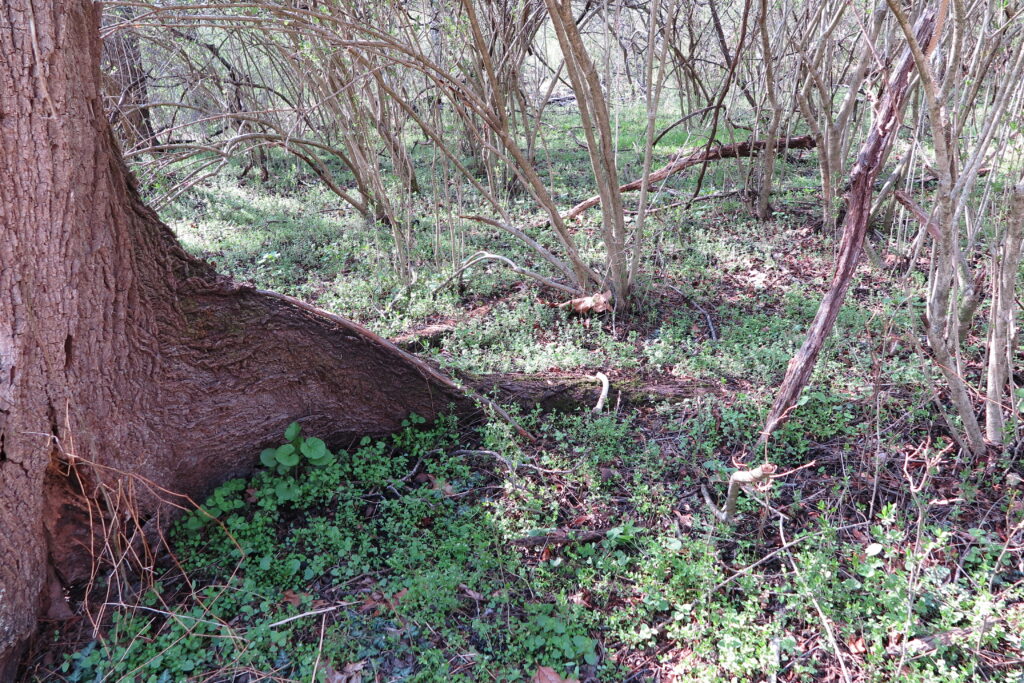
Real-world discoveries often occur along game trails, creek crossings, fence lines, and wooded ridges. The fragment featured here was observed resting on a fallen log, demonstrating how antlers can remain visible in elevated locations rather than becoming buried beneath leaf litter. Such discoveries highlight the unpredictable nature of finding shed antlers in the wild.
Popular Searches About Deer Antler Fragments
Explore Deer Antler Fragment Guide
Explore More Bones

Support Encounters World
Help support wildlife photography and get behind the scenes discoveries on Patreon.