
Yellowjacket Identification Guide: How to Identify Yellowjackets, Look-Alikes, and Key Features
Quick Facts
Scientific Name: Vespula sp.
Common Name: Yellowjacket
Identification Difficulty: Easy to Moderate
Average Size: 0.4–0.75 inches (10–19 mm)
Primary Colors: Yellow and Black
Distinctive Feature: Compact body with bold black-and-yellow markings
Common Look-Alikes: Honey Bees, Paper Wasps, Hornets, Hoverflies
Global Range: North America, Europe, Asia, and Introduced Regions Worldwide
Yellowjacket Identification Overview and Recognition
Yellowjackets are among the most recognizable wasps in the world, yet they are frequently mistaken for several other insects. Their bright coloration immediately attracts attention, but accurate identification requires more than simply noticing black and yellow markings. Many unrelated insects share similar colors, making close observation important.
Members of the genus Vespula occur throughout much of North America, Europe, and Asia. Their widespread distribution means that people regularly encounter them in both natural and developed environments. Because yellowjackets are so common, they are often the insect people picture when they hear the word “wasp.”
At first glance, a yellowjacket may appear similar to a bee, hornet, or even certain flies. However, a combination of body shape, coloration, texture, and proportions allows reliable identification. Learning these features helps separate yellowjackets from many commonly confused species.
Unlike insects that require microscopic examination for identification, yellowjackets possess several highly visible characteristics. Most can be recognized from only a few feet away when viewed clearly. Understanding these features makes field identification much easier for naturalists, gardeners, and wildlife observers.
Yellowjacket Appearance and Visible Identification Features
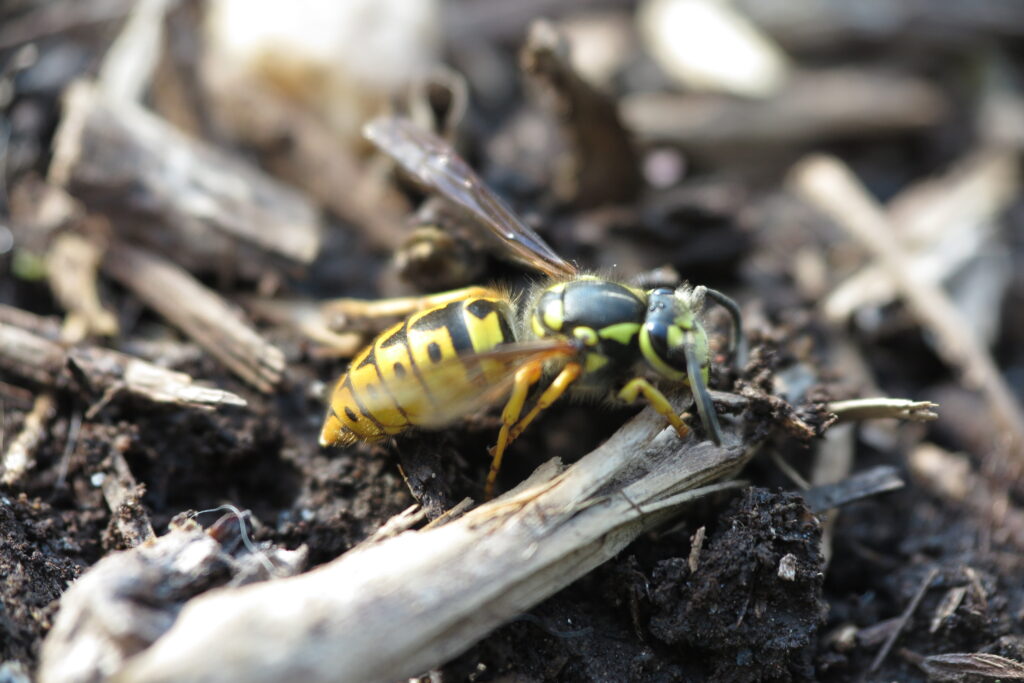
The most obvious identifying feature of a yellowjacket is its striking yellow-and-black coloration. Bright yellow markings contrast sharply against black sections of the body, creating one of nature’s most recognizable warning patterns. This bold appearance remains visible even while the insect is in flight.
Adult yellowjackets possess a compact and streamlined body. Unlike many bees, which appear rounded and fuzzy, yellowjackets look sleek and polished. Their smooth exterior gives them a cleaner, more glossy appearance when viewed in natural light.
Size can also assist with identification. Most yellowjackets measure between half an inch and three-quarters of an inch long, making them roughly comparable to the length of a standard paperclip. Although relatively small, their vivid coloration often causes them to appear larger than they actually are.
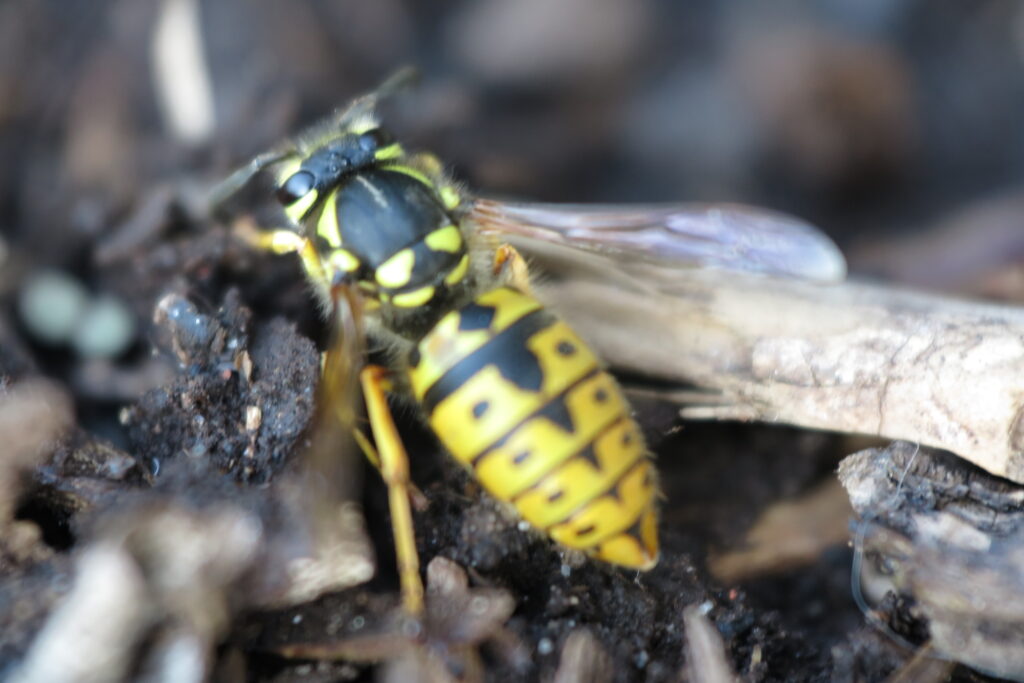
The abdomen typically displays alternating black and yellow bands. Depending on the species, these markings may form stripes, triangular patterns, or irregular shapes. These distinct patterns contribute greatly to the insect’s recognizable appearance.
Their wings are translucent and fold neatly along the body when at rest. This folding behavior creates a tidy profile rather than the spread-wing appearance seen in some other insects. The wings often appear slightly smoky or amber depending on lighting conditions.
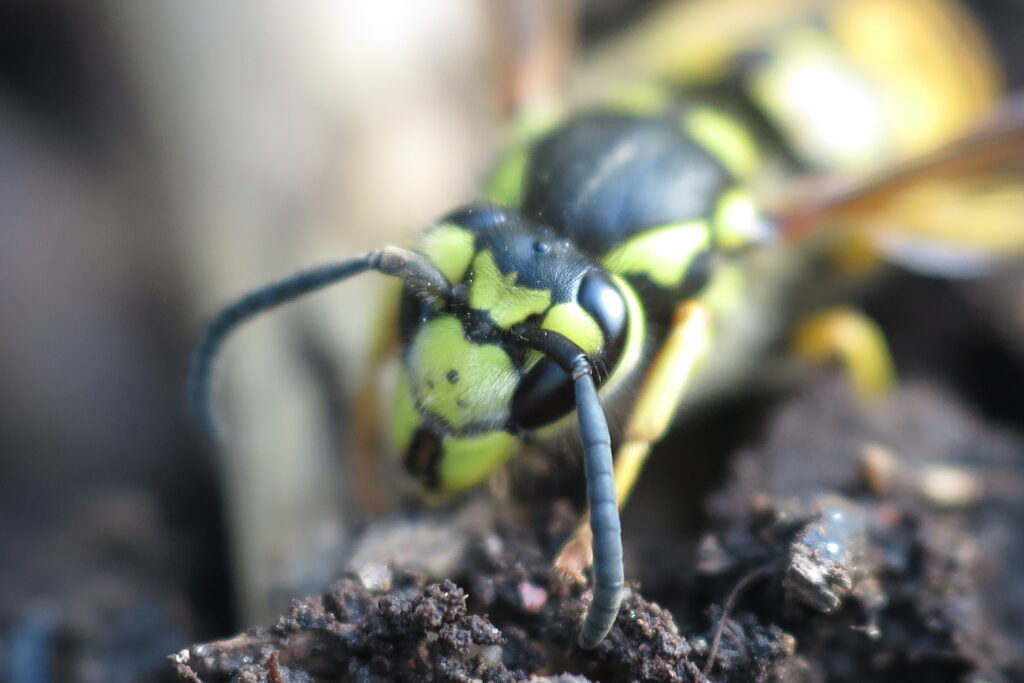
The head contains large dark compound eyes and prominent antennae. Facial markings vary among species but generally feature a combination of yellow and black coloration. Viewed from the front, the face often appears bold and highly patterned.
Together, body shape, coloration, wing posture, and facial markings create a combination that is difficult to mistake once learned. These visible characteristics form the foundation of reliable yellowjacket identification.
Yellowjacket Characteristics That Separate It from Look-Alikes
Honey bees are perhaps the most commonly confused insects. While both display yellow coloration, honey bees possess noticeably thicker bodies covered in dense hair. Yellowjackets, by contrast, appear smooth, shiny, and more streamlined.
Paper wasps represent another frequent source of confusion. These wasps generally have longer legs, narrower bodies, and a more elongated appearance. Yellowjackets look more compact and robust, giving them a stockier overall profile.
Hornets belong to the same broader wasp family but are usually much larger. A hornet often appears heavier-bodied and more imposing than a typical yellowjacket. Size alone can often separate the two when observed side by side.
Hoverflies create a particularly interesting challenge because they are flies that mimic yellowjackets. Although their coloration may appear convincing, hoverflies possess only one pair of wings and lack the narrow waist characteristic of true wasps. Close inspection usually reveals the difference.
One useful comparison is to imagine a yellowjacket as a sports car and a honey bee as an off-road vehicle. Both are effective in their own ways, but one is sleek, smooth, and streamlined while the other appears bulkier and more rugged. This visual contrast helps explain why experienced observers can identify them quickly.
The narrow waist connecting the thorax and abdomen is another important clue. This structure creates the classic wasp silhouette associated with yellowjackets. Many look-alike insects lack this sharply defined body shape.
These distinguishing characteristics allow observers to identify yellowjackets confidently even in areas where multiple black-and-yellow insects occur together. Focusing on body structure rather than color alone often leads to the most accurate identification.
Yellowjacket Identification Importance and Ecological Recognition
Correctly identifying yellowjackets is important for understanding local insect diversity. Because they are widespread and highly visible, they often serve as one of the first wasp species people learn to recognize. Their abundance makes them a useful introduction to insect identification.
Yellowjackets occupy a unique position within ecosystems and are often encountered alongside bees, butterflies, beetles, and other insects. Recognizing them accurately helps observers better understand the relationships among different insect groups. Identification provides valuable context when studying local wildlife.
Many wildlife enthusiasts initially identify insects based solely on color. However, yellowjackets demonstrate why shape, texture, and overall form are equally important. Learning to identify yellowjackets encourages a more complete approach to insect observation.
Naturalists frequently use yellowjackets as examples of warning coloration in nature. Their bold patterning serves as one of the most recognizable visual signals among insects. This makes them useful educational species for teaching identification skills.
A clear understanding of yellowjacket identification can also help distinguish them from beneficial pollinators such as bees. While both groups play important ecological roles, they possess different appearances and ecological functions. Accurate recognition prevents unnecessary confusion.
For photographers and wildlife observers, yellowjackets provide excellent subjects for practicing insect identification techniques. Their visibility, widespread distribution, and distinctive features make them easier to study than many smaller or less conspicuous species.
The yellowjacket remains one of the most recognizable insects in the world, but true identification involves more than noticing yellow and black colors. By focusing on body shape, texture, wing posture, and overall structure, observers can confidently separate yellowjackets from their many look-alikes and gain a deeper appreciation for this remarkable group of social wasps.
Popular Searches About Yellowjackets
Explore Yellowjacket Guide
Explore More Wildlife

Support Encounters World
Help support wildlife photography and get behind the scenes discoveries on Patreon.