
Yellowjacket Nest Guide: Nest Identification, Structure, and Colony Development
Quick Facts
Nest Type: Paper Nest
Nest Material: Chewed Wood Fibers Mixed with Saliva
Typical Nest Location: Underground Cavities, Wall Voids, Logs, and Sheltered Spaces
Colony Size: Hundreds to Several Thousand Individuals
Nest Lifespan: One Season
Peak Nest Activity: Summer and Early Fall
Nest Founder: Single Queen
Notable Feature: Multi-Layered Paper Structure with Internal Comb Chambers
Yellowjacket Nest Overview and Colony Foundations
Yellowjackets are social wasps that live within highly organized nests constructed to support an entire colony. Unlike solitary insects that live independently, yellowjackets depend on a shared structure that serves as shelter, protection, and a center for colony growth. The nest becomes the focal point of nearly every stage of the colony’s development.
Members of the genus Vespula occur throughout North America, Europe, and Asia, and their nests can be found across a wide variety of landscapes. Although people often notice the insects themselves before discovering a nest, the colony structure is one of the most impressive features of yellowjacket biology. Hidden from view, these nests may house hundreds or even thousands of individuals.
Each colony begins with a single queen emerging after winter. She establishes the first portion of the nest and raises the initial generation of workers. What starts as a small structure eventually develops into a complex colony capable of supporting large populations.
To an observer, a yellowjacket nest can seem surprisingly sophisticated. The structure contains multiple chambers, protective outer layers, and organized internal sections. Despite being built by insects, the finished nest functions much like a carefully planned miniature city hidden within the environment.
Yellowjacket Nest Structure and Physical Appearance
A yellowjacket nest is constructed from paper-like material produced by the wasps themselves. Workers collect weathered wood fibers from fences, logs, tree bark, and other sources before chewing the material into a pulp. This pulp is then shaped into durable layers that harden as they dry.
The finished nest often appears gray, tan, or light brown in color. Swirling patterns created by different wood fibers can produce a layered appearance similar to wood grain or papier-mâché. These natural variations make each nest visually unique.
Inside the nest are multiple comb layers arranged in horizontal tiers. These combs contain hundreds of individual cells where developing yellowjackets grow through various life stages. The arrangement resembles a multi-story apartment building with rows of organized chambers.
Unlike the exposed combs of paper wasps, yellowjacket nests are usually enclosed within a protective outer envelope. This covering surrounds the internal structure and helps shield the colony from environmental conditions. The outer layer also contributes to the nest’s distinctive rounded appearance.
Nest size varies dramatically throughout the season. Early nests may be no larger than a golf ball, while mature colonies can reach the size of a basketball or even larger. Some exceptionally productive colonies grow to impressive dimensions by late summer.
A useful comparison is to imagine a layered paper lantern with multiple floors hidden inside. From the outside, the structure appears relatively simple, but the interior contains a surprisingly complex arrangement of chambers and passageways.
The overall design reflects efficiency and organization. Every section of the nest serves a purpose, allowing the colony to function as a coordinated social unit throughout the active season.
Yellowjacket Nest Locations and Common Nesting Sites
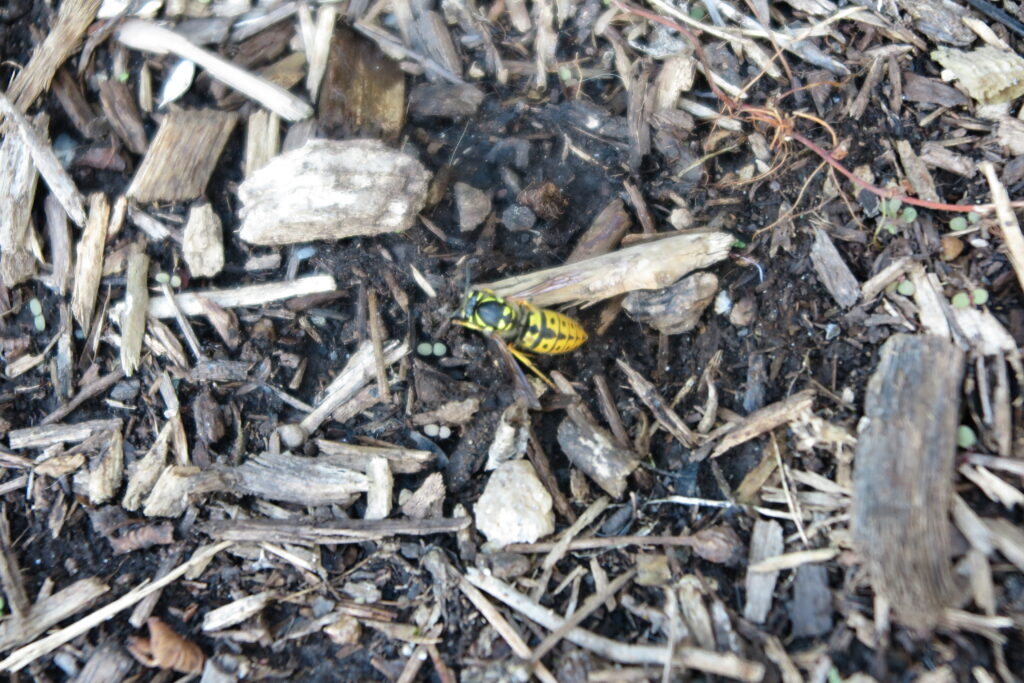
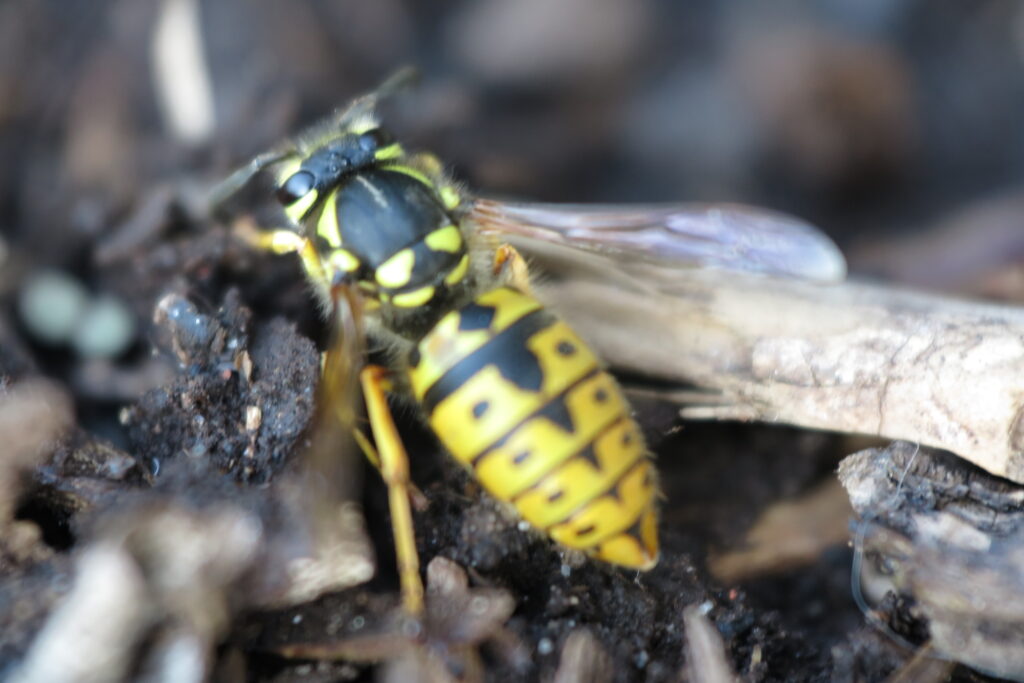
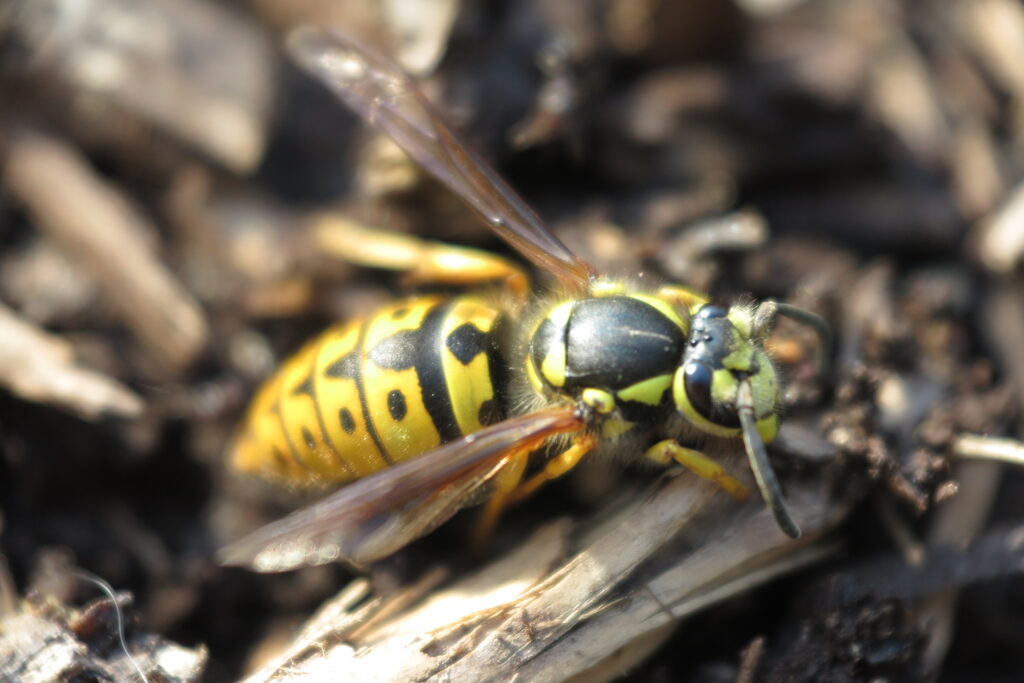
One of the most distinctive characteristics of yellowjackets is their tendency to nest in protected locations. Many species construct nests underground, often utilizing abandoned rodent burrows, natural cavities, or existing openings within the soil. These concealed sites provide shelter and protection throughout colony development.
Underground nests are among the most frequently encountered by people. A small entrance hole may be the only visible sign of a large colony hidden below the surface. Because the majority of the structure remains concealed, these nests often go unnoticed until yellowjacket activity becomes obvious.
Not all yellowjackets nest below ground. Some colonies establish themselves inside hollow logs, tree cavities, wall voids, attics, sheds, or other sheltered spaces. These protected locations offer many of the same advantages as underground nesting sites while remaining inaccessible to many predators.
Woodland edges, parks, gardens, fields, and suburban landscapes all contain suitable nesting opportunities. Yellowjackets frequently take advantage of existing cavities rather than excavating entirely new structures. This flexibility allows them to occupy a wide range of environments.
Nest placement often favors locations with some degree of protection from weather. Sheltered spaces help maintain stable conditions and reduce exposure to environmental stress. As a result, colonies commonly develop in areas where wind, rain, and temperature fluctuations are moderated.
A useful example is an abandoned mammal burrow in a grassy field. What once served as shelter for a small mammal may later become the foundation of a thriving yellowjacket colony. Such resourcefulness contributes greatly to the success of these social wasps.
The variety of nesting locations used by yellowjackets highlights their adaptability. Whether underground or inside a protected structure, colonies are remarkably effective at utilizing available spaces.
Yellowjacket Colony Growth and Seasonal Nest Development
The life of a yellowjacket nest follows a predictable annual cycle. Each colony begins with a solitary queen during spring, making the early nest relatively small and simple. At this stage, every aspect of construction depends on a single individual.
As the first workers emerge, colony growth accelerates dramatically. These workers assume responsibility for nest expansion, allowing the queen to focus on reproduction. The increase in labor leads to rapid enlargement of both the nest and population.
Throughout summer, the colony reaches its most productive period. Additional comb layers are added, new chambers are constructed, and worker numbers increase steadily. During this phase, the nest transforms from a small paper structure into a bustling center of activity.
By late summer and early fall, many colonies reach peak size. Hundreds or even thousands of yellowjackets may occupy the nest simultaneously. The structure becomes one of the most densely populated insect colonies in the surrounding environment.
Seasonal changes eventually bring colony decline. As temperatures drop and environmental conditions become less favorable, worker populations decrease and nest activity slows. The once-thriving colony gradually approaches the end of its annual cycle.
Unlike honey bee hives, yellowjacket nests are generally not reused year after year. Most colonies persist for a single season before being abandoned. Future queens leave to establish new colonies elsewhere, beginning the cycle again.
The annual development of a yellowjacket nest demonstrates one of nature’s most impressive examples of social organization. From a single queen to a colony containing thousands of individuals, the nest serves as the foundation for every stage of yellowjacket life and remains one of the defining features of this remarkable group of wasps.
Popular Searches About Yellowjackets
Explore Yellowjacket Guide
Explore More Wildlife

Support Encounters World
Help support wildlife photography and get behind the scenes discoveries on Patreon.