Bugleweed Facts Guide: Fascinating Facts, Unique Traits, and Surprising Discoveries
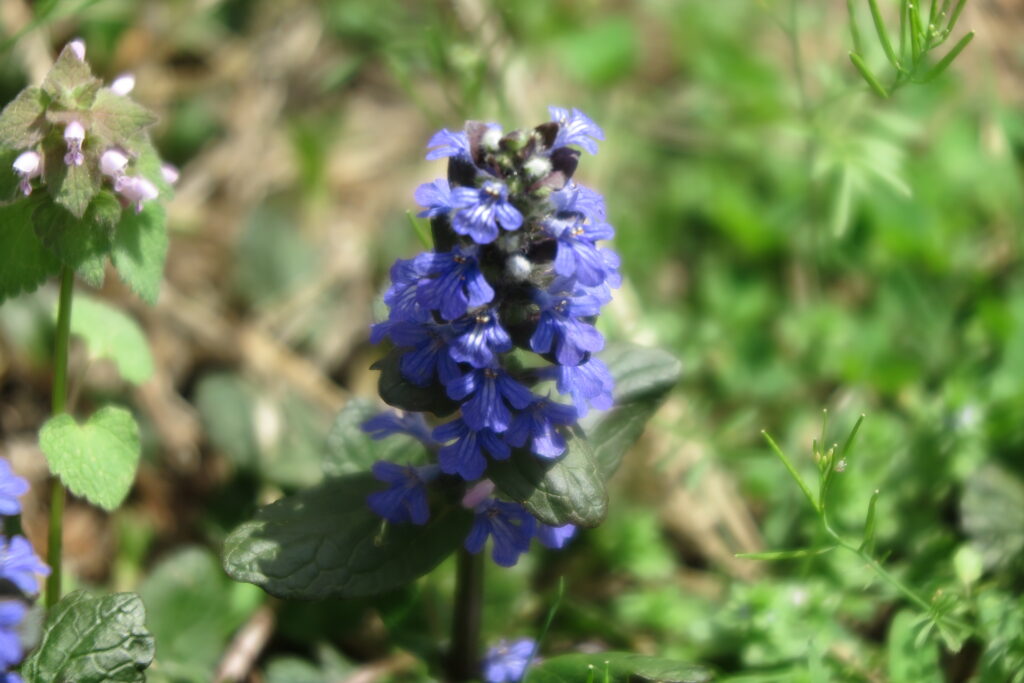
Quick Facts
Scientific Name: Ajuga reptans
Common Name: Bugleweed
Plant Family: Mint Family (Lamiaceae)
Plant Type: Perennial Groundcover
Native Range: Europe, Western Asia, and North Africa
Blooming Season: Spring to Early Summer
Interesting Feature: Forms Dense Carpets of Colorful Foliage and Flowers
Interesting Bugleweed Facts and Background Information
Bugleweed is one of the most recognizable groundcover plants used in gardens throughout temperate regions of the world. Although many people know it for its colorful flower spikes, the plant possesses a variety of interesting characteristics that often go unnoticed. From its connection to the mint family to its remarkable adaptability, Bugleweed offers far more than simple ornamental value.
The plant’s scientific name, Ajuga reptans, reflects one of its most important traits. The word “reptans” means creeping or crawling, a reference to the way the plant expands across the ground. This name accurately describes the growth habit that has helped make Bugleweed one of the most successful groundcovers in cultivation.
Despite being widely associated with modern landscaping, Bugleweed has a long natural history. Native populations existed across Europe and parts of Asia long before the species became popular in ornamental gardens. Over time, gardeners recognized its attractive appearance and began introducing it to new regions.
Today, Bugleweed can be found in parks, residential landscapes, botanical gardens, and naturalized environments across multiple continents. Its ability to adapt to different settings has contributed greatly to its global success. Few ornamental groundcovers have achieved such widespread popularity.
Many people are surprised to learn that Bugleweed belongs to the mint family. Although it lacks the strong fragrance commonly associated with culinary mints, it shares important structural characteristics with its relatives. Square stems, opposite leaves, and specialized flowers all reveal this family connection.
The plant has also become a favorite among landscape designers because it provides year-round visual interest. Even when flowers are absent, colorful foliage continues contributing texture and color to the garden. This extended appeal helps distinguish Bugleweed from many plants that are attractive only during bloom.
Another interesting fact involves the sheer number of cultivated varieties available. Gardeners can choose from plants displaying green, bronze, burgundy, purple, or nearly black foliage. These variations allow Bugleweed to fit a wide range of design styles and planting schemes.
Because of its reliability and adaptability, Bugleweed remains one of the most commonly recommended perennial groundcovers. Its popularity has endured for generations, making it a familiar sight in landscapes around the world.
Unique Bugleweed Characteristics That Stand Out
One of the most remarkable characteristics of Bugleweed is its ability to combine low-growing foliage with prominent flower spikes. Many groundcovers remain visually flat throughout the growing season, but Bugleweed creates vertical interest when blooms emerge. This combination helps the plant stand out among similar species.
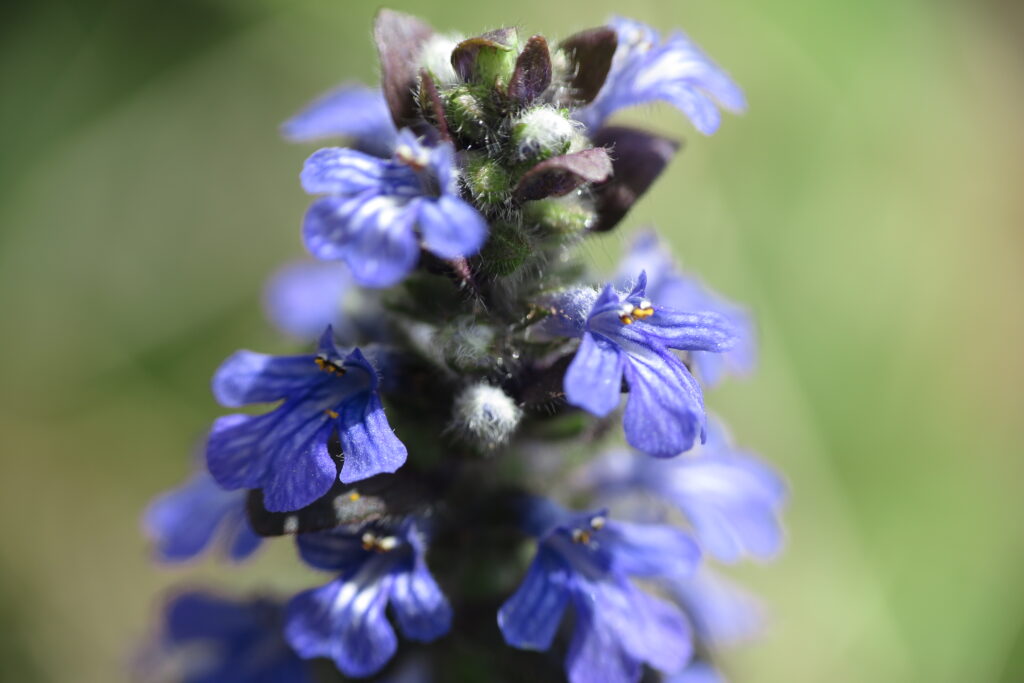
The flowers themselves possess a distinctive structure. Individual blooms are small, yet they occur in dense clusters stacked along upright stems. When viewed together, these clusters create colorful spikes that are visible from considerable distances.
Leaf coloration is another feature that contributes to the plant’s uniqueness. While many groundcovers remain uniformly green, Bugleweed varieties display an impressive range of colors. Deep burgundy, bronze, purple, and variegated forms provide visual diversity rarely found in a single species.
A useful comparison is the difference between standard carpeting and decorative patterned flooring. Ordinary green groundcovers provide basic coverage, while Bugleweed adds decorative elements that enhance the overall landscape. This additional visual interest helps explain its popularity among gardeners.
The species is also known for maintaining attractive foliage throughout much of the year. Even after flowering ends, dense leaf coverage continues providing texture and color. This extended ornamental value makes the plant useful beyond its bloom period.
Bugleweed’s adaptability contributes further to its appeal. The plant succeeds in a wider range of conditions than many ornamental perennials. This flexibility allows it to remain attractive and functional across diverse landscapes.
Another notable characteristic is the contrast created between foliage and flowers. Purple-blue blooms rising above darker leaves create a striking visual effect that attracts both pollinators and human observers. This natural contrast contributes significantly to the plant’s decorative appeal.
Together, these features create a plant that is both practical and visually distinctive. Few groundcovers combine so many attractive characteristics within such a compact form.
Surprising Facts About Growth and Adaptability
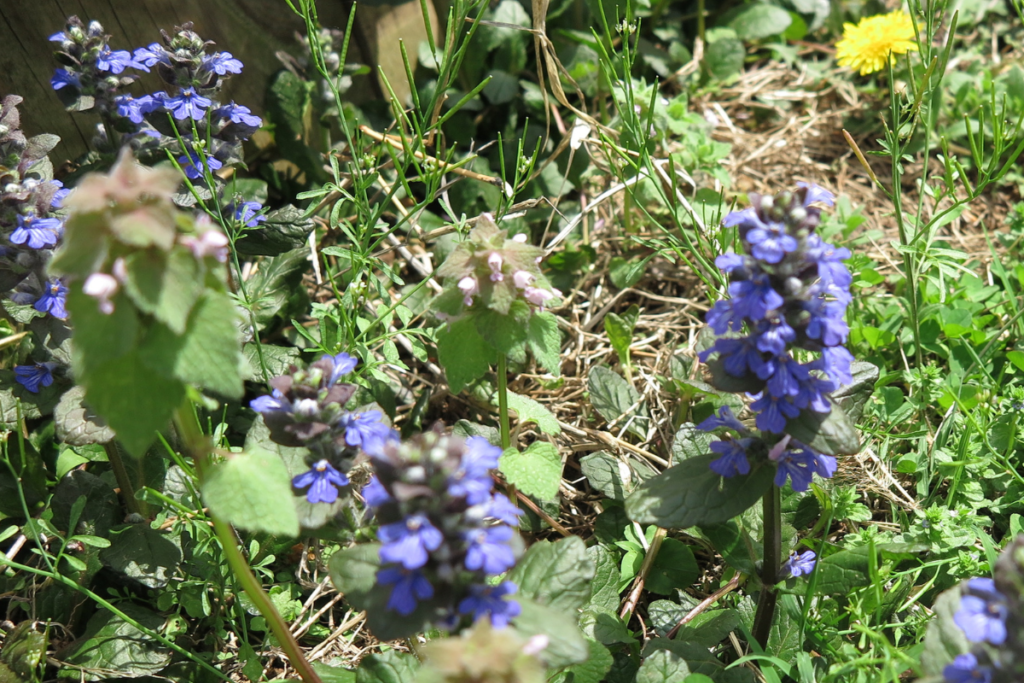
Bugleweed has earned a reputation for being one of the more adaptable perennial groundcovers available to gardeners. Once established, colonies can persist for many years while continuing to expand gradually across suitable areas. This durability helps explain why the species remains so widely planted.
One surprising fact is how effectively the plant covers bare ground. Through the production of stolons, Bugleweed can create dense mats that reduce open soil exposure. This ability makes it valuable for erosion control and weed suppression in some landscape situations.
A useful comparison is a living blanket slowly extending across the ground. Instead of remaining confined to a single location, the plant steadily occupies available space while maintaining a relatively low profile. This growth strategy contributes significantly to its success.
Bugleweed performs well in locations where many ornamental plants struggle. Partial shade, woodland edges, and areas beneath trees often provide conditions that support healthy growth. This capability allows the species to fill important roles in challenging landscape settings.
The plant also tolerates seasonal temperature fluctuations common throughout temperate climates. Winter dormancy followed by renewed spring growth enables Bugleweed to survive in regions that experience significant seasonal change. This resilience has supported its widespread cultivation.
Another surprising fact is the speed at which established colonies can develop. While individual plants may appear modest at first, connected growth gradually forms extensive patches. Over time, these colonies can become impressive landscape features.
Gardeners often appreciate the predictability of Bugleweed growth. Unlike some perennials that vary dramatically from year to year, healthy colonies generally follow a dependable pattern of development. This consistency makes long-term landscape planning easier.
Adaptability, persistence, and steady expansion all contribute to the plant’s reputation as a reliable groundcover. These qualities have played a major role in its continued popularity around the world.
Lesser-Known Bugleweed Trivia and Ecological Value
Many people associate Bugleweed primarily with ornamental gardening, but the plant also provides ecological benefits. During the blooming season, flowers attract a variety of pollinating insects. Bees, hoverflies, butterflies, and other visitors regularly feed on nectar and pollen produced by the blooms.
The dense foliage layer offers additional environmental value. Groundcover plantings help protect soil from erosion while reducing opportunities for weed establishment. These practical benefits make Bugleweed useful in both decorative and functional landscape designs.
A lesser-known fact is that Bugleweed has appeared in traditional herbal practices for centuries. Historical references describe various uses involving species within the Ajuga group. While modern gardeners usually grow the plant for ornament rather than herbal purposes, this history remains an interesting part of its story.
Another surprising detail involves the diversity of cultivated forms. Some varieties are prized almost entirely for foliage color rather than flowers. In these cases, gardeners value the leaves as much as—or even more than—the blooms themselves.
The species is also popular among photographers and nature enthusiasts. Flower spikes covered with pollinators create attractive subjects for close-up observation and photography. During peak bloom, Bugleweed patches often become focal points within gardens and parks.
Because it spreads efficiently while remaining visually appealing, the plant is frequently used in public landscaping projects. Municipal gardens, educational centers, and botanical collections often incorporate Bugleweed into larger planting displays. Its reliability makes it well suited for these applications.
Few groundcovers have achieved the combination of ornamental appeal, ecological value, and adaptability found in Bugleweed. Its colorful flowers, attractive foliage, pollinator support, and long history of cultivation have earned it a place among the most widely appreciated perennial landscape plants.
Whether encountered in a woodland garden, beneath a shade tree, or along a landscaped pathway, Bugleweed offers far more than its modest size might suggest. The plant’s fascinating characteristics and surprising versatility continue to make it a favorite among gardeners, naturalists, and landscape professionals alike.
Popular Searches About Bugleweed
Explore Bugleweed Guide
Explore More Plants

Support Encounters World
Help support wildlife photography and get behind the scenes discoveries on Patreon.