Red Lionfish Adaptations Guide: Survival Features and Unique Adaptations
Quick Facts
Primary Adaptation: Venomous Defensive Spines
Average Size: 12–15 Inches (30–38 cm)
Lifespan: 10–15 Years
Global Range: Indo-Pacific; Invasive in the Atlantic, Caribbean, and Gulf of Mexico
Conservation Status: Least Concern
Notable Feature: Elaborate Fin Structure Combined with Venomous Protection
Introduction: Understanding Red Lionfish Adaptations
The red lionfish is one of the most distinctive marine fish found in tropical and subtropical waters. Native to the Indo-Pacific region, this species has become widely recognized across the world due to its striking appearance and successful expansion into new environments. Its combination of physical defenses and specialized features has made it one of the most fascinating fish studied by marine biologists.
Throughout its native range, red lionfish inhabit warm ocean regions stretching from eastern Africa to parts of the Pacific Ocean. Outside these waters, populations have become established throughout the Caribbean Sea, Gulf of Mexico, and western Atlantic Ocean. Their success across such a broad geographic area highlights the effectiveness of their natural adaptations.
Adaptations are traits that help organisms survive and reproduce within their environments. In lionfish, these traits include specialized structures, body patterns, and biological features that improve protection and overall survival. Many of these characteristics are immediately visible, while others operate beneath the surface through anatomy and physiology.
The red lionfish serves as an excellent example of how multiple adaptations can work together. Rather than relying on a single advantage, the species possesses a collection of complementary traits that enhance its ability to persist in a variety of marine ecosystems. These adaptations help explain why lionfish have become such a recognizable and successful fish worldwide.
Red Lionfish Physical Adaptations for Survival
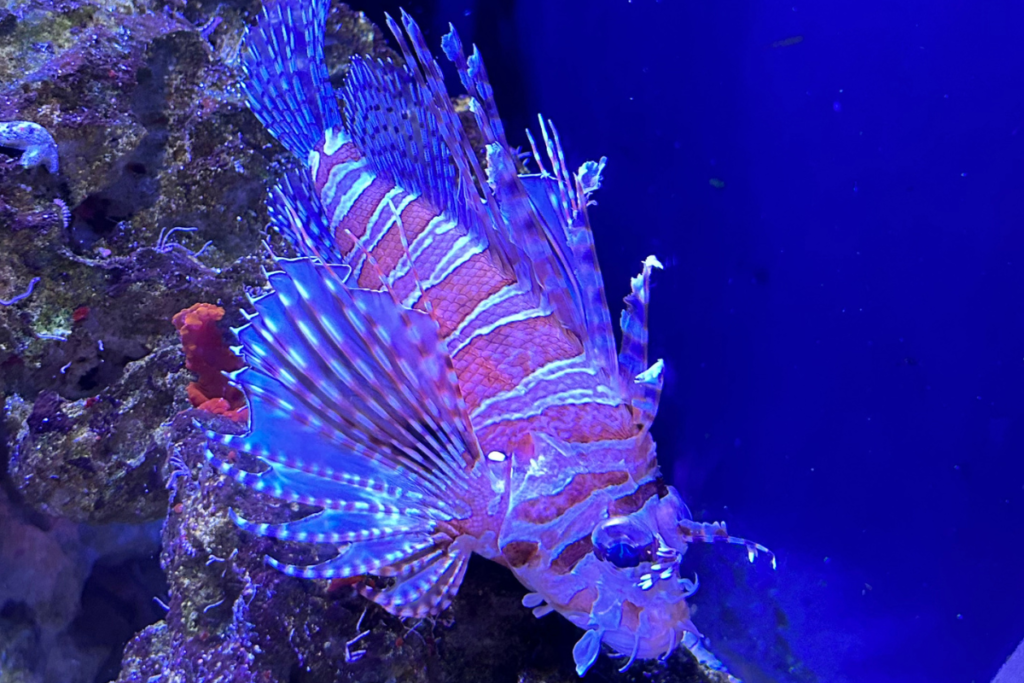
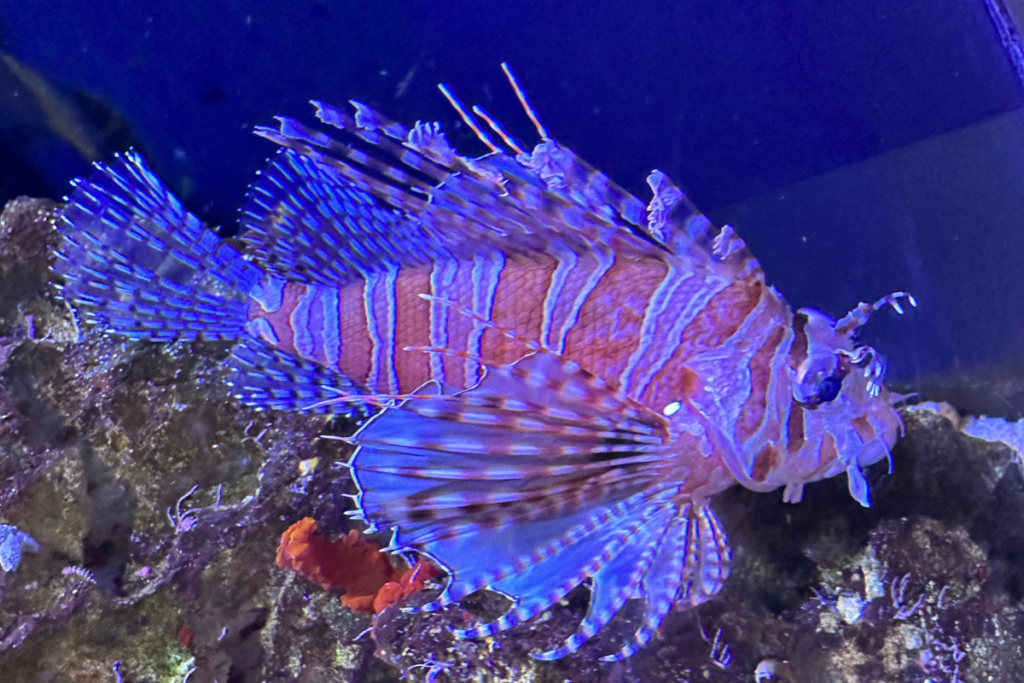
One of the most obvious adaptations of the red lionfish is its elaborate fin structure. Long dorsal spines, broad pectoral fins, and flowing fin rays create a dramatic silhouette unlike that of most reef fish. These structures make the fish appear significantly larger than its actual body size, potentially discouraging threats from approaching too closely.
Coloration represents another important adaptation. The alternating bands of reddish-brown, white, cream, and dark markings break up the fish’s outline when viewed underwater. Similar patterns are seen in numerous animals throughout nature, where contrasting colors help disguise body shape or create visual confusion. In lionfish, these markings contribute to their unmistakable appearance.
Body proportions also provide advantages. Unlike streamlined open-water fish built for speed, lionfish possess a deep, compressed body shape that supports maneuverability and stability. This design allows them to move comfortably through complex underwater environments while maintaining precise control over their position in the water column.
Compared to many common reef fish, lionfish present a far more elaborate visual profile. A clownfish or damselfish appears relatively compact and simple by comparison. The lionfish’s combination of size, coloration, and fin development creates one of the most recognizable body plans in tropical marine ecosystems.
Specialized Features That Make Red Lionfish Unique
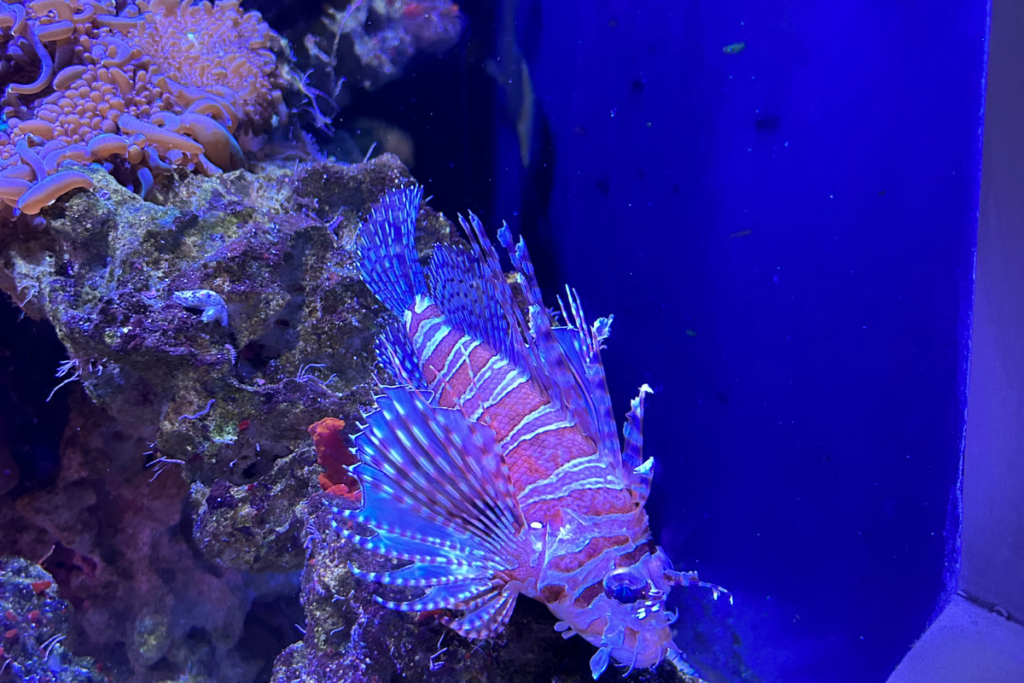
Venomous spines are among the most significant adaptations found in the red lionfish. These modified fin structures provide an effective defensive system that distinguishes lionfish from many other reef fish species. Few marine fish combine such prominent ornamentation with a similarly sophisticated form of protection.
The arrangement of these spines contributes to their effectiveness. Venom-bearing structures occur along the dorsal, pelvic, and anal fins, creating protection around multiple parts of the body. This distribution means that potential threats are likely to encounter defensive structures regardless of the direction from which contact occurs.
Another notable adaptation involves the lionfish’s highly developed fin rays. These elongated extensions create an appearance often compared to decorative fans, feathers, or elaborate costumes. While many reef fish possess colorful fins, relatively few exhibit the same level of structural complexity seen in lionfish.
The species also demonstrates remarkable growth flexibility across different regions. Individuals maintain their distinctive appearance whether found within their native Indo-Pacific range or in introduced Atlantic populations. This consistency highlights the effectiveness of their physical design and helps explain why lionfish remain instantly recognizable regardless of location.
How Red Lionfish Adaptations Influence Marine Ecosystems
Adaptations do not only affect the survival of individual animals; they can also shape ecological relationships. The red lionfish’s unique characteristics influence how it interacts with surrounding marine communities. Its combination of defensive structures and distinctive appearance contributes to its ecological role within tropical waters.
Protective adaptations help lionfish remain a stable component of marine ecosystems over long periods. Species equipped with effective defenses often experience different pressures than organisms lacking similar protections. This can influence population structure and affect how animals fit into broader ecological networks.
The visual prominence of lionfish also makes them an important part of underwater biodiversity. Coral reefs and other marine environments support countless species, yet relatively few possess such a distinctive appearance. Their striking form contributes to the overall diversity of shapes, colors, and adaptations found within tropical ocean ecosystems.
From an evolutionary perspective, lionfish demonstrate how multiple adaptations can work together to create a highly successful species. Venomous spines, specialized fins, contrasting coloration, and distinctive body structure each provide benefits individually. Combined, these traits form an integrated survival strategy that has helped the red lionfish thrive across vast portions of the world’s tropical seas.
Popular Searches About Red Lionfish
Explore Red Lionfish Guide
Explore More Exhibits

Support Encounters World
Help support wildlife photography and get behind the scenes discoveries on Patreon.