Are Red Lionfish Venomous? Complete Red Lionfish Venom Guide
Quick Facts
Venomous: Yes
Danger Level to Humans: Moderate
Average Size: 12–15 Inches (30–38 cm)
Lifespan: 10–15 Years
Global Range: Indo-Pacific; Invasive in the Atlantic, Caribbean, and Gulf of Mexico
Notable Feature: Venomous Dorsal, Pelvic, and Anal Spines
Introduction: Understanding Red Lionfish Venom
The red lionfish is one of the most recognizable marine fish found in tropical and subtropical waters around the world. With its bold stripes, flowing fins, and dramatic appearance, it often attracts attention from divers, snorkelers, and aquarium enthusiasts. Despite its beautiful coloration, the lionfish is also well known for possessing venomous spines.
Native to the Indo-Pacific region, red lionfish naturally occur throughout a vast area stretching from eastern Africa to the western Pacific Ocean. In recent decades, they have become established throughout the Caribbean Sea, Gulf of Mexico, and western Atlantic Ocean. Their expansion into new regions has increased public awareness of their venomous capabilities.
Many people mistakenly use the terms venomous and poisonous interchangeably. In reality, these terms describe different biological traits. Lionfish are venomous because they inject venom through specialized spines, rather than being poisonous when touched or consumed. Understanding this distinction helps eliminate common misconceptions surrounding the species.
Questions about lionfish venom are among the most searched topics related to this fish. While encounters with humans are relatively uncommon, accidental contact can occur during diving, fishing, aquarium maintenance, or handling. Learning how the venom system works provides valuable information for anyone interested in marine wildlife or ocean safety.
Red Lionfish Venom Overview and Identification Features
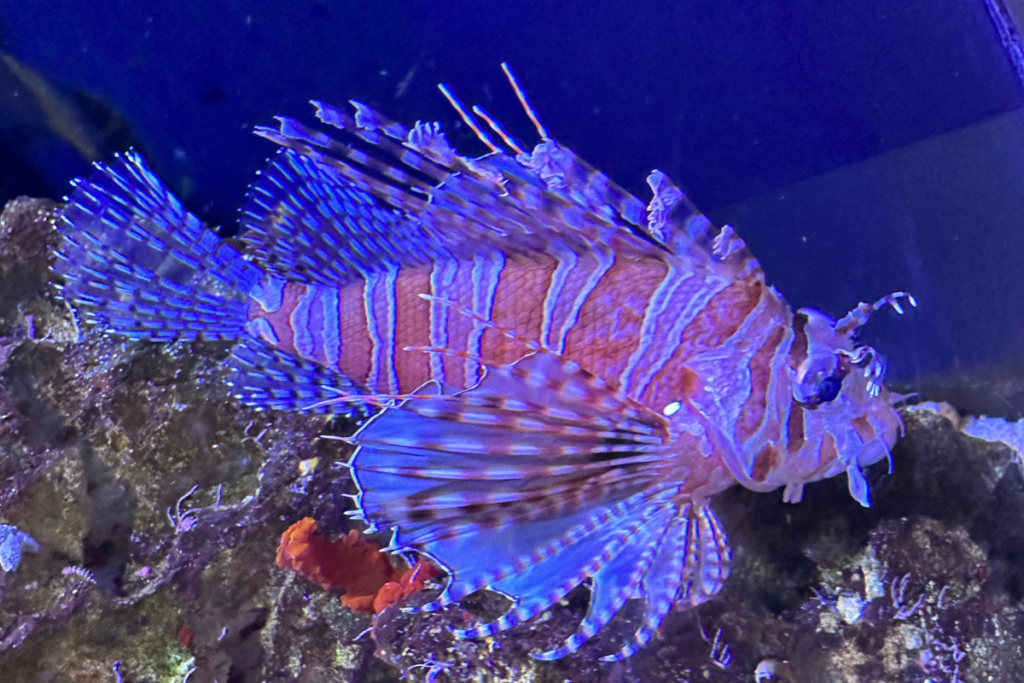
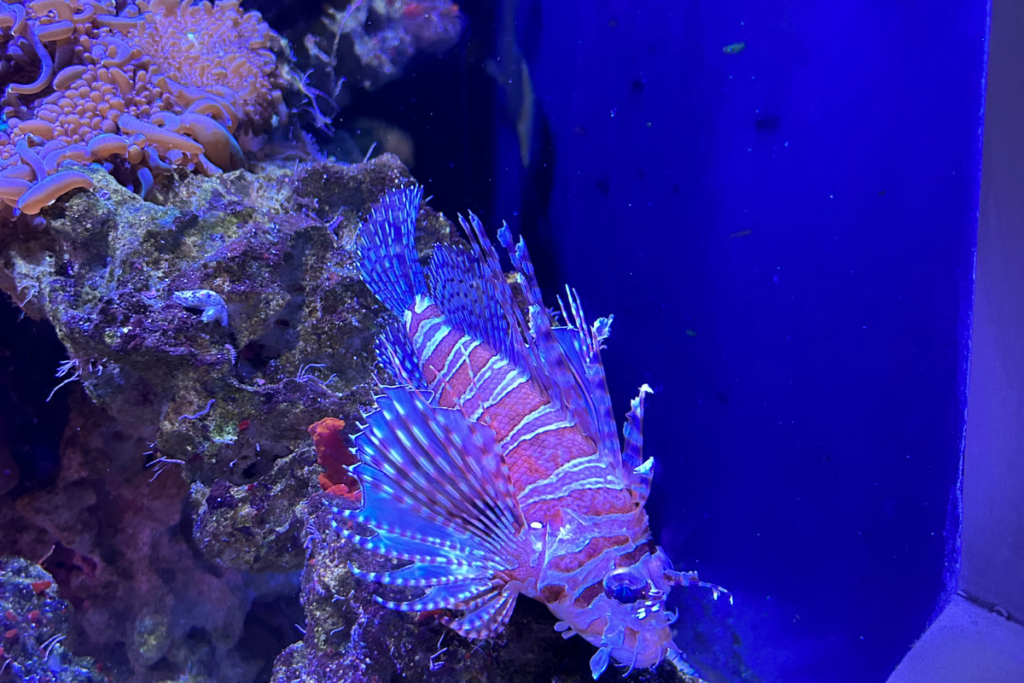
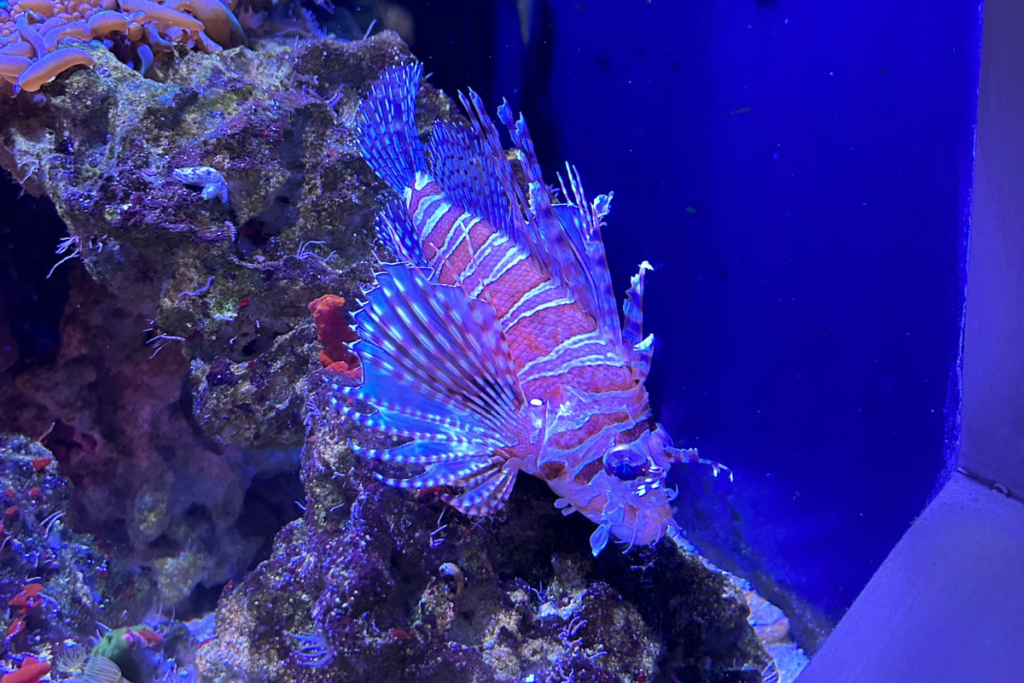
The venomous nature of the red lionfish is directly connected to its unique physical appearance. Along the back of the fish runs a row of long dorsal spines that serve as part of its defensive system. Additional venom-bearing spines are located on the pelvic and anal fins, creating multiple points of protection around the body.
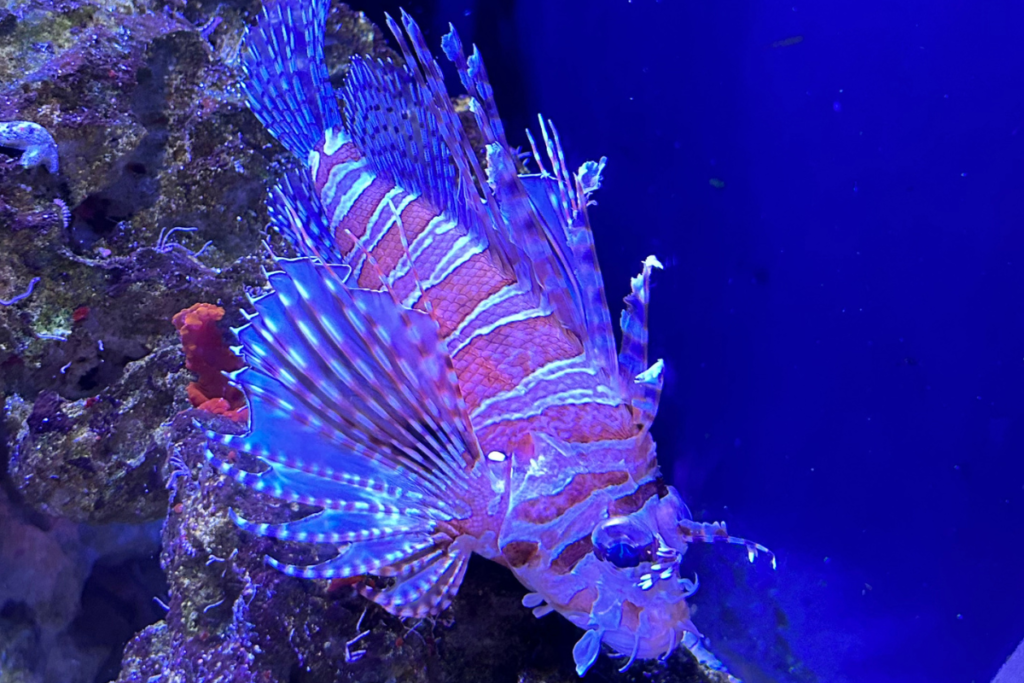
These spines are easy to recognize once identified correctly. Unlike the soft, flowing fin rays that create the lionfish’s elegant appearance, venomous spines are rigid and sharply pointed. They project outward from the body and remain visible even when the fish is resting. This combination of beauty and defense makes the species particularly distinctive.
Coloration often acts as a visual warning. Red lionfish display contrasting bands of reddish-brown, white, cream, and dark markings that stand out against surrounding marine environments. Similar warning patterns occur throughout nature, where bright or noticeable coloration frequently signals a defensive capability. The lionfish’s appearance serves as an example of this principle.
Compared to many reef fish, lionfish possess one of the most recognizable defensive structures in the ocean. While fish such as tangs may have sharp tail spines and catfish may possess venomous fin rays, few species combine elaborate ornamentation and venomous defenses as dramatically as the lionfish. This unusual combination has contributed significantly to its reputation worldwide.
How Red Lionfish Venom Works and Its Effects
Venom is stored within specialized tissues associated with the lionfish’s defensive spines. When pressure is applied to a spine, the protective covering can be displaced, allowing venom to enter a wound. Unlike snakes that actively strike to inject venom, lionfish venom delivery typically occurs when another animal accidentally comes into contact with the spines.
The severity of a sting can vary depending on several factors. The number of spines involved, the depth of penetration, and the amount of venom delivered all influence the resulting effects. Most reported stings cause intense localized pain, often described as immediate and severe. Swelling and redness commonly accompany the injury.
Although lionfish stings are extremely painful, they are rarely fatal to healthy adults. Serious reactions can occur, particularly in individuals with allergies, underlying health conditions, or multiple puncture wounds. Medical attention is often recommended following a significant sting to ensure proper treatment and monitoring.
One reason lionfish venom receives so much attention is the contrast between the fish’s appearance and its defensive capability. To an inexperienced observer, the fish may appear harmless due to its graceful fins and vibrant colors. In reality, those same structures contain one of the most effective defensive systems found among reef fish species.
Why Venom Matters in the Red Lionfish Ecosystem
The venomous spines of the red lionfish play an important role in the species’ ecological success. Defensive adaptations help reduce vulnerability to larger predators and increase the likelihood of long-term survival. In many marine ecosystems, physical defenses can be just as important as camouflage or speed.
Venom also influences how other animals interact with lionfish. Potential threats often learn to recognize the distinctive shape and appearance associated with the spines. This recognition can reduce unnecessary encounters and contribute to the lionfish’s ability to persist within diverse marine communities.
In regions where lionfish are invasive, their venomous defenses present an additional challenge for management efforts. Removal programs frequently require specialized handling techniques and protective equipment. The presence of venomous spines means that even experienced divers and researchers must exercise caution when working with captured individuals.
From an ecological perspective, venom represents one of the defining characteristics of the species. It contributes to the lionfish’s identity, survival, and role within marine environments. Whether observed on a coral reef in the Indo-Pacific or along an Atlantic coastline, the red lionfish remains one of the ocean’s most recognizable venomous fish, combining striking beauty with an effective natural defense system.
Popular Searches About Red Lionfish
Explore Red Lionfish Guide
Explore More Exhibits

Support Encounters World
Help support wildlife photography and get behind the scenes discoveries on Patreon.