Red Lionfish Diet Guide: What Red Lionfish Eat in the Wild
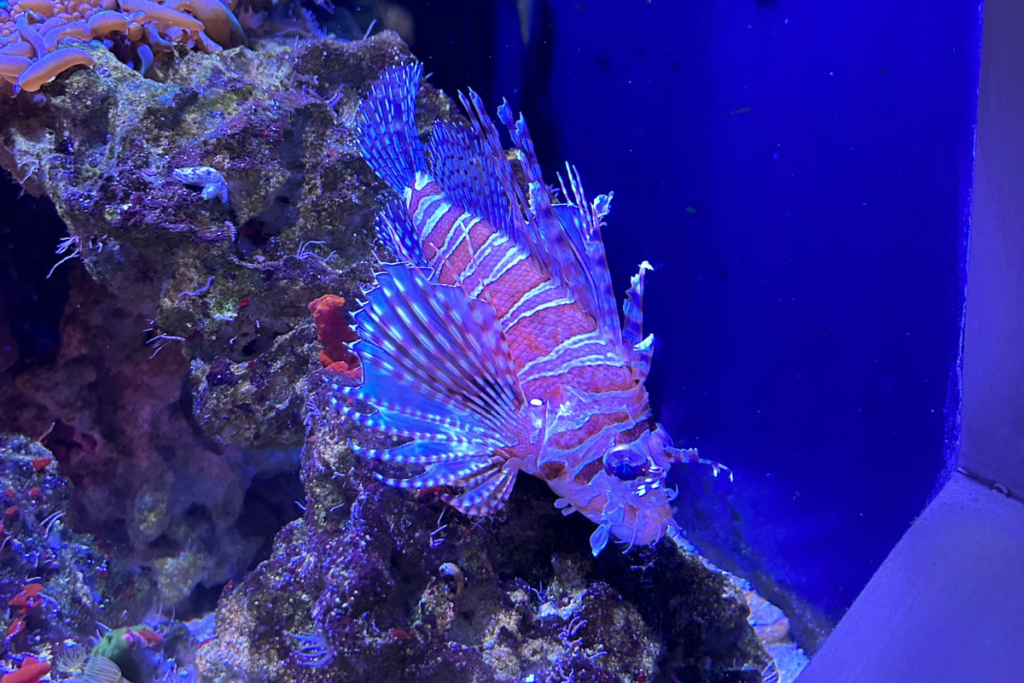
Quick Facts
Diet Type: Carnivore
Main Food Sources: Small Fish, Crustaceans, and Juvenile Marine Animals
Feeding Time: Primarily Dawn and Dusk, but Active Throughout the Day
Foraging Method: Ambush Predator and Active Hunter
Seasonal Diet Changes: Limited Seasonal Variation in Tropical Waters
Predatory Adaptations: Venomous Spines, Large Expandable Mouth, Rapid Suction Feeding
Introduction: Understanding the Red Lionfish Diet
The red lionfish is a predatory marine fish recognized throughout tropical and subtropical oceans for its striking appearance and efficient hunting abilities. Native to the Indo-Pacific region and now widely established throughout the Caribbean, Gulf of Mexico, and western Atlantic, this species has become one of the most discussed predators in modern marine ecology. Its success is closely tied to its feeding habits and ability to exploit a wide variety of prey.
Wherever lionfish populations become established, food resources play a major role in their expansion. Coastal reefs, lagoons, rocky marine environments, and artificial structures often support dense populations because they contain abundant prey. These environments provide opportunities for lionfish to feed frequently and grow rapidly.
Unlike many marine species that rely on a narrow range of food sources, lionfish have developed a feeding strategy that allows them to take advantage of numerous prey opportunities. This flexibility contributes significantly to their ability to survive across large geographic regions and adapt to changing conditions.
The diet of the red lionfish has attracted considerable scientific attention because of its influence on local fish communities. Researchers frequently study what lionfish consume and how their feeding habits affect surrounding ecosystems. Understanding their diet provides valuable insight into why this species has become such a successful predator in both native and invasive environments.
Red Lionfish Diet Overview and Feeding Strategy
Red lionfish are obligate carnivores that obtain all of their nutrition from other animals. Unlike herbivorous reef fish that graze on algae or omnivores that consume a mixture of plant and animal material, lionfish rely entirely on animal prey. Their feeding habits place them among the most efficient small-to-medium-sized predators found in tropical marine ecosystems.
One of the defining characteristics of the lionfish diet is its flexibility. Many predatory fish focus heavily on a few preferred prey species, but lionfish demonstrate a broader feeding strategy. This adaptability allows them to exploit whichever prey organisms are most abundant within a particular region, giving them an advantage when environmental conditions change.
Diet composition can vary considerably from one location to another. In some reef systems, lionfish consume large numbers of small fish, while populations elsewhere may rely more heavily on crustaceans. Rather than being tied to a single prey category, they adjust their feeding habits based on local availability and competition.
Compared to certain reef predators that specialize in capturing specific prey, lionfish are generally more opportunistic. This characteristic helps explain their success in newly colonized environments. Their ability to utilize a wide variety of prey species allows populations to establish themselves quickly and maintain growth even when preferred food sources fluctuate.
Natural Food Sources Consumed by Red Lionfish
Small reef fish represent one of the most important components of the red lionfish diet. Numerous studies have documented lionfish consuming juvenile fish belonging to many different families. These prey animals provide substantial nutritional value and support rapid growth, particularly in developing lionfish populations.
Crustaceans serve as another major food source. Shrimp, small crabs, and similar marine invertebrates are frequently captured throughout the lionfish’s range. In some areas, crustaceans account for a significant percentage of prey consumed, especially when fish prey are less abundant. Their availability makes them an important secondary resource.
Young lionfish often consume smaller prey than adults. Juveniles may focus heavily on tiny crustaceans and newly settled marine organisms that are easier to capture. As lionfish increase in size, they become capable of targeting larger fish and a wider range of prey species. This shift allows growing individuals to maximize energy intake throughout their development.
One commonly documented prey category includes juvenile reef fish that have recently settled into coral communities. These young fish are abundant, relatively small, and often vulnerable to predators. By consuming large numbers of juvenile fish, lionfish gain access to a reliable food source while simultaneously influencing the composition of local reef communities.
Red Lionfish Feeding Behavior and Survival Techniques
The hunting behavior of the red lionfish is one of the most distinctive aspects of its ecology. Rather than relying solely on speed or long pursuits, lionfish typically approach prey slowly and deliberately. Their movements often appear calm and controlled, reducing the likelihood that potential prey will detect immediate danger.
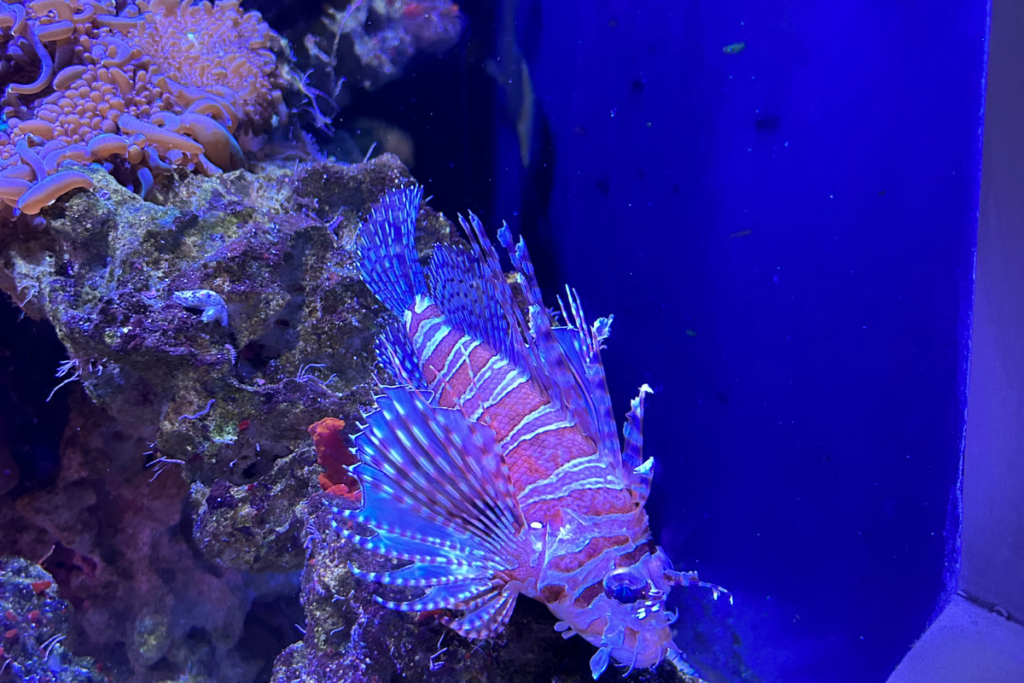
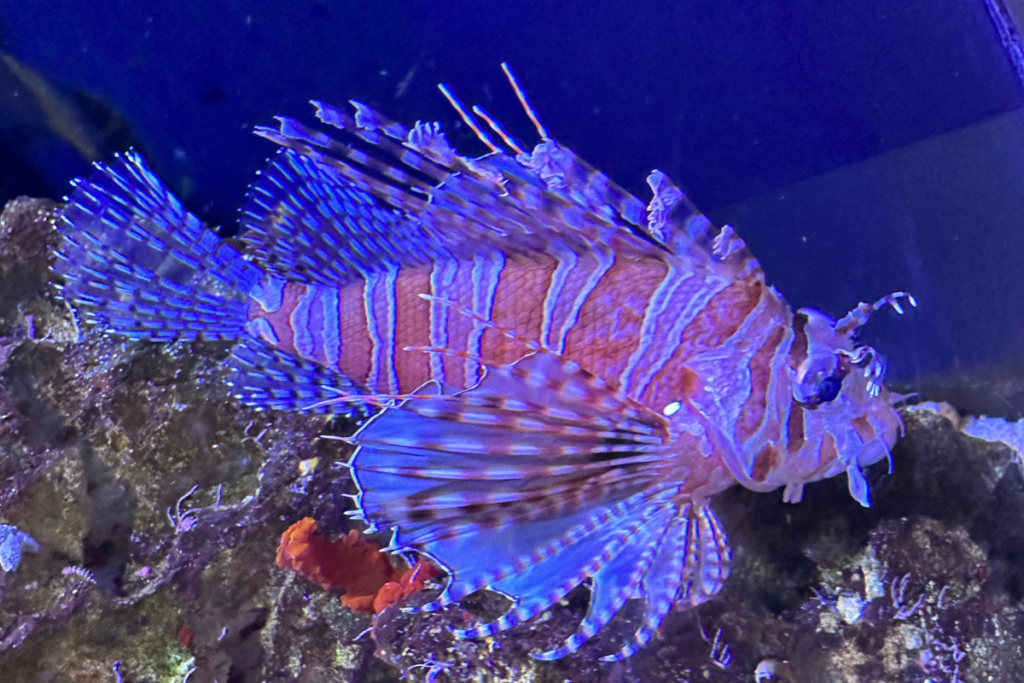
Large pectoral fins play an important role during feeding. Lionfish frequently spread these fins outward while approaching prey, creating a visual barrier that can limit escape routes. This strategy helps funnel prey into positions where capture becomes more likely. The technique is highly effective against small fish and mobile invertebrates.
Once prey is within range, lionfish employ rapid suction feeding. Their mouths expand suddenly, generating powerful water movement that pulls prey inward before it can react. This feeding method occurs in fractions of a second and allows lionfish to capture agile prey that might otherwise evade pursuit. Many successful predatory fish utilize similar suction-based techniques, but lionfish combine it with careful stalking behavior.
When prey becomes scarce, lionfish benefit from their opportunistic feeding habits. Rather than depending on a single food source, they can shift toward whatever prey remains available. This flexibility reduces the risk of food shortages and contributes to their ability to survive in both native and invasive environments. Combined with efficient hunting methods and a broad prey spectrum, these feeding adaptations have helped establish the red lionfish as one of the most successful predators in tropical marine ecosystems.
Popular Searches About Red Lionfish
Explore Red Lionfish Guide
Explore More Exhibits

Support Encounters World
Help support wildlife photography and get behind the scenes discoveries on Patreon.