Red Lionfish Behavior: Activity Patterns, Movement, and Survival Strategies
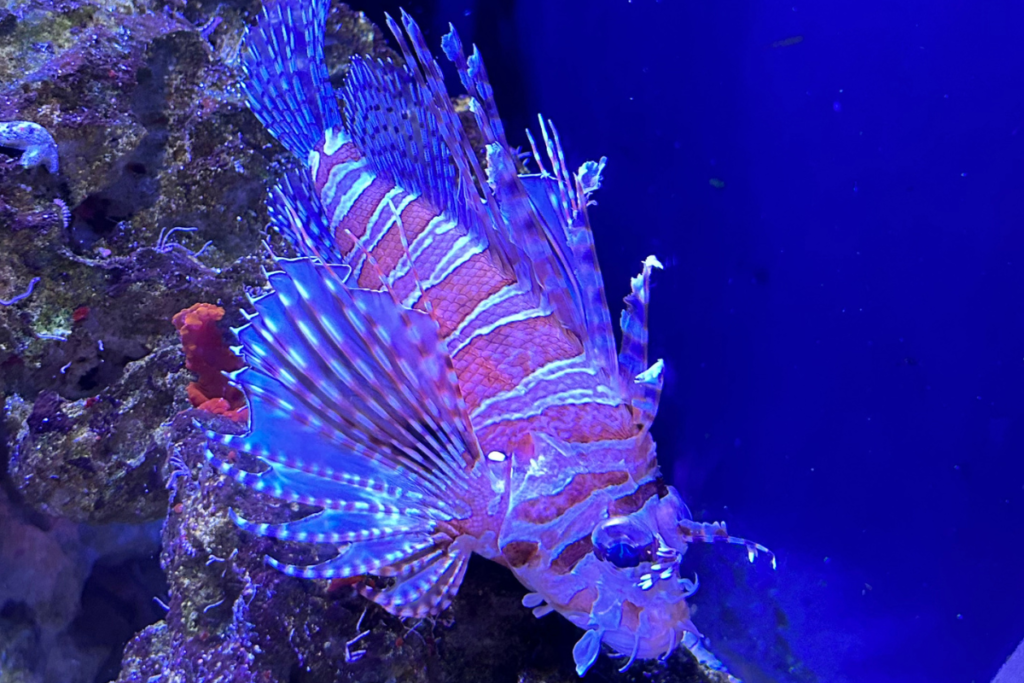
Quick Facts
Activity Type: Primarily Crepuscular and Nocturnal
Social Structure: Usually Solitary or Loosely Grouped
Territorial Behavior: Moderately Territorial
Movement Style: Slow Hovering with Controlled Fin Movements
Communication Method: Visual Displays and Body Positioning
Defense Strategy: Venomous Spines and Warning Display
Introduction: Observing Red Lionfish in Marine Environments
The Red Lionfish (Pterois volitans) is one of the most recognizable fish inhabiting tropical and subtropical marine waters. Native to the Indo-Pacific region, it can be found from the Red Sea and eastern Africa to Japan, Australia, and numerous Pacific islands. Today, populations also exist throughout parts of the Caribbean Sea, Gulf of Mexico, and western Atlantic Ocean.
Whether encountered on coral reefs, rocky outcrops, or in large aquarium exhibits, Red Lionfish often attract attention immediately. Their flowing fins and bold striped patterns create an unmistakable appearance that stands out among surrounding marine life. Even when numerous fish share the same environment, the lionfish is usually one of the first species observers notice.
Unlike many reef fish that constantly dart through the water, Red Lionfish frequently appear calm and deliberate. They often hover near structures or remain suspended above the seafloor with surprisingly little effort. This composed presence gives them a different personality compared to the rapid and energetic behavior seen in many reef inhabitants.
Watching a Red Lionfish can feel similar to observing a drifting feather suspended in water. Movements are often subtle, controlled, and purposeful rather than fast or erratic. This measured approach contributes to the species’ reputation as one of the most graceful fish found in tropical marine ecosystems.
Red Lionfish Behavioral Tendencies and Daily Lifestyle
At first glance, Red Lionfish may seem inactive compared to other reef species. They commonly spend long periods hovering near structures, maintaining a steady position while remaining aware of their surroundings. Although they are capable of rapid responses when necessary, most of their day is characterized by patience rather than constant activity.
When left undisturbed, lionfish typically display a calm and composed demeanor. They rarely engage in unnecessary movement and often conserve energy by holding position in the water column. This behavior contrasts sharply with species such as tangs or wrasses that spend much of the day swimming continuously.
Their behavior is often described as deliberate. Rather than reacting immediately to every nearby disturbance, lionfish frequently assess their surroundings before changing position. This measured response can make them appear confident and unhurried, even when other fish nearby are actively moving around.
Adaptability is another notable aspect of Red Lionfish behavior. Individuals have successfully established populations in areas far outside their native range, demonstrating an ability to adjust to different environmental conditions. This flexibility contributes to their success across a variety of marine ecosystems.
A useful comparison is that of a patient observer sitting quietly in a crowded room. While other animals constantly move from place to place, the lionfish often remains stationary while monitoring activity around it. This combination of awareness and restraint is a defining characteristic of the species.
Red Lionfish Movement and Activity Patterns
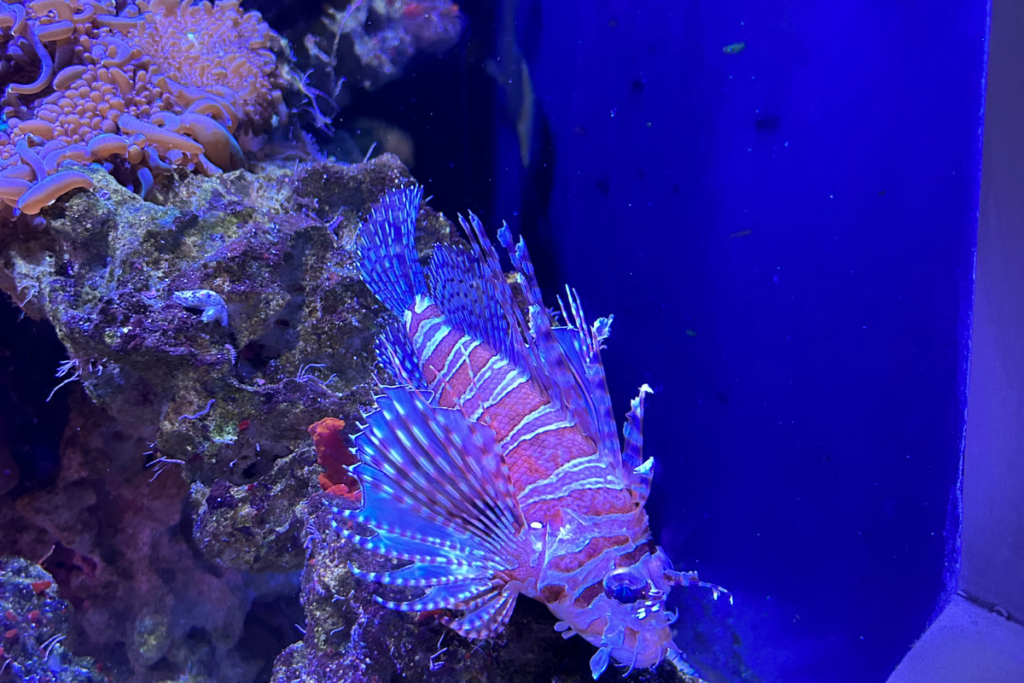
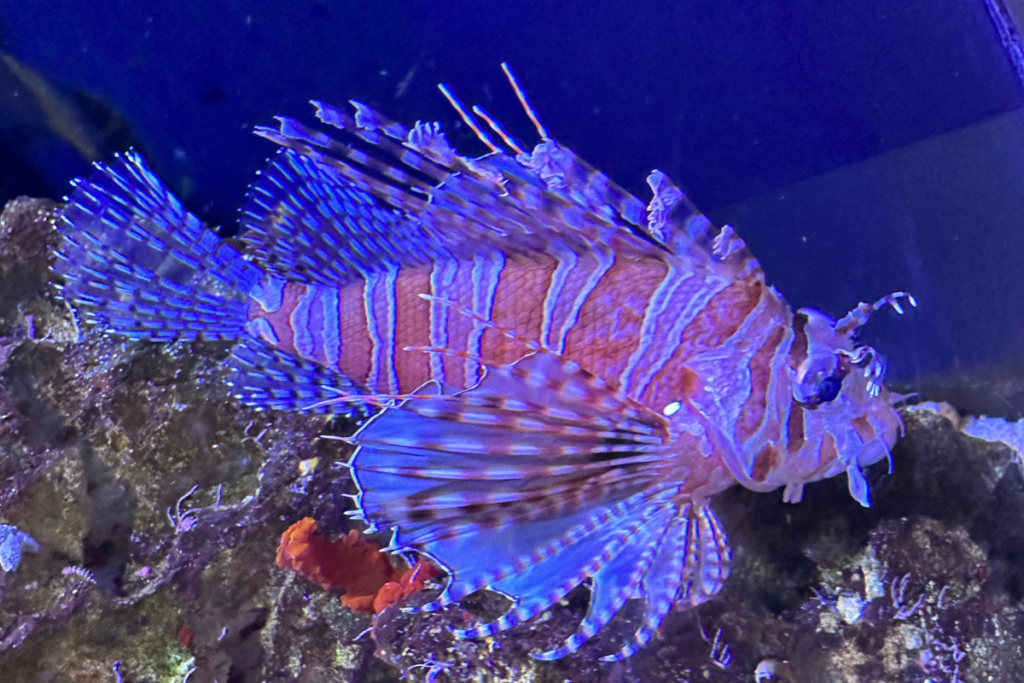
The movement of a Red Lionfish is remarkably smooth and controlled. Rather than relying on rapid tail beats, it often uses gentle motions of its large pectoral fins to glide through the water. These slow movements allow the fish to travel with minimal visible effort.
Most activity occurs during twilight hours and nighttime periods. As daylight fades, lionfish generally become more active and spend more time moving through their surroundings. This pattern helps reduce competition with many daytime reef species while allowing them to take advantage of lower light conditions.
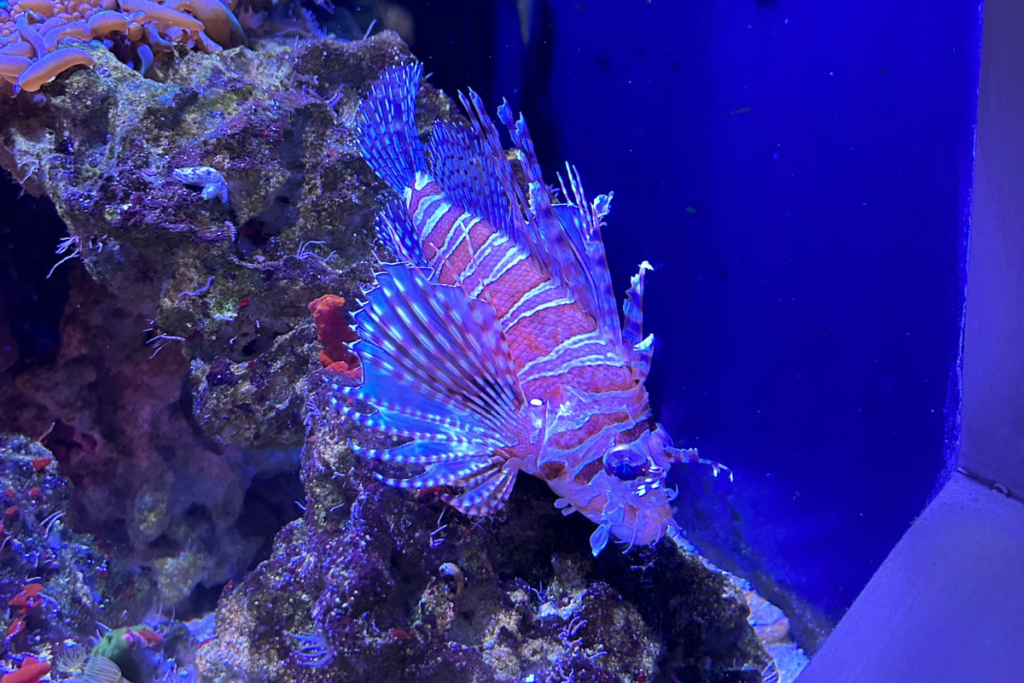
During daylight hours, individuals frequently remain near reefs, ledges, caves, or rocky structures. They may hover almost motionless for extended periods, making only occasional adjustments to maintain position. To an observer, this can resemble a kite floating steadily in a light breeze.
Seasonal changes have less influence on activity than they do for many terrestrial animals because marine environments often experience relatively stable conditions. However, water temperature, food availability, and environmental disturbances can still affect movement levels and daily routines. In favorable conditions, lionfish generally maintain consistent behavioral patterns throughout the year.
Energy conservation plays an important role in how lionfish move. By avoiding unnecessary swimming, they reduce energy expenditure while remaining prepared to react quickly when needed. This balance between inactivity and sudden responsiveness contributes to their efficiency within marine environments.
Red Lionfish Interaction and Survival Responses
One of the most important aspects of Red Lionfish behavior involves how they respond to potential threats. Their primary defense comes from the venomous spines located along the dorsal, pelvic, and anal fins. When danger is perceived, these spines can be displayed prominently as a warning to would-be predators.
Rather than immediately fleeing from every disturbance, lionfish often rely on confidence and visual deterrence. The combination of bold coloration, extended fins, and venomous spines creates a highly recognizable warning signal. Many predators learn to avoid contact after encountering or observing these defenses.
Interactions between lionfish are generally limited outside of reproductive periods. Most adults spend much of their time alone, although multiple individuals may occasionally occupy the same general area. These loose associations differ from the coordinated schools formed by species such as sardines or anchovies.
A common survival response involves turning toward a perceived threat and spreading the fins outward. This behavior increases the animal’s apparent size and makes the venomous spines more visible. The display serves as both a warning and a deterrent, reducing the likelihood of physical confrontation.
The species’ overall survival strategy relies on a combination of patience, awareness, and effective defense. Instead of depending solely on speed or aggression, Red Lionfish use visual signals and protective adaptations to navigate potential dangers. These behavioral traits have helped establish them as one of the most successful and recognizable fish inhabiting tropical marine ecosystems.
Popular Searches About Red Lionfish
Explore Red Lionfish Guide
Explore More Exhibits

Support Encounters World
Help support wildlife photography and get behind the scenes discoveries on Patreon.